


How to Find Calcium Nitrite Solution Suppliers?
Finding a dependable source for calcium nitrite 30% solution starts with knowing exactly what you need and where to look. Procurement managers sourcing this anodic corrosion inhibitor for bridge, tunnel, or marine concrete projects should prioritize certified manufacturers over brokers, verify ASTM C1582 and ISO compliance upfront, and request third-party batch test reports before committing to bulk orders. Direct factory sourcing eliminates markup layers and reduces supply-chain risk. This guide walks you through every stage — from understanding product specifications to evaluating supplier credentials and negotiating terms that protect your project timeline.

Understanding Calcium Nitrite 30% Solution and Its Market Demand
There is a lot more to calcium nitrite 30% solution [Ca(NO₂)₂, CAS# 13780-06-8, molecular weight 132] than just adding it to concrete. It is a chemically active anodic inhibitor that protects steel rebar by adding a layer of ferric oxide (FeO) to the metal's surface. This raises the level of chloride needed to start corrosion. This system directly fights "concrete cancer," which is the cracking that happens over time because chloride gets into the concrete from seawater, de-icing salts, and salty soils.
Infrastructure investments around the world keep going up. The U.S. Infrastructure Investment and Jobs Act alone put $1.2 trillion toward building roads, bridges, and public transit systems. This has kept the demand for high-performance concrete additives strong. Chloride rust inhibitors must be used in marine building, parking structures, and cold-climate concreting. This means that buying this product is a must, not an extra that can be added on.
Why the 30% Liquid Formulation Is the Industry Standard?
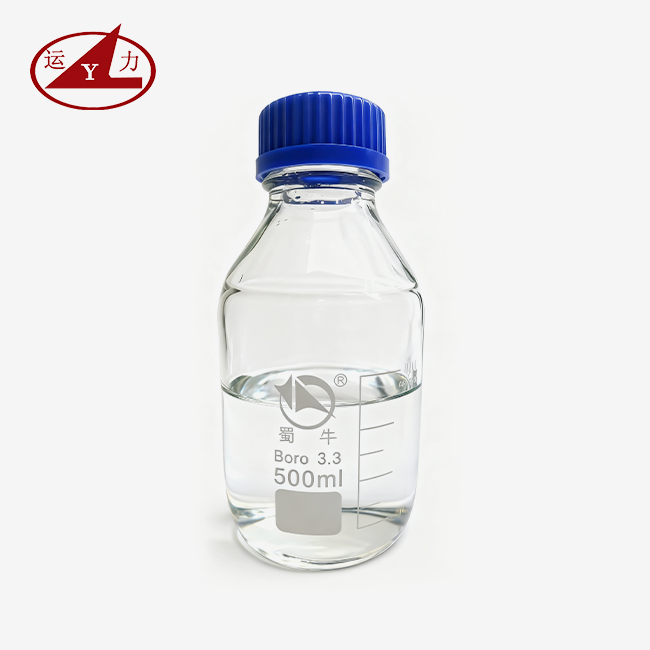
The ready-to-use 30% liquid format gets rid of the need to dissolve solids on-site, which saves time and prevents dose mistakes during mixing. The concentration of the solution stays the same while it is being stored and used, which is very important when engineers need to figure out exact chloride-to-nitrite ratios for structure design compliance. Its antifreeze properties also help contractors work in temperatures as low as -10°C, so projects stay on schedule no matter what the weather is like.
Key Criteria for Selecting Reliable Suppliers
A lot of research goes into choosing a supplier for a dangerous chemical additive. Taking shortcuts at this point can damage the structure and leave your company open to liability.
Every buying team should use these basic checks to make sure everything is okay:
- Certification audit: Make sure that the company has the ISO 9001 quality management, ISO 14001 environmental compliance, and OHSAS safety certifications. For responsible chemical making, these are the minimum standards that can't be changed.
- Product specification compliance: The active nitrite test must be exactly between 29% and 31%. At 20°C, the density should be between 1.28 and 1.32 g/cm³. To keep the concrete strong and workers safe, the chloride ion content must be less than 0.1% and the heavy metals must be less than 10 parts per million.
- Hazardous materials transport credentials: DOT and IMDG rules say that calcium nitrite 30% solution is an oxidant. Make sure the seller has the right paperwork to ship dangerous goods both within the country and to other countries.
- Production capacity: Each delivery cycle for big infrastructure projects needs hundreds of metric tons. Make sure that the manufacturer's yearly output is enough to handle the amount of your project without causing wait times to slip.
- Technical support availability: Reliable suppliers give advice on how to design a concrete mix, how to get the best dosage, and provide MSDS/SDS documentation, not just a price sheet.

These criteria give your decision about procurement a safety net. If a provider meets all five criteria, they are more likely to become a long-term partner rather than just a trade partner.
Assessing Quality Through Third-Party Testing
For each production batch, you should get a certificate of analysis (CoA) from a recognized lab. In U.S. markets, ASTM C1582 compliance is the main standard for how well rust inhibitors work. If the supplier gives you the ASTM G109 macrocell corrosion test results, you can be even more sure that the product will work in the long term. An independent check of the specific gravity in the field, which is just a simple density check, can find problems with dilution before they get to the job site.
Comparative Analysis: Calcium Nitrite vs. Other Corrosion Inhibitors
Knowing how this mix compares to other options helps procurement teams explain to engineering stakeholders why they made the choices they did about specifications.
Calcium nitrate shortens the setting time but doesn't protect much against corrosion caused by chloride. It works as an antifreeze agent, but it shouldn't be used instead of deicing salt in marine or deicing salt environments where the main goal is to protect the rebar. Sodium nitrite has a similar passivation chemistry, but it adds sodium ions to the concrete pore solution, which raises the alkali content. This can be a problem when alkali-silica reactive (ASR) particles are in the mix design. This problem is not present at all in the calcium nitrite 30% solution formulation.
Organic corrosion inhibitors, like amine-based admixtures, need to move through the vapor phase to reach the steel interface. This means that their performance is harder to predict in concrete that is dense or doesn't let much water through. Ions are sent directly and measurably to the surface of the rebar by the inorganic mechanism of the solution. Total cost of ownership (TCO) analysis shows that the dosage cost per cubic meter is not very high when compared to the costs of fixing buildings that it saves over a 50-year service life.
Proven Methods to Find and Evaluate Suppliers
The most reliable ways to get custom chemical admixtures are those that combine digital proof with direct communication with manufacturers. Here's how procurement managers with a lot of experience handle the process:
When you type "calcium nitrite 30% solution corrosion inhibitor manufacturer" or "rebar corrosion inhibitor wholesale supplier" into Google, you'll find both manufacturers and distributors. To tell the difference between the two, factory-direct supply cuts out the middleman and gives you straight access to the technical and quality teams. Alibaba International and industry-specific B2B sites have lists of verified sellers who have a history of exporting, doing business, and getting reviews from customers.
Associations in the industry, like the American Concrete Institute (ACI) and NACE International, keep lists of suppliers and put out technical standards that you can use to compare what a product says to real standards. Trade shows, like the World of Concrete expo, let you talk to suppliers directly and compare products in real time.
Due Diligence Questions to Ask Before Purchasing
Before you place a pilot order, ask any potential supplier these questions: Can you give me a third-party COA for the current batch of production? How long does it usually take to get an order of 20 metric tons? Do you have all the paperwork you need to ship dangerous goods? Can you help with the technical side of integrating mix-design? What are your rules for storing things and cleaning up spills? The answers to these questions give a more accurate picture of operational maturity and supply chain reliability than any brochure.
Best Practices for Procurement and Risk Mitigation
When buying dangerous materials, you need to make sure that the deal is clear and that the products are authentic. Service level agreements should include delivery windows and punishment terms that are linked to project goals. For example, if the supply of admixture is delayed, building sites will have to pay workers to do nothing. calcium nitrite 30% solution needs to be stored in polyethylene or stainless steel tanks that are kept above -15°C to keep crystals from forming, along with the right oxidizer-class control steps.
Re-qualification costs go down on subsequent jobs when you build a long-term relationship with a source. Spot-market sources are much more risky for the supply chain than suppliers who have built up their export infrastructure and a history of delivering on time for international projects.

Conclusion
Finding a trustworthy calcium nitrite 30% solution additive for important infrastructure doesn't just happen by buying something when you see it. It requires careful source evaluation. Check for certifications, test the product specifications on your own, make sure the company has the right credentials for handling dangerous goods, and make sure the contract has clear terms. The right supplier will always provide high-quality products, helpful technical support, and on-time deliveries. This will protect both the timeline of your project and the long-term durability of the things you build.
FAQ
What is the standard dosage rate for a corrosion inhibitor admixture in concrete?
The dose depends on how much chloride is expected to be present. According to ACI 222R rules, the industry standard is 10 to 30 liters per cubic meter of concrete. For each job, a structure engineer should figure out the exact chloride-to-nitrite ratio.
How does the calcium-based inhibitor compare to sodium nitrite from an ASR risk perspective?
The calcium nitrite 30% solution recipe doesn't add any sodium to the pore solution, so it can be used with aggregate sources that are subject to ASR. Sodium nitrite raises the amount of alkali in a mix and can make it more likely for it to crack open.
What certifications should I confirm with a supplier?
Make sure that at least ISO 9001, ISO 14001, and ASTM C1582 are being followed. For both domestic and international shipments, you need to have a hazardous materials transport certification.
Can this admixture be combined with supplementary cementitious materials?
It works better when mixed with silica dust and fly ash. The nitrite inhibitor stops the chlorides from reaching any steel that they do reach, and the SCMs lower the porosity. To keep the mix from gelling, add them one at a time.
What is the typical shelf life and storage requirement?
With the right care, the shelf life is 12 months. Do not store above -15°C. Instead, use plastic or lined steel tanks. Stay away from reducing agents and direct sunlight.
Request a Quote from Yunli Chemical — Trusted Calcium Nitrite 30% Solution Manufacturer
Yunli Chemical has been providing materials for infrastructure projects in Asia and other places for more than 20 years. The company has annual sales of more than 1 billion yuan and is certified by ISO 9001, ISO 14001, and OHSAS. Please note that the calcium nitrite 30% solution we sell is in line with ASTM C1582, comes with full documentation for dangerous goods, and we'll send you free samples of up to 500g. For product datasheets, COAs, and mass prices, you can email our technical team at wangjuan202301@outlook.com.
References
1. American Concrete Institute. ACI 222R-19: Guide to Protection of Metals in Concrete Against Corrosion. ACI, 2019.
2. ASTM International. ASTM C1582/C1582M: Standard Specification for Admixtures to Inhibit Chloride-Induced Corrosion of Reinforcing Steel in Concrete. ASTM, 2011.
3. ASTM International. ASTM G109: Standard Test Method for Determining the Effects of Chemical Admixtures on the Corrosion of Embedded Steel Reinforcement in Concrete Exposed to Chloride Environments. ASTM, 2007.
4. Berke, N. S., & Hicks, M. C. "Predicting Long-Term Durability of Steel-Reinforced Concrete with Calcium Nitrite Corrosion Inhibitor." Cement and Concrete Composites, 2004.
5. Neville, A. M. Properties of Concrete. 5th ed. Pearson Education, 2011.
6. U.S. Department of Transportation, Federal Highway Administration. Infrastructure Investment and Jobs Act: Bridge and Highway Funding Summary. FHWA, 2022.