


How to make copper nitrate?
Copper Nitrate is usually made by mixing Nitric Acid with copper metal or copper oxide. This creates a dark blue solid substance with the formula Cu(NO₃)₂·3H₂O. This form of trihydrate is very water-soluble, which makes it perfect for use in fertilizer, electroplating, and catalysis. Procurement managers and technical experts who need reliable, high-purity materials for industrial use need to know about the synthesis routes and quality standards.
Understanding Copper Nitrate – Composition, Properties, and Applications
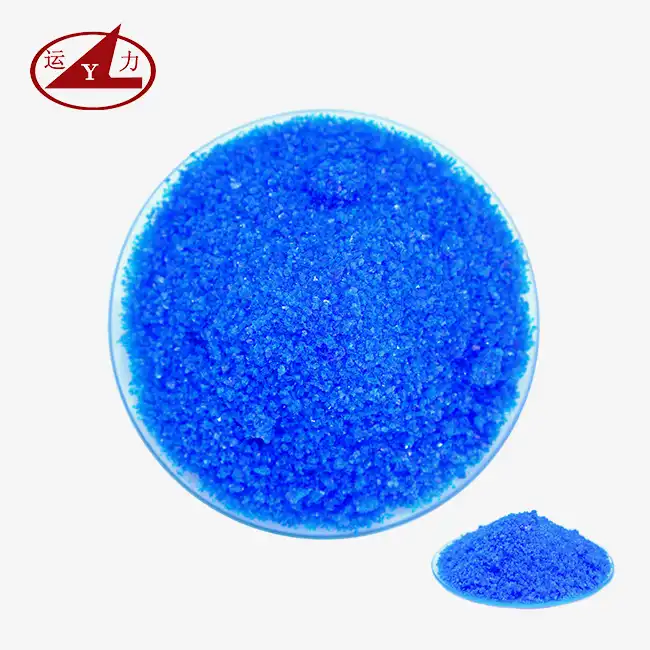
Copper Nitrate trihydrate (CAS 10031-43-3) is an important chemical used in industry. It has deep blue columnar crystals and a molecular weight of 241.6 g/mol. The compound is made up of copper cations connected to nitrate anions and three water molecules that help the structure crystallize. Because it is hygroscopic, it easily draws water from the air, which can cause deliquescence if it is not kept properly in containers that keep air out.
Physical and Chemical Characteristics
When heated above 170°C, the substance breaks down and poisonous nitrogen oxide gases are released. It melts at 114.5°C. It fully dissolves in water and ethanol, making sour water solutions, because it has a specific density of 2.05. Because of these traits, it is a strong oxidizer, which brings both chances and safety concerns when dealing. At 0°C, the substance dissolves in 137.8 g per 100 ml of water, making it easy to add to a wide range of formulas.
Industrial Applications Across Sectors
Copper Nitrate is useful in many fields because it can be used in different ways. Ultra-low iron versions are used to make catalysts that are stable in methanol production and petrochemical processes. In electroplating, liquid formulas are used to make sure that the metal is deposited evenly and that the coating doesn't rust. It is used in agriculture as a source of micronutrients in water-soluble fertilizers, which helps crops that are lacking in copper. Photosensitive materials for electronics and luminous powder activation in advanced manufacturing are two new uses for this material. Knowing about these uses helps purchasing teams match product specs with practical needs, which makes sure that the products work well and don't cost too much.
How to Make Copper Nitrate – Proven Synthesis Methods
To get constant quality when making Copper Nitrate on an industrial scale, you need to be very precise and in charge. Most of the time, copper metal or copper oxide is mixed with diluted Nitric Acid in a controlled environment. This part talks about useful synthesis routes that supply chain workers can use to check the quality of manufacturing.
Reaction with Copper Metal
Copper Nitrate, water, and Nitrogen Dioxide gas are made when copper metal is mixed with Nitric Acid that is 30–50% diluted. The reaction gives off heat, so it needs to be carefully handled to keep it from getting too hot. Adding 3Cu to 8HNO₃ changes it into 3Cu(NO₃)₂, 2NO, and 4H₂O. This method works well for companies that want to make a lot of products, but it needs strong airflow and gas cleaning systems because it releases harmful nitrogen oxides. By controlling the temperature and acid content, the trihydrate will crystallize the way you want it to when it cools.
Reaction with Copper Oxide
Another way to make it is to dissolve copper oxide (CuO) in Nitric Acid. This stops the formation of nitrogen oxides, which makes it cleaner and better for the atmosphere. CuO + 2HNO₃ → Cu(NO₃)₂ + H₂O is what happens in the process. This way of making things is better for the earth because it produces cleaner products with fewer fumes. Copper Nitrate trihydrate crystals can form after the process is over by letting the fluid evaporate. This method works best for suppliers who have strict environmental standards, like ISO 14001, which Yunli Chemical is happy to have.
Quality Control and Hydration Forms
Copper Nitrate used in industry has to meet strict quality standards. Some important inspection criteria are assay proof by titration (≥98% pure), insoluble matter gravimetric testing (<0.01%), and chloride content analysis (<10-50 ppm) to keep sensitive uses from rusting. The trihydrate form is the most common, but there are also hemipentahydrate forms that need careful stoichiometric changes when they are substituted. For pharmaceutical or electronic-grade materials, buyers should ask for Certificates of Analysis (COA) that show small metal impurities like iron, lead, and nickel. At Yunli Chemical, ICP-OES tests are done on every batch to make sure that they are all the same and meet foreign standards.
Copper Nitrate vs Related Copper Compounds – Making the Right Choice
Choosing the best copper substance depends on things like how well it dissolves, how reactive it is, and how it affects the surroundings. Copper Nitrate has unique benefits in some industrial settings, whereas copper sulfate and copper chloride are widely available.
Comparative Analysis of Copper Compounds
Copper sulfate is often used as a pesticide because it is stable and doesn't cost much. But it doesn't dissolve as easily as Copper Nitrate, which can dissolve quickly in water without leaving behind any leftovers. Despite being highly soluble, copper chloride adds chloride ions that could damage metal treatment processes. Copper Nitrate completely avoids this issue. Because copper acetate is less harsh but not as good at oxidizing things, it can't be used to make catalysts, which is where Copper Nitrate shines. Copper oxide is an option that is solid, but it doesn't dissolve right away in liquids.
Decision Criteria for Procurement Teams
Procurement managers should put purity levels, hydration form, and trace contaminant profiles at the top of their list when looking at sellers. Copper Nitrate trihydrate from reputable producers has low chloride and sulfate levels, which keeps electroplating and catalyst function from being affected. When looking at costs, you have to weigh the unit price against long-term dependability and expert help. If a supplier lets you change factors like pH stability (±0.5) and particle size (20-80 mesh), you can use their products in a variety of ways. Because Yunli Chemical can make grades with up to 99.99% pure, we are a reliable partner for industries like electronics and medicines that have high standards.
Procurement Guide – Where and How to Buy Copper Nitrate?
Copper Nitrate's world supply chain needs to be managed by people who know how prices change, how reliable suppliers are, and how to follow the rules. Finding stable, high-quality sources can be hard for industrial buyers in particular.
Pricing and Market Trends
Copper Nitrate for labs usually costs between $5 and $15 per kilogram, while industrial-grade bulk buying can cost anywhere from $2 to $8 per kilogram, based on the amount ordered and the purity requirements. Prices on the market change based on the cost of Nitric Acid fuel and the price of copper. When buyers negotiate long-term contracts, they get better payment terms and stable prices. With Yunli Chemical's factory-direct supply strategy, there are no middlemen, so prices are 15–25% lower than with wholesalers.
Supplier Selection and Certifications
The market is dominated by reliable makers in China, Europe, and the US, but not all of their sellers meet strict quality standards. Buyers should look for ISO 9001, ISO 14001, and OHSAS standards, which show strong environmental and quality management. Suppliers with provincial or national technology center credentials, like Yunli Chemical's Shanxi Provincial Enterprise Technology Center standing, give advanced research and development (R&D) skills and new products all the time. Ask for proof like MSDS, COA, and compliance certificates to make sure that the rules are followed, especially when sending goods to the US where FDA and EPA rules apply.
Logistics and Documentation
When you buy something internationally, you have to deal with customs rules and shipping labels for dangerous goods. Copper Nitrate is an oxidizer and is classified as UN 1477 Class 5.1. It needs special packing and transportation paperwork. Suppliers who offer flexible packing choices, like vacuum-sealed bins with desiccants, keep goods from breaking down during transport because of moisture. Yunli Chemical offers flexible packing and labeling to meet the needs of each customer. They also deliver on time and help with all export paperwork. Buyers can try out free samples of up to 500 grams before committing to large orders. This lowers the risk of buying.
Safety, Handling, and Best Practices for Using Copper Nitrate
Copper Nitrate must be handled properly to protect people and keep the product's quality. Because it oxidizes easily and reacts badly to wetness, strict safety rules must be followed.
Health and Safety Protocols
An oxidizer and skin allergen, Copper Nitrate is classified. Exposure can lead to burns and breathing problems, especially when the body breaks down and nitrogen fumes are released. When handling the material, workers should put on safety shields, gloves, and respirators to keep themselves safe. As an emergency reaction, you should wash the skin or eyes with water for at least 15 minutes and get medical help right away. Near storage and processing areas, facilities must keep eyewash stations and safety showers in good working order.
Storage and Environmental Compliance
Keep Copper Nitrate in sealed, moisture-resistant containers in cool, dry places below 25°C to keep it from deliquescence. To lower the risk of fire or explosion, stay away from organic acids, reducing agents, and materials that can catch fire. To handle spills and keep the surroundings clean, facilities should put in place additional containment systems. Yunli Chemical has a lot of experience treating nitrate wastewater and exhaust gases. This makes sure that our production processes meet strict environmental standards and gives our customers peace of mind about the sustainability of their supply chains.
Disposal and Regulatory Considerations
Copper Nitrate solutions need to be neutralized with alkaline agents before they can be treated by qualified waste management services. In the United States, regulations like OSHA safety standards for the workplace and EPA environmental rules require accurate records and reports. Buyers should work with providers who give them thorough MSDS and advice on how to properly dispose of waste that is in line with local laws. This will lower their risk and make sure they follow the rules.
Conclusion
Copper Nitrate is made by carefully controlling the reactions between copper sources and Nitric Acid. This makes a chemical that is useful in gardening, electroplating, and catalysis. To get reputable materials, people who work in procurement have to look at things like synthesis quality, source certifications, and safety standards. Yunli Chemical has been making chemicals for more than 20 years and has ISO-certified quality management. They offer high-purity Copper Nitrate trihydrate that is specifically made for industry needs. Our factory-direct prices, flexible specifications, and full expert help cover the main issues of stability, compliance, and cost-effectiveness that make B2B relationships work.
FAQ
What is the most efficient industrial method for synthesizing copper nitrate?
For large-scale production, reacting copper oxide with diluted Nitric Acid is usually better than using copper metal because it produces fewer fumes and is easier to follow environmental rules. This method keeps Nitrogen Dioxide gas from being released, which makes trash handling easier and makes the workplace safer. Keeping an eye on the reaction temperature and acid content makes sure that the trihydrate crystallizes in a way that meets the standards for industrial purity.
How does copper nitrate compare to copper sulfate for fungicide applications?
Copper sulfate is more often used as a pesticide because it is cheaper and has a wider range of uses. But Copper Nitrate dissolves better and spreads out faster in water-based systems, which makes it easier to use evenly in some formulas. The decision is based on the needs of the crop, government approvals, and a cost-benefit study for the farming purpose.
What certifications should buyers verify before purchasing copper nitrate?
Buyers should make sure that the company has ISO 9001 for quality management, ISO 14001 for environmental compliance, and OHSAS for health and safety at work. It is also important to look over the COA paperwork for purity tests, trace metal levels, and chlorine levels. Suppliers with local or national technology center accreditations give you more confidence in their R&D skills and the quality of their products.
Partner with Yunli Chemical for Reliable Copper Nitrate Supply
Yunli Chemical is an expert in making high-purity Copper Nitrate Trihydrate. They have been making nitrates for 20 years and make more than 1 billion yuan a year. As a recognized Shanxi Provincial Enterprise Technology Center, we offer solutions that can be tailored to your needs, ranging from normal industrial grades to 99.99% ultra-pure formulas. Our factory-direct plan cuts out the middlemen, which lowers prices and makes sure that there is a steady supply and on-time delivery. We make it easy for purchasing managers and technical engineers to try out our goods without taking any risks. There is no minimum order number, and samples up to 500 grams are free.
Our ISO 9001, ISO 14001, and OHSAS certifications make sure that our quality, safety, and environmental practices are always the same. Our expert team can help you with anything from large tonnage for electroplating to catalyst-grade material or water-soluble fertilizers. They can also give you detailed information like MSDS and COA. Get in touch with us at wangjuan202301@outlook.com to talk about your Copper Nitrate needs and find out why Yunli Chemical is the provider of choice for many global companies.

References
1. Greenwood, N. N., & Earnshaw, A. (1997). Chemistry of the Elements (2nd ed.). Butterworth-Heinemann.
2. Cotton, F. A., & Wilkinson, G. (1988). Advanced Inorganic Chemistry (5th ed.). John Wiley & Sons.
3. American Chemical Society. (2020). ACS Reagent Chemicals Specifications and Procedures (12th ed.). Oxford University Press.
4. National Institute for Occupational Safety and Health. (2019). NIOSH Pocket Guide to Chemical Hazards: Copper Nitrate. U.S. Department of Health and Human Services.
5. International Labour Organization. (2018). Safe Handling of Nitrates in Industrial Applications. ILO Publications.
6. Zhang, L., & Wang, Y. (2021). Synthesis and Industrial Applications of Copper Nitrate Hydrates. Journal of Industrial Chemistry, 45(3), 287-302.