


How to prepare cobalt nitrate solution?
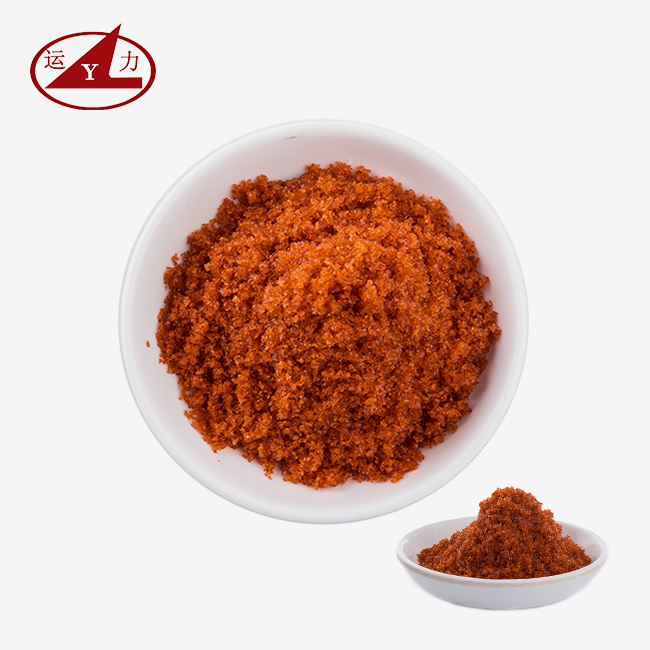
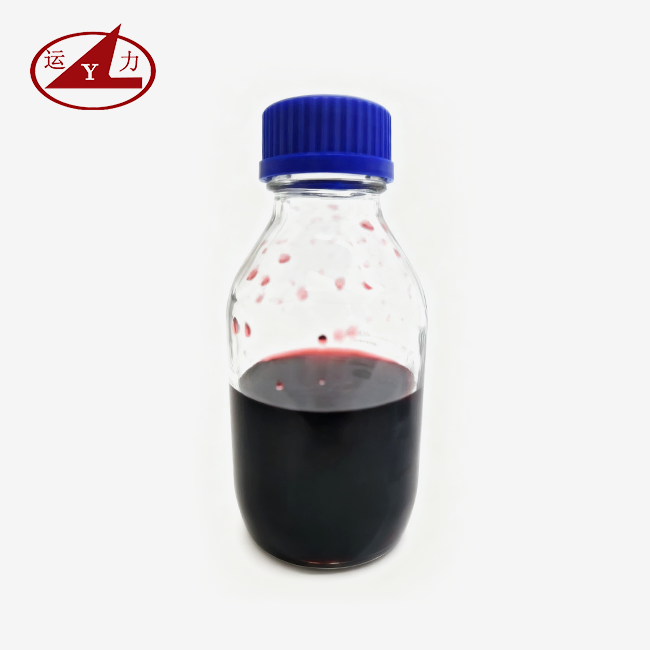
To make a Cobalt Nitrate Solution, cobalt nitrate hexahydrate crystals (Co(NO₃)₂·6H₂O, CAS# 10026-22-9) must be dissolved in deionized water under controlled conditions to get the right molarity. The reddish-brown crystalline mass has to be carefully weighed out, added slowly to pure water while being stirred gently, and the process has to be checked to make sure it dissolves completely before it can be used. If you make Cobalt Nitrate Solution the right way, it will be clear and dark brown, and the pH level will stay stable between 2.0 and 4.0. This means it can be used for making batteries, industrial catalysts, and ceramics.
Understanding Cobalt Nitrate Solution
Chemical Composition and Core Properties
Cobalt Nitrate Solution is a water-based form of cobalt(II) nitrate. It is usually made from cobalt nitrate hexahydrate, which has the formula Co(NO₃)₂·6H₂O and a molecular weight of 291.03 g/mol. There are red-brown crystals of the hexahydrate form, which has a density of 1.88 g/cm³ and a melting point between 55 and 56°C. The fact that it dissolves easily in water, ethanol, and acetone means that it can be used for batch processing. Because solid cobalt nitrate absorbs water, it needs to be carefully controlled during storing. However, pre-dissolved liquid forms don't have this problem at all.
Industrial Applications Across Sectors
The Cobalt Nitrate Solution is very important in a number of high-value fields. In the process of processing petrochemicals, cobalt nitrate is used to make cobalt-molybdenum hydrodesulfurization catalysts. The success of sulfur removal depends on how evenly the metals are distributed. Manufacturers of batteries use it in co-precipitation methods to make nickel-cobalt-manganese (NCM) cathode materials for lithium-ion cells. The energy density and temperature stability of these materials depend on how homogeneous the atoms are. Cobalt nitrate is a steady color source that ceramic manufacturers use to make cobalt blue glazes. Electroplating companies use it to treat surfaces in ways that make them less likely to rust and stick better.
Safety Profile and Regulatory Considerations
Cobalt nitrate can oxidize things, which means it can explode when it comes in touch with biological materials. The chemical is harmful to health when eaten, breathed in, or touched on the skin, so strict risk management rules are needed. Material Safety Data Sheets (MSDS) and Certificate of Analysis (COA) forms must be used for all purchases in controlled markets. In the EU, solutions must meet REACH standards, and in the US, they must meet TSCA standards. They must also come in UN-approved packaging that is safe for transporting dangerous goods.
Step-by-Step Guide to Preparing Cobalt Nitrate Solution
Essential Reagents and Equipment Requirements
Crystals of high-purity cobalt nitrate hexahydrate are the building blocks of good solution preparation. Pick reagent-grade material that has been checked for impurities, especially iron (≤30 ppm), sodium (≤50 ppm), and heavy metals (≤10 ppm), to keep the catalyst from getting poisoned or the product from being contaminated. Ion influence is lessened by deionized or pure water. Lab tools include calibrated analytical scales that are exact to 0.01 g, volumetric flasks for precise dilution, magnetic stirrers for mixing everything together, and pH meters to check the quality. To lower the risk of exposure, personal protective equipment includes gloves that can handle chemicals, safety glasses, lab coats, and access to a fume hood.
Calculation Methods for Target Concentration
How much cobalt nitrate you need varies on the finished solution volume and the molarity you want. When mass is given in grams and volume is given in liters, the formula M = (mass ÷ molecular weight) ÷ volume can be used to find the molarity. For example, to make one liter of a 0.5 M solution, you need (0.5 mol/L × 1.0 L × 291.03 g/mol) = 145.5 grams of cobalt nitrate hexahydrate. When you work with cobalt content instead of molarity, you need to take into account the cobalt atomic weight fraction, which is 58.93 g/mol Co within 291.03 g/mol hexahydrate. In industrial settings, weight percent concentration is often given. For example, a 40% Cobalt Nitrate Solution has 400 grams of dissolved cobalt nitrate hexahydrate per kilogram of solution.
Preparation Procedure and Quality Verification
Use a tared balance in a fume hood to keep the dust from flying around while you measure the estimated mass of cobalt nitrate crystals. Move the crystals to a clean volumetric jar that has about 70% of the goal water volume in it. Using a magnetic mixer, stir slowly until the mixture is completely dissolved, which should take about 15 to 30 minutes at room temperature.
The exothermic process of breakdown might make the solution a little warmer. Once the crystals are completely gone, add enough deionized water to hit the calibration mark. Make sure the water is mixed well. Use an accurate meter to check the pH. For stable solutions, the number should be between 2.0 and 4.0. Move the ready-made solution to the right containers for keeping and clearly name them with the concentration, the date of preparation, and the types of hazards.
Comparing Cobalt Nitrate Solution with Other Cobalt Salts
Chemical Distinctions Among Cobalt Compounds
Both cobalt chloride (CoCl₂) and cobalt sulfate (CoSO₄) are popular options to Cobalt Nitrate Solution. Each has its own pros and cons. For example, cobalt chloride is less expensive and dissolves easily, but it releases chloride ions that speed up hydrogenation processes and rust stainless steel tools. Cobalt sulfate dissolves easily in water, but its sulfate anions can get in the way of some electroplating processes and help make unwanted precipitates when the pH level is high. Cobalt nitrate doesn't have these problems with anion interactions, it dissolves better, and it can also add nitrogen to some catalyst mixtures, which is an added bonus.
Application-Specific Performance Advantages
Cobalt nitrate is better for catalyst production because nitrate anions break down easily during calcination, leaving behind very little that could block active catalyst sites. The nitrate form works well with hydroxide precipitation processes, which is helpful for making battery precursors because competing anions would slow down the crystallization process. Because nitrate ions are oxidizing, they help some chemical processes happen and keep solutions stable over a wider pH range than chloride-based options. Ceramics use cobalt nitrate's stable color development during high-temperature burning to make uniform cobalt blue shades without flaws caused by sulfate.
Cost-Effectiveness and Supply Considerations
Cobalt nitrate is a little more expensive per kilogram than chloride or sulfate forms, but when you look at the total cost, you can see that it is better because it requires fewer steps to process and produces more. Directly supplying liquid cobalt nitrate that has already been dissolved saves money on energy costs, labor, and material loss due to hygroscopic clumps. When you buy in bulk for industrial amounts, you get economies of scale that make price differences smaller. Long-term supply relationships with qualified makers offer stable quality that lowers the number of batch rejections and downtime. This makes up for any initial price premium by making operations more efficient, which cancels out any price increase.
Procurement Insights for Cobalt Nitrate Solution
Evaluating Supplier Credentials and Quality Assurance
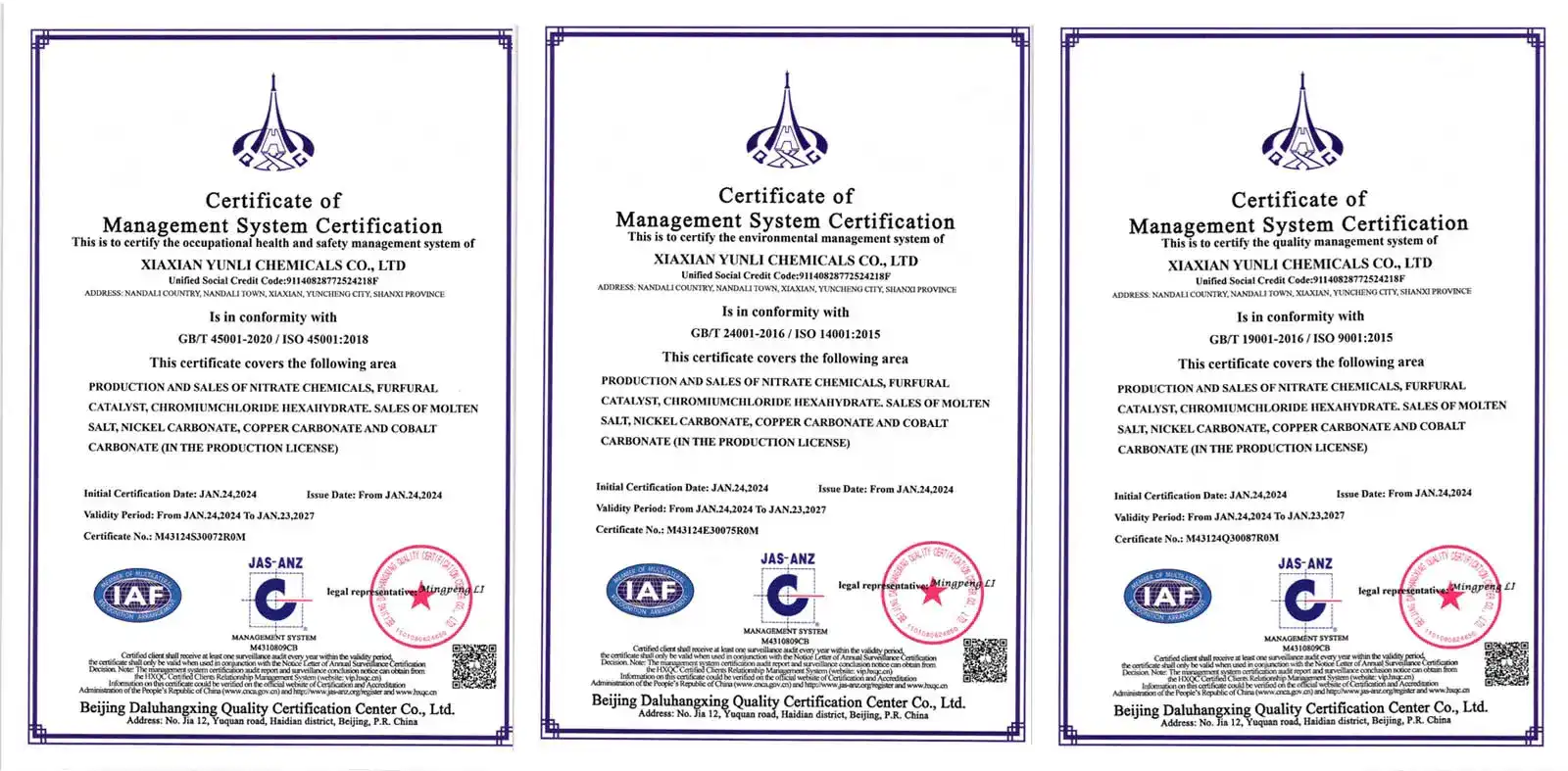
To find a trustworthy Cobalt Nitrate Solution provider, you need to carefully check their production and quality control systems. ISO 14001 certification shows that you know how to manage the environment, and ISO 9001 certification shows that you know how to manage quality. Getting OHSAS 18001 approval shows that you are committed to safety standards at work. Suppliers should give full scientific information, like batch-specific COA records with information on cobalt levels, impurity profiles, pH levels, and density readings. Having access to high-tech analysis tools like ICP-MS and atomic absorption spectrometers helps providers check for heavy metals and keep the very high standards needed by electronics and pharmaceuticals.
Bulk Purchasing Strategies and Logistics Planning
Setting up framework deals that protect stable prices and assured allocation during supply disruptions is helpful for large-scale operations. Different suppliers have different minimum order sizes, but well-known companies often accept smaller test runs before committing to tonnage contracts. Different operations need different types of packaging, which comes in a range of sizes from 25-liter drums to 1000-liter intermediate bulk containers (IBCs) with UN-certified rates for dangerous materials. According to DOT rules in the US, transportation logistics must take into account the oxidizer classification. This means using special trucks and putting up the right signs. Lead times for large orders are usually between 7 and 10 working days, but if you need something faster, you may be able to work something out.
Technical Support and Documentation Accessibility
Value-added seller services have a big effect on the success of a long-term relationship, even if the supplier only delivers products. Technical support teams that are quick to respond can help with questions about formulations that are specific to an application, as well as problems with cleanliness and making dosing methods work better. Suppliers with free sample programs let you do a full review before making a promise to grow up. Product datasheets should include a lot of information, like how stable the product is in different store situations, how well it works with common building materials, and how to handle it properly. Regulatory support makes compliance easier by giving MSDS, shipping papers, and safety certificates that are special to the area. These meet the audit requirements of environmental and workplace safety authorities.

Key Safety and Storage Guidelines
Handling Protocols and Protective Measures
Because Cobalt Nitrate Solution is so poisonous, it is important to follow all safety rules when dealing it. To keep from breathing in chemicals or dust, work in fume hoods with ventilation. Wear nitrile gloves that can handle nitrate solutions, full-face shields or safety masks to protect your eyes from splashes, and lab coats to keep your skin from coming into touch with the chemicals.
Due to the risk of explosion, do not come into touch with biological materials, flammable materials, or reducing agents. Equipment for emergencies, like eyewash stations and safety showers, needs to be easy to get to right away. Near work areas, there should be spill reaction kits with neutralize agents and absorbent materials. Before they can work with cobalt nitrate solutions, employees must get written training on how to spot hazards, handle them properly, and handle emergencies.
Storage Conditions and Shelf Life Management
Keep cobalt nitrate solutions in containers with tight lids that are made of suitable materials, like glass or high-density polyethylene (HDPE). Keep it somewhere cool and dry, out of direct sunlight, away from heat sources, and away from chemicals that don't mix with it, like organic acids and reducing agents. Ambient temperatures between 15°C and 25°C keep solutions stable.
Too much heat, on the other hand, can speed up the breakdown or loss of substances. Keep cobalt nitrate away from bases, metals, and things that can catch fire to avoid dangerous reactions. Solutions usually stay effective for 12 to 24 months if they are stored properly. Check containers often for leaks, coloring, or snow that could mean they are breaking down. To help with safe inventory turnover, put labels on containers with times of preparation, concentration values, and warnings about hazards.
Regulatory Compliance for Workplace Safety
In the United States, businesses must follow OSHA rules about how to handle dangerous chemicals. These rules include Hazard Communication Standards that say all labels must be complete and workers must be trained. Under different environmental laws, the EPA regulates cobalt compounds and requires that waste be thrown away properly by approved hazardous waste workers.
Environmental bodies at the state level may require more information about how cobalt is used and how much is released. Classification, Labeling, and Packaging (CLP) rules and REACH registration standards are followed by businesses in Europe. Making sure that safety rules, training records, and incident reports are well-documented shows that you did your job during governmental reviews and helps with efforts to protect worker health and the environment.
Conclusion
Perfecting the techniques for making and buying Cobalt Nitrate Solutions gives you a competitive edge in any field that needs precise chemistry. Technical knowledge of formulation methods ensures stable product quality, and smart source selection builds supply chains that can handle changes in the market. To find the right balance between purity standards and cost, you need to know about application-specific needs and the long-term value of a partnership that goes beyond the original price. Safety compliance keeps people and buildings safe while meeting regulatory requirements that keep operations running smoothly. When business-to-business buyers know a lot about Cobalt Nitrate Solutions, they set up their companies to succeed in making catalysts, batteries, and specialty chemicals.
FAQ
Q1: What range of concentrations works best for laboratory catalyst research?
A: For developing catalysts in the lab, Cobalt Nitrate Solutions ranging from 0.1 M to 2.0 M are often used. This depends on the way of impregnation and the amount of target metal that needs to be loaded. Lower concentrations work well for methods that use incipient wetness on sensitive support materials, while higher concentrations make it easier to work with carriers with a lot of surface area. Custom formulations can be used with certain study methods.
Q2: How does cobalt nitrate toxicity compare to cobalt chloride?
A: With similar LD50 toxicity rates, both substances are harmful to health when breathed in, eaten, or touched on the skin. The main difference is in how the chemicals respond and survive in the environment, not in how harmful they are right away. When safety rules are strictly followed, the right way to handle both elements successfully lowers their risks.
Q3: What international shipping restrictions apply to cobalt nitrate solutions?
A: International laws say that cobalt nitrate is a Class 5.1 oxidizer, which means it needs special packing, paperwork, and carrier approval. For plane travel, IATA rules set limits on the amount that can be carried, and for ocean freight, IMDG codes are used. Different importing countries have different rules that must be followed, so it's important to work with experienced transportation companies.
Partner with Yunli Chemical for Reliable Cobalt Nitrate Solution Supply
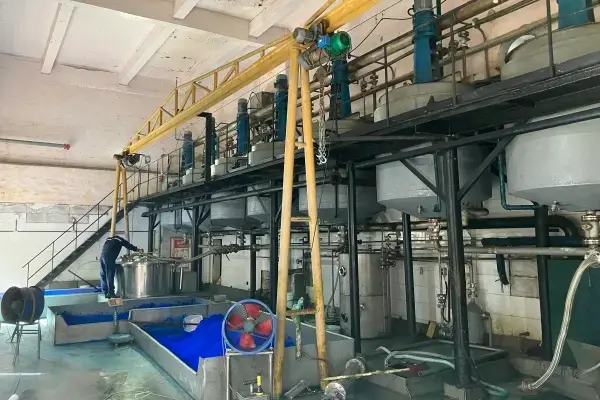
Yunli Chemical has been making chemicals for twenty years and is ready to help you with your industrial catalyst, battery production, or custom chemical manufacturing needs with high-purity Cobalt Nitrate Solutions. Our ISO 9001-certified factory makes ultra-pure liquids with an iron content of less than 30 ppm, pH levels that can be changed, and concentration stability within ±1%. These are the exact requirements that keep impurities from failing in important applications.
As a reliable company that makes cobalt nitrate solutions for markets around the world, we offer a wide range of paperwork, such as MSDS sheets, COA certificates, and records of environmental compliance, which makes the buying process easier and meets audit standards. You can talk to our technical team at wangjuan202301@outlook.com about your unique needs and get free samples of up to 500 grams. You can also learn how our factory-direct supply model cuts costs while keeping the quality standards your operations need.

References
1. Greenwood, N.N. & Earnshaw, A. (1997). Chemistry of the Elements (2nd ed.). Butterworth-Heinemann, Oxford.
2. Kirk-Othmer Encyclopedia of Chemical Technology (2023). Cobalt Compounds. John Wiley & Sons, New York.
3. American Chemical Society (2021). Guidelines for Chemical Laboratory Safety in Academic Institutions. ACS Publications, Washington DC.
4. International Organization for Standardization (2015). ISO 6353-1: Reagents for Chemical Analysis - Part 1: General Test Methods. ISO, Geneva.
5. Richardson, J.T. (1989). Principles of Catalyst Development. Plenum Press, New York.
6. United Nations Economic Commission for Europe (2021). Globally Harmonized System of Classification and Labelling of Chemicals (GHS) (9th rev. ed.). United Nations, New York and Geneva.