


How to reverse cupric nitrate on copper?
Chemical neutralization with gentle acidic solutions or chelating agents that break down the oxidized layer without hurting the copper base below is needed to remove Cupric Nitrate deposits from copper. Diluted acetic acid or citric acid solutions are often used, followed by a thorough rinse with deionized water. This method gets rid of the blue-green leftovers that are left behind when Cupric Nitrate reacts with copper surfaces, making them look good and conducting electricity again. When used in business settings that need metal surfaces to be spotless, mechanical cleaning and chemical treatment work best.
Introduction
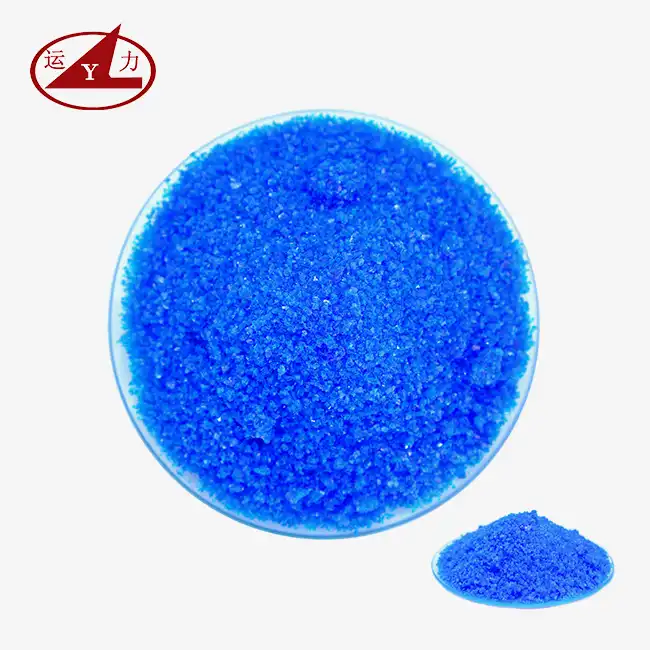
Cupric Nitrate trihydrate is one of the most useful copper compounds in modern industrial chemistry. It is used to make catalysts, electroplate metals, and make nutrients that dissolve in water. But when this dark blue crystalline oxidizer comes into contact with copper surfaces during production or storage, it starts oxidation processes that leave behind stubborn deposits that weaken the material. It's always hard for purchasing managers and technical experts in the electroplating, electronics manufacturing, and chemical synthesis industries to get rid of these deposits. This guide talks about useful reversal methods and buying strategies that strike a balance between quality control and operating efficiency. Knowing how Cupric Nitrate trihydrate (Cu(NO₃)₂·3H₂O, CAS 10031-43-3) reacts chemically gives people who work in the supply chain the power to take precautions and choose sellers who offer products with the best purity levels and handling properties.
Understanding Cupric Nitrate and Its Interaction with Copper
Chemical Properties and Structure
The crystals of Cupric Nitrate trihydrate are highly colored and have a molecular weight of 241.6 g/mol and a specific density of 2.05. The chemical has strong hygroscopic properties, which means it easily absorbs water from the air to form concentrated solutions. At 114.5°C, it melts into its own water of crystallization. At temperatures above 170°C, it breaks down and harmful nitrogen oxide gases and copper oxide leftovers are released. It is very different from copper sulfate and copper chloride alternatives because it dissolves easily in water and ethanol. This makes it possible for even distribution in acidic water settings. The nitrate anions are strong oxidizing agents, which is good for making catalysts but bad when they come into touch with copper metal without being managed.
Oxidation Mechanisms on Copper Surfaces
When Cupric Nitrate solutions come in touch with copper metal, electrochemical processes speed up the oxidation of the surface. The nitrate ions help move electrons around, which changes solid copper into cupric ions and creates secondary copper oxides and hydroxides. When it's wet, this process gets stronger because deliquescence makes localized electrolytic cells. The layers that form have blue-green colors that are typical of mixed copper oxide phases. Over time, they get worse at conducting electricity and leaving a smooth surface. When these oxidation products build up, they lower the performance of industries that use copper in circuit boards, heat exchanges, or artistic finishes. Understanding how these interactions work helps procurement experts choose materials with controlled moisture levels and the right packing to keep them from breaking down too quickly during transport and storage.
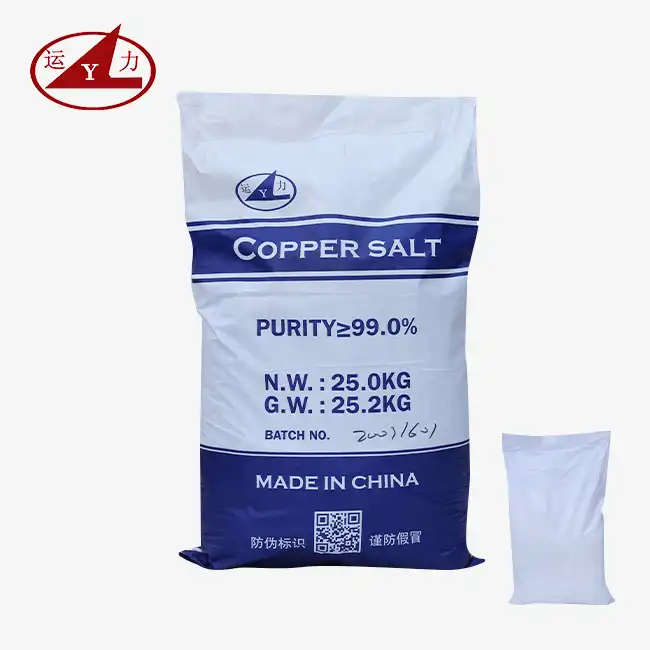
Causes and Challenges of Cupric Nitrate Deposits on Copper
Environmental and Process Factors
When copper surfaces are exposed to air humidity levels higher than 60% relative humidity, deposits form faster. This is especially true in places where nitrate-based products are handled. Localized concentration gradients are caused by process chemicals that are left over from electroplating baths or catalyst synthesis operations. When ventilation systems aren't working right, nitrogen oxide builds up. This, along with the moisture in the air, creates nitric acid fumes that help break down copper even more. Changes in temperature make these problems worse by making metal surfaces condense. In factories that work with highly pure electronics materials, there are strict limits on pollution. Even small amounts can stop the assembly process further down the line. Cupric Nitrate is hard to handle because it oxidizes quickly. Safety Data Sheets list it as a Class 5.1 oxidizing solid that needs to be kept away from organic materials and reducing agents while it is being stored.
Industrial Impact on Product Quality
Cupric Nitrate deposits cause corrosion patterns that show up as localized pits and surface roughness that make it hard for precise parts to meet their dimensions. When oxide layers are present on substrate surfaces, electroplating processes have less striking power and an uneven coating distribution. Manufacturers of catalysts notice that copper oxide formulas that are contaminated with leftover nitrate species have less active surface area. These differences in quality lead to expensive repair cycles and higher rejection rates during the processes for incoming inspection. In situations where something is exposed for a long time, intergranular rust weakens the structure. This is especially bad for copper alloys that hold weight. To solve these problems, we need to use a combination of preventative material choices and reactive cleaning routines that are made to fit the needs of each work setting.
Effective Methods to Reverse Cupric Nitrate on Copper
Chemical Neutralization Techniques
Chelating agents, such as EDTA or citric acid solutions (5–10% strength), are used in modern industry. These work by forming soluble complexes with copper ions, which remove oxide layers without harshly etching the substrate. Acetic acid that is diluted (3–5%) is a softer option for sensitive uses where exact tolerances in size are important. Immersion for 10 to 30 minutes at room temperature is a common part of treatment plans. This is followed by multiple stages of rinsing with deionized water to get rid of any leftover salts. The neutralization process changes copper oxides that don't dissolve into acetate or citrate complexes that wash off easily and leave behind shiny metal surfaces. Advanced mixtures have rust inhibitors, such as benzotriazole derivatives, that passivate newly cleaned copper and stop it from oxidizing again as soon as it comes into contact with air.
Mechanical and Hybrid Approaches
Ultrasonic cleaning with gentle soaps and micro-abrasive blasting are two abrasive methods that can be used to physically remove dirt from surfaces that are very dirty. Ultrasonic motion at 40 kHz frequencies makes it easier for chemicals to get into pitted areas and breaks up layers that are stuck on there. For high-value parts that need mirror finishes, combining chemical pre-treatment with controlled mechanical finishing works better. Laser ablation technologies are new choices for precise tasks because they use focused energy bursts to vaporize contaminants without damaging substrates with heat. Electronics companies have used real-life case studies to show that hybrid methods can cut cleaning cycle times by 40% while also improving surface quality measures measured by profilometry.
Quality Control Best Practices
Standardized cleaning and validation processes make sure that all output batches are the same. Ion chromatography finds nitrate contamination below 10 ppm levels, and surface resistivity readings show that all the oxide has been removed. Visual inspection in normal lighting circumstances shows that there is still discoloration, which means that the treatment wasn't completed. When expert staff and procurement teams work together, they set clear acceptance criteria that are linked to the needs of the downstream process. These criteria are then written down in seller quality agreements. Monitoring the amounts of contamination and cleaning solution concentrations on a regular basis keeps the process working well and lowers the cost of chemicals used. These organized methods are in line with the quality management principles of ISO 9001. They provide proof of process control that can be used for regulatory compliance paperwork.
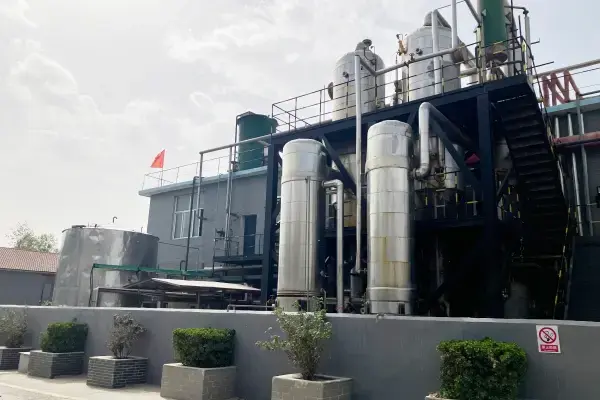
Comparison of Cupric Nitrate with Other Copper Compounds for Industrial Use
To choose the right copper salts, you need to look at their solubility profiles, temperature stability ranges, and ability to work with certain reaction conditions. Cupric sulfate pentahydrate has a lower oxidation potential, which makes it good for farming uses. However, it adds sulfate ions that are problematic in chloride-sensitive electroplating mixtures. While copper chloride's strong etching behavior is good for making PCBs, it can damage stainless steel process equipment through rusting. Cupric Nitrate works great in situations where it needs to dissolve quickly and have a strong oxidizing property. This is especially true in catalyst precursor synthesis, where controlled breakdown creates copper oxide phases with a lot of surface area. Since high-purity types don't have any bromide or sulfate contaminants, they are perfect for making pharmaceutical intermediates and electronic materials. When procurement workers look at the total cost of ownership, they have to take safety into account. For example, Cupric Nitrate needs strong control systems because it is sensitive to wetness and an oxidizer. When you look at different source approvals side by side, you can see that materials that meet the ACS reagent grade standards (≥98% purity, ≤0.01% insolubles) cost more, but the higher price is worth it because the quality is more stable.
Procurement Considerations for Cupric Nitrate
Supplier Evaluation and Certification Requirements
To find trustworthy makers, you need to check a lot of quality paperwork, like Certificates of Analysis (CoAs) that list assay values, trace metal content (iron, nickel, lead), and insoluble matter amounts. The MSDS paperwork needs to include instructions on how to properly handle things that are burning, what to do in an emergency, and how to properly dispose of the waste in the environment. Suppliers with ISO 9001 and ISO 14001 licenses show that they can handle quality and the environment in a systematic way, which is important for building stable, long-term relationships with suppliers. Technical data sheets should clearly show the ranges of particle sizes, pH levels of water-based solutions, and heat stability factors that are important for certain uses. Asking established customers in your industry for reference lists can give you useful information about how reliable delivery is and how quickly technical help responds.
Bulk Purchasing and Logistics Strategies
Negotiating bulk deals for purchases that will be made again and again takes advantage of economies of scale and protects against changes in the commodity market by ensuring stable prices. When there aren't enough supplies, tonnage agreements usually open up tiered discounting systems and priority allocation. Customized packing choices, such as moisture-barrier liners, inert gas blanketing, and scaled container sizes, make it easier for shipping operations to move materials quickly. Understanding the UN 1477 shipping grades for oxidizing solids helps you choose a carrier and figure out how much freight will cost. Specialty purity grades (4N, 99.99%) have longer lead times than normal industrial grades (4-6 weeks), so planning ahead is needed to make sure that production plans are met. Setting up consignment inventory agreements with qualified sellers reduces the amount of operating capital that is needed while still keeping enough stock to cover changes in demand. Payment terms with staged goals that are tied to quality acceptance testing protect purchase budgets from material risks that don't meet requirements. Cupric Nitrate needs strong control systems because it is sensitive to wetness and an oxidizer.
Conclusion
To effectively handle Cupric Nitrate deposits on copper surfaces, you need to know about chemical properties, reversal methods, and smart purchasing practices. Using chelating agents for chemical reduction along with mechanical finishing gives solid results in a wide range of industrial settings. When you compare Cupric Nitrate to other copper compounds, you can see how well it works in acidic settings while still being aware of how to handle it safely. Excellence in procurement comes from carefully evaluating suppliers based on their qualifications, expert support, and the ability to adapt to changing logistics. Businesses that use these all-encompassing methods get better product quality, lower business risks, and better supply chain performance.
FAQ
What safety precautions are necessary when reversing cupric nitrate deposits?
Acidic cleaning solutions and leftover Cupric Nitrate particles can't hurt you if you wear chemical-resistant gloves, safety masks, and make sure there is enough air flow. NFPA rules say that burning materials and organic fluids must be kept separate in the workplace. To get rid of used cleaning solutions, you have to neutralize their pH and follow the rules for dumping trash in your area.
Can copper nitrate trihydrate be used interchangeably with copper sulfate in fertilizer applications?
Both Copper Micronutrients and Cupric Nitrate are available, but Cupric Nitrate is more expensive because it is more soluble and has more nitrate. Because it oxidizes, it needs to be mixed carefully so that it doesn't combine with organic fertilizer components. When it comes to agricultural uses, copper sulfate is typically preferred over Cupric Nitrate, unless fast dissolving or spray application is required.
What supplier certifications ensure consistent product quality?
Systematic quality management is confirmed by ISO 9001 certification, and material uniformity is ensured by CoA paperwork that includes batch-specific analytical data (purity ≥98%, iron content ≤30 ppm). Suppliers with local or national technology center designations have to show that they can do research and development to meet unique recipe needs and help with technical problems.
Partner with Yunli Chemical for High-Purity Cupric Nitrate Solutions
Yunli Chemical offers Cupric Nitrate Trihydrate that is used in industry. They have been making nitrates well for more than twenty years. Our production facilities in Shanxi Province are ISO 9001, ISO 14001, and OHSAS-certified. They make sure that each batch is the same, with purity levels that can be changed up to 99.99% and iron content that is kept below 30 ppm. Direct factory supply gets rid of markups on goods sold by middlemen, keeping prices stable for large buyers. Technical experts give you personalized advice on how to avoid deposits and reverse them that are specific to your application. You can email our team at wangjuan202301@outlook.com to get free samples up to 500 grams and full technical data packages. As a reputable company that makes Cupric Nitrate for the electroplating, catalyst, and specialty chemical industries around the world, we offer low prices, on-time deliveries, and expert advice.

References
1. Smith, J.R., & Thompson, M.L. (2021). Copper Salt Chemistry in Industrial Applications: Synthesis, Properties, and Surface Interactions. Academic Press.
2. Chen, W., & Patel, K. (2020). "Oxidation Mechanisms of Metallic Copper in Nitrate Environments," Journal of Applied Electrochemistry, 50(7), 892-905.
3. International Copper Association. (2019). Guidelines for Handling and Storage of Copper Compounds in Manufacturing Environments. ICA Technical Publication.
4. Martinez, R.D. (2022). "Comparative Analysis of Copper Salts in Catalyst Manufacturing," Industrial Chemistry Research, 61(14), 5120-5134.
5. National Institute for Occupational Safety and Health. (2020). Safety and Health Guidelines for Oxidizing Chemical Substances. NIOSH Publication Series.
6. Zhang, L., & Kobayashi, T. (2021). "Surface Treatment Methods for Copper Alloys: Chemical and Mechanical Approaches," Materials Processing Technology, 288, 116-129.