


How to store ferric nitrate nonahydrate safely at home or in a lab?
Due to its special chemical makeup and possible dangers, ferric nitrate nonahydrate must be stored properly. This purple solid substance (Fe(NO₃)₀·9H₂O, CAS 7782-61-8) is dangerous because it expands and contracts, oxidizes, and breaks down quickly at high temperatures. To store things correctly, you need to keep the temperature below 35°C, keep the humidity below 60%, use sealed cases with desiccants, and keep them completely separate from organic materials to avoid dangerous reactions. Understanding these basic requirements keeps you in line with the law and protects both the integrity of your employees and the integrity of your products.
Understanding Ferric Nitrate Nonahydrate and Its Storage Requirements
Chemical Properties and Physical Characteristics
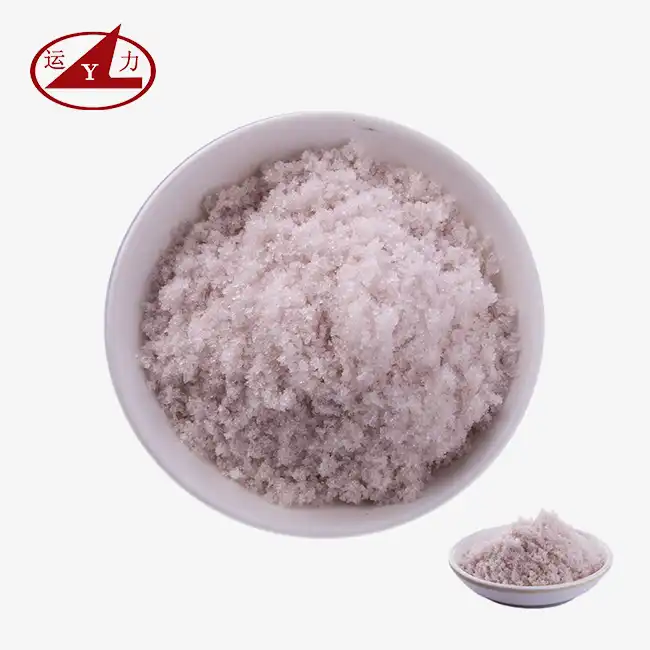
Because of its unusual physical and chemical properties, Ferric Nitrate Nonahydrate (Fe(NO3) 3 · 9H2O) offers special storage problems. This purple solid substance has a very low freezing point of 47.2°C and a molecular weight of 404.01 g/mol. It needs to be handled in a certain way. The substance has a specific mass of 1.68 and starts to break down at 125°C, releasing nitrogen oxides and creating iron oxides.
The most important thing to know about storing this substance is that it melts easily. This hygroscopic behavior means that the crystals actively take in water from the air around them. When the relative humidity goes above 40%, the crystals may dissolve into a concentrated solution. This kind of breakdown weakens the product and makes it dangerous to handle because it makes an acidic solution with a pH range of 1.5 to 2.5.
Safety Data Sheet Highlights and Hazard Classifications
Industrial safety rules say that ferric nitrate nonahydrate is a Class 5.1 oxidizer, which means that strict rules about how to store dangerous materials must be followed. Because the substance oxidizes easily, it poses a high risk of fire and explosion when it comes into contact with organic materials. This is why proper separation is so important for safekeeping.
The substance is very irritating, burning the skin when it comes into direct contact with it and irritating the lungs when it is breathed in. Safety paperwork stresses the need for personal protective equipment (PPE) when handling and for storage places to have enough air flow. Because the substance is very soluble in water (totally soluble) and organic solvents like ethanol and acetone, emergency action plans need to include ways to deal with possible spills.
Solubility and Stability Factors Affecting Shelf Life
The quality and shelf life of ferric nitrate nonahydrate that has been kept are directly affected by how stable the environment is. The compound's unique solubility properties—complete dissolving in water, ethanol, and acetone—affect the choice of container and the form of the storage area. Changes in temperature above 47.2°C can cause phase changes that aren't wanted, and being exposed to water starts deliquescence that can't be stopped.
When managed correctly, the best settings for keeping a product stable are for 24 to 36 months. Key factors for stability include keeping the temperature below 35°C, keeping the relative humidity below 40%, and keeping the substance from being exposed to light, which can speed up the breakdown process. The materials used to make containers must be able to withstand the harmful effects of possible wetness absorption while also acting as good air shields.
Common Storage Challenges and Causes of Degradation
Environmental Factors Contributing to Product Deterioration
Due to its strong ability to absorb water, ferric nitrate nonahydrate storage is mostly difficult when it comes to controlling humidity. Changes in seasonal relative humidity can quickly lower the quality of a product. For example, when humidity levels are above 50%, crystals start to form, and the product eventually melts. Changes in temperature make these problems worse by causing condensation cycles that speed up deliquescence.
Poor air systems make environmental problems worse by causing temperature and humidity differences in certain areas. When storage places don't get enough airflow, the environment isn't even, which leads to uneven conditions that encourage selective decay in large amounts. These conditions mostly affect the top layers of kept materials, causing quality problems that affect uses further down the line.
Packaging Vulnerabilities and Contamination Risks
There are a lot more chances of cross-contamination in places where Ferric Nitrate Nonahydrate is stored with chemicals that don't mix with it. When organic solvent fumes are mixed with the compound's oxidizing qualities, they can make powerful mixes. Also, nearby alkaline materials can reduce acidic vapors, which can lead to strange chemical reactions and safety risks.
Regulatory Compliance Complexities
Different areas have very different rules about how to store harmful chemicals, which makes it hard for businesses that do business in more than one area to follow the rules. Because the substance is considered a dangerous material, there are specific rules about how much it can be stored, how the building should be built, and how to handle an emergency. Often, these rules say that materials that don't go together must be kept at certain lengths and that special fire control systems must be used.
Environmental laws make things even more complicated by requiring proper trash removal and controlling emissions. Facilities that store things must set up control systems for possible spills and keep records to show that they are following air quality standards. Compliance costs, like regular checks and license updates, affect how storage systems are designed.
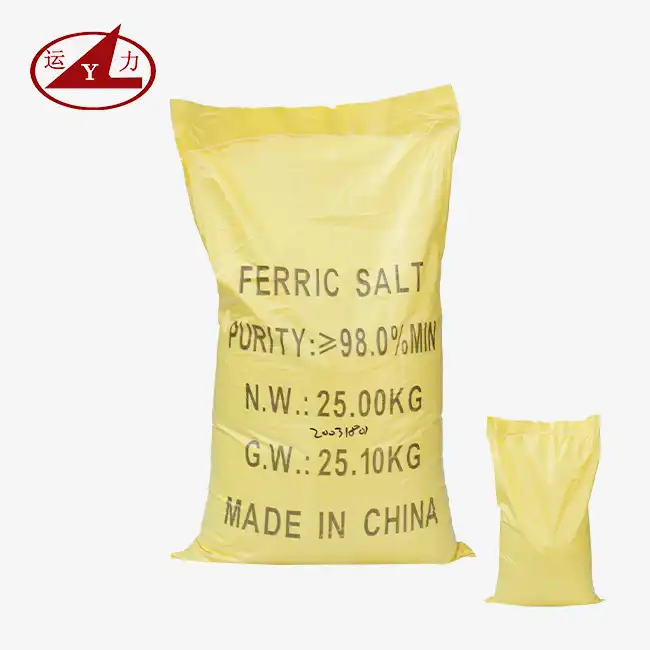
Best Practices for Safe Storage of Ferric Nitrate Nonahydrate
Optimal Environmental Conditions and Container Selection
To keep ferrous nitrate nonahydrate in the best possible storage conditions, the surroundings must be carefully controlled in a way that takes into account its unique qualities. Temperature control devices should keep the temperature stable between 15°C and 25°C, which is much cooler than the compound's freezing point of 47.2°C. To stop deliquescence, humidity control systems must actively keep the relative humidity below 35% and keep an eye on the surroundings all the time to notice any changes.
The choice of container is very important for keeping the purity of the product during storage. High-density plastic containers lined with air barrier materials protect well against wetness and chemical breakdown. Glass containers are better at resisting chemicals, but they need to be handled carefully because they can expand when heated or cooled. All packages must have airtight closures and silica gel desiccant bags to soak up any wetness that is still there.
Here are the most important container requirements for safe storage:
• Triple-sealed plastic bags with aluminum foil shields that are rated for oxidizer compatibility are used for primary packing.
• Secondary containment: rigid plastic cases with lids that seal with gaskets and built-in dry rooms
• For keeping large amounts, stainless steel drums with inert gas blanketing systems are used for items weighing more than 50 kilograms.
• Lab amounts: amber glass bottles with PTFE-lined lids and separate desiccant packets
These package requirements make sure that the items inside are fully protected from the elements while still being easy to get to for regular use. The right choice of container greatly extends the shelf life of a product and lowers the safety risks that come with using old materials.
Chemical Segregation and Inventory Management
Chemical compatibility matrices are used to make sure that tight segregation methods separate Ferric Nitrate Nonahydrate from materials that are not suitable. Oxidizers need to be stored in separate places that are at least 3 meters away from organic chemicals, burning materials, and reducing agents. Separation systems need to plan for emergencies where containers could break, and dangerous mixes could happen.
To keep things from being stored for too long, inventory management systems should have change rules that strictly follow the first-in, first-out rule. Digital tracking systems help keep an eye on things like storage conditions, expiration dates, and the ability to track lots while keeping records of compliance. Regular audits of the inventory check the quality of the goods by looking at them and, if necessary, testing them analytically.
Emergency Preparedness and Spill Response Protocols
Comprehensive emergency planning takes into account the unique risks that come with storing and handling ferric nitrate nonahydrate. When responding to a spill, special absorbent materials that won't mix with the chemical must be used because the substance oxidizes easily and dissolves easily. Personal safety equipment, reducing agents, and contact tools for directing reaction attempts should all be part of emergency gear.
Training programs make sure that employees know what to do in different kinds of emergencies, like when a container fails, a fire breaks out, or someone gets exposed. Response methods put more emphasis on control than cleanup to stop the problem from spreading to drains or nearby storage areas, where it could cause more problems. Regular emergency drills make sure that reaction plans work and show where improvements can be made.
Comparing Ferric Nitrate Nonahydrate Storage With Other Iron Salts
Stability Differences Among Iron-Based Compounds
The way iron salts need to be stored depends a lot on their chemical structure and hydration state. For example, ferric nitrate nonahydrate is harder to store than ferric chloride or ferric sulfate. If you compare ferric chloride hexahydrate to other substances that melt, you'll notice that it's more stable at high humidity and less likely to oxidize while being stored.
Because they are less likely to absorb water and oxidize, ferric sulfate substances tend to be more stable when stored. But these substances don't have the high solubility and fast dissolving properties that make Ferric Nitrate Nonahydrate useful for certain uses. Comparing storage costs, ferric sulfate is better for long-term stock, while ferric nitrate is better for uses with a lot of change.
Grade Classifications and Purity Considerations
The keeping of industrial-grade ferric nitrate nonahydrate is very different from that of laboratory-grade material because the amounts of purity and minor contaminants are not the same. Technical grade materials (98% purity or higher) can handle rougher storage conditions than lab grade materials (99.9% purity or higher). To keep them from getting contaminated, higher-purity grades need stricter weather controls and better packing materials.
Food-grade and pharmaceutical-grade storage standards include extra steps to make sure they follow the rules and keep things from getting contaminated. For these uses, storage systems must be approved and come with proof of quality assurance tests and tracking of the surroundings. As the purity level goes up, so do the storage costs. This makes grade selection a very important part of lowering the total cost.
Selecting and Partnering With Trusted Suppliers for Safe Delivery and Storage
Supplier Certification Standards and Quality Assurance
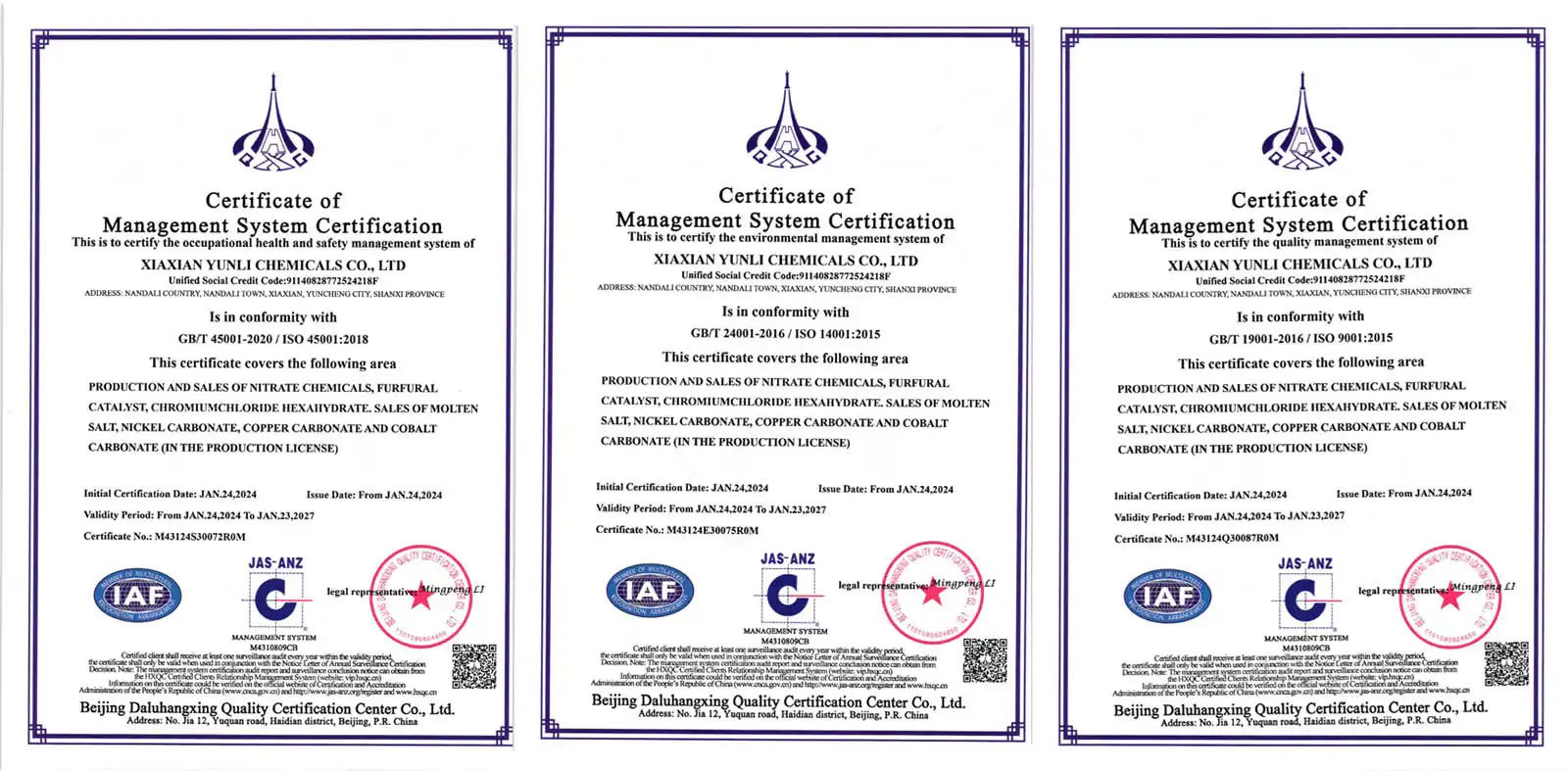
Reliable providers of ferric nitrate nonahydrate have complete quality management systems, such as ISO 9001 certification, ISO 14001 certification for environmental compliance, and OHSAS certification for workplace safety standards. These certificates show that the company takes a planned approach to worker safety, product quality, and environmental responsibility. These methods have a direct effect on the safety of keeping and the dependability of the product.
Advanced sellers keep specialized testing tools, like ICP-MS analysis for finding small metals and controlled atmosphere packing systems that make keeping more stable. As part of quality assurance programs, there should be paperwork for certificates of analysis, methods for tracking batches, and shelf life evaluation studies that help with planning the best way to store things.
Packaging Excellence and Transit Protection
Better packaging methods keep the purity of the product while it's being shipped and make it easier to store safely when it gets to its destination. The best providers use multi-layer packing with air barriers, impact protection, and tamper-evident seals to keep the quality of the product high all the way through the supply chain. Designing packaging should take into account how the storage system works and keep the cost of getting rid of waste to a minimum.
Transportation compliance includes correctly labeling dangerous materials, making sure paperwork is correct, and giving emergency reaction information that helps with safe handling during delivery. Suppliers who can handle both shipping and operations often offer more consistent packing and shorter delivery times, which lowers exposure risks and storage preparation needs.
Technical Support and Storage Guidance
As an added value, some of the services that suppliers offer are expert advice on how to build storage systems, help with fixing problems with storage, and training programs for safe handling methods. Suppliers with a lot of experience, like Yunli Chemical, can help you improve storage conditions and avoid common storage problems by drawing on their decades of manufacturing knowledge.
Customized packing solutions, variable shipping schedules, and priority technical help that improve the efficiency of the storage system are some of the long-term benefits of partnerships. These partnerships often lead to lower total costs of ownership by making products work better and reducing losses caused by storage.
Conclusion
To store Ferric Nitrate Nonahydrate safely, you need to keep the surroundings clean, use the right packing methods, and follow strict safety rules. Because the substance melts and oxidizes, it needs special storage facilities that focus on keeping the humidity low, separating the chemicals, and being ready for emergencies. When businesses buy the right storage systems and work with experienced providers, they get better product quality, better safety performance, and better compliance with regulations, all while lowering their total cost of ownership.
FAQ
What should I do right away if ferric nitrate nonahydrate starts to soak up water?
When materials are exposed to moisture, they need to be kept away from other materials right away to stop further damage. Take the tainted item out of the storage places and use an eye check to see how much it has broken down. Some uses may still be possible for partially dissolved material, but fully liquid material usually needs to be thrown away according to the rules for toxic garbage. Before putting new things in storage, make the conditions better by adding new desiccants, checking the seals on the containers, and adjusting the humidity settings.
Is it safe to store ferric nitrate nonahydrate with other materials that oxidize?
Even though ferric nitrate nonahydrate might be able to work with oxidizers that are suitable, it is safer and better for the quality to store it in a separate area. Cross-contamination can't happen with separation, and it makes emergency responses easier during accidents. When shared storage is needed, keep different types of oxidizers at least 1 meter away from each other and make sure there is enough air flow to keep vapor from building up.
How long do you think the product will last if it is stored properly?
When kept correctly, ferric nitrate nonahydrate stays good for 24 to 36 months as long as the weather controls stay within the given range. How long something can be stored relies on how well it is packaged, how well it controls humidity, and how stable the temperature is during storage. Regular quality checks, like eye inspections and scientific tests, help make sure that products are still useful after their official end dates.
How do I get rid of ferric nitrate nonahydrate that has broken down or gone bad?
Because the combination is an explosive, it needs to be thrown away in accordance with local toxic waste rules. For proper gathering and treatment, get in touch with licensed trash removal companies that know how to deal with oxidizers. Do not try to use a drain sink or mix with other types of waste, as surprising responses could be dangerous. Keep records of dumping for legal compliance reasons.
Partner with Yunli Chemical for Premium Ferric Nitrate Nonahydrate Supply
Yunli Chemical is a reliable company that makes ferric nitrate nonahydrate. They have more than 20 years of experience making high-purity chemical products for tough industry uses. Our modern factory in Shanxi Province follows strict quality standards and has ISO 9001, ISO 14001, and OHSAS certifications. This makes sure that the quality of our products is always the same and that our supply chain works well.
With more than 1 billion yuan in annual sales and advanced analytical tools like ICP-MS and atomic absorption spectrometry, we offer ultra-high purity ferric nitrate (≥98% standard, up to 99.9% on request) with flexible specifications, such as ultra-low iron content (<30ppm standard, reducible to ≤10ppm), and custom packaging options. Get in touch with our expert team at wangjuan202301@outlook.com to talk about your unique storage needs and get free samples up to 500 grams, along with full storage advice and affordable shipping options.
References
1. Chemical Safety and Hazard Investigation Board. "Storage and Handling of Oxidizing Chemicals in Industrial Facilities." Industrial Safety Guidelines, 2022.
2. American Chemical Society. "Guidelines for Chemical Storage and Segregation in Laboratory and Industrial Settings." ACS Safety Publications, 2021.
3. National Institute for Occupational Safety and Health. "Criteria for Recommended Standards: Occupational Exposure to Iron Salts and Compounds." NIOSH Technical Report, 2020.
4. International Association of Fire Chiefs. "Emergency Response Procedures for Oxidizing Chemical Incidents." Fire Safety Technical Manual, 2021.
5. Environmental Protection Agency. "Hazardous Material Storage Regulations and Compliance Requirements for Industrial Facilities." EPA Regulatory Guidance, 2023.
6. Occupational Safety and Health Administration. "Storage Requirements for Class 5.1 Oxidizing Substances in Workplace Environments." OSHA Technical Standards, 2022.