


How to tell calcium nitrate from zinc nitrate
Distinguishing calcium nitrate from zinc nitrate requires understanding their unique chemical compositions and physical properties. Zinc Nitrate (Zn(NO₃)₂·6H2O, CAS 10196-18-6) is a colorless tetragonal crystal with a molecular weight of 297.47, highly hygroscopic, and melts at 36.4℃. Calcium nitrate (Ca(NO₃)₂·4H2O) appears as white granules or prisms with a molecular weight of 236.15. Simple field tests include observing crystal structure, testing water solubility characteristics, and reviewing MSDS documentation. Both compounds are nitrates but serve distinct industrial purposes—calcium nitrate dominates agriculture and concrete acceleration, while zinc nitrate excels in catalysis, electroplating, and pharmaceutical synthesis.
Understanding Calcium Nitrate and Zinc Nitrate: Chemical and Physical Properties
It is important for procurement workers who handle large chemical packages to understand the chemical structures and behaviours of these two nitrates. This will help them avoid making mistakes that cost a lot of money and keep workers safe.
Molecular Structure and Weight Differences
The more common form of Zinc Nitrate is Zn(NO₃)₂·6H₂O, which has a molecular weight of 297.15, while the less common form is Calcium Nitrate (Ca(NO₃)₂·4H₂O), which has a molecular weight of 236.15. Because it contains more water molecules, Zinc Nitrate has a higher specific density than Calcium Nitrate, which is 1.82. This difference in weight changes how much freight is estimated and how much storage room is planned. This is especially important for electroplating or surface treatment facilities that deal with large orders.
Visual and Physical Identification Cues
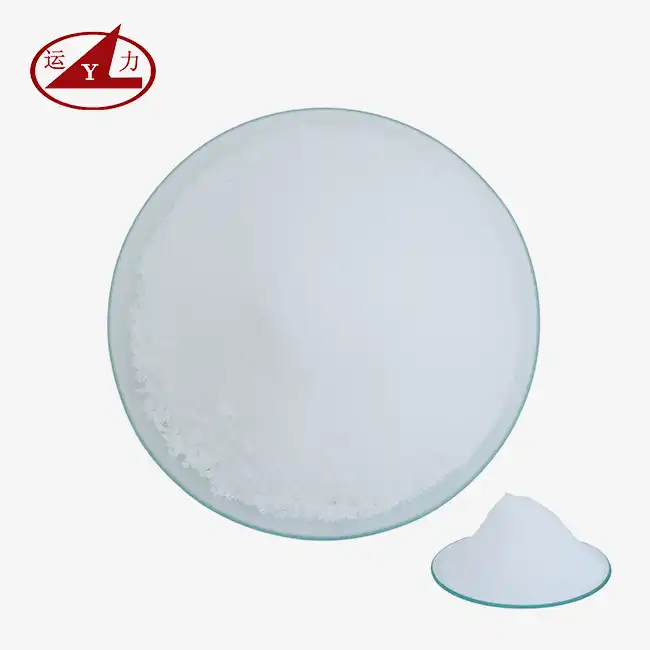
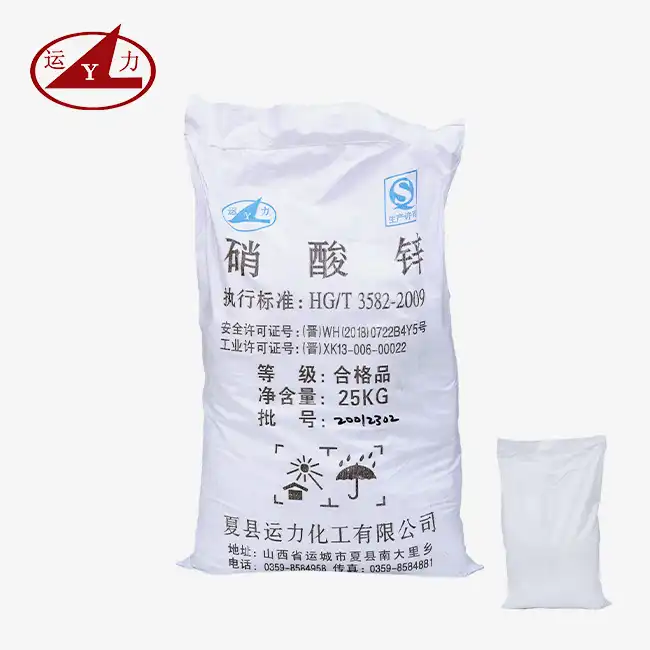
It looks like a pure crystal or prism and is white to off-white. When kept the right way, it stays mostly the same. Zinc Nitrate is a strong hygroscopic substance that can easily take in water from the air and turn into a liquid at temperatures above 36.4°C. It looks like colourless tetragonal crystals. Buyers of Zinc Nitrate in the warmer months should be aware of this change in the material and check the safety of the packaging as soon as they get it. Zinc Nitrate and Calcium Nitrate both dissolve completely in water and alcohol. However, solutions of Zinc Nitrate are clearly acidic (pH 3.5–4.5), while solutions of Calcium Nitrate are neutral to slightly acidic.
Safety Protocols and MSDS Essentials
Both chemicals are oxidisers, which means they make fires stronger when they come in touch with things that can catch fire. Zinc Nitrate is a Class 5.1 oxidiser, which means it should be kept away from organic chemicals, reducing agents, and flammable materials. It is not as dangerous as Calcium Nitrate, but it still needs to be treated with care. When technical experts buy something, the company should give them a full MSDS sheet that tells them about fire risks, first aid, and how to properly throw away trash. Handling Calcium Nitrate is mostly about keeping dust out of your lungs and off your skin. Handling Zinc Nitrate, on the other hand, needs safety gear like acid-resistant gloves and goggles because it comes in acidic solutions.
Key Differences Between Calcium Nitrate and Zinc Nitrate for Procurement Decisions
Buying teams can find sellers who can meet their needs if they know how these chemicals are used and where they fit in the market.
Industrial Applications and Market Positioning
Calcium Nitrate is the most common fertiliser used in farming because it gives plants calcium and nitrate nitrogen, which is easy to use. It is also used to speed up the setting time of concrete for building in cold weather. Every year, the world needs more than a few million metric tonnes of it, and because it is a commodity, prices are low. Zinc Nitrate does certain things. It can be used to make zinc oxide nanoparticles, as a mordant in dying clothes, as a catalyst in pharmaceutical products, or to treat steel car parts with phosphate. They can handle smaller orders because they are more specialist, but they charge more per tonne, normally 30–50% more than Calcium Nitrate depending on the purity grade.
Purity Standards and Quality Benchmarks
Most Calcium Nitrate used in industry is ≥99% pure and has controlled heavy metal levels (Pb ≤10 ppm, Cd ≤5 ppm), which means it can be used in fertiliser. Zinc Nitrate needs are a lot more different. Battery makers need it to be at least 99% pure and have a moisture level of less than 0.5%. Pharmaceutical fillers, on the other hand, need USP-grade material with arsenic levels less than 3 ppm. Yunli Chemical makes ≥98% pure Zinc Nitrate hexahydrate that is used in everyday industry. To order, we can also make grades that are ≥99% ultra-pure and have iron levels below 30 ppm and lead levels below 50 ppm. This flexibility is useful in many fields, from painting metal to making catalysts.
Supplier Certification Essentials
Companies that buy from other companies should give more weight to suppliers who have ISO 9001, ISO 14001, or OHSAS 18001 certifications for quality management, environmental management, or occupational safety. These badges show that the way things are made is uniform and that batches are always made the same way. When suppliers offer factory direct sales, they cut out the middleman and make it easy to keep track of goods.
This is very helpful when regulatory checks need all the paperwork from the supply chain. It is also known as a Shanxi Provincial Enterprise Technology Center, and Yunli Chemical has all three certifications. On top of that, they have high-tech analysis tools like ICP-MS and atomic absorption spectrometers to back them up. A Certificate of Analysis (COA) is sent with every batch to show how pure it is, how much heavy metal it contains, and what its pH value is.
Methods to Accurately Identify Calcium Nitrate vs Zinc Nitrate in Bulk Materials
Mistakes in identification made during receiving inspections can lead to production delays, quality issues, or safety incidents. Setting up organised ways to check things protects the consistency of operations.
Laboratory Analytical Techniques
The metal cation makeup can be seen clearly with ICP-OES (Inductively Coupled Plasma Optical Emission Spectroscopy), which makes it easy to tell the difference between calcium and zinc. This method works for places that do tests in-house or with outside labs. AS is just as accurate as AAS, but it is easier to set up and costs less. Simple qualitative tests with reagents can be used by procurement teams for quick tests in the field.
For example, adding diluted sodium hydroxide to already dissolved samples produces white calcium hydroxide from Calcium Nitrate, while Zinc Nitrate produces white zinc hydroxide that dissolves again in extra hydroxide to produce a clear zincate solution. You could also look at the light to be sure. A brick-red flame is caused by calcium ions, while a bluish-green flame is caused by zinc chemicals.
Practical Inspection Protocols
An eye check should always be done before a chemistry test. Make sure the signs have the correct CAS numbers, chemical formulas, and pictures of danger. For Zinc Nitrate, the CAS number is 10196-18-6 for hexahydrate and 10124-37-5 for tetrahydrate. Zinc Nitrate may partially liquefy if exposed to moisture, whereas Calcium Nitrate remains solid and grainy. Zinc Nitrate that has a freezing point of 36.4°C can be shown by temperature-sensitive signs if it did happen while it was being moved. When working with new vendors, it is a good idea to compare COAs from different suppliers with tests that were done on random samples from each batch by a third party.
Real-World Case Studies
A company that makes pharmaceutical intermediates got Calcium Nitrate instead of Zinc Nitrate when production had to be stopped for three days because of problems with catalyst manufacturing. In the long run, the company lost more than $50,000 because of damage to its reputation with customers. Another electroplating company got Zinc Nitrate that had too much iron in it (Fe >100 ppm). This made the finished coats look different and caused an entire order of car parts to be turned down. Both incidents show how important it is to do thorough checks on incoming goods and only work with suppliers who have strong quality control systems inside their own companies.
Procurement Best Practices: How to Buy and Store Calcium Nitrate and Zinc Nitrate Safely
Managing transportation, paperwork, and storage is all part of organisational excellence when buying chemicals. It is not just about negotiating prices.
Bulk Ordering and Packaging Considerations
For people who buy a lot of Calcium Nitrate, it is usually sent in 25 kg multi-wall paper bags with plastic lids, IBC totes, or bulk tanker trucks. Because it draws water, Zinc Nitrate requires more stringent packing. Double-sealed plastic bags inside moisture-barrier layers are standard packaging, and nitrogen flushing is recommended for shipping over long distances. It is important for contracts to be clear about the type of packing that is needed.
This should include English labels with UN numbers, danger symbols, and directions on how to handle the goods. Transportation has to follow DOT rules about oxidising substances, and drivers have to be taught how to deal with dangerous things. Yunli Chemical gives customers a range of packing options by altering the size of the bags, the plan of the pallets, and the style of the labels to meet the needs of their stores and the laws in various countries.
Optimal Storage Conditions
Never store Calcium Nitrate near ammonium compounds or organic substances because they don't work with it. Instead, keep it somewhere cool and dry. Calcium Nitrate doesn't soak up water as quickly as Zinc Nitrate, but it can still do so over time, which could cause it to clump together. Zinc Nitrate needs tighter rules about where it can be used. It needs to be kept below 30°C and with less than 60% relative humidity.
Use shelves that can handle acid and make sure there is enough air flow to get rid of any nitric acid that comes from things breaking down. If Zinc Nitrate is kept correctly, it can last for 12 to 24 months. This means that first-in, first-out (FIFO) inventories should be used. Keep oxidisers and flammables at least 6 meters away from each other, either by putting up physical barriers or storing them in different areas.
Documentation and Compliance Essentials
There should be source certifications, MSDS sheets, and COAs with lot numbers and test results in every package. These show that the company is following the rules. Don't throw away these papers; they can be used as proof in audits, especially in fields controlled by the FDA, like making drugs, or by the EPA. Make sure that the paperwork for customs is in line with the rules for chemical inventory in the country if you buy from outside the country. Yunli Chemical sells full English-language paperwork packages that make it easier for buyers from North America to get goods through customs and make sure they are following the rules.
Advantages of Choosing the Right Supplier for Zinc Nitrate and Calcium Nitrate
Strategic connections with suppliers are about more than just price; they also affect how safe operations will be in the long run and where the company stands in the market.
Product Purity and Consistency Assurance
Changes from one batch to the next mess up industrial processes and mean that they need to be re-calibrated a lot of times, which can lead to quality issues. A supplier with a good name will spend money on process controls to make sure that all production runs meet your exact needs. A business technology center at the province level is run by Yunli Chemical. It is made sure that each batch meets the agreed-upon purity levels by systems that work in real time at this center.
We can make Zinc Nitrate and other unique chemicals that are 4N-grade, meaning they are 99.99% pure. Some flaws in these chemicals can cause big problems because they are used to make high-end battery cathodes and pharmaceutical intermediates. With this much technical know-how, you can tell the difference between sellers who care about quality and traders who just resell any stock that comes up.
Supply Chain Reliability and Flexibility
Chemicals are often bought over and over again over the course of several years. This makes it very important that the seller is financially stable and has the ability to make a lot of things. Builders that want to work together for a long time need to have been around for a while and have fixed assets worth more than $40 million, like Yunli Chemical's RMB 300 million infrastructure.
Having direct ties with companies cuts out the need for middlemen, who can slow things down and make it harder to talk to each other. We keep smart amounts of raw materials on hand so that we can quickly fill orders, even if there are issues in the supply chain. There are no minimum order amounts for smaller buyers. The payment terms and prices can be changed based on the amount bought by different types of customers, from small regional distributors to big global manufacturers.
Technical Support and Value-Added Services
It's not enough for a service to just sell you things; they should also be your business partner. You can speed up process improvement and fixing by having application engineers on hand who know how to make catalysts or understand the chemistry of electroplating baths. For free, Yunli Chemical will help customers choose the right purity grades for their needs and give them tips on how to handle the chemicals in a way that works best for their facilities. We give away free samples of up to 500 grams, so you can try it out in the real world before you buy a lot of it. Customisation services let you change pH ranges, make solution concentrations, and make your own formulations, which is not possible with generic distributors.
Conclusion
Being able to correctly tell the difference between Calcium Nitrate and Zinc Nitrate is important for many fields, from farming to high-tech manufacturing. It ensures the safety of activities and the quality of the products made. All of these substances are very different in how they work physically, what they are used for, and how they should be treated. While Calcium Nitrate is used in commodity markets that buy a lot, Zinc Nitrate is used for science applications that require greater purity control.
Risks of misidentification can be cut down by using proof methods like looking at things visually, doing analytical tests, and reading through papers. Chemical buying can be a hassle but can also be useful if you work with approved suppliers who offer consistent quality, full paperwork, and technical knowledge. As global supply lines become less stable, the stability and responsiveness of your Zinc Nitrate seller become a way to stand out from the competition. Pick partners who are honest, skilled, and committed to doing their best.

FAQ
How can I quickly distinguish between calcium nitrate and zinc nitrate without laboratory equipment?
Check out the crystal's look and how it works. Zinc Nitrate is a white rock that can dissolve partially in damp places following water absorption. When things are normal, Calcium Nitrate forms white crystals that stay rigid. Check to see where it melts. Materials sent to hot locations run the risk of melting because Zinc Nitrate melts at 36.4°C. First, check the box labels to make sure they have the correct CAS numbers and chemical formulas.
What are the main safety hazards when handling zinc nitrate?
Zinc Nitrate is a Class 5.1 oxidiser (UN 1514), which means that when it comes in contact with things that can catch fire, it makes them worse. Because solutions are acidic (pH 3.5–4.5), you need safety gear that can handle acid. Things that can catch fire, chemical molecules, and this should not be near each other. Zinc Nitrate can start a fire on its own, so it should never come in touch with things that are easy to burn.
Can calcium nitrate substitute for zinc nitrate in industrial applications?
Not at all. These chemicals are used for different things. Zinc Nitrate is used for catalysis, electroplating, and making medicines, while Calcium Nitrate is used for farming or building because it contains calcium ions and nitrogen. Changes to chemicals would make the product work less well and could even be dangerous because they react in different ways.
What documentation should I expect from a reliable zinc nitrate supplier?
Every package should have MSDS sheets with information on the risks and how to handle the goods, COA sheets with information on the grade of pure and impurity, and lot numbers. It should also include copies of ISO certifications that show quality management systems. You can expect customs forms and certificates of compliance that follow the rules of the country where the package is going.
Partner with a Trusted Zinc Nitrate Supplier: Yunli Chemical
People who make speciality nitrates need to have technical know-how, be able to produce big amounts, and follow the rules in order to have reliable supply lines. Zinc Nitrate hexahydrate and Calcium Nitrate that are very pure have been made by Yunli Chemical for more than twenty years and sold to businesses and wholesalers all over North America. The quality is always the same because we are certified by ISO 9001, ISO 14001, and OHSAS 18001, and our provincial technology center lets us make any kind of changes, from standard industrial grades to ultra-pure 4N specifications. We don't use a middleman because we sell straight from the plant.
We have a wide range of flexible packaging, from 25 kg bags to bulk trucks. We also don't have a minimum order amount, so companies of all kinds can use us. Tests of up to 500 grams are free, and you can get full expert help to speed up the review process. Our advanced testing skills will make sure you get exactly what you need, whether it's Zinc Nitrate for batteries that need to control the amount of water they hold or material for catalysts that needs to have low heavy metals. Please email our buying team at wangjuan202301@outlook.com for fair quotes, detailed datasheets, and COA samples. You can also see all of our nitrate goods at yunlichemical.com. Getting Zinc Nitrate from the right company is the first thing you need to do to keep your supply chain stable.
References
1. Smith, J.R. & Anderson, K.L. (2021). Industrial Nitrate Compounds: Properties, Applications, and Safety Protocols. Chemical Engineering Press.
2. Martinez, P.D. (2020). "Comparative Analysis of Calcium and Zinc Nitrates in Industrial Catalysis." Journal of Applied Chemistry, Vol. 45, No. 3, pp. 287-304.
3. Thompson, R.W. (2022). Handbook of Chemical Procurement and Quality Control for Manufacturing Industries. Technical Publications Ltd.
4. Zhang, H. & Kumar, S. (2019). "Analytical Methods for Nitrate Identification in Bulk Chemical Shipments." International Journal of Chemical Analysis, Vol. 12, No. 2, pp. 145-162.
5. Environmental Protection Agency (2023). Storage and Handling Guidelines for Oxidizing Chemical Substances. EPA Industrial Safety Division.
6. Wilson, M.T., Chen, Y., & Roberts, D.K. (2020). Metal Nitrate Applications in Modern Surface Treatment Technologies. Manufacturing Sciences Institute.