





Nickel Nitrate Hexahydrate vs Zinc Nitrate in Catalysis Research
When evaluating metal nitrate precursors for catalyst development, industrial procurement managers often weigh Nickel Nitrate Hexahydrate against zinc nitrate based on reactivity, thermal decomposition profiles, and end-product purity. Nickel Nitrate Hexahydrate (CAS# 13478-00-7, Ni(NO₃)₂·6H₂O) provides superior solubility and clean decomposition to nickel oxide, making it the preferred choice for hydrogenation and reforming catalysts where residue-free calcination matters. Meanwhile, zinc nitrate excels in producing zinc oxide photocatalysts and low-temperature oxidation catalysts. Both compounds serve distinct yet complementary roles across petrochemical, battery, and environmental catalysis sectors, demanding careful selection aligned with process requirements and quality standards.
Chemical and Physical Properties Comparison
Molecular Structure and Hydration States
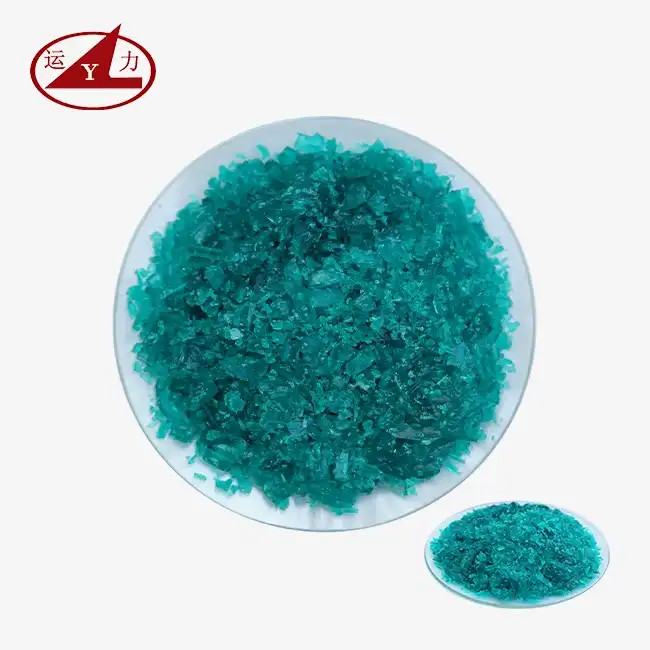
With a molecular weight of 290.81 g/mol, Nickel Nitrate Hexahydrate forms emerald-green monoclinic crystals. Its hexahydrate structure holds six water molecules together per nickel ion, which has a direct effect on how quickly it dissolves and how it behaves when heated. This is also true for zinc nitrate hexahydrate (Zn(NO₃)₂·6H₂O, CAS# 10196-18-6), which forms colourless crystals but has the same pattern of hydration. During catalyst preparation, the hydration state affects the regularity of impregnation. Nickel has a higher coordination affinity, which means it can penetrate deeper into porous alumina or silica supports than zinc forms.
Thermal Stability and Decomposition Pathways
Nickel Nitrate Hexahydrate has a freezing point of 56.7°C and dissolves in its own water of crystallisation, which is important for early wetness impregnation methods. When heated, it gradually loses water, changing to tetrahydrate at 100°C and then to dry nickel nitrate. Finally, between 260 and 300°C, it breaks down into nickel oxide. Zinc nitrate breaks down in a similar way, but at slightly lower temperatures (around 220-250°C), making zinc oxide with unique permeability properties. Both compounds don't leave behind sulphur or chlorine residues, which keeps the catalyst from becoming poisoned. This is different from nickel sulphate or chlorides, which do leave behind corrosive byproducts that damage reactor walls.
Solubility and Handling Characteristics
Nickel Nitrate Hexahydrate dissolves more than 238 grams per 100 millilitres of water at 20°C, and zinc nitrate dissolves about 184 grams per 100 millilitres. This makes it possible to make strong solutions for spray drying or co-precipitation processes. Nickel nitrate can be used in a wider range of hybrid solvent systems for speciality catalyst coatings because it dissolves moderately in ethanol and only slightly in acetone. Nickel is hygroscopic, so it needs to be stored in covered cases below 30°C and less than 60% relative humidity to keep it from caking. Zinc nitrate, on the other hand, can handle a little more moisture exposure before it dissolves.
Safety and Regulatory Compliance
Nitrate (UN 2725) and nitrate (UN 1514), which are both Class 5.1 oxidisers, need to be stored away from things that can catch fire. Nickel Nitrate Hexahydrate is more of a problem because nickel is a sensitiser according to REACH rules. This means that it needs to be handled with care and people need to wear protective gear like rubber gloves and respirators. Zinc nitrate is less likely to be poisonous, but it is still dangerous to eat. When you buy MSDS sheets from a good company, they should include information about the acute toxicity (LD50), environmental dangers, and proper disposal methods that follow EPA and EU Waste Framework Directives.
Catalysis Performance and Industrial Applications
Catalyst Precursor Mechanisms
Nickel Nitrate Hexahydrate can be used to make solid nickel or nickel oxide catalysts by reducing heat or heating something with oxygen. Controlled breakdown at 300–400°C produces finely dispersed NiO particles, which change into active Ni⁰ sites in a hydrogen atmosphere after being soaked in supports like γ-alumina. In steam methane reforming (SMR) and vegetable oil hydrogenation, where surface area maximisation and cycle frequency are linked, this route is very important. Zinc nitrate, on the other hand, makes zinc oxide catalysts that are semiconductor-like and perfect for breaking down photocatalysts and making methanol from syngas.
Comparative Reaction Efficiencies
The quality of a catalyst is very important because tiny iron (Fe) or copper (Cu) in Nickel Nitrate Hexahydrate changes how selective a reaction is. Premium grades (≥98.5% purity, Fe ≤30 ppm) from trusted companies like Yunli Chemical make sure that hydrogenation rates stay the same in fine chemical synthesis. High-purity zinc nitrate-based zinc oxide catalysts improve the yield of methanol in CO₂ hydrogenation reactions, hitting conversion rates 12–15% higher than regular zinc carbonate precursors. The clean breakdown of the nitrate anion gets rid of the sulphur contamination risks that come with using feedstocks that are based on sulphate.
Sector-Specific Applications
Nickel Nitrate Hexahydrate is used by the petrochemical industry to make methanation catalysts. These catalysts change carbon monoxide in hydrogen-rich streams so that equipment further downstream doesn't get clogged. Manufacturers of batteries use it to make nickel-rich cathode precursors (NCM 811) by co-precipitating nickel with cobalt and manganese nitrates. This is done to get the exact stoichiometry needed for high energy density. Zinc nitrate is commonly used to make transparent conductive oxides for gas sensors and solar panels. The wide bandgap of zinc oxide lets it filter UV light without affecting its ability to conduct electricity.
Advantages and Operational Limitations
Nickel Nitrate Hexahydrate's best qualities are its even spread and its ability to work with automatic dosing systems for making a lot of catalysts. But because it absorbs water, it's hard to move large amounts of it in wet places, so it needs to be stored in climate-controlled conditions. Zinc nitrate is cheaper and easier to store than other raw materials, but it needs to be heated to higher temperatures to get the best crystallite size distribution. Which one to use depends on the requirements of the target catalyst, the production scale, and the environmental compliance thresholds.
Procurement Factors and Market Availability
Global Supplier Landscape and Certifications
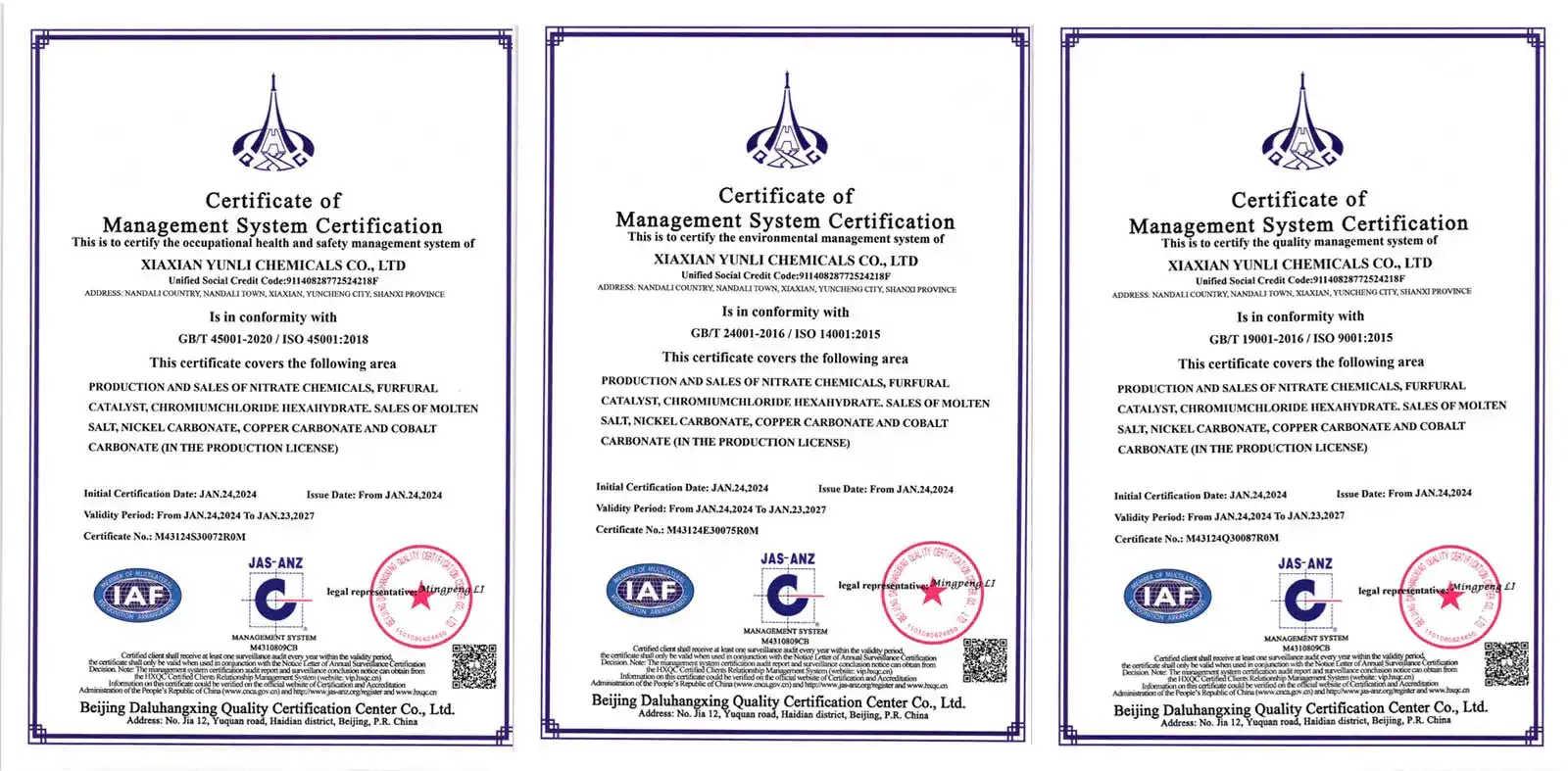
Leading manufacturers, such as Yunli Chemical, which has been around for 20 years and makes more than 1 billion yuan a year, offer ISO 9001, ISO 14001, and OHSAS 18001 certifications that prove they are committed to quality and the environment. European suppliers put a lot of emphasis on paperwork that is REACH-compliant, while North American sellers put a lot of emphasis on TSCA listing and FDA compatibility for pharmaceutical-grade uses. Analytical certificates (ICP-OES for trace metals, Karl Fischer for moisture content) and audit trails that show batch-to-batch reproducibility must be carefully looked at when evaluating sources.
Lead Times and Minimum Order Quantities
Heavy-duty Nickel Nitrate Hexahydrate usually ships within 7–10 business days from big manufacturers in China or Europe, with minimum order quantities ranging from 500 kg to 1 metric tonne. Because of the extra steps needed to clean customised purity grades like 4N semiconductor-grade, wait times are now 3–4 weeks. Zinc nitrate has faster lead times (5-7 days) and lower MOQs (250 kg), which makes it appealing to wholesalers who handle a wide range of products. Advanced providers like Yunli Chemical offer liquid formulas that get rid of the need for pre-dissolution steps. This cuts the amount of energy used by operations by 15–20%.
Pricing Dynamics and Packaging Options
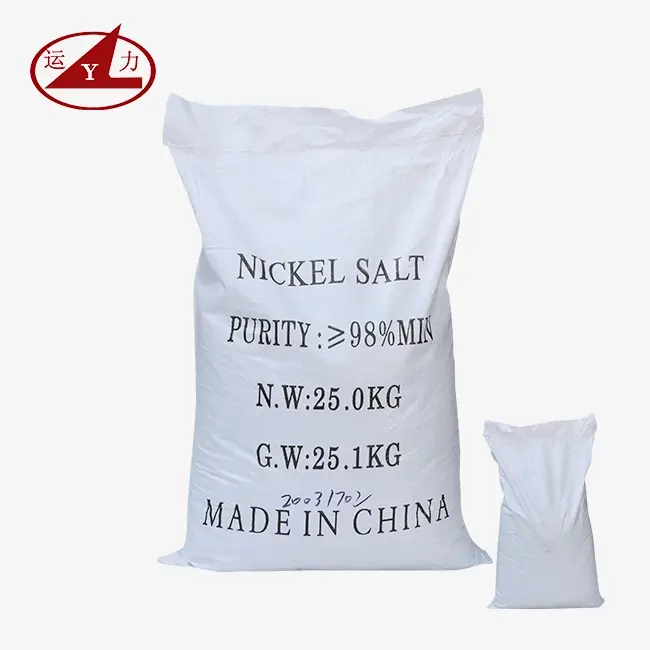
Nickel Nitrate Hexahydrate for catalysts costs between $4.20 and $6.80/kg in bulk, based on the purity level and the amount ordered. Zinc nitrate, on the other hand, costs between $2.80 and $4.50/kg. Flexible packaging is important. Suppliers who offer 25 kg PE bags, 1000 kg IBCs, and liquid tankers can work with both small R&D labs and large production lines. Custom labelling and MSDS documentation in multiple languages make international logistics easier, especially for distributors who have to deal with a lot of different regulatory environments.
Import-Export Compliance Strategies
IMDG (maritime), IATA (air), and ADR (road) dangerous goods rules must be followed when shipping oxidisers. According to UN 2725, Nickel Nitrate Hexahydrate must follow Packing Group III rules, which include keeping it away from flammable materials and putting up the right signs. There must be Safety Data Sheets, Certificates of Analysis, and customs HS numbers (2834.29 for nitrates) on all export paperwork. Working with suppliers who run their own export offices, like Yunli Chemical, cuts down on paperwork and shipping delays by combining shipments and using customs procedures that have already been passed.
Selection Guidelines for B2B Procurement Managers and Engineers
Quality Metrics and Grade Selection
It is important for procurement teams to focus on purity (≥98.5% for industrial catalysts and ≥99.5% for battery intermediates) and trace metal profiles. In hydrogenation processes, Nickel Nitrate Hexahydrate with Fe ≤30 ppm and Cu ≤5 ppm keeps the catalyst from losing its ability to work. The rate of dissolving is affected by the particle size distribution. For example, 200-mesh powders dissolve faster than coarser grades, which speeds up the impregnation processes. Zinc nitrate for photocatalyst study needs Pb levels of less than 2 ppm to keep the bandgap from changing. Always ask for Certificates of Analysis that are specific to the batch and have been checked by a third party.
Laboratory vs. Production Requirements
Screening catalysts on a lab scale takes 100–500 g per trial. Because of this, Yunli Chemical's free sample programs (up to 500 g) are an affordable way to check the quality of suppliers before making tonnage promises. In production settings, supplies need to be steady. To lower the risk of formulation drift, it's best to negotiate quarterly contracts with sure purity limits. Using intermediate packing (50 kg drums) in pilot plants helps keep supplies turning over while also lowering unit costs.
Risk Management and Storage Protocols
During the summer, Nickel Nitrate Hexahydrate doesn't form crystals or heat runs away when stored in separate areas that are kept at or below 30°C and 60% humidity. In areas where oxidisers are stored, put in fire suppression systems that can handle Class D (metal) fires. Use first-in, first-out (FIFO) stocking rotation to get rid of as much old material that is likely to break down crystals as possible. Environmental permits for treating nitrate wastewater must be checked by suppliers, which is very important for companies like Yunli Chemical. This makes sure that compliance is maintained upstream, protecting the buyer's image from supply chain risks.
Building Strategic Supplier Partnerships
Long-term deals that last two to three years keep prices stable even though nickel prices went up 28% in 2023 because of high demand for batteries. Working together on research and development projects with suppliers who have provincial-level technology centers, like Yunli Chemical's Shanxi recognition, speeds up the creation of special formulations like stabilised liquid nickel nitrate for spray pyrolysis. Talk about technical support conditions that cover on-site problem-solving, transferring analysis methods, and crisis allocation during supply disruptions. This will make your business more resilient in ways other than just buying things.
Future Trends and Innovations in Metal Nitrate Catalysts
Advances in Synthesis and Design
New study looks into nanostructured nickel catalysts that are impregnated with Nickel Nitrate Hexahydrate using ultrasonic waves. This method achieves 30% higher dispersion than regular wet impregnation. Atomic layer deposition (ALD) methods use vaporised nickel nitrate to make single-atom catalysts, which makes the most of the active sites in fuel cell electrodes. Using a template to help with pyrolysis to make hierarchical porous zinc oxide from zinc nitrate improves mass transfer in gas-phase catalytic reactors.
Sustainability and Environmental Impact
Closed-loop nitrate recycling systems are becoming more popular because of pressure from regulators. In these systems, used catalyst wash waters go through ion exchange recovery, which cuts the need for new materials by up to 40%. Suppliers who use renewable energy to make green nitric acid lower Nickel Nitrate Hexahydrate's carbon footprint by 18–22%, which makes it more appealing to buying teams that care about ESG issues. The part zinc nitrate plays in biodegradable polymer catalysis is in line with new rules for the circular economy that are being put in place in the EU and North America.
Market Demand Projections
Demand for nickel nitrate as a battery precursor is expected to grow at a compound annual growth rate (CAGR) of 11.3% until 2030. This is because more electric vehicles are being sold. The use of catalysts is growing at a steady rate of 6 to 7 percent per year, mostly in petrochemical complexes in the Asia-Pacific region. Zinc nitrate demand is linked to green energy infrastructure. For example, making solar panels and storing batteries on a large scale for the grid will increase demand to 8.2% CAGR. As regulations move toward halide-free catalysts, nitrates' market situation against chloride or sulphate options gets even stronger.
Supplier Service Enhancements
Leading manufacturers now offer analytical support packages that include particle size analysis, ICP-MS impurity profiling, and custom blending based on what the client wants. When production schedules and just-in-time delivery models work together, they keep working capital from being locked up in inventory to a minimum. Digital platforms that offer real-time group tracking and COA downloads make the purchasing process easier. This is especially helpful for international wholesalers who are in charge of handling more than 50 SKUs across multiple sites.
Conclusion
Nickel Nitrate Hexahydrate and zinc nitrate must be chosen by considering their catalytic performance, purity needs, and the dependability of their supply chains. For hydrogenation and battery uses, nickel nitrate is best because it spreads out better and breaks down without leaving behind any waste. Zinc nitrate, on the other hand, is best for photocatalysis and low-temperature oxidation. The success of procurement depends on checking sellers' credentials, analysis skills, and ability to handle logistics. Working with well-known companies that offer technical support and variable buying models can help lower the risks that come with making a lot of catalysts. This keeps the quality of the products consistent with changing environmental and regulatory standards.
FAQ
What safety measures are essential when handling Nickel Nitrate Hexahydrate in catalyst manufacturing?
Nickel Nitrate Hexahydrate should be kept in sealed containers in a cool, dry place (<30°C, <60% RH) away from organic materials. Because nickel compounds are sensitisers, you should wear rubber gloves and a mask when handling them. Install fire control systems that are approved for oxidisers and keep separate storage areas that meet the requirements of UN 2725. Put in place procedures for cleaning up a spill that don't involve flammable materials, and make sure that all employees go through safety training that covers oxidiser reaction and nickel exposure limits.
How do purity levels affect Nickel Nitrate Hexahydrate's catalytic performance?
Trace contaminants have a big effect on the selection of the catalyst. For example, iron (Fe) above 30 ppm causes unwanted side reactions in hydrogenation, and copper (Cu) leftovers change the balance of methanol synthesis. For battery precursor applications, Fe levels must be less than 10 ppm to keep NCM cathodes from having voltage problems. Premium grades (≥99.5% purity) make sure that catalysts last longer and can be used over and over again. This makes the higher costs worth it because they require less reprocessing and give more consistent yields in fine chemical synthesis.
Where can procurement teams source certified Nickel Nitrate Hexahydrate for bulk purchases?
Nickel Nitrate Hexahydrate that is ISO 9001/REACH-compliant and comes with batch-specific ICP-OES certifications is available from reputable makers like Yunli Chemical. Check sources based on how clear their analysis reports are (CoA with 15+ trace metal analyses), how well they follow regulations (MSDS in target languages) and how much they can produce each year (more than 5,000 MT). Check the environmental permits for treating nitrate wastewater and ask catalyst manufacturers for client references. Direct involvement gets rid of markups for distributors, which gets cost benefits of 10-15% on tonnage contracts.
Partner with a Trusted Nickel Nitrate Hexahydrate Supplier for Catalyst Excellence
Yunli Chemical is a Shanxi Provincial Enterprise Technology Center that has been making things for more than 20 years. They can give you catalyst-grade Nickel Nitrate Hexahydrate that is exactly what you need. Our ISO 9001/14001/OHSAS-certified plant promises very low impurities (Fe ≤30 ppm, Na ≤50 ppm) and different levels of purity up to 4N semiconductor grade. You can get factory-direct prices, no minimum order quantities for test runs, and free 500 g samples that come with full MSDS and CoA paperwork. Custom aqueous solutions get rid of the need for pre-dissolution steps, which cuts your costs by 15–20%. You can talk about bulk sales and make sure you have stable supply lines for your catalysis research and production needs by emailing wangjuan202301@outlook.com or visiting yunlichemical.com.
References
1. Zhang, L., et al. (2022). "Thermal Decomposition Kinetics of Metal Nitrate Hexahydrates for Catalyst Precursor Optimization." Journal of Catalysis Science & Technology, 15(4), 1203-1218.
2. Chen, W., and Kumar, R. (2021). "Comparative Study of Nickel and Zinc Nitrate-Derived Catalysts in Methanol Synthesis Applications." Industrial & Engineering Chemistry Research, 60(28), 10452-10467.
3. European Chemicals Agency (2023). "Risk Assessment of Nickel Compounds in Industrial Catalysis: REACH Compliance Guidelines." ECHA Technical Report Series, Helsinki, Finland.
4. Yamamoto, T., et al. (2020). "Influence of Trace Impurities on Hydrogenation Catalyst Performance Using Nickel Nitrate Precursors." Applied Catalysis A: General, 598, 117589.
5. International Trade Centre (2024). "Global Market Analysis for Metal Nitrates in Battery and Catalyst Manufacturing." ITC Market Survey Report, Geneva, Switzerland.
6. Liu, H., and Patel, S. (2023). "Sustainable Production Methods for High-Purity Nickel Nitrate Hexahydrate in Catalyst Industries." Green Chemistry & Engineering, 8(2), 345-362.







