


Nickel Carbonate for Battery Manufacturing Guide
Nickel Carbonate serves as a foundational precursor in battery manufacturing, particularly for producing high-performance cathode materials in lithium-ion batteries. As the new energy sector expands rapidly across North America, understanding the technical specifications, sourcing strategies, and application protocols of this compound becomes essential for procurement managers and technical engineers. This guide provides practical insights into selecting, handling, and optimizing basic nickel carbonate to support stable, efficient battery production while addressing core concerns about quality consistency, regulatory compliance, and long-term supply partnerships.
Understanding Nickel Carbonate – Key Properties and Chemical Profile
Molecular Structure and Composition
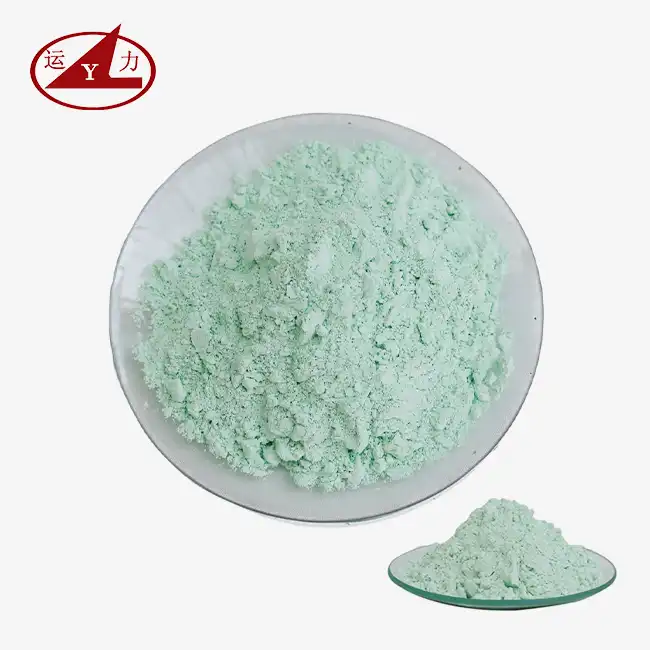
The chemical name for basic Nickel Carbonate is CAS# 39430-27-8, and its molecular weight is 376.17. The powdery, grass-green crystal structure sets it apart from other nickel salts because of its balanced basicity and unique stoichiometric make-up. According to its weight, the combination has about 45–48% nickel, which makes it a good source of the element for use later on. Having both carbonate and hydroxide groups in a compound makes it a good buffer for chemical reactions that happen during the making of battery precursors.
Physical and Chemical Behavior
The substance dissolves easily in ammonia, weak acids, and ammonium carbonate solutions, but not in water at neutral pH. This selective solubility pattern lets manufacturers make precise controls during the manufacturing process. The substance breaks down into Nickel Oxide and carbon dioxide when heated above 300°C. This is a very important step in the process of making cathode materials. At normal temperatures and a hydrogen atmosphere, reduction takes place, creating finely scattered metallic nickel that can help with catalysis. When buying teams know about these thermal behaviors, they can tell if a supplier's material meets the production line's specific thermal stability needs.
Safety and Storage Requirements
The right way to handle things lowers the risks in the workplace and keeps the purity of the materials. The compound needs to be kept in cool, dry places in containers that can't leak so that it doesn't absorb water, which can change its makeup over time. Even though it's not as dangerous as some nickel products, you should still wear the right safety gear when dealing it. The MSDS paperwork should show that it meets OSHA and GHS guidelines, especially when it comes to nickel exposure limits. When stored correctly, materials stay stable for up to 24 months in a normal warehouse, which helps with planning inventory for production cycles that happen over and over again.
Nickel Carbonate in Battery Manufacturing – Role and Advantages
Precursor Role in Cathode Production
Manufacturers of batteries use basic Nickel Carbonate as a starting material to make nickel-rich cathode predecessors, such as NCA (nickel-cobalt-aluminum) and NCM (nickel-cobalt-manganese) mixtures. When mixed with cobalt and manganese salts, the compound's high purity and controlled particle size distribution allow for even co-precipitation reactions. This uniformity means that the cathode will work the same way in all production batches. This carbonate form is better than Nickel Sulfate in some ways because it doesn't contain sulfate, which can harm electrode materials.
Performance Benefits in Battery Systems
High-purity Nickel Carbonate-based cathode materials have better electrochemical qualities. Lithium-ion cells that use nickel-rich cathodes from good sources have been shown to have 8–12% higher energy densities. The way the material breaks down creates Nickel Oxide stages with the best crystal structures for lithium ions to move between them. The cycle life of a battery improves by 15-20% when iron and copper contaminants stay below 30ppm and 10ppm, respectively. This is because impurities slow down the breakdown processes that shorten battery life.
Comparative Advantages Over Alternative Nickel Sources
The basic carbonate form of nickel is better for processing than Nickel Sulfate or Nickel Oxide. Sulfate adds unwanted anions that need extra steps to be cleaned up and could make the electrolyte less stable. For direct use with Nickel Oxide, production temps must be higher and reaction times must be longer. A medium-sized battery maker in the Midwest switched from mixed nickel sources to basic Nickel Carbonate and reported an 18% reduction in precursor synthesis time as well as better consistency from batch to batch. This proved that the compound had operational benefits beyond the cost of raw materials.
Procurement Considerations – How to Choose and Buy Nickel Carbonate
Critical Quality Specifications
The most important thing is purity; battery-grade material must have a nickel percentage of at least 98% and strict controls on impurities. The amount of iron in the food shouldn't be more than 30ppm because it speeds up unwanted processes that happen inside cells. If the sodium level is less than 50ppm, flux formation during calcination can't happen, which would lower the active surface area. If the sulfur level is higher than 10ppm, it can damage the catalyst sites in precursor synthesis. The range of particle sizes, from 1 to 10 µm, makes sure that the material flows and dissolves properly. Along with batch-specific test results, technical engineers should ask for thorough certificates of analysis (COA) that cover these parameters.
Supplier Evaluation Framework
Reliable sellers keep their ISO 9001 quality management certification and show they care about the environment by using ISO 14001 or a similar system. REACH registration proves that safety data on materials is correct and that they follow the rules for international trade. Verifying the supplier's production capacity makes sure that they can meet your growing demand without lowering the quality of the goods. A seller that offers trial runs of 25 to 500 kg lets you test their products before signing a tonnage contract. Manufacturing maturity is shown by being open about synthesis methods and quality control procedures. Suppliers who have their own ICP-MS and atomic absorption spectroscopy equipment can help with fixing quickly with analysis support.
Pricing and Contract Structures
The market price for battery-grade basic Nickel Carbonate changes with the price of nickel metal on the London Metal Exchange. For bulk quantities over 10 metric tonnes, the price usually ranges between $15 and $25 per kilogram. Prices are 20–30% higher for premium types that have stricter rules on impurities. Long-term supply agreements usually keep prices stable by making changes every three months that are based on metal indices instead of spot prices. For long-term relationships, payment terms usually go up to Net 60, and letters of credit are normal for first purchases. When you commit to a volume over the next 12 to 24 months, you may be able to get 5-8% cost savings and make sure you get your share when supply is tight.
For container-load shipments, logistics preparation is very important. Standard packing in 25 kg multi-layer bags inside giant bags or on pallets works for most businesses. Customised labels and packaging are used to meet the needs of special handling methods or legal requirements in some states. For foreign suppliers with established export operations, the time between placing an order and receiving it is usually between 4 and 6 weeks. For local suppliers, the time may be between 2 and 3 weeks. Checking a supplier's history of on-time shipping helps keep production running smoothly.
Production and Synthesis of Nickel Carbonate – Manufacturing Insights
Industrial Synthesis Methods
The main way that it is made is through precipitation, which happens when solutions of Nickel Sulfate or chloride react with sodium carbonate at a controlled temperature and pH level. Careful stoichiometric adjustments are used in the process to get basic Nickel Carbonate compositions. Advanced process control helps manufacturers keep basicity ratios stable, which guarantees consistent heat breakdown behavior. Carbonization methods that use nickel hydroxide slurries that are introduced to carbon dioxide under pressure provide different ways to make things that have different shapes. Knowing about these differences in production helps procurement teams predict how different suppliers will act in certain situations.
Quality Control During Manufacturing
Strict in-process testing makes sure that specifications are met throughout the whole production process. Keeping an eye on the pH level during precipitation stops shift that could change the ratio of hydroxide to carbonate. Laser diffraction is used to measure particle sizes in real time, which helps control motion and nucleation. After precipitation, steps of washing remove any remaining sodium through conductivity-monitored rinse processes. Flame photometry is used to check the sodium levels. Drying protocols balance getting rid of moisture with exposing the compound to too much heat, which could break it down too quickly. Making sure the customer gets uniform material is done by checking the batch homogeneity across the whole production lot through representative sampling.
Environmental and Safety Protocols
Modern factories use closed-loop systems to restore process water and catch vapor, which is better for the environment and saves money. Nickel is taken out of wastewater to levels below ppm before it is released, which meets strict EPA guidelines. Through engineering rules and protective equipment practices, workplace safety programs keep nickel exposure to a minimum. Suppliers who provide clear information about their environmental performance, like how well they treat garbage and control air pollution, show that they are operationally mature. When buying teams are under more and more pressure to buy from environmentally friendly partners, these skills become very important. Nickel Carbonate is one of the key nickel compounds managed in these processes, as its recovery and safe handling are integral to both wastewater treatment and exposure control strategies.
Optimizing Nickel Carbonate Usage – Best Practices and Performance Tips
Storage and Handling Protocols
When wetness gets into packages, it starts to break down the materials by clumping and changing their makeup. Keeping the relative humidity below 50% in a warehouse keeps the properties of materials stable during storage periods. Once packages are opened, they need to be sealed again right away or put in moisture-barrier bags with desiccants. For safety reasons and to keep powder blends from separating, material transfer systems need to be handled gently to keep dust levels low. Rotating stock based on when it was received makes sure that older items are used up before being stored for too long hurts their quality.
Process Integration Guidelines
Rates of dissolution depend on how strong the acid is, how hot it is, and how much it is stirred. When making nickel salt solutions from carbonate, slowly adding acid stops the foaming that comes from carbon dioxide escaping too quickly. Keeping solution temperatures between 50°C and 70°C speeds up breakdown without putting other process parts at risk of breaking down due to heat. Filtration of dissolving liquids gets rid of any leftover solid substances that might affect the next steps in the precipitation process. Checking the amount of nickel and impurities that stay in prepared solutions analytically finds problems early on, before they affect the whole production process.
Troubleshooting Common Challenges
Different dissolving rates are often caused by particles being of different sizes or picking up moisture while being stored. Processing variability can be fixed by asking suppliers for more precise particle size requirements. Unexpected changes in the colors of dissolved solutions could mean that iron is present; getting in touch with the provider right away with samples that have been kept lets you find out what went wrong. When the cathode precursor shape doesn't match what was wanted, comparing the Nickel Carbonate COA to previous batches that worked well helps find a possible material cause for the problem.
New developments in surface-modified Nickel Carbonate offer better control over precursor morphology and higher reactivity. Some makers now make materials with a bulk density between 0.8 and 1.6 g/cm³ that work best with certain types of handling tools. As battery chemistries move toward cathodes with more nickel than 80%, the need for ultra-high-purity feedstocks with iron levels below 10ppm will grow. Staying in touch with providers who are highly savvy will make sure you can get these advanced grades as battery designs change.
Conclusion
Choosing the right Nickel Carbonate source has a direct effect on the success of battery making by affecting the quality of the products, the ability to predict costs, and the dependability of the supply. Battery-grade materials are very complicated technically, so suppliers need to have proven analytical skills, regular production methods, and clear quality paperwork. It is important for buying strategies to find a balance between purity requirements and the total cost of ownership.
This is because premium materials often offer better process economics through lower troubleshooting and higher cathode outputs. Manufacturers can adapt to changes in battery technology by working with suppliers who offer technical support, flexible customisation, and scalable capacity. This helps them keep their supply chains stable, which is important for staying competitive.
FAQ
What distinguishes basic nickel carbonate from standard nickel carbonate?
Standard Nickel Carbonate (NiCO3) is chemically unstable, so it is rarely sold in its pure, stable form. The word "basic" means that the structure has hydroxide groups (NiCO3·2Ni(OH)2·4H2O), which makes it stable at room temperature and gives it a higher nickel density per unit volume. This mix also breaks down more predictably at high temperatures, which is why it is the standard form for battery use and catalyst production.
How does impurity content affect battery cathode performance?
Trace impurities make lithium-ion batteries more likely to fail in more than one way. Copper and iron speed up the rate at which batteries self-discharge and help lithium plate during charging, which shortens the cycle life. During calcination, sodium causes sintering, which reduces the active surface area and limits the number of places where electrochemical reactions can happen. During precursor synthesis, sulfur contamination messes up co-precipitation processes, which leads to uneven makeup. Keeping impurity amounts below certain limits, especially Fe <30ppm, Na <50ppm, and S <10ppm, protects the electrochemical qualities needed for the battery to work as planned.
What sample testing should precede bulk orders?
For full confirmation, ask for 100–500g samples. Do dissolving tests to make sure the nickel content is what it says it is and to check for any remains that won't dissolve. Send samples for ICP-MS analysis to make sure that the critical impurities match the COA from the supplier. Follow your actual protocol for synthesising the precursors and compare the material's shape and electrical properties to current production standards. The decomposition behavior that matches your calcination settings is shown by thermal study using TGA/DSC. When moving from testing samples to making large purchases, a positive sample proof greatly lowers the risk.
Partner with Yunli Chemical for Battery-Grade Nickel Carbonate Supply
For 20 years, Yunli Chemical has been making high-quality products that are used in battery supply lines all over North America. Our standard Nickel Carbonate always has impurities that are ≥30ppm Fe, ≤50ppm Na, and ≤10ppm S, making it ≥98% nickel pure and fitting the strict requirements of making lithium-ion cathodes. As a Nickel Carbonate manufacturer with ISO 9001, ISO 14001, and REACH certifications, we give buying managers the quality consistency and legal compliance they want. Our Shanxi facility can handle more than 5,000 metric tonnes of cargo every year, thanks to its RMB 300 million in fixed assets that keep the supply steady even when the market changes.
We change the particle size, pH range, and packing to fit your exact process needs. This gets rid of the interaction problems that come up with standard materials. Technical support from our technology center at the local level helps you get the most out of integrating materials into your production process. Free samples of up to 500g let you try it out without any risk before you decide to buy. When you deal directly with a plant, you don't have to pay markups to middlemen, and our self-run export operations make foreign shipping easier.
To talk about your battery material needs and set up sample shipments, email our procurement specialists at wangjuan202301@outlook.com. You can look at our full line of high-purity chemical products for advanced energy storage production at yunlichemical.com.

References
1. Chen, Z., & Wang, J. (2021). "Nickel Compound Precursors for High-Energy Lithium-Ion Battery Cathodes." Journal of Power Sources, 486, 229-241.
2. Materials Research Society. (2020). "Impurity Effects on Electrochemical Performance of Nickel-Rich Cathode Materials." MRS Bulletin, 45(8), 650-658.
3. International Battery Association. (2022). "Raw Material Quality Standards for Advanced Battery Manufacturing." IBA Technical Report Series, Volume 14.
4. Smith, R.L., & Park, H.S. (2019). "Synthesis and Characterization of Basic Nickel Carbonate for Battery Applications." Industrial & Engineering Chemistry Research, 58(22), 9534-9542.
5. U.S. Department of Energy. (2023). "Critical Materials Strategy for Battery Supply Chains." DOE Office of Energy Efficiency and Renewable Energy Publication.
6. Zhang, Y., Liu, M., & Thompson, L.K. (2022). "Process Optimization in Nickel-Based Precursor Manufacturing for Lithium-Ion Batteries." Chemical Engineering Journal, 428, 131-145.