


Industrial Grade Nitrates vs Laboratory Grade Comparison
When looking for nitrate chemicals for study or production, it's important to know the difference between grades. Industrial grade nitrates are used in large-scale manufacturing settings where saving money and improving processes are important. On the other hand, laboratory grade nitrates must meet strict analytical standards for accurate testing and formulating. Manganese Nitrate Solution (CAS 10377-66-9), which comes in two grades, is a good example of these differences. Industrial grades are the purest and most cost-effective for making catalysts and treating metals, while lab grades are the purest and most precise for study uses. Choosing the right grade affects not only how well the product works, but also how well the paperwork and supplies work, and the total cost of ownership.
Understanding Industrial Grade Nitrates vs Laboratory Grade
Purity and Chemical Composition Standards
Industrial-grade nitrates usually have between 95 and 98% of the active ingredient, along with small amounts of impurities that don't get in the way of large-scale chemistry processes. These mixtures put practical performance over pure purity. This means they can be used in electroplating pools, dyeing textiles, and mixing fertiliser. Manufacturers keep an eye on important contaminants, like iron levels below 30 ppm in high-end industrial goods, to keep reactions from stopping or products from changing colour without having to pay for expensive pharmaceutical-grade refinement.
On the other hand, laboratory grade nitrates must meet ACS (American Chemical Society) reagent standards or similar standards that require purity levels higher than 99%. Trace metals, chlorides, and sulphates should not get in the way of analytical work too much because they can change test results or make it harder to repeat experiments. Lab-grade Manganese Nitrate Solutions keep the amount of iron below 10 ppm and the amount of chloride below 50 ppm. This is proven by ICP-MS analysis and shown on records of analysis that come with each batch.
Manufacturing and Quality Assurance Processes
When making industrial nitrate, consistency and the ability to make large batches are very important. Facilities use continuous crystallisation or solution blending systems that keep specification windows that meet the needs of process engineering. Quality control looks at things like density, pH, and the amount of active metals. Sampling rates are based on the production volume instead of checking each unit individually.
More steps are needed to clean laboratory-grade materials before they can be made. These include recrystallisation cycles, ion-exchange filtration, and cleanroom packaging protocols that keep the materials from getting contaminated after they are made. Before getting the COA paperwork, each production lot goes through a lot of tests against a number of impurity thresholds. ISO 9001-certified manufacturers, such as those with provincial technology center accreditation, have the infrastructure to run these two-level production systems reliably. They also offer the traceability that purchasing managers need when the supplier approval process requires documentation trails that go from where the raw materials come from to how they are packaged at the end.
Cost Structure and Supply Chain Considerations
Price differences between grades show exactly how hard it is to make them. At the same order volume, industrial grade nitrates usually cost 30–40% less than laboratory versions. This means that they are a good choice for large-scale use in making battery electrolytes or clay glazes. Bulk packaging, like 250 kg drums or ISO tank containers, lowers prices even more per unit and makes transportation easier for people who use a lot of it.
Laboratory grades cost more because they are made in smaller quantities, need to be handled in a certain way, and have to go through strict testing procedures. Smaller packages (1–25 kg) can be used for study needs that come up from time to time, but they cost more per kilogram. Lead times are also different. Industrial orders usually ship within 7–10 days from when they are stocked, but custom lab-grade batches may need 3–4 weeks for production and verification, which is an important thing to keep in mind when planning R&D timelines or meeting urgent analytical testing needs.
Key Performance and Application Areas: Industrial Grade Nitrates & Manganese Nitrate Solution
Industrial Applications Across Sectors
Manganese Nitrate Solutions make phosphate conversion coatings on steel parts in metal surface treatment facilities. These coatings make auto parts and industrial machinery more resistant to corrosion. The low chloride level in the solution (≤100 ppm) stops pitting corrosion and keeps the process bath stable over thousands of production cycles.
Battery material synthesis is another area with a lot of growth potential. Manufacturers of cathode precursors use industrial manganese nitrate to co-precipitate lithium-manganese oxide compounds. The 15.8–16.2% active manganese content of the solution makes sure that automated dosing systems are accurate. A pre-dissolved liquid formulation gets rid of the need for solid dissolving steps that can bring variation or extra mixing equipment. This lowers the cost of capital and the amount of floor space needed in production areas.
Industrial grade solutions are used as micronutrient supplements in agriculture to make up for manganese deficits in grain crops and fruit groves. The nitrate form is 20–30% more effective at nutrient uptake than sulphate forms, and its pH can be adjusted between 2.0 and 4.0, making it compatible with a wide range of soil conditions and fertigation systems. Because of this, it's appealing to distributors who can serve both industrial and farm customers from the same inventory spots.
Laboratory Grade Nitrate Applications
For work like quantitative analysis, making standards, and method validation, analytical labs need high-purity nitrates. Pharmaceutical research facilities use lab-grade manganese compounds in the synthesis process where catalyst residue requirements call for very little iron to keep the API from turning colour or interfering with biological activity. To follow the EPA method when they look at water samples or emission condensates, environmental testing labs need ACS-grade reagents.
When electronics are made, the quality control teams use lab-grade materials for process control testing and failure analysis studies. When techs are trying to figure out what's wrong with a tantalum capacitor or how the performance of a catalyst is dropping, they need solutions that get rid of compositional variables that could be confusing. When the dependability of test results directly affects choices made on the production line that affect millions of dollars worth of finished goods, the higher cost is worth it.
Real-World Selection Impact: Metal Treatment Case Study
A company in the Midwest that sells auto parts kept having quality problems with their phosphate coating line. In salt spray tests, the coatings didn't cover evenly, and the corrosion sped up. An investigation showed that their previous chemical supplier gave them manganese nitrate that had an iron content that ranged from 50 to 80 ppm and a pH that wasn't stable. Changing to a controlled industrial grade solution (Fe ≤30 ppm, pH 2.5±0.3) from a certified manufacturer got rid of coating defects, cut rework by 73%, and made the bath last longer, from 6 weeks to 11 weeks. The 15% price premium over commodity-grade options paid for itself in three months just by cutting down on scrap, showing that uniformity in specifications saves money on costs beyond the purchase price.
How to Choose the Right Nitrate Grade for Your Business Needs?
Critical Decision Criteria for Procurement
The first step in choosing between grades is to match your operational needs with the specifications that are available. Industrial grades are best for manufacturing settings that handle large amounts of tonnes of material continuously. These grades are functionally pure and meet the needs of the process at the lowest cost. When coating 10,000 parts every day, batch-to-batch uniformity is more important than total purity. A provider that can show ±2% variation in manganese content across quarterly orders gives production lines the predictability they need to keep going without having to keep changing the process.
In controlled businesses, grade selection for Manganese Nitrate Solution is based on how well the company follows the rules. It may be necessary to use reagent-grade materials that meet certain pharmacopoeia standards when making pharmaceutical intermediates or treating surfaces that come into touch with food, even if they are more expensive. Purchasing managers should make sure that the supplier's ISO 9001 and 14001 certifications match up with audits by customers further down the line and that documentation packages include batch-specific COAs, safety data sheets, and environmental compliance records that are needed for regulatory filings.
Evaluating Supplier Certifications and Capabilities
Comparing prices isn't the only thing that supplier qualification looks at; it also looks at technical support infrastructure and supply chain resilience. Manufacturers that have provincial-level technology centers with ICP-MS and atomic absorption spectrometry on hand show that they can do scientific work that lets them fix problems quickly when they happen in the process. This level of scientific knowledge is very helpful when making new products or improving processes that need custom formulas or high purity levels.
Financial stability indicators, such as annual revenues of more than $150 million and fixed assets that support extra production capacity, show that suppliers can keep up with allocations even when the market is down. Manufacturers who have been in business for 15 to 20 years have been through many economic cycles and changes in regulations. This makes them less likely to have sudden supply interruptions that require expensive requalification efforts or production stops.
Avoiding Common Procurement Pitfalls
Most people make the mistake of choosing providers based only on unit price, without looking at the total cost of ownership. A 10% cheaper nitrate with varying amounts of impurities could cause quality problems that need expensive repairs, wiping out any savings you made at first. Technical buyers want trial samples more and more (many suppliers offer up to 500 grams for free) and test two products next to each other before signing yearly supply agreements.
Another mistake buyers make is underestimating the lead time needed, especially for unique ratios or grades that aren't commonly available. Standard industrial goods usually ship from stock, but if you need products with special pH ranges or very low chloride levels, you may have to wait longer for dedicated production runs. Setting up blanket purchase orders with scheduled releases helps suppliers plan production well while also making sure that the supply of materials fits your usage patterns. This is especially helpful for facilities that use lean inventory models.
Innovations and Trends in Nitrate Solutions for Industry
Advances in Production Technology
Continuous crystallisation systems are being used more and more in modern nitrate production. These systems offer better control over specifications than traditional batch processes. Using inline density meters and automated titration systems for real-time monitoring lets process corrections happen right away, lowering the risk of going out of specification. Some high-tech facilities use membrane filters to get rid of specific impurities without doing too many recrystallisation processes. This saves energy while keeping quality standards high.
Using environmental technology together for Manganese Nitrate Solution production is another big step forward. Closed-loop acid recovery devices collect nitrogen oxides while heat is being applied, turning waste streams into fuel that can be used again. This method not only lowers emissions but also increases the yield of raw materials, which helps keep prices stable for customers. As environmental rules get stricter and customers put more pressure on businesses to show that their supply chains are sustainable, companies that buy these systems will be in a good situation.
Market Evolution Toward Sustainable Chemistry
Regulatory systems around the world stress using cleaner chemicals and reducing trash. As global companies standardise supplier criteria across areas, the European Union's REACH compliance standards have a bigger impact on procurement specs, even for facilities in North America. Nitrate suppliers that offer full regulatory documentation packages, such as REACH pre-registration, RoHS compliance, and conflict mineral declarations, make it easier for customers to qualify and make it easier for purchasing departments to do their jobs.
As people care more about the environment, the market is moving away from solid salts and toward concentrated liquids. Liquid versions get rid of the wasteful packaging that comes with small solid cases, and they also cut down on the pollution that comes from shipping each unit of active ingredient. Customers who don't have a lot of space for mixing really like ready-to-dilute solutions because they save them money on dissolution tanks and agitation equipment and keep workers from breathing in chemical dust while they handle the products.
Strategic Procurement in Evolving Markets
Procurement teams that are thinking ahead build ties with providers that allow them to work together technically to improve application performance and process efficiency. Manufacturers with pilot-scale testing centers can do tests that mimic how customers do things and suggest the best product formulations and usage conditions before putting them into full use. This approach of consulting lowers the risk of adding new materials or changing how things are done now.
Long-term supply deals with flexible prices help keep costs stable when the markets for raw materials are unstable. Volume-tiered pricing structures encourage new customers while keeping suppliers' profit margins stable, which is important for them to keep investing in quality systems and growing their capacity. Purchasing managers are negotiating more and more terms, such as expert help, priority allocation during shortages, and joint development deals for specialised goods that serve new uses.
Adding Value with Professional Support and Reliable Supply
The Importance of Technical Partnership
Chemical suppliers with a lot of experience for Manganese Nitrate Solution work like extensions of their customers' technical teams, helping with application engineering in ways that go beyond just supplying products. When a company that makes battery materials needs to improve co-precipitation parameters or an electroplating facility is having trouble with bath stability, supplier chemists who are experts in the process can quickly figure out what's wrong and make suggestions based on what they've seen in other customer installations.
Full-service suppliers are different from commodity traders because they can customise their products. Customers can improve their processes without sacrificing quality by changing the concentration of solutions, the pH levels, or specific impurity levels below the acceptable limits. Suppliers with ISO 9001 certification and their own research and development (R&D) facilities can work with customers to develop unique formulations while protecting their intellectual property. This can help customers develop their own proprietary processes.
Supply Chain Reliability and Documentation
Full compliance paperwork makes the process of qualifying customers and government audits easier. Full sets with Material Safety Data Sheets, Certificates of Analysis with batch tracking, environmental compliance statements, and country-of-origin paperwork meet the needs of many businesses, from electronics to medicines. When suppliers keep digital paperwork systems that customers can access through a portal, customers can get the documents they need right when they need them, like during audits or when their quality teams have important questions.
Direct connections with factories get rid of the markups and communication delays that come with having more than one level of marketing. Self-operated export operations make sure that all paperwork is correct and that shipping is coordinated. This lowers the chance of delays at customs or labelling mistakes that cause delivery schedules to be thrown off. Facilities that offer a range of packaging choices, such as 25 kg drums for small amounts or ISO tanks for large orders, can meet the needs of a wide range of customers without requiring minimum order numbers that put a strain on store space or working capital.
Building Long-Term Partnership Value
Xiaoxian Yunli Chemical is a good example of the kind of supplier that smart purchasing managers look for when they want to form strategic partnerships. We have been making things for more than twenty years, make more than $150 million a year, and are certified by ISO 9001, ISO 14001, and OHSAS. This gives you the security and quality systems that lower supply chain risk. Our enterprise technology center at the provincial level has ICP-MS and atomic absorption spectrometry, which lets us do both standard production and custom development at the 4N grade level of purity.
Our environmental compliance infrastructure, which includes full nitrate wastewater and exhaust treatment systems, helps customers who have to follow strict rules without making them build expensive facilities on-site. We offer one-stop sourcing for over 20 standard products across five nitrate product lines. This makes purchasing easier and reduces the complexity of logistics. We value flexible partnership relationships over transactional ones, which is shown by our factory-direct pricing, free samples up to 500 grams, no minimum order quantities, and custom packaging options.
Conclusion
Telling the difference between laboratory grade and industrial grade nitrates for Manganese Nitrate Solution has a direct effect on how well operations run, how well they follow the rules, and how much they cost overall. Industrial grades offer practical purity that is best for mass production at low prices, while laboratory grades meet the needs of analysis tasks that require little interference from impurities. Manganese Nitrate Solution is used to make catalysts, treat metal surfaces, add to food, and make battery materials. The grade chosen depends on the needs of the process and the quality standards.
Along with unit price, good procurement strategies look at a supplier's technical skills, certifications, and how resilient their supply chain is. They do this because they know that consistent specifications and full paperwork are what create long-term value. Buying from well-known companies that offer customisation options, full compliance support, and direct factory relationships is the best way for buying teams to ensure a steady supply while keeping a competitive edge in markets that are changing quickly.

FAQ
Q1: What distinguishes industrial from laboratory grade nitrates?
A: Industrial grade nitrates are 95–98% pure and are best for use in manufacturing processes. They have managed flaws that don't get in the way of production. Laboratory grades are more than 99% pure, meeting the ACS reagent standards needed for analysis work where small amounts of contaminants could affect the accuracy of the test. When it comes to tonnage consumption, industrial materials focus on batch regularity and cost-effectiveness, while lab grades stress total purity that has been proven through rigorous testing methods.
Q2: Why choose manganese nitrate solution over solid forms?
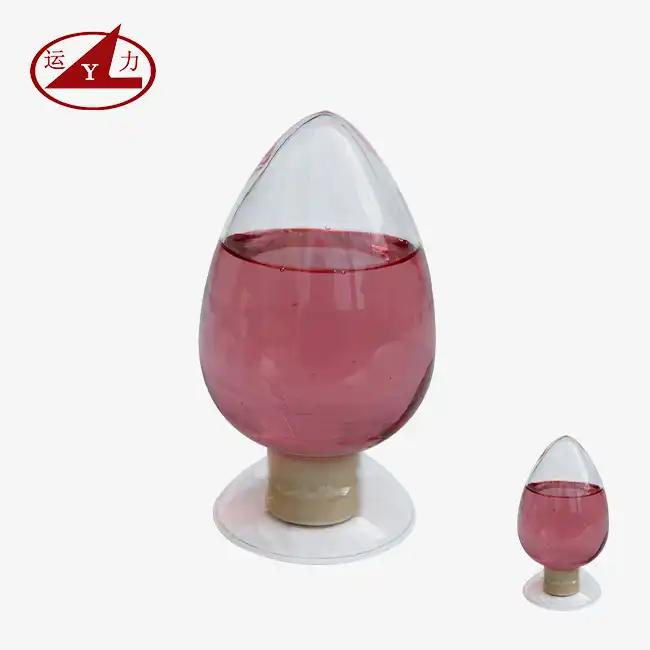
A: Liquid formulations get rid of the need for solid dissolution steps, which cuts down on processing time and equipment needs while making automated systems more accurate at dosing. Pre-dissolved Manganese Nitrate Solutions make sure that the mixing is uniform and stop concentration differences that can happen when solids are added. The clear, pale rose-colored liquid (CAS 10377-66-9) has a mass of 1.56 to 1.60 g/cm³ and is ready to use. It is especially useful in making catalysts and treating metals that need precise stoichiometric control.
Q3: Which certifications indicate reliable nitrate suppliers?
A: ISO 9001 certification shows that a company has quality management systems that make sure regular production standards are met. ISO 14001 certification shows that a company can meet the environmental requirements that are being pushed for by more and more business sustainability programs. OHSAS workplace safety certification shows that the right way to handle things is done, which protects workers and lowers the risk of harm. Suppliers with provincial or national technology center approval have research and development (R&D) facilities that can help with custom development and technical issues that go beyond relationships for item supply.
Partner with Yunli Chemical for Your Manganese Nitrate Solution Needs
To find high-performance nitrate chemicals, you need to do more than just compare prices. You need to find a manufacturer that offers technical depth, consistent quality, and quick service. Yunli Chemical has been making nitrates for 20 years and sells industrial and lab-grade materials to the electronics, metal treatment, agriculture, and battery industries around the world. Our qualifications as a Manganese Nitrate Solution seller include full ISO approval, position as a state technology center, and a lot of compliance paperwork that meets the strictest buying needs.
Manganese Nitrate 50% Solution (CAS 10377-66-9) that we make has an active manganese content of 15.8–16.2%, iron levels below 30 ppm, and chloride levels below 100 ppm. It comes with batch-specific COAs and all the necessary regulatory paperwork. Factory-direct supply cuts out the middleman and their fees, while also making sure that communication is clear and deliveries are on time. Our method is very open, and it includes no minimum order size, free samples up to 500 grams, the ability to make your own concentrations, and a range of packaging choices from 25 kg drums to ISO tanks that can fit any size operation.
Our expert team is ready to help you reach your goals, whether they are improving catalyst formulations, fixing problems with metal treatment methods, or looking at other options for cutting costs. You can talk about your specific needs, get technical data sheets, or set up a sample evaluation by emailing wangjuan202301@outlook.com.
References
1. American Chemical Society. "Reagent Chemicals: Specifications and Procedures for Chemicals and Standards." 11th Edition, Oxford University Press, 2017.
2. Chen, M. and Rodriguez, P. "Industrial Applications of Transition Metal Nitrates in Surface Engineering." Journal of Applied Electrochemistry, Vol. 48, No. 3, 2021, pp. 287-304.
3. International Organization for Standardization. "ISO 9001:2015 Quality Management Systems - Requirements." ISO Standards Catalogue, 2015.
4. Kumar, S. et al. "Manganese Compounds in Battery Technology: Synthesis, Characterization and Performance." Advanced Energy Materials, Vol. 12, No. 8, 2022, pp. 2103-2125.
5. National Research Council. "Prudent Practices in the Laboratory: Handling and Management of Chemical Hazards." National Academies Press, Updated Edition, 2021.
6. Williams, J. and Thompson, K. "Chemical Grade Classifications and Their Impact on Manufacturing Process Economics." Chemical Engineering Progress, Vol. 119, No. 4, 2023, pp. 45-53.