


Is chromium nitrate an electrolyte?
Chromium Nitrate is an element, that much is true. Chromium Nitrate nonahydrate [Cr(NO₃)₃·9H₂O] completely splits into positively charged chromium ions (Cr³⁺) and negatively charged nitrate ions (NO₃⁻) when it comes in contact with water. The ionization process makes it possible for the water-based solution to effectively carry electricity. It is a strong electrolyte because the combination breaks down totally. Ionic conductivity is useful for industrial processes that need it, such as electroplating pools, catalyst preparation, and surface treatment processes that need to reliably move charges for the best results.
Understanding Chromium Nitrate and Electrolyte Basics
Chemical Structure and Physical Properties
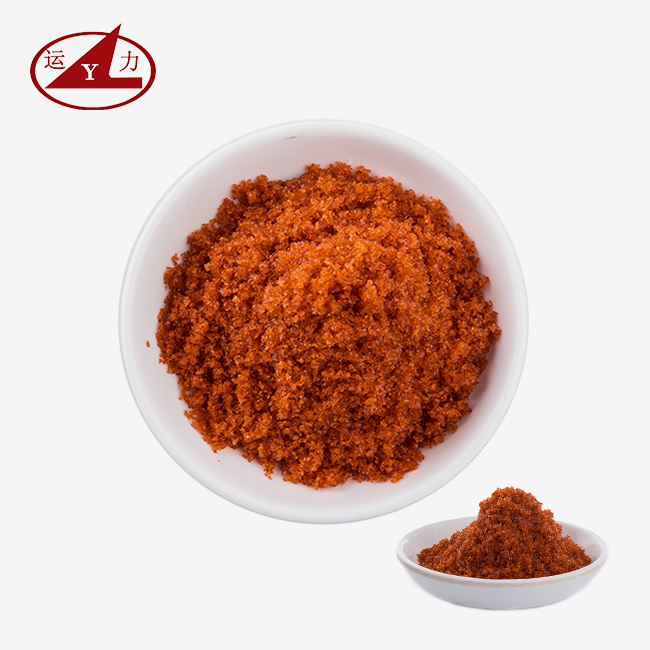
The scientific name for Chromium Nitrate nonahydrate is CAS 7789-02-8, and it looks like dark purple-red crystals. The formula for its molecules is Cr(NO₃)₃·9H₂O, and their weight is 400.15. It is very hygroscopic, which means it takes in water from its surroundings very quickly. It dissolves quickly and evenly in water—about 81 grams per 100 milliliters at 20°C—so it can be used in systems that use water. The material is also easily broken down in ethanol, acetone, and a number of man-made acids, which makes it useful in a number of chemical processing situations.
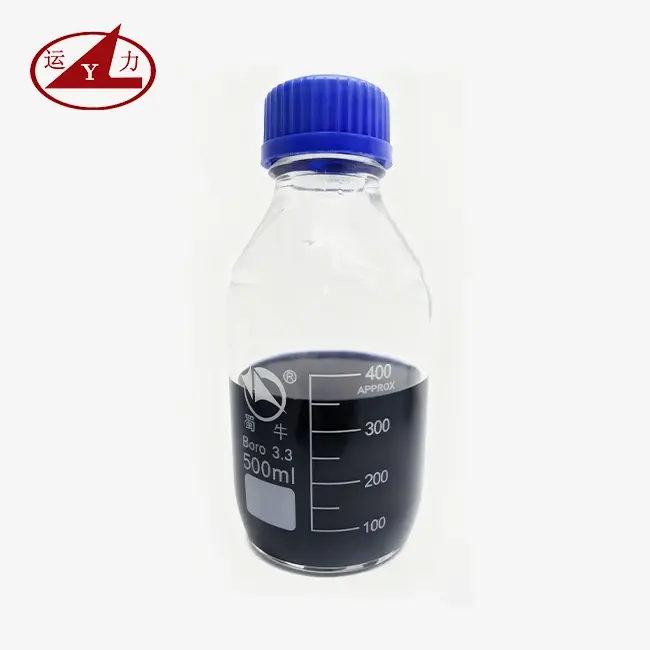
When this chemical is dissolved in water, its color changes based on the temperature. As the water-based solution gets warmer, it changes from violet to green, but it quickly returns to its reddish-purple color when it cools down. Changes in the coordination sphere around the chromium ion cause this color change that can be undone. At 60°C, it freezes, and at 125.5°C, the crystal structure breaks down. These temperature properties have an effect on how things are treated and used in the business world.
Electrolyte Classification and Ionization Mechanism
When electrolytes are mixed with polar solutions, they turn into ions. It is possible for electricity to pass through ions because they move. Only some of the ions in weak electrolytes break apart when they are mixed with water. Most of the time, salts, acids, and bases are strong ions. Because it breaks apart so fully from other molecules, Chromium Nitrate is a strong cushion.
It does not dissolve in water, but the hydration energy is higher than the ionic lattice energy when it does. This breaks up the structure of the crystal. Each unit of the formula gives off three nitrate anions and one trivalent chromium cation:
Cr(NO₃)₃ + 9H₂O → Cr³⁺ + 3NO₃⁻ + 9H₂O
The chromium ion usually shows up as a hexaaqua complex [Cr(H₂O)₆]³⁺ when the conditions are weak. This means that six water molecules are arranged in an octahedral shape around it. The highly charged cation stays stable inside this water ring, but it can still move around. While the solution is being made, the nitrate anions stay well mixed and move around. Chromium Nitrate solutions are great at moving electricity around because they have a lot of charged particles that can move around easily. So, they can be used in electrolytic processes and other places where it's important to have precise control over the strength of the ions.
Factors Influencing Conductivity Performance
There are many things that can change the electrolytic performance of Chromium Nitrate solutions in real life. It's very important to know the concentration. Higher concentrations make more ions available, but they can make it harder for individual ions to move because they crowd together and make the fluid thicker. Things usually become more conductible when the temperature goes up because it lowers the viscosity and increases the kinetic energy of the ions. But too much heat can cause things to happen that aren't wanted. There is a direct link between the level of cleanliness and performance because impurities can mess up conductivity tests and cause unwanted side effects in sensitive processes.
At Yunli Chemical, we make Chromium Nitrate with almost no other chemicals in it. The amount of iron in the water is kept below 30 parts per million, and alkali metal waste is carefully controlled. Making sure that the electrolytic behavior is the same from batch to batch is important in areas where quality depends on being able to do the same thing over and over again. You can choose from pH ranges 5.0 to 7.0, and they are stable to within 0.2 units. This means that clients can find the best solution chemistry for different electrochemical settings without having to use extra stabilizing agents.

Chromium Nitrate in Industrial and Laboratory Applications
Catalyst Manufacturing and Chemical Synthesis
Chromium-based catalysts help with a lot of dehydrogenation processes and the making of polymers in the oil and technology industries. When calcinated, the nitrate counter-ion breaks down quickly, leaving only pure chromium oxide active sites and no poisons behind. This makes the nonahydrate form of Chromium Nitrate a great precursor. This clean way of breaking things down is not the same as chloride or sulfate, which can leave behind agents that are harmful or don't work.
During the process of making the catalyst, technicians soak porous supports like alumina or silica in Chromium Nitrate solutions. Because of how it is made, the electrolyte is easily spread out evenly across the support structure. This keeps the quantity of the active sites the same. Once they are heated and dried, the chromium species change to the right oxidation state and solid form. Our pH-stable formulas keep the best catalytic activity and stop precipitation before it happens during the impregnation stage. Low amounts of alkali metal impurities—less than 50 parts per million—keep catalysts from fusing and blocking active sites, which makes them last longer.
This way of making chromium catalysts is great for making methanol and hydrogenation processes. The ones that were made are more selective and last longer than ones that come from chromium chloride or sulfate sources. Ions from those sources can introduce acidic particles that hurt metals in the reactor or catalytic sites nearby.
Metal Surface Treatment and Electroplating
The government is putting more and more pressure on traditional hexavalent chromium treatment ways because they are very bad for the environment. Trivalent chromium devices that use Chromium Nitrate are legal, meet RoHS and REACH standards, and protect against rust at the same level. Solutions of Chromium Nitrate can be used to control electrolytic formation because they are electrolytes. This makes coats that stick to steel, aluminum, and zinc that are smooth and even.
Chromium Nitrate keeps gunk from forming in passivation baths because it dissolves over a higher pH range. This is a problem that often happens with sulfate-based systems. Because of this stability, it takes less time to clean and maintain the bath. Our goods are 99.9% less dangerous than those made with hexavalent chromium. This is safe for workers and good for the environment, and it doesn't change how well the protection works.
When used to clean surfaces, Chromium Nitrate is not the same as chromium chloride because it does not have chloride ions in it. Rust cracking can happen on stainless steel tools when chlorine gets on them, and protective coatings may not work as well. Chromium Nitrate gets rid of this risk, which is why it is the best choice for high-reliability uses in places like boats, planes, and cars where coating failure could have serious safety and financial consequences.
Corrosion Inhibition and Specialty Applications
During the winter, Chromium Nitrate is mixed into concrete for building projects. This keeps the concrete from freezing and the steel support from rusting. The material makes chromium oxide layers on steel surfaces that protect them and lowers the freezing point of pore water. This helps buildings last longer in harsh weather. The material's ability to absorb water is protected while it is being stored and moved by custom packing it in 25-kilogram bags or intermediate bulk containers that are resistant to wetness.
Chromium Nitrate is used to loosen up dyes used to color fabrics. It does this by creating coordination complexes between the molecules of the cloth and the dye's structures. Because of this bridge action, wool and silk get bright colors that don't fade when they are cleaned. It is easy for the electrolyte to spread evenly through textiles because of its properties. This makes sure that colors develop evenly across large production batches.
Chromium Nitrate made for pharmaceutical use helps make active pharmaceutical ingredients when small amounts of metal pollution must stay below tight limits. We only have less than 0.1% nitric acid left over, which is the same amount that the US Pharmacopeia and the European Pharmacopeia say is safe for both injection and edible forms. This level of purity keeps the electrolytic properties needed for electrochemical steps of synthesis while not getting in the way of biological processes that need to work smoothly.
Comparative Analysis with Alternative Chromium Salts
You need to know what each salt can do for different things in order to pick the right chromium source. Chromium chloride is cheap and easy to breakdown in water, but it gives off chloride ions that hurt stainless steel machinery and make protective coatings crack in some places. Chromium sulfate dissolves in water, but not very well. It colors leather well. On the other hand, sulfate ions can join with calcium or barium to form crystals. These can be tough to work with and contaminate things.
Chromium oxide doesn't dissolve easily in water; it needs to be hard to dissolve. This makes it less useful for working with water. It is very simple to dissolve chromium acetate, but it costs a lot and leaves behind biological waste that could damage analysis or catalytic systems. There are pros and cons to each choice when it comes to cost, clarity, process fit, and security.
Chromium Nitrate keeps these things in check well. The nitrate ion doesn't leave behind any dangerous substances, is easy to break down when heated, and is always soluble. For electrolytic uses, we can guess that it will carry electricity well because it is a strong solution. Sensitive metals won't rust because there is no salt. Chromium Nitrate is being used more and more by producers who care about quality, even though it costs a little more. The general cost of ownership normally favors Chromium Nitrate when you look at things like how long the machine lasts, how much more it produces, and how well it follows the rules.
Safe Handling, Storage, and Environmental Considerations
Health Hazards and Exposure Prevention
It is naturally dangerous to handle Chromium Nitrate nonahydrate, so be careful. Chemical burns can be very bad if this stuff gets on your skin or eyes because it is acidic. It's bad for the body to eat or take in dust or fumes because they can hurt the lungs and make you sick. Hexavalent chromium substances are more dangerous than trivalent ones, but it's still important to keep the workplace clean.
Material Safety Data Sheets tell you exactly what to do in an emergency and how to keep yourself from getting too exposed. When dust is possible, people should have safety glasses with side screens, hands that can handle chemicals, and breathing masks as part of their personal protective equipment. In the field of engineering, controls like local exhaust flows lower the pollution in the air where people work. Eyewash stations and safety showers need to be easy for workers to get to wherever they work with the stuff.
When there is a spill, neutral absorbents like sand or vermiculite need to be used right away to keep it under control. Do not add water to the material when you first start to clean up because its hygroscopicity and oxidation potential can make heat. Put the dirty absorbent in the right bins so that it can be thrown away as hazardous waste. Use weak alkaline solutions to clean up the damaged areas and get rid of any acidity and Chromium Nitrate that is still there.
Storage Requirements and Stability
When you store things the right way, you keep them in good shape and avoid accidents. Chromium Nitrate nonahydrate should be kept in cases with tight-fitting lids that won't rust. It should also be kept away from things that could get wet. The substance is deliquescent, which means it can take in water vapor from the air and turn it into concentrated solutions that can leak out of containers and damage nearby things. When it comes to conditions, climate-controlled spaces where the humidity goes below 50% are the best.
Keep Chromium Nitrate away from things that can't be mixed with it, like organic substances, reducing agents, and things that can catch fire. It is possible for nitrate ions to start fires when they come into touch with things that can catch fire. Keep food out of direct sunlight and heat sources to keep it from getting bad. All packages should have clear labels that say what they are, what they contain, and how to keep track of each batch.
Regular checks make sure the container is stable and look for early signs of water getting inside. We can package things in many ways, including polyester bags with desiccant packs to keep out moisture, fiber drums with sealed liners, and stainless steel drums to store things for a long time. These options keep the product's specs the same over its shelf life and help people who buy a lot of goods keep track of their stocks better.
Environmental Compliance and Regulatory Framework
Environmentalists pay close attention to chromium goods because hexavalent chromium has been linked to waste issues in the past. They are very strict about how much chromium can be put into the water and air. These agencies are the European Chemicals Agency and the US Environmental Protection Agency. Chromium molecules are changing from hexavalent to trivalent. This is good for the environment because trivalent forms are less dangerous and are easier for living things to take in.
Wastewater that has Chromium Nitrate in it needs to be cleaned up before it can be released. Chromium that dissolves is changed into hydroxides that don't dissolve and can be sorted out and put away as solid waste when alkaline chemicals are used in precipitation methods. Reduction, chelation, or ion exchange may be used in advanced treatment, depending on what the release permit needs. It has been handling nitrate pollution for a long time and has built up environmental facilities that meet strict Chinese and international standards.
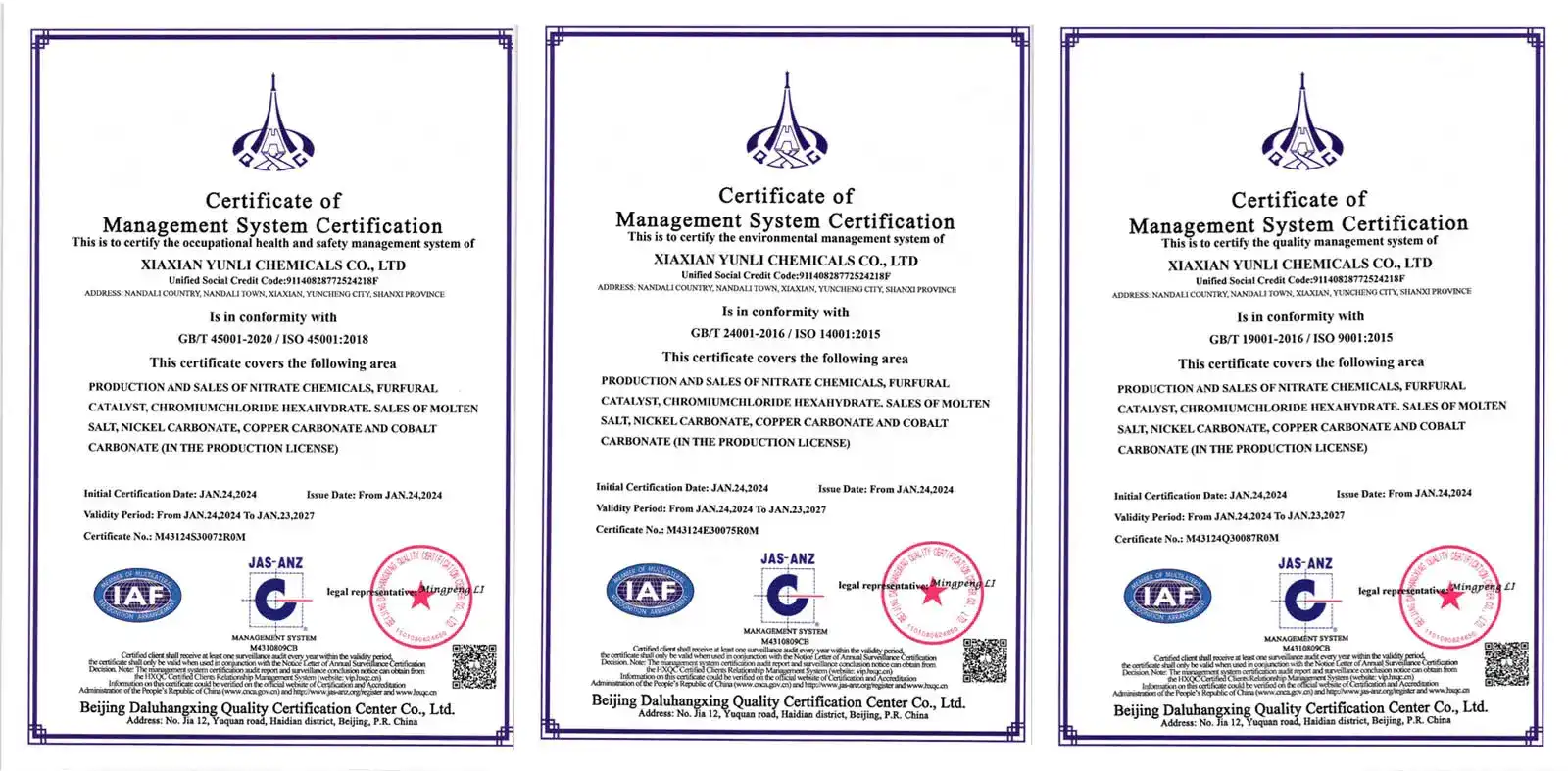
We care about the earth, as shown by our REACH registration and RoHS safety approvals. The ISO 14001 Environmental Management System approval makes sure that steps are taken in a planned way to protect the earth while the product is being made, packed, and sent out. People who buy these licenses don't have to worry about having to follow complicated environmental rules in their own businesses.

Conclusion
To make chromium and nitrate ions that can move around easily and let electricity flow, Chromium Nitrate completely breaks apart in water. This makes it a strong electrolyte. Because of this, it can be used to make drugs, treat metal surfaces, stop rust, and make catalysts. Chromium Nitrate is a more pure form of chromium than other chromium salts. It breaks down easily at high temperatures and doesn't have any chloride or sulfate pollutants that can be a problem. To keep yourself safe, you should know how acidic and hot it is. To keep the earth safe, you need to follow the rules and treat garbage the right way. When you buy from well-known companies, you can be sure that the quality will always be the same, that the rules will be followed, and that you will always have a supply. All of these things are important for hard industrial uses.
FAQ
Can chromium nitrate replace chromium chloride in electroplating applications?
A lot of the time, Chromium Nitrate can be used instead of chromium chloride in electroplating, which is very helpful. Tanks made of stainless steel are not at risk of pitting corrosion, and base materials are not at risk of stress corrosion cracks. It is safe for the environment and works just as well as other ways to protect against corrosion with trivalent Chromium Nitrate devices. The bigger solubility window of Chromium Nitrate makes water stability better. This means that less sludge builds up and less maintenance needs to be done. This alternative works really well for changing coats on metal and zinc.
How should chromium nitrate be stored to prevent degradation?
In climate-controlled rooms with a relative humidity of less than 50%, keep Chromium Nitrate in containers that won't leak or soak up water. Keep it away from burning materials, organic substances, and reducing agents because it breaks down things. Things that don't rust are high-density plastic, stainless steel, glass, and so on. Check storage areas often to see if there are any signs that items are broken or water is getting in. Keeping things in the right way keeps them at the right level throughout their shelf life and avoids the safety risks that come with letting water in or meeting things that don't belong together.
Partner with a Trusted Chromium Nitrate Manufacturer
Yunli Chemical has been making high-purity Chromium Nitrate nonahydrate for over 20 years. This chemical is great for tough industrial uses. We use high-tech tools like ICP-MS and atomic absorption spectrometry, along with a technology center at the regional level, to make sure that every batch meets strict quality standards and that the iron content stays below 30 ppm. All of our goods, from solid crystals to special liquid amounts, are fully certified by REACH, RoHS, and ISO 9001. We cut out the broker by selling Chromium Nitrate directly and having our own export area. We also offer quick technical help during the whole process of buying from us. You can talk to our team about your specific needs, ask for certificates of analysis, or set up free samples of up to 500 grams by emailing wangjuan202301@outlook.com.

References
1. Cotton, F. A., Wilkinson, G., Murillo, C. A., & Bochmann, M. (1999). Advanced Inorganic Chemistry (6th ed.). New York: Wiley-Interscience.
2. Greenwood, N. N., & Earnshaw, A. (1997). Chemistry of the Elements (2nd ed.). Oxford: Butterworth-Heinemann.
3. Atkins, P., & de Paula, J. (2010). Physical Chemistry (9th ed.). Oxford: Oxford University Press.
4. Schweitzer, G. K., & Pesterfield, L. L. (2010). The Aqueous Chemistry of the Elements. Oxford: Oxford University Press.
5. Dean, J. A. (1999). Lange's Handbook of Chemistry (15th ed.). New York: McGraw-Hill.
6. Wiberg, E., Wiberg, N., & Holleman, A. F. (2001). Inorganic Chemistry. San Diego: Academic Press.