


Is cobalt nitrate polar?
Cobalt Nitrate is a neutral chemical, that much is true. This is the hexahydrate form of Co(NO3)2·6H2O (CAS# 10026-22-9). It dissolves easily in water and other polar liquids because it is made up of ions, and they are polar. What this polarity means for how the chemical breaks, responds, and should be treated is very clear. People in charge of buying things and scientific experts who are interested in this chemical for use in industry need to know about it. It is possible to speed up apps and protect your info by learning about these traits.
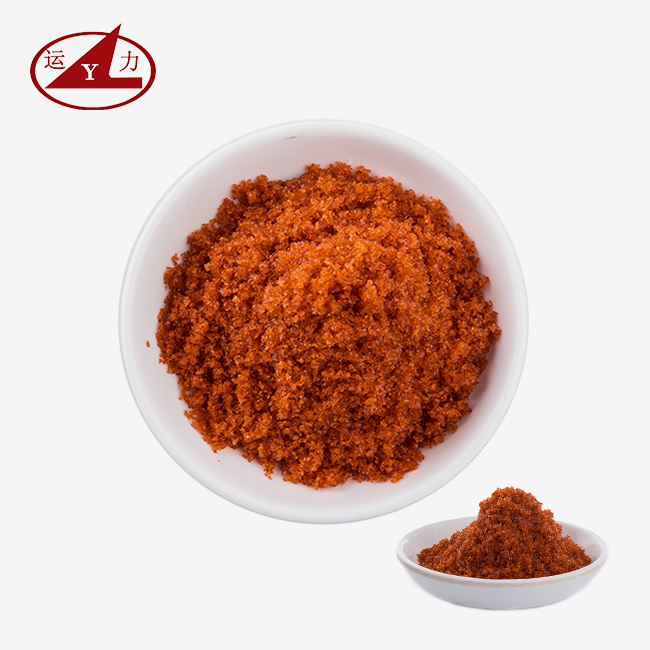
Cobalt Nitrate is a crucial solid chemical that is used in a variety of applications, including catalysis, the production of battery precursors, the coloring of clay, and pharmaceutical intermediates. This solid is dark brown and has a molecular weight of 291.03 g/mol. It can strongly absorb water and oxidize. People who work in buying need to know how polarity affects the choice of sellers, the suitability of products, and the speed of processes. This guide has both basic science information and helpful finding tips so that people who need to make choices can pick high-purity goods that have solid proof that they meet the rules. We will talk about the properties of chemicals, safety rules, industrial uses, and ways to judge sellers so that you can make smart choices when buying in B2B markets that are very competitive.
Understanding Cobalt Nitrate: Chemical and Physical Properties
Molecular Structure and Polarity Characteristics
What does Cobalt Nitrate Hexahydrate's ionic crystal structure looks like. Six water molecules are linked together by the main cobalt ion (Co2+). Two NO3- ions keep the charges the same. Ionic bonds are formed between metal cores that are positively charged and negatively charged polyatomic anions. This creates a molecule with a lot of charge separation. There are resonance structures in the nitrate groups that have electrons that are spread out. This makes them even more magnetic. Polar solvents, such as water (about 134 g/100 mL at 0°C), ethanol, and acetone, break down the substance very well. However, nonpolar organic liquids do not dissolve it at all. This is because of how the molecules are set up.
Critical Physical Properties for Industrial Assessment
The six water molecules in Cobalt Nitrate crystals enhance polarity through interconnected hydrogen bond networks. Around the cobalt ion, these water molecules form an octahedral geometry, creating a hydration shell that facilitates Cobalt Nitrate dissolution in water. Cobalt Nitrate dissociates into Co2+ and NO3- ions upon dissolution, with water OH groups forming strong bonds with both species. Engineers must consider this Cobalt Nitrate behavior when designing formulations or precipitation processes, as Cobalt Nitrate polarity affects pH sensitivity, compatibility with other chemicals, and coordination chemistry in multi-component systems.
Solubility Behavior and Process Implications
A reddish-brown substance with a density of 1.88 g/cm³ can be found as single crystals or pellets that melt. On the other hand, the crystals dissolve in the water that helped them form at 55–56°C, which is also the point at which it melts. It starts to break down thermally when heated above 74°C, giving off nitrogen oxides and turning into cobalt oxide (Co3O4). It can be used in calcination processes that need to turn sulfur or chloride into oxide catalysts without leaving any trash because it breaks down at a low temperature.
Safety, Handling, and Environmental Impact of Cobalt Nitrate
Health Hazards and Protective Measures
Because it contains heavy metals and does damage, Cobalt Nitrate Hexahydrate is bad for your health in many ways. Dust can make your lungs hurt and lead to asthma or hypersensitivity pneumonitis if you take it in for a long time. When it comes in contact with the skin, it can itch and make you more sensitive to it. Eating it can give you stomach problems and cobalt poisoning that can affect your heart and liver. You must carefully follow OSHA's cobalt exposure rules (0.1 mg/m³ over 8 hours) to avoid being too close to this dangerous chemical.
Storage Protocols and Fire Safety Considerations
Rules about safety at work should require closed-system treatment when it is possible to do so. If the process is open, local air circulation should be used. Chemical splash masks, rubber gloves that don't break down easily, and NIOSH-approved particulate respirators (N95 at the very least) must all be carried by each worker. People should be able to get to eyewash stations and emergency showers in less than 10 seconds. Monitoring tools for health and regular checks of the air quality help find patterns in pollution before they hurt health. Buyers need to make sure that sellers give them full Safety Data Sheets (SDS) that follow GHS classification rules and have details on how to clean up after spills, give first aid, and get rid of trash.
Environmental Compliance and Sustainable Procurement
Cobalt Nitrate is a Class 5.1 oxidizer, so it needs to be kept away from things that are on fire, organic chemicals, and reducing agents while it is being stored and moved. It's easy for ions to move around when things are wet, which can cause strong oxidation processes or fires to start when they come into contact with them. Building materials that don't catch fire, spill control systems, and rules against smoking and open fires should all be used in storage areas. Containers need to have the right warning signs and arrows to keep things from spilling out.
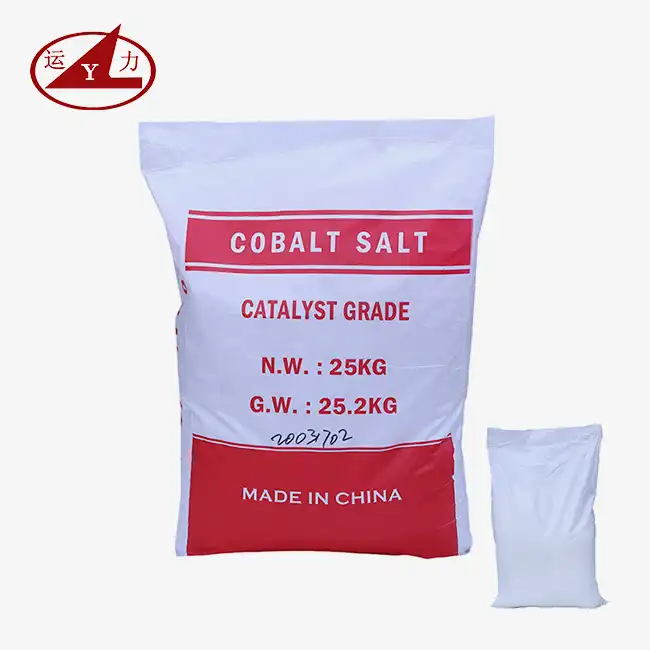
Comparing Cobalt Nitrate with Other Cobalt Compounds for Industry Use
Structural and Functional Differences Among Cobalt Salts
The heat breakdown processes are where Cobalt Nitrate shines. When you heat it, it turns into cobalt oxide. It doesn't leave behind any sulfates or chlorides that could hurt catalytic sites or change how batteries work. With this in mind, nitrate is the best material to start spray pyrolysis, calcination, and chemical vapor deposition. It is good for analytical chemistry and making pharmaceutical intermediates that there are no interfering anions that make it harder for compounds to form or precipitate. The molecule can be used as a weak oxidizer in organic synthesis because it oxidizes. This isn't possible with the sulfate or chloride forms.
Quality Standards and Certificate of Analysis Requirements
Electronic-grade materials are 99.5% pure and have strong controls over metallic flaws. Industrial-grade Cobalt Nitrate hexahydrate, on the other hand, usually passes a minimum test of 98.0% purity. Proof that key factors found using allowed testing methods were checked for each batch is shown by a Certificate of Analysis (COA). For tests, EDTA complexometric titration is used. For finding metals at levels as low as parts per million, ICP-OES or ICP-MS are used for trace metal studies. Iron (generally less than 30 parts per million), nickel, copper, zinc, and lead are all important metals. These all change the application in different ways.
Market Dynamics and Supplier Selection Criteria
When bought in bulk (metric tons), industrial grades of Cobalt Nitrate cost around $15 to $25 per kilogram. Electronic grades, on the other hand, cost 30 to 50 percent more. The prices are linked to the London Metal Exchange prices of cobalt cathodes, but there are some local variations due to the cost of conversion and changes in supply. People in North America often have to pay more than people in Asia because of import taxes and smaller production sizes. But it's easy to follow the rules and the supply chain is safer when you buy from within the country.
Practical Insights: How Does Cobalt Nitrate Work in Industrial Applications?
Catalytic Systems and Chemical Processing
Cobalt Nitrate solutions are put on alumina carriers, and they are then heated and dried under controlled conditions. This makes active cobalt oxide stages on supports with a lot of surface area. It is possible for neutral Cobalt Nitrate solutions to get deep into the pores of alumina. This helps the catalyst work better. Over 400 to 600°C, the nitrate breaks down into Co3O4 nanoparticles that help get rid of sulfur from different parts of crude oil in high-pressure hydrogen atmospheres.
Quality Control and Manufacturing Standards
Checking for quality is more than just looking at chemicals. It also involves checking the qualities of things. The way things break down and behave is affected by the particle size range. Laser diffraction analysis checks the specs to make sure they meet the customer's needs. To find out how much water something has and to make sure that the hydration stoichiometry is right, Karl Fischer titration is used. Deviations show when a substance is partially dehydrated or over-hydrated, which can change predictions of molecular weight and the correctness of the formulation. The X-ray diffraction test looks at the crystal structure to see if the phase is pure and for any cobalt oxide or carbonate particles that might be in it.
Logistics and Procurement Optimization
You can buy a lot of fiber in 25 kg drums with plastic lids, 50 kg woven bags, or 1000 kg big sacks. If you ship solution forms in HDPE drums or ISO tank containers, they will not freeze in the winter because the covers are heated. They should make sure that the packing needs are met so that the goods can be received and kept properly while the quotes are being made. It is easier to keep track of goods and follow the rules when labels are made just for you with GHS-compliant danger symbols, batch numbers, and customer-specific IDs.
Conclusion
Cobalt Nitrate is mostly formed by its polarity in industrial settings because it dissolves easily, breaks down cleanly at high temperatures, and works well with polar reaction media. When buying teams know about these chemical traits, they can pick the right types, make sure they handle them safely, and judge providers based on how well they do paperwork and offer expert support. If you need to change things without leaving any residue, have perfect stoichiometry, or work with materials that are hard on tools, this substance is better than other cobalt salts. In order to maintain competitive production capabilities and meet rising quality standards as industries like battery making and oil refining continue to change, reliable access to high-purity Cobalt Nitrate backed by thorough compliance documentation and quick technical service is still essential.
FAQ
Is Cobalt Nitrate Suitable for Outdoor Storage?
No, you can't store Cobalt Nitrate outside because it gets wet and don't like it when the temperature changes. The compound takes in water from the air, which can cause the container to break down and clump together. When the temperature goes above 55°C, it can start to break down too fast. Warehouses that keep the temperature between 15°C and 25°C and the humidity below 60% keep the goods they store in good shape. A key requirement for sellers is having the right method for storing goods.
How Does Cobalt Nitrate Compare to Cobalt Sulfate for Battery Applications?
Cobalt Nitrate breaks down things more thoroughly and doesn't leave behind sulfur, which can hurt the materials in the battery cathode. When something is heated, the nitrate anion dissolves completely. However, there are a lot of steps needed to get rid of the sulfur, which makes the sulfate less useful in electrochemistry. Manufacturers of batteries use nitrate intermediates to make high-energy-density NCM and NCA chemicals. Keeping impurities in check has a direct impact on safety and service life. There is a small price increase, but the perks of handling make it worth it.
What Documentation Should Accompany High-Purity Cobalt Nitrate Shipments?
There are certificates of analysis that come with full packages. They list the minor metals (Fe, Ni, Cu, Zn, Pb), chloride, sulfate, and things that don't dissolve in water. Safety Data Sheets that follow GHS Rev. 7 rules list risks and tell you what to do in an emergency. As per the UN 1477 oxidizer classification, packages meant for export must have customs records, fumigation certificates, and transportation paperwork. Electronic-grade materials might have extra test results for potassium, sodium, and particle size distribution. Customers can get digital papers from suppliers with a good name by going to their customer sites.
Partner with Yunli Chemical: Your Trusted Cobalt Nitrate Manufacturer
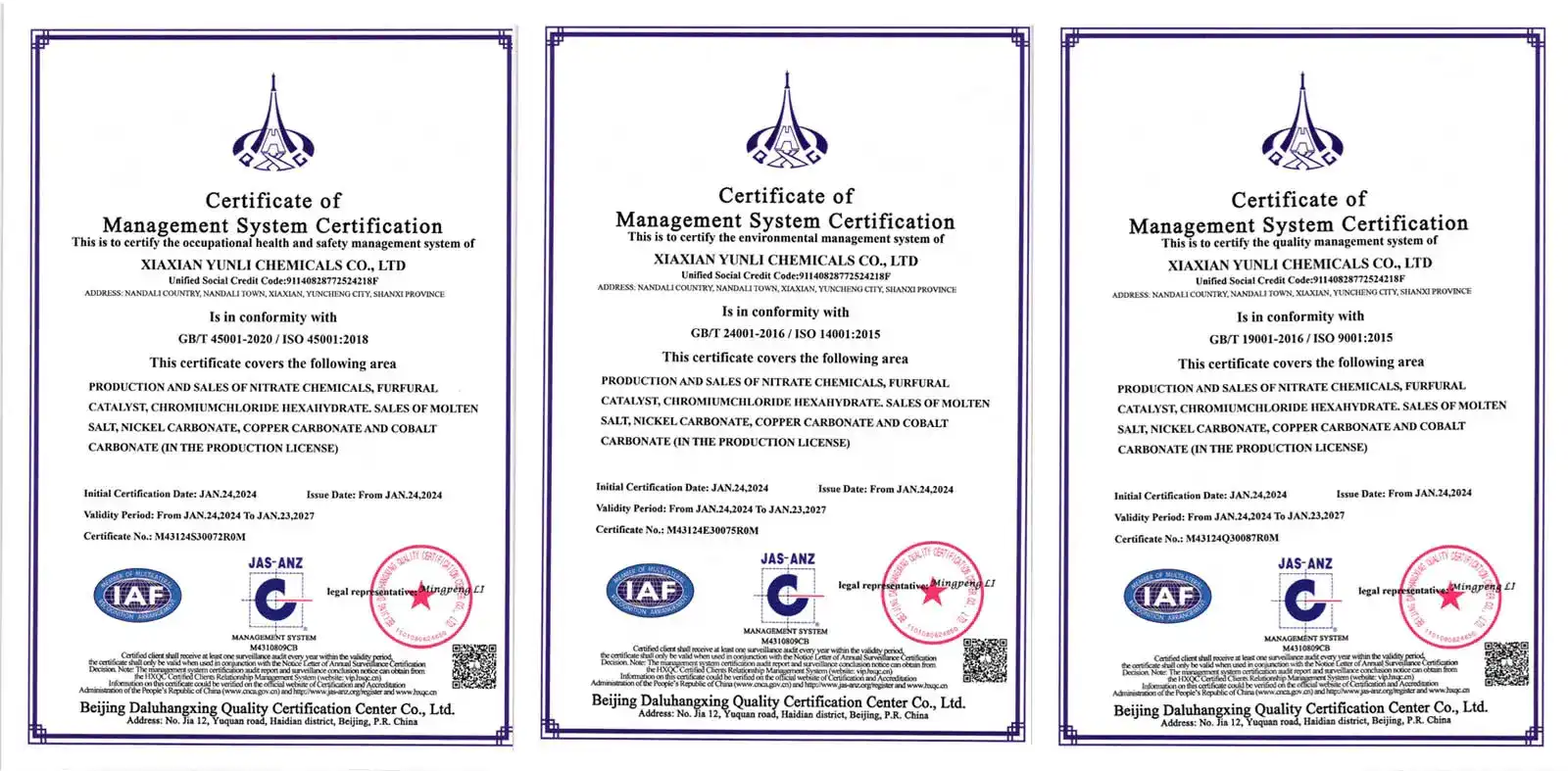
You can get ultra-pure Cobalt Nitrate hexahydrate right from Yunli Chemical. It was made for tough industrial uses. Our more than 20 years of experience in nitrate chemistry is used by our ISO-certified companies to help clients in North America and other places make catalysts, battery precursors, and pharmaceutical intermediates. We promise that there will be less than 30 parts per million of iron, that the recipes won't have any sulfur, and that they will meet the standards for electronic grade. We stand by our word with full COAs and quick technical help. You can get a free 500-gram sample, and the minimum order size is only 25 kg. You can also change the ratios to suit your needs.
In other words, we can help with both small-scale tests and big orders that come in on a daily basis. We make things in a way that is good for the earth and always coming up with new ideas. Our closed-loop environmental systems and provincial technology center approval are proof of this. You can email us at wangjuan202301@outlook.com to set up site checks, talk about your Cobalt Nitrate supply needs, or get expert data sheets. You can get better deals and stay ahead of the competition if you work with a well-known service.

References
1. Cotton, F.A. & Wilkinson, G. (2019). Advanced Inorganic Chemistry, 7th Edition. Wiley-Interscience Publications, New York.
2. Greenwood, N.N. & Earnshaw, A. (2018). Chemistry of the Elements, 3rd Edition. Butterworth-Heinemann, Oxford.
3. Kirk-Othmer Encyclopedia of Chemical Technology (2021). Cobalt Compounds, Volume 7. John Wiley & Sons, Hoboken.
4. American Chemical Society (2020). Reagent Chemicals: Specifications and Procedures for Reagents and Standard-Grade Reference Materials, 11th Edition. ACS Publications, Washington DC.
5. International Organization for Standardization (2022). ISO 6353-1: Reagents for Chemical Analysis - Part 1: General Test Methods. ISO Standards, Geneva.
6. United States Geological Survey (2023). Mineral Commodity Summaries: Cobalt. U.S. Department of the Interior, Reston, Virginia.