


Is ferric nitrate nonahydrate corrosive?
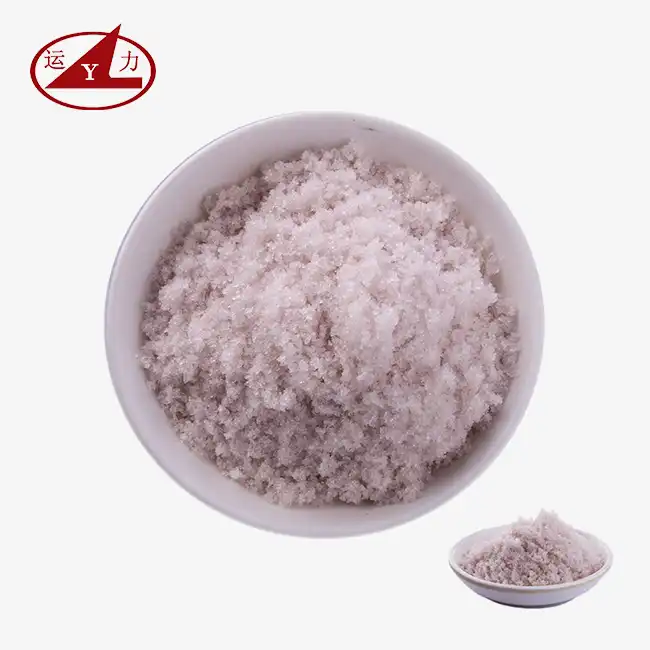
Yes, Ferric Nitrate Nonahydrate is corrosive. With the molecular formula Fe(NO3)3·9H2O and CAS number 7782-61-8, this purple crystalline compound exhibits both oxidizing properties and acidic characteristics that can damage skin, eyes, and certain metal surfaces. The compound's aqueous solution produces a pH of approximately 1.5-2.5, contributing to its corrosive nature. Understanding these properties is crucial for safe handling, proper equipment selection, and compliance with occupational health standards across industries ranging from catalyst manufacturing to electroplating applications.
Understanding Ferric Nitrate Nonahydrate and Its Properties
Ferric Nitrate Nonahydrate is different from other chemicals on the market because of the way it reacts and is structured. The chemical weight of the substance is 404.01 g/mol, and it has nine fully charged water molecules. These nine droplets of water have a big impact on how it is stored, moved, and used. With this much water, the substance is deliquescent, which means it can easily take water from the air. What this means is that it could melt normally when the temperature is above 65%.
Physical Characteristics That Influence Corrosive Behavior
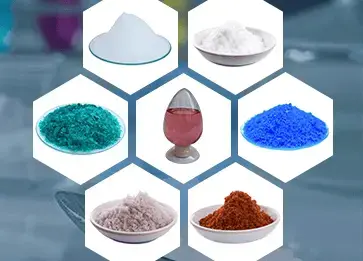
Fe(NO3)3·9H2O is a solid that is purple and has a very low freezing point of 47.2°C. It has a specific density of 1.68. The material breaks down thermally when heated above 125°C, giving off nitrogen oxides and leaving behind iron oxides. Because this is a fairly low temperature at which the product will break down, it must be carefully watched while it is being shipped and kept to make sure it stays stable throughout the supply chain.
Liquids with a high oxidizing potential are made when the material is broken down in water, ethanol, and acetone. It dissolves very well—almost 99.5% in water—so it can be spread out evenly in jobs like making catalysts and treating metal surfaces. Due to the same property, however, even small amounts of water can cause breakdown, which could cause acidic solutions to gather in certain areas of storage bins or processing equipment.
Chemical Reactivity and Oxidizing Properties
Ferric Nitrate Nonahydrate is a Type 5.1 oxidizer, which means it can do more damage than just acid damage, according to the DOT. If the chemical gets in contact with living things, reducing agents, or things that can catch fire, it can cause an explosion or fire. You can oxidize things because the ferric ion can take electrons very well and the nitrate anion can oxidize things. They work together to make a double-threat of rust that can hurt both living things and some metals.
Ionic solutions that are made of water are acidic because the water molecules break down the ferric ion into hydronium ions. There are liquids that always have a pH number less than 3.0 when the amounts are right. Materials made of carbonates, zinc coats, and aluminum alloys that haven't been passivated can be broken down by these liquids. Procurement managers need to know that the amount of rust has a clear link to the purity level. Higher pure grades (≥99%) with chloride levels kept below 50 ppm stop unwanted side effects that can cause equipment to break down faster.
Safety Data Sheet Insights and Handling Precautions
Different safety methods around the world classify Ferric Nitrate Nonahydrate as dangerous in more than one way. The Globally Harmonized System of Classification and Labeling (GHS) uses pictures to show how dangerous this material is. These pictures show that it can rust, damage skin, and hurt your eyes very badly. Signs on properly labeled packages should say "Danger," which means that the substance can damage tissue permanently in as little as three minutes of touch.
Corrosion Classification and Regulatory Requirements
Normal SDS sheets that follow OSHA rules say that Ferric Nitrate Nonahydrate is in Category 1B for Skin Corrosiveness and Category 1 for Eye Damage. It's important to mark these labels correctly, keep them separate, and know what to do in a case. Part 302 of EPCRA says that businesses that deal with more than the minimum planning numbers need to let local emergency planning groups know about it. Title III of SARA says that places that store more than 10,000 pounds must report their stock every year.
This material is also part of the GHS because it corrodes metals. The amount of rust depends on the metal and the metals that make it up. Carbon steel quickly oxidizes and pits when it comes into contact with concentrated solutions. However, some types of stainless steel, especially 316L with molybdenum, are strong enough to handle short-term contact. This range of results shows how important it is to check that materials will work together before buying large items or putting systems together.
Personal Protective Equipment and Storage Best Practices
You need strong safety gear for yourself in addition to lab clothes in order to work safely. Butyl rubber or fluoropolymer gloves that are resistant to chemicals are a good way to keep your hands safe. Face guards and chemical safety masks protect your eyes from splashes while you're moving things around. It's important to protect your lungs when dealing with the substance in places that don't have good air flow or when doing jobs that make dust or mist. Chemical capsule respirators that are approved by NIOSH meet the basic standards for safety.
It's important for the storage system to know how the stuff melts and how it turns into oxygen. Climate-controlled buildings keep the relative humidity below 50% so that rainwater doesn't get absorbed and cause caking. Products stay stable and don't break down too quickly when the temperature is between 15°C and 25°C. There are rules that say chemicals that don't mix with other chemicals, organic materials, or reducing agents should be kept at least three meters apart. Fire-resistant walls can make storage areas with a lot of items safer. We've seen that places that use these steps report almost no cases of reactions that can't be controlled or containers breaking down over long periods of time.
Corrosiveness in Industrial Applications and Use Cases
Ferric Nitrate Nonahydrate is used in lots of different commercial areas, and each one has its own unique problems with stopping rust. If procurement experts know how the compound's qualities affect process equipment and supporting infrastructure, they can figure out how much maintenance will be needed and get the best total cost of ownership.
Catalyst Manufacturing and Material Compatibility
There is a lot of very pure Ferric Nitrate Nonahydrate used to make catalysts. It is used as an iron precursor in supported catalyst synthesis to make methanol, in Fischer-Tropsch processes, and in selective catalytic reduction systems. Some of the things that Ferric Nitrate Nonahydrate solutions touch during the impregnation process are polymer filter media, ceramic supports, and stainless steel vessels. The oxidizing and acidic pH can damage equipment surfaces that aren't properly protected. This could cause iron pollution that makes the end catalyst work less well.
316L stainless steel design with electropolished surfaces is what most makers choose when they want to solve this problem. This makes it easier to clean between production runs and lowers the chance that cracks will rust. Glass-lined steel reactors or hastelloy metal equipment are other choices for places where production is still going on and where the equipment needs to last longer. Before you decide on the exact tools you need, we recommend that you do coupon rust tests on 90-day samples of material that are representative of the whole process.
Metal Surface Treatment and Electroplating Applications
Because Ferric Nitrate Nonahydrate can oxidize, it is used to prepare metal surfaces for the next steps, which are painting or plating. In some recipes, the material can be used instead of chromate, which is better for the environment but still works well to activate surfaces. If the Ferric Nitrate Nonahydrate amount in a process bath is above 15% by weight, it will eat away at aluminum fittings faster and brass rack system parts more than any other metal.
To make progress, the materials for the tank and other tools must be carefully picked out. It is very hard for chemicals to damage polypropylene, polyvinyl chloride, and cross-linked polyethylene, even at high temperatures and amounts that are common in surface treatment. When properly defined, these kinds of materials last longer than five years without much maintenance. On the other hand, metal parts that aren't properly defined break down quickly. You can coat the inside of metal tanks with chemically resistant covers instead of making the whole thing out of polymer when room is limited and metal tank bodies are the best choice.
Wastewater Treatment and Corrosion Mitigation Strategies
Outside, Ferric Nitrate Nonahydrate is used to get rid of sulfur and precipitate phosphate. It does this by clumping things together and burning them. Water treatment plants may come across Ferric Nitrate Nonahydrate solutions with different amounts and pH levels when they are working with industrial waste water. This can lead to different kinds of rust all along the working line. After being used nonstop for a few months, concrete pits that don't have protected covers will have surface weathering and aggregate showing. If you don't cover steel lines correctly, the walls will thin, which can make the system less stable.
Ways to protect yourself include limiting chemicals, managing the environment, and picking the right materials. Tanks and lines made from fiberglass-reinforced plastic are light and won't rust when they are installed for the first time. Surface finishing systems that use epoxy can make steel and concrete buildings last longer. Some managers add chemicals that stop rust to the process lines. These chemicals can be sodium silicate or phosphate-based.
Care should be taken to make sure that these don't get in the way of the goals of the treatment that comes next. You can quickly tell when damage is getting worse with monitoring tools that keep track of corrosion rates through ultrasound thickness measurements or corrosion coupon analysis. This way, you can do preventative maintenance before big problems happen.

Comparing Ferric Nitrate Nonahydrate with Alternatives on Corrosiveness
People often compare Ferric Nitrate Nonahydrate to other iron sources or oxidizing agents before they buy something. Each option has its own pros and cons when it comes to how acidic it is, how well it works with other materials, and how safe it is to use.
Anhydrous Ferric Nitrate Versus Nonahydrate Form
This type of Ferric Nitrate is even better at drawing water into itself than the nonahydrate form because it doesn't have any water to hydrate. Both types break down in acidic liquids, but anhydrous Ferric Nitrate has more iron per unit mass. This means that less material is needed to concentrate the same amount of ferric ions. This difference in content changes the rate of corrosion. During the breakdown phases before the material is fully mixed, dry material can cause faster and more serious localized corrosion.
There is a big difference between how these forms are used. It is hard to keep the dust under control when anhydrous Ferric Nitrate is around because it attracts water very well. This speeds up the rusting process from the inside of the container outward. The nonahydrate form is safer for standard workplace work because it has a solid structure and a lower reaction rate. This is because it doesn't need as much special tools to handle as the dry form does. When used in business, the nonahydrate form is best because it has the right amount of iron, is safe to handle, and stays stable when kept.
Ferric Chloride and Sulfate Alternatives
The two types of ferric chloride liquids are not the same when it comes to rust. A huge amount of speed is added to pitting corrosion in stainless steels by the chloride anion. It also hits passive oxide layers on aluminum alloys faster than nitrate systems. Even though ferric chloride costs less per unit of iron it contains, Ferric Nitrate Nonahydrate is generally the better choice when looking at the total cost of ownership. This includes how long the equipment lasts and how much it costs to keep up.
Another choice is ferric sulfate, which is different in some ways. In many cases, sulfate anion causes less violent rust patterns than nitrate anion because it has a lower reactive potential. Scaling issues can happen with sulfate precipitates when they mix with calcium ions in hard water systems, but they don't happen with nitrate formulas. Because it doesn't contain chloride or sulfate, Ferric Nitrate Nonahydrate must be used for tasks that need it, like making drugs or working with electrical materials, even if it costs more.
When the patterns of impurities are important, Ferric Nitrate Nonahydrate from dependable sources works better. Chemical company Yunli Chemical makes sure that the amounts of chlorine and sodium are both less than 100 parts per million (ppm). As a result, there aren't many unwanted side effects that hurt the quality of the product or make tools rust faster. When used as a catalyst, small amounts of halide contamination can damage active sites. When used as a coating, impurities can cause flaws on the surface. This makes these standards very important.
Procurement Guidance and Supplier Selection Tips
To make sure you always have Ferric Nitrate Nonahydrate, you need to carefully look at possible sources in a lot of different areas that can affect how well your long-term relationship works. The value is more than just the cost per metric ton. The running results and total cost of ownership are based on how consistent the quality is, how much paperwork is done, and how good the expert support staff is.
Certifications and Quality Assurance Indicators
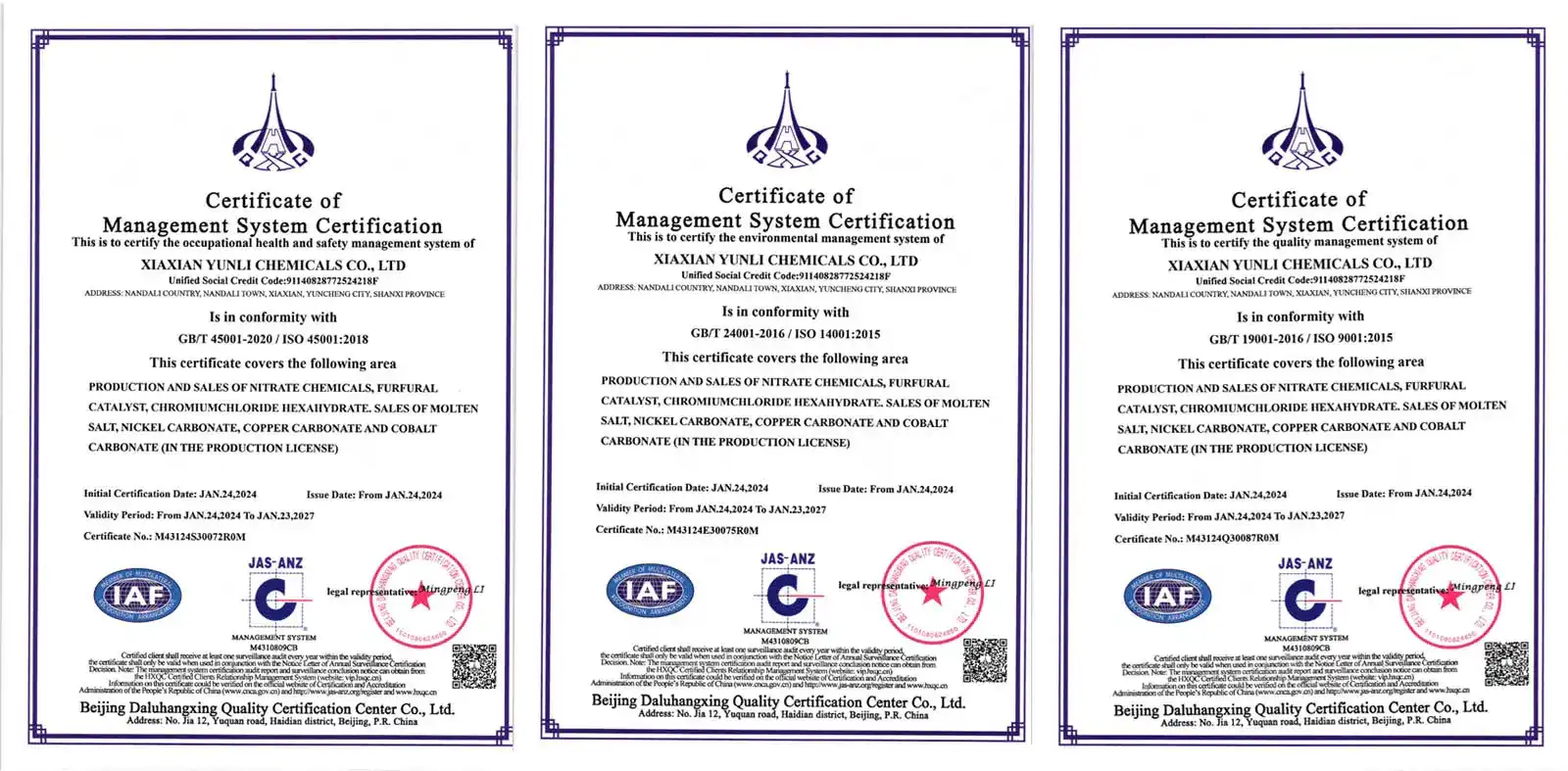
Manufacturers with a good reputation keep third-party certificates that show they care about worker safety, quality control, and the environment. Getting ISO 9001 approval shows that quality control is done in a planned way, from getting the raw materials to checking and sending out the produced goods. The management of production wastes and pollution is shown to be correct by getting ISO 14001 environmental approval. This lowers the bad things that could happen if environmental rules are broken in the supply chain.
You should check more than just basic licenses. You should also see how analytical the providers are and how ready they are to give you all the papers. Some important test results should be on the Certificate of Analysis. These results should be able to be linked to particular output lots and show things like purity, iron content, salt levels, and more. With high-tech testing tools like ICP-MS for finding trace elements and ion chromatography for finding anion impurities, suppliers can make sure that the quality of their products is always good.
Evaluating Technical Support and Customization Capabilities
If your app is hard to understand, it's best to get help from experts and have the product customized. If a seller has its own research and development (R&D) facilities, it can change how the crystal sizes are spread out, the anti-caking agents, or the amounts of solutions that are already dissolved. Some of the steps you have to take will be cut down, which can speed up the production process. This ability to change is especially useful during the part of scaling up or when fixing issues that came up because of unexpected processing problems.
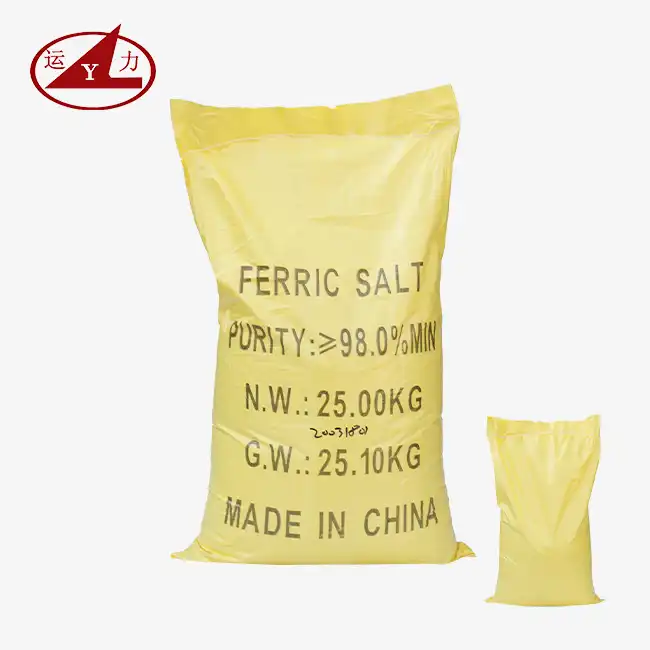
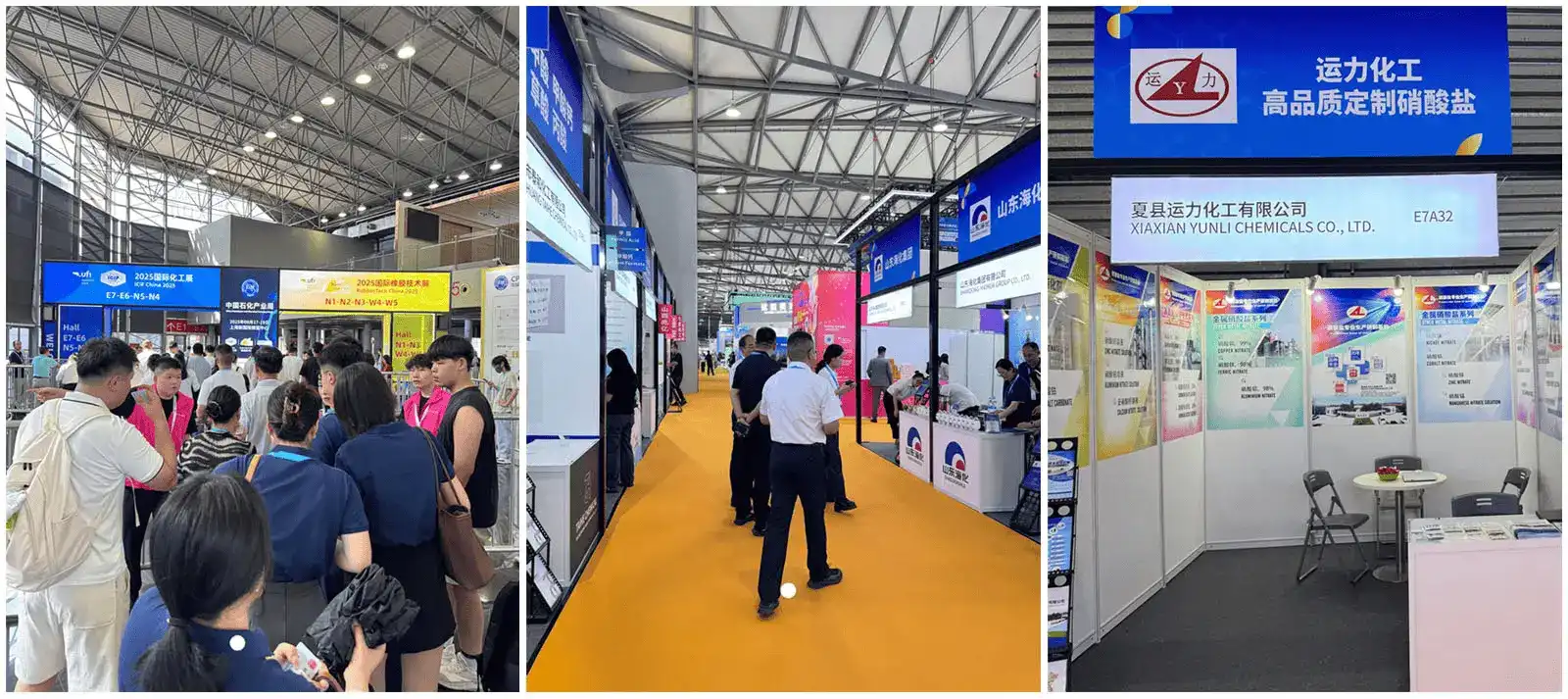
As an example of this kind of customer service, Yunli Chemical is a good one. Since 2019, the company has been a Shanxi Provincial Enterprise Technology Center. It has been in business since 2005. It has been making things and doing advanced research and development for 20 years. Based on your needs, our companies make Ferric Nitrate Nonahydrate. It is possible to raise the purity level from the normal 98% to 99.9% for tough jobs. Depending on the use, the iron content can be kept between 10 and 30 parts per million (ppm). There are a lot of different ways for big buyers to get our products packed, from 25 kg PE bags to bulk ISO tanks.
Aside from meeting normal product needs, our service is unique in other ways as well. You can try us out before you decide to buy because we don't have a minimum order size and give away free samples of up to 500 grams. Our plant can make water-based products in any amount the customer wants. In other words, you don't need to remove anything or worry about the tools rusting. We can get better prices on goods and services without having to pay less for them when we buy straight from companies and handle our own exports.
Technical help can help you with rust problems that are unique to you, questions about how well the tools will work together, and ways to speed up the process. There are coal-chemical engineers on our team, and they have worked with big industry clients to do electroplating, make catalysts, and make specialty chemicals. This lets us give real answers to problems instead of just general tips. This level of application knowledge helps technical engineers and buying managers match the specs of a material with what it needs to do in real life. We can start making things faster and for less money by not having to try and fail as much.
Documentation Access and Regulatory Compliance Support
To make sure that all the rules are followed when running a business around the world, you need to do a lot of papers. At the very least, professionals should give full MSDS sheets that cover GHS standards, REACH pre-registration paperwork for European markets, and FDA Master Files for medical products. The best sellers not only offer these papers, but they also keep them up to date as laws change. This means that customers don't have to deal with gaps in compliance, which could slow things down.
It is just as important to be careful with the papers for transporting Ferric Nitrate Nonahydrate, since it is an oxidizer. You need the right shipping papers, label-putting instructions, and emergency contact information to make sure that your goods are moved safely and that foreign rules are followed. People who are suppliers and have done business all over the world know these rules and can easily follow them. This helps the buying teams do their jobs better and keeps orders on time.
Conclusion
It is important to be careful with Ferric Nitrate Nonahydrate at all times, both in the supply chain and during the lifecycle of an application. It is hard for things to work together with this chemical because it is both an acid and an oxidizer. This means that safety gear and picking the right tools are important. But being aware of these traits makes adoption safe and useful in many business settings.
FAQ
What makes ferric nitrate nonahydrate corrosive to skin and metals?
There are two things going on at the same time that make the result deadly. When Ferric Nitrate Nonahydrate mixes with water, it turns into solutions that are acidic and have a pH between 1.5 and 2.5. These treatments go straight for the proteins and metal oxide layers in the skin. On the other hand, the compound's oxidizing properties, which come from ferric and nitrate ions, make some metal alloys and organic materials break down faster.
How should I store ferric nitrate nonahydrate to minimize corrosion risks?
To keep things from getting wet and breaking down thermally, keep storage areas below 50% relative humidity and between 15°C and 25°C. Boxes made of high-density plastic, polypropylene, or glass are better than metal ones that can rust. Keep the stuff at least three meters away from biological substances, reducing agents, and things that can catch fire by using the right fire barriers.
Can stainless steel equipment safely handle ferric nitrate solutions?
What kind of metal, how concentrated the fluid is, the temperature, and how long the steel is exposed all affect how well it works. Some types of austenitic steels contain molybdenum, like 316L. These steels are resistant enough to touch that only happens sometimes and solutions that are less than 10% concentrated when the temperature is average.
Partner with a Trusted Ferric Nitrate Nonahydrate Manufacturer
Many business people who buy Ferric Nitrate Nonahydrate do so from Yunli Chemical because they know they will get good quality, trustworthiness, and service. Our factories are approved by ISO 9001, ISO 14001, and OHSAS. This means that they have strict quality control and take care of the environment. We have been in business for twenty years and make more than RMB 1 billion a year. Your exact needs can be met by us, whether you need standard grades that are 98% pure or ultra-high-purity recipes that have less than 10 parts per million of iron. By getting our goods straight from the plant, we can do this and keep prices low. When you email wangjuan202301@outlook.com, you can tell us about your ferric nitrate needs, ask for samples, or learn how our technical know-how can help you build your app.
References
1. American Chemical Society. (2022). "Inorganic Iron Compounds: Properties, Reactivity, and Industrial Applications." ACS Symposium Series on Industrial Chemistry.
2. National Institute for Occupational Safety and Health. (2021). "Pocket Guide to Chemical Hazards: Ferric Nitrate." DHHS Publication No. 2021-104.
3. Revie, R.W. & Uhlig, H.H. (2008). "Corrosion and Corrosion Control: An Introduction to Corrosion Science and Engineering, Fourth Edition." John Wiley & Sons, Hoboken, New Jersey.
4. European Chemicals Agency. (2020). "Guidance on the Compilation of Safety Data Sheets, Version 4.0." Helsinki, Finland.
5. Schweitzer, Philip A. (2018). "Metallic Materials: Physical, Mechanical, and Corrosion Properties." CRC Press, Boca Raton, Florida.
6. International Organization for Standardization. (2019). "ISO 11306:2019 - Corrosion of Metals and Alloys: Guidelines for Exposing and Evaluating Metals in Surface Sea Water." Geneva, Switzerland.