


Is Nickel Nitrate Solution Liquid Suitable for Battery Manufacturing?
Nickel nitrate solution liquid is genuinely well-suited for battery manufacturing, notably for the production of nickel-rich cathode precursors such as NCM (Nickel-Cobalt-Manganese) and NCA (Nickel-Cobalt-Aluminum) materials. Being an aqueous compound of Ni(NO3)2, it provides an accurate concentration of nickel ions straight to the co-precipitation reactors without the need to dissolve the solid salts. Its nitrate anion also prevents sulfur contamination that might decrease electrochemical performance in lithium-ion batteries. Sourced at high purity with regulated amounts of trace metals, this reagent enables consistent particle shape, tighter stoichiometric control, and cleaner battery chemistry on large-volume manufacturing lines.

Understanding Nickel Nitrate Solution and Its Chemical Properties
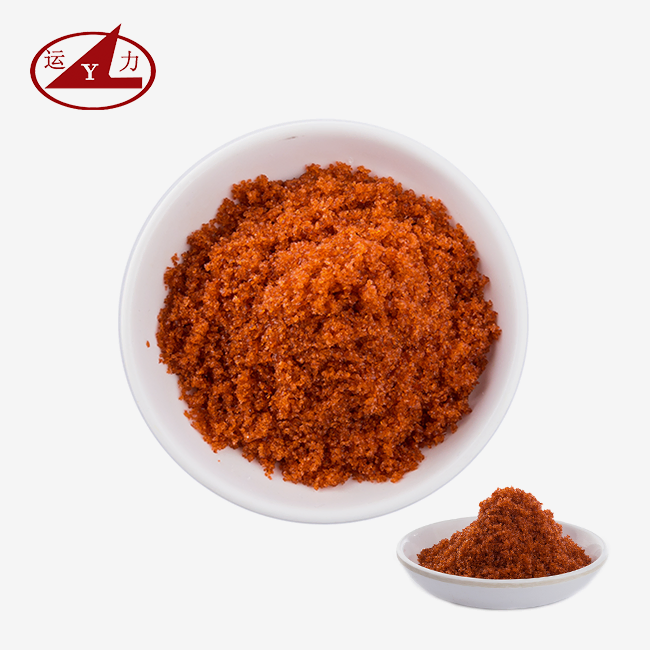
You can’t make an educated procurement choice if you don’t know what it is you’re purchasing. Nickel nitrate hexahydrate CAS# 13478-00-7 Ni(NO 3) 2 ·6H 2 O A dry green crystalline solid, melting point 56.7°C, boiling point 136.7°C, specific density 2.05. It takes up water very fast and breaks down in dry air. It slowly loses water molecules at temperatures over 100C and becomes anhydrous salt.
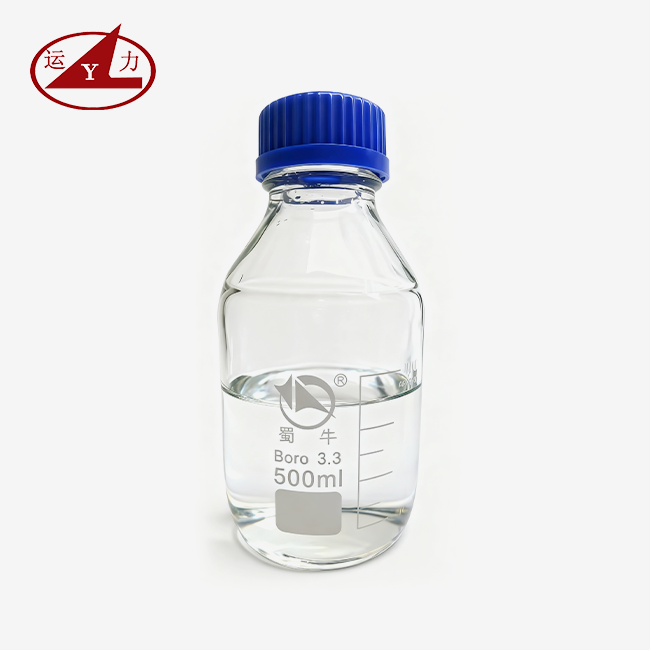
When mixed with an industrial liquid solution, it becomes a clear, emerald-green nickel nitrate solution liquid that is mostly water. Key parameters for the liquid form include:
- Nickel content: Typically between 13% and 50% w/w, customizable by concentration
- pH range: 2.0–4.0 (acidic, adjustable for specific process requirements)
- Specific gravity: 1.40–1.60 g/cm³ at 20°C
- Trace metal impurities: Fe < 30 ppm, Cu < 5 ppm, and Cl⁻ < 50 ppm
You can’t make an educated procurement choice if you don’t know what it is you’re purchasing. It is soluble in alcohol and water, and interacts violently with organic compounds. It is very marginally soluble in acetone. For storage and shipment it should be stored in HDPE or 304L/316L stainless steel tanks at temperatures higher than 20°C to avoid crystallization. The chemical properties of this solution are immediately adapted to automated liquid-feed production systems, a great benefit for battery and catalyst facilities of today.
Nickel Nitrate Solution in Battery Manufacturing: Applications and Benefits
Role in Cathode Precursor Synthesis
Making NCM and NCA cathode materials through co-precipitation is the most important scientific application in battery production. In this method, salts of nickel, cobalt, and manganese are fed simultaneously into a mixed tank reactor under controlled pH and temperature. The nickel nitrate solution liquid form is preferred for certain proprietary processes because it eliminates sulfate leftovers that can disrupt the crystal lattice structure of cathode active materials, affecting stability and energy density.
Liquid Form Advantages Over Solid Salts
Switching from solid nickel nitrate hexahydrate to the pre-dissolved liquid form fixes several operational bottlenecks for R&D engineers and production managers. Here are the core processing advantages this liquid reagent offers:
- Eliminated dissolution step: The liquid integrates directly into continuous flow reactors, saving labor hours and reducing thermal energy consumption per batch.
- Reduced dust exposure: Solid nickel salts generate fine particles that pose inhalation risks classified as carcinogens under OSHA standards. The liquid form dramatically reduces airborne nickel particulate.
- Stoichiometric precision: Pumped delivery systems enable micro-dosing accuracy, maintaining the tight molar ratios needed for consistent NCM precursor particle morphology and tap density.
- Process scalability: Liquid feed works seamlessly with automated dosing equipment in large-scale facilities, supporting throughput increases without hiring more people.
These advantages translate into lower total cost of ownership, fewer safety incidents, and more reproducible electrochemical outcomes for battery production lines.
Comparing Nickel Nitrate Solution with Alternative Nickel Compounds
Battery and catalyst makers compare nickel sulfate, nickel chloride and nickel nitrate with each having different merits and downsides. Nickel sulfate hexahydrate is still the most used base salt for NCM production owing to established supply channels and reduced material prices. However, if the washing is not adequate, sulfate anions may persist as trace impurities that might alter the electrochemical impedance of the cathode material.
Nickel chloride solution is used for electroplating, but not often to synthesize battery precursors. Chloride ions may lead to undesired halide contamination of the cathode materials and promote corrosion in stainless steel reactors.
Nickel nitrate solution liquid occupies a distinct niche as the preferred choice for proprietary co-precipitation processes requiring sulfate-free and chloride-free sourcing. It is ideal for catalyst manufacturing where high solubility and uniform pore penetration are required, and for R&D projects demanding traceable, ultra-low-impurity batches. The nitrate anion decomposes totally during calcination, leaving no ionic residuals that could damage the active catalytic sites or the battery crystal structure.

Procurement Considerations for Nickel Nitrate Solution
Supplier Selection Criteria
Sourcing nickel nitrate solution liquid at an industrial scale requires evaluating suppliers against technical and financial benchmarks beyond just the price per kilogram:
- Confirmed nickel concentration: Verified with a batch-specific Certificate of Analysis (COA) from ICP-OES or ICP-MS analysis.
- Demonstrated control of trace metals: Maintaining minor metals like Fe, Cu, Zn, Na, and Ca at or below application-specific thresholds.
- Compliance documentation: Packaging and operations must meet ISO 9001, REACH, GHS/CLP, and ADR/IMDG standards.
- Flexible concentration customization: Ability to provide 10%–50% w/w concentrations to match specific reactor feed requirements.
- Crystallization risk management: Using insulated packaging or temperature-controlled logistics above 20°C to prevent salting out.
Pricing for the solution is linked to nickel spot prices on the London Metal Exchange (LME). Long-term supply agreements with price-adjustment clauses tied to LME benchmarks are recommended to protect procurement budgets against volatility.
Sampling and Qualification Process
The structured qualification workflow typically consists of six steps: technical specification review, requesting a free sample, in-house concentration verification, trace metal validation, trial order, and signing a long-term supply agreement. Requesting a 500-gram sample before committing to bulk volumes is standard practice for any reputable supplier.
Safety, Environmental, and Regulatory Aspects
Nickel nitrate solution liquid is classified as a Class 5.1 Oxidizer under international transport regulations. It is harmful if swallowed and poses skin and eye irritation risks. When handling this chemical, appropriate PPE—including acid-resistant gloves, a face shield, and an acid-resistant apron—is mandatory.
Environmental regulations from the EPA and REACH require that nickel-containing wastewater be treated before discharge. Suppliers with ISO 14001 certification and documented nitrate wastewater treatment systems provide assurance that their manufacturing meets global environmental compliance standards. OSHA's Hazard Communication Standard (29 CFR 1910.1200) requires full SDS documentation to accompany all shipments into U.S. facilities.
Conclusion
Nickel nitrate solution liquid is a technically sound and operationally efficient precursor material for battery cathode synthesis, catalyst impregnation, and surface treatment applications. Its liquid form eliminates processing steps, reduces EHS exposure risks, and enables the exact stoichiometric precision that high-performance battery manufacturing demands. The key to unlocking these benefits lies in sourcing from a supplier who can deliver verified purity, concentration stability, and full regulatory compliance batch after batch.
FAQ
Is the liquid form safer to handle than solid nickel nitrate hexahydrate?
Yes. The nickel nitrate solution liquid form significantly reduces airborne nickel dust, which is the primary inhalation hazard associated with solid salts. While standard PPE like gloves and face shields are still required, total EHS exposure incidents are materially lower in liquid-fed systems.
At what temperature does nickel nitrate solution begin to crystallize?
A standard 14% Ni solution may begin to salt out near 15°C (59°F). Heated transport and storage above 20°C prevents line blockages and concentration drift during transit.
How does nickel nitrate compare to nickel sulfate for NCM battery precursors?
Nickel sulfate dominates mainstream production, but nickel nitrate is preferred in sulfate-sensitive processes because its anion decomposes cleanly during calcination, leaving no sulfur residual that could interfere with cathode lattice integrity.
What tank materials are compatible with storage?
304L or 316L stainless steel and HDPE are the accepted materials. Carbon steel and copper alloys corrode rapidly due to the solution's acidity and oxidizing nature.
Why does sodium content matter for catalyst-grade applications?
Sodium promotes sintering of catalyst surfaces at elevated operating temperatures, reducing active surface area and shortening catalyst lifespan. Premium-grade solutions maintain Na below 50 ppm to protect performance.

Partner with Yunli Chemical for High-Purity Nickel Nitrate Solution
Yunli Chemical has supplied verified, high-purity nickel nitrate solution liquid to catalyst manufacturers and battery material producers for over two decades, backed by ISO 9001, ISO 14001, and OHSAS certifications and annual sales exceeding RMB 1 billion. As a trusted supplier, we offer 10%–50% customizable concentrations, free 500-gram samples, and batch-specific COA documentation. Reach our technical team directly at wangjuan202301@outlook.com to start your qualification process today.
References
1. Whittingham, M. S. (2004). Lithium Batteries and Cathode Materials. Chemical Reviews, 104(10), 4271–4302.
2. Ohzuku, T., & Makimura, Y. (2001). Layered Lithium Insertion Material of LiNi₁/₃Co₁/₃Mn₁/₃O₂ for Lithium-Ion Batteries. Chemistry Letters, 30(7), 642–643.
3. Brodd, R. J. (Ed.). (2012). Batteries for Sustainability: Selected Entries from the Encyclopedia of Sustainability Science and Technology. Springer.
4. European Chemicals Agency (ECHA). (2023). REACH Regulation: Nickel Compounds Restriction Dossier. ECHA Publications.
5. U.S. Occupational Safety and Health Administration (OSHA). (2016). Hazard Communication Standard: Safety Data Sheets (29 CFR 1910.1200). U.S. Department of Labor.
6. Noh, H.-J., Youn, S., Yoon, C. S., & Sun, Y.-K. (2013). Comparison of the Structural and Electrochemical Properties of Layered Li[NixCoyMnz]O₂ (x = 1/3, 0.5, 0.6, 0.7, 0.8 and 0.85) Cathode Material. Journal of Power Sources, 233, 121–130.