


Top Calcium Nitrite Powder Suppliers for Global Construction Buyers - yunli chemical
When construction buyers across the Middle East, Southeast Asia, and North America search for a dependable corrosion inhibitor admixture, calcium nitrite powder consistently appears at the top of the specification sheet. As a non-chloride anodic inhibitor with the molecular formula Ca(NO₂)₂ (CAS 13780-06-8), it passivates steel rebar surfaces, blocks chloride penetration, and extends structural service life by decades. Choosing the right supplier for this compound determines not just price but batch-to-batch consistency, moisture-proof packaging integrity, and uninterrupted project timelines. This guide walks through what matters most and explains why Yunli Chemical stands out.

Understanding Calcium Nitrite Powder and Its Role in Construction
Chemical Identity and Physical Properties
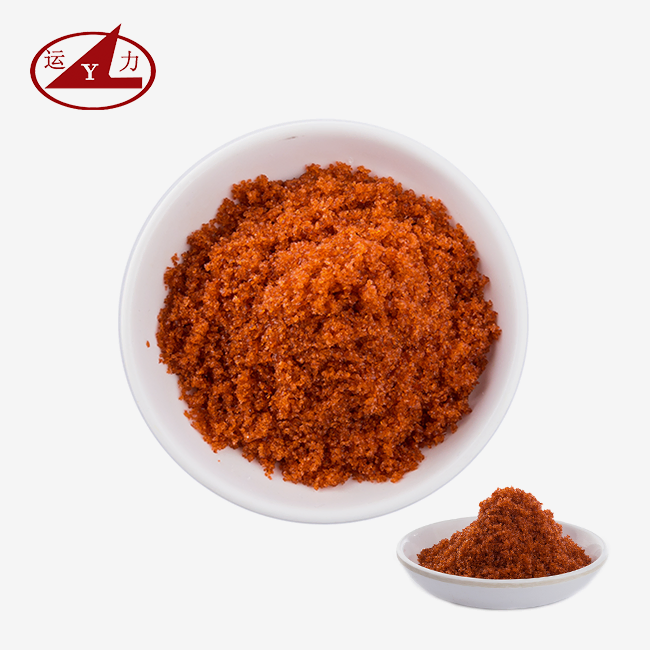
The chemical weight of Ca(NO₂)₂ is 132 g/mol, and it is a white to light yellow powder. Its density changes with temperature and runs from 2.23 to 2.53 g/cm³. It melts at 100 °C and dissolves quickly in water but not so quickly in alcohol. One feature that every procurement engineer needs to be aware of is how easily it absorbs water. When it comes into contact with air humidity, it causes deliquescence and caking, which makes it harder to mix dry materials accurately.
Mechanism of Action in Reinforced Concrete
Anodic corrosion can't happen when calcium nitrite is present. It fights with chloride ions on the surface of the steel, oxidizing ferrous ions to make a thick, stable iron oxide passivation film. According to a study published in the journal Cement and Concrete Research, adding 2–4% by weight of cementitious material protects against chloride in places like chemical processing floors, marine structures, and coastal bridges. The compound not only stops corrosion, but it also speeds up early cement hydration and meets the requirements of ASTM C494 Types C and CI. This double benefit cuts down on formwork cycles without sacrificing long-term durability.
Criteria for Selecting the Best Corrosion Inhibitor Supplier
Not all suppliers who quote Ca(NO₂)₂ give the same number. When looking for a company to make calcium nitrite powder, purchasing managers should compare candidates based on the following must-have qualities:
- Verified purity and impurity control: Industrial-grade material should carry ≥94% active content at minimum; premium grades reach ≥99.5%. Critical impurity ceilings include Fe ≤30 ppm, Na ≤50 ppm, and heavy metals (Pb, Cd) ≤10 ppm. Chloride ion content must stay below 0.1% — any excess negates the corrosion-inhibiting benefit entirely.
- Consistent particle size distribution: Particle uniformity governs how evenly the inhibitor disperses within dry-mix mortars and powder admixtures. Fluctuating granulometry causes uneven protection zones and unpredictable early-strength gain across a concrete pour.
- Moisture-proof packaging integrity: Because the powder is strongly hygroscopic, multi-layer moisture-barrier bags or sealed bulk containers are essential. Packaging failure during ocean freight translates directly into caked, unusable product upon arrival.
- Export compliance and documentation: International buyers need accurate SDS sheets, Certificates of Analysis (COA), and HS code documentation. Delays at customs erode project schedules and inflate carrying costs.
Together, these traits show a supplier that looks out for the buyer's formulation quality, the continuity of the supply chain, and the total cost of ownership, not just the price of the line item.
Top Calcium Nitrite Powder Suppliers Globally — Spotlight on Yunli Chemical
Why Yunli Chemical Stands Apart?
Yunli Chemical (yunlichemical.com), which was founded in May 2005 and is based in Xia County, Yuncheng City, Shanxi Province, China, has grown into a producer with yearly sales of more than RMB 1 billion and fixed assets worth RMB 300 million. The company has all three certifications at the same time: ISO 9001, ISO 14001, and OHSAS 18001; this is a rare occurrence that shows mature process control in terms of quality, the environment, and worker safety. In 2019, Shanxi Province officially named Yunli Chemical a "Provincial-Level Enterprise Technology Center," marking the company's research and development (R&D) skills.
The factory has a high-quality analytical lab with ICP-MS and atomic absorption spectrometers that can check impurity profiles at the batch level all the way down to 4N-grade purity. This infrastructure can handle both standard industrial products and custom-made high-purity calcium nitrite for tough applications further down the line.
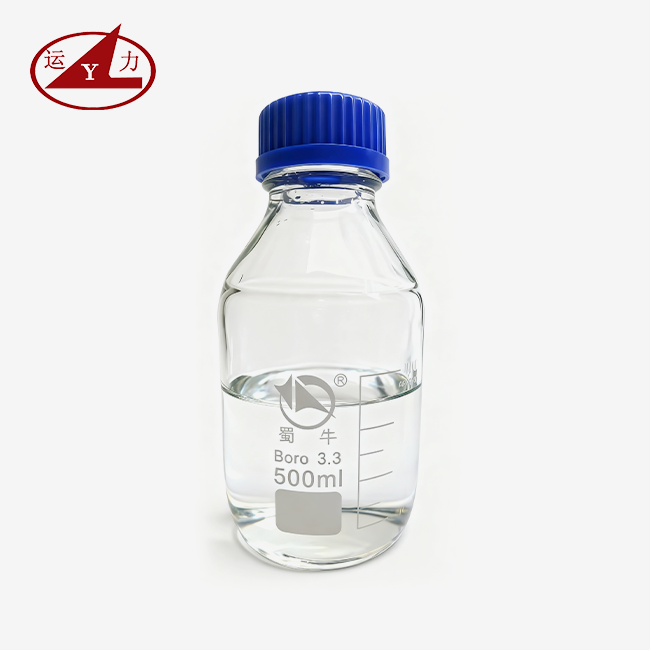
This is reflected in Yunli Chemical's calcium nitrite powder specification: clarity ≥99.5%, Fe ≤30 ppm, Na ≤50 ppm, heavy metals ≤10 ppm; offered as powder, crystals, or liquid that has already been dissolved. Packaging includes 25 kg moisture-proof bags and bulk cases, and the user can choose the labels and style that works best for them. The company does factory-direct export, which means there are no middlemen. This gets rid of the markup layers that make buying things more expensive.
Yunli Chemical offers free samples of up to 500 grams and trial orders starting at 1 metric ton for buyers who want to make sure the product works before committing to a large order. This low-stress entry point fits with the typical dry-mix mortar industry cycle of 1 to 2 months for technical evaluation and formula verification.

Comparing Calcium Nitrite with Alternative Corrosion Inhibitors
Teams in charge of buying things often compare calcium nitrite to sodium nitrite, calcium nitrate, and accelerators based on calcium chloride. This is where the differences matter in terms of how they work.
Sodium nitrite has similar passivation properties, but it adds sodium ions that raise the alkali content, which is a problem for concrete chemistry in alkali-silica reactive aggregate settings. Calcium nitrate helps with early strength but doesn't really stop rusting at normal doses. Calcium chloride, the old accelerator, speeds up the corrosion of rebar and isn't allowed in ACI 318 or most international bridge codes for reinforced concrete.
Calcium nitrite makes these trade-offs easier to handle: it adds calcium instead of sodium, speeds up or slows down reactions, and is safer to handle than other nitrites when following standard safety rules for industrial hygiene. When compared to 30–35% aqueous solutions, the powder form is easier to ship because it is lighter, doesn't need to be frozen during winter travel, and has a longer shelf life when kept dry and packed. For calcium nitrite powder, these advantages make it a practical choice for dry-mix applications where freight efficiency, storage stability and controlled reactivity all matter.
How to Purchase Calcium Nitrite Powder for Your Construction Needs?
International business-to-business buyers usually go through an organized five-step process to buy something. First, technical teams use COA and sample material from the seller to measure particle size, hygroscopicity, and dissolving rate. The powder is then mixed with polycarboxylate superplasticizers and other ingredients in dry-mix tests to make sure it works well with them. The price standard is set by at least three rival quotes. Shipping samples of 1 to 5 metric tons confirm how well the packaging works and how long it takes to deliver. When trials go well, they lead to long-term contracts with set delivery dates.
Before doing business with a seller, buyers using sites like Alibaba International or Made-in-China can check their qualifications against databases of third-party certifications. A common way to tell the difference between reliable suppliers and commodity traders is to ask for batch-specific COA documentation that includes nitrite assay by redox titration, chloride ion content, and water-insoluble matter.
Conclusion
Choosing a provider for calcium nitrite powder is a business and technical choice that will have long-lasting effects on the structure. The compound's performance in chloride-filled settings relies on its purity consistency, particle uniformity, and the integrity of its packing. You can't just assume any of these things without checking the paperwork. Yunli Chemical gives to every order 20 years of experience in production, recognition as a provincial R&D center, and three levels of certification. Its factory-direct model gets rid of supply chain uncertainty, and its flexible customization options, such as changing the purity or making the liquid form already dissolved, make it useful for a wide range of companies that make dry-mix mortar, anti-corrosion coatings, and international trade.
FAQ
What purity grade should dry-mix mortar producers specify?
For most concrete additive uses, industrial-grade material with at least 94% active content is the standard. For exact dry-mix recipes where small amounts of iron or sodium could affect the delicate chemistry of Portland cement, specifying ≥99.5% purity with Fe ≤30 ppm and Na ≤50 ppm gives formulators more room for error and more reliable batch results.
How does Yunli Chemical prevent hygroscopic caking during shipment?
Yunli Chemical uses multi-layer packing that keeps moisture out and has sealed inner cases. Before a container is loaded, each pallet is put together in a humidity-controlled area. Buyers get a batch-specific COA that confirms the moisture content at the time of shipping. This gives them a baseline that can be used to check the state upon arrival.
Can the powder be used alongside polycarboxylate superplasticizers?
Because calcium nitrite speeds things up, it can cut down on the open time in high-range water-reducer systems. It is suggested that you do a compatibility pre-test that changes the PCE dose. As part of the usual pre-order sample review service, Yunli Chemical's expert team gives advice on formulation.
What is the recommended storage practice after opening?
Keep in a building that is cool, dry, and well-ventilated. Use moisture-resistant closures to reseal opened bags right away. To keep bags from stress cracks, don't stack them higher than the manufacturer's recommended box height.
Partner with Yunli Chemical — Your Trusted Calcium Nitrite Powder Supplier
Yunli Chemical sends ultra-pure Ca(NO₂)₂ straight from the plant to your production line, with no middlemen and no extra fees. We are ready to help you with your next building project because our products are ≥99.5% pure, our quality systems are ISO-certified, and you can get free samples up to 500 g. To get a COA, a competitive quote, or a custom formulation consultation, please email our technical sales team at wangjuan202301@outlook.com right now.

References
1. Berke, N. S., & Hicks, M. C. (1992). Calcium nitrite corrosion inhibitor in concrete. Cement, Concrete and Aggregates, American Society for Testing and Materials.
2. Söylev, T. A., & Richardson, M. G. (2008). Corrosion inhibitors for steel in concrete: State-of-the-art report. Construction and Building Materials, Elsevier.
3. American Concrete Institute. (2019). ACI 318-19: Building Code Requirements for Structural Concrete. ACI Committee 318.
4. ASTM International. (2017). ASTM C494/C494M-17: Standard Specification for Chemical Admixtures for Concrete. ASTM International.
5. Page, C. L., & Page, M. M. (Eds.). (2007). Durability of Concrete and Cement Composites. Woodhead Publishing.
6. Hansson, C. M., Mammoliti, L., & Hope, B. B. (1998). Corrosion inhibitors in concrete — Part I: The principles. Cement and Concrete Research, Elsevier.