


Is Zinc Nitrate Hexahydrate Useful in Green Synthesis Processes?
Zinc Nitrate Hexahydrate (Zn(NO₃)₂·6H₂O, CAS# 10196-18-6) demonstrates significant utility in green synthesis processes, primarily functioning as an eco-friendly oxidizing agent and catalyst precursor. Its exceptional water solubility, minimal toxic residue upon thermal decomposition, and compatibility with aqueous reaction systems align with core green chemistry principles—reducing hazardous solvents and enabling cleaner chemical transformations across pharmaceutical intermediates, nanomaterial fabrication, and sustainable catalyst development.
Understanding Zinc Nitrate Hexahydrate: Properties and Industrial Applications
Molecular Structure and Physical Characteristics
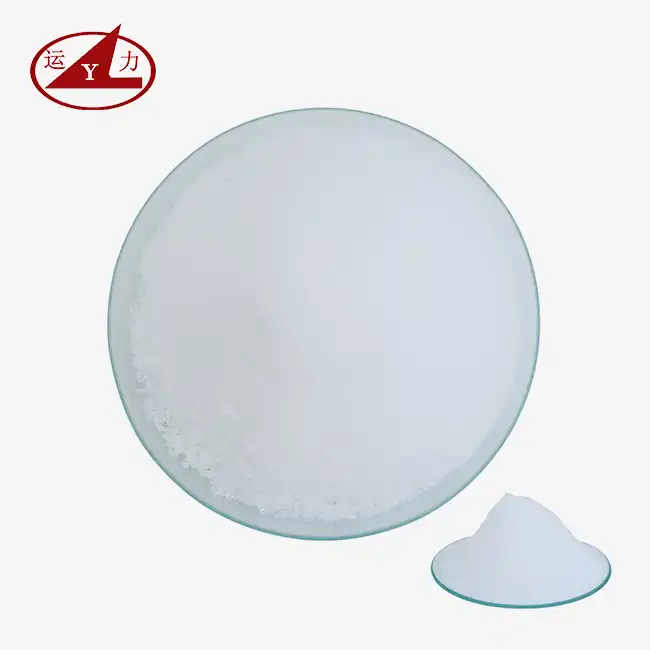
For this solid zinc salt, the crystals are tetragonal and colourless. They have a molecular weight of 297.47 g/mol. The Zinc Nitrate Hexahydrate structure has six water molecules bonded to the central zinc ion. This gives it a specific density of 2.065 and a very low melting point of 36.4°C. Above 37°C, the chemical changes into its dry form, which means it needs to be stored and handled with great care while the temperature is high. Because it is hygroscopic, rigid crystals quickly turn into concentrated water solutions when they come into contact with humidity.
Solubility and Reactivity Profile
This zinc salt is different from zinc oxide or zinc carbonate, which don't dissolve well in water or alcohol because they don't dissolve at all. Solubility is more than 180 g per 100 mL of water at 20°C. This makes it possible to make high-concentration stock solutions that are needed for industrial batch processes. Aqueous liquids keep their acidic pH levels between 3.5 and 4.5, which makes acid-catalyzed processes possible without the need for extra acidifiers. The Class 5.1 oxidising ability of the nitrate anion (UN 1514) increases reactivity in organic synthesis and burns cleanly to nitrogen oxides during calcination, leaving little residue.
Traditional Industrial Functions
In addition to new uses in green chemistry, this substance has long-standing uses in many other areas. When used in electroplating, it makes zinc coats on steel that are resistant to rust through electro-galvanizing. The material is used in phosphonating agent formulations for making cars to create fine-grained protective layers that make paint stick better. It is used as a dye mordant in the textile industry, and its catalytic qualities are used in acid-mediated organic reactions in the pharmaceutical industry. Agricultural products benefit from its two nutrients—zinc and nitrate nitrogen—which are given in a form that is quickly bioavailable.
Zinc Nitrate Hexahydrate in Green Synthesis Processes: Mechanisms and Benefits
Defining Green Chemistry Principles
Anastas and Warner came up with twelve main ideas that are at the heart of green synthesis. These ideas are about reducing trash, making chemicals safer, using less energy, and atom economy. When choosing an agent, substances with little environmental persistence, low toxicity, and renewability are given the most weight. Volatile chemical solvents are replaced by water-based reaction systems. Thermal processes run in mild conditions, and waste products break down into harmless substances. Adopting these principles by businesses would help with legal pressures while lowering the costs of dealing with hazardous garbage and using energy.
Catalytic and Oxidizing Functions in Sustainable Processes
Zinc Nitrate Hexahydrate is very good at a number of green synthesis methods. Using water-based solutions with controlled pH and temperature to create uniform nanomaterials without any harmful steps is a good way to start making zinc oxide nanoparticles through sol-gel or hydrothermal methods. At high temperatures, the nitrate part breaks down cleanly, while chloride or sulphate salts give off harmful or long-lasting emissions.
Catalytic uses include Lewis acid-promoted organic coupling reactions, in which zinc ions activate substrates in mixed water and alcohol systems, getting rid of chlorinated solvents. The controlled oxidising environment that nitrate ions provide helps the oxidative functionalisation of aromatic molecules. This results in focused products with lower risks of overoxidation.
Comparative Environmental Advantages
When you look at your options, you can see specific benefits. Zinc chloride is very easy to dissolve, but it can contaminate stainless steel tools and some farming tasks. Because zinc sulphate is less soluble, concentration ranges are limited, and sulphate builds up in systems that use water to circulate. Strong acids are needed to dissolve zinc oxide, which adds to the number of steps and chemicals needed. The hexahydrate is completely soluble, breaks down cleanly at high temperatures, and works well with neutral to acidic water systems. This makes it a good choice for closed-loop manufacturing, where reusing water and making little trash is what makes the business profitable.
Procurement Considerations for Zinc Nitrate Hexahydrate in Green Synthesis Applications
Quality Grades and Purity Requirements
Material for industry usually promises to be at least 98% pure, with iron levels below 30 parts per million and lead levels below 50 parts per million. For uses that need stricter standards, like pharmaceutical intermediates, electronic materials, and advanced catalysts, you need custom grades that are close to 99% pure and have heavy metal profiles that meet USP or electronic-grade standards.
We check the quality using Inductively Coupled Plasma Optical Emission Spectroscopy (ICP-OES), which confirms that the zinc content is close to the theoretical 21.9% while keeping an eye on small amounts of contaminants. A water-insoluble content of less than 0.05% guarantees full breakdown, which is important for processes that need to be filtered, like spray coating or irrigation fertigation.
Supplier Reliability and Documentation
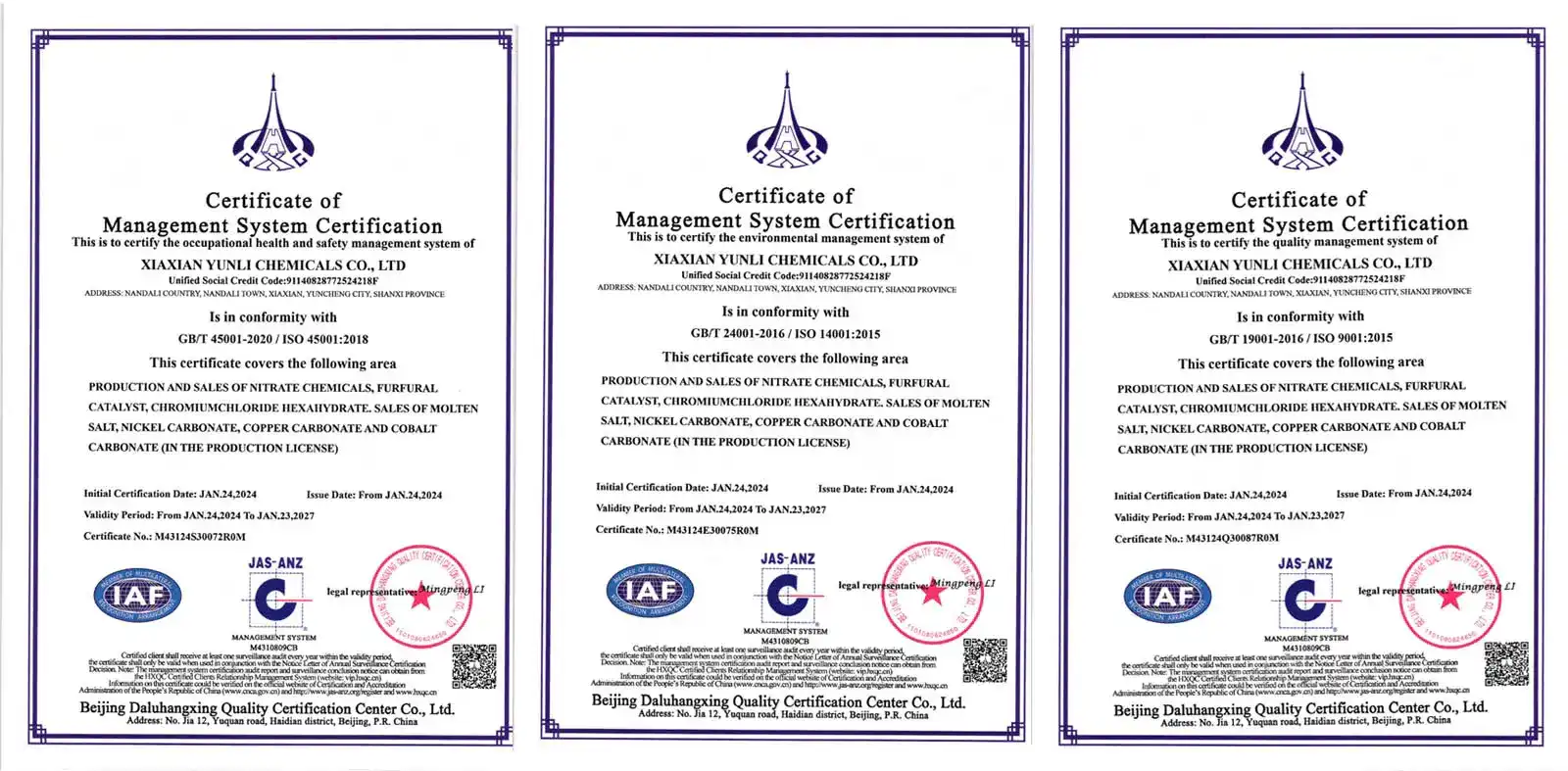
Checking for ISO 9001 quality management, ISO 14001 environmental compliance, and product-specific certifications is part of choosing partners. Material Safety Data Sheets (MSDS) with instructions on how to handle oxidisers, Certificates of Analysis (COA) with data on the makeup of each batch, and environmental assessment reports all show that operations are open and honest.
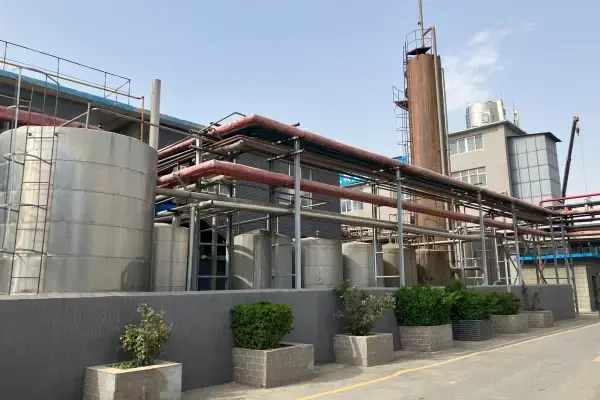
If a supplier is accredited by a local or national technology center, it means that they can do research and development for special formulations with particular pH ranges, moisture content requirements, or chelated versions. With annual sales of more than $150 million and fixed assets that support two sets of production lines, the risk of supply interruptions during quality incidents or maintenance cycles is lower.
Before committing to tonnage contracts, procurement teams benefit from sample evaluation procedures. By asking for 200–500 grams of Zinc Nitrate Hexahydrate as trial quantities, lab-scale validation can be done without putting any money at risk. Dissolution rates, pH stability, impurity thresholds, and the integrity of the packaging should all be tested against internal standards. Setting standard performance measures through controlled trials lowers the amount of variation that happens when shipments are made in bulk.
Logistics and Regulatory Compliance
As a Class 5.1 oxidiser, it needs to be transported in accordance with International Maritime Dangerous Goods (IMDG) codes for ocean freight or DOT rules in the United States. The right packaging keeps moisture out. For 25 kg units, this is usually plastic inner liners inside polypropylene woven bags, and for large amounts, these are sealed IBC boxes. Harmonised System (HS) codes make it easier to clear customs, and country-specific registration dossiers under REACH (Europe) or TSCA (United States) are part of import and export paperwork. Partnering with makers who run their own export departments cuts out the middleman's markups and makes it easier to talk about shipment schedules and changes to regulations.
Case Studies and Practical Examples of Zinc Nitrate Hexahydrate in Green Synthesis
Nanomaterial Fabrication with Reduced Footprint
In 2021, Materials Science and Engineering released a study that explained how to make zinc oxide nanoparticles using Zinc Nitrate Hexahydrate as a starting material and a process called water precipitation. Using only water and sodium hydroxide, researchers were able to get regular particle ranges of 20 to 30 nm at 70°C without using any chemical capping agents. A lifetime comparison with traditional methods that used zinc acetate in ethanol showed that 40% less energy was used and there were no volatile organic compound emissions at all. In line with goals for carbon balance, the nitrate breakdown pathway created nitrogen and oxygen gases instead of CO2 from acetate.
Pharmaceutical Intermediate Synthesis
In an important cyclisation reaction, companies that make antibiotic intermediates switched zinc chloride for zinc hexahydrate. The switch got rid of the hydrochloric acid waste that needed to be neutralised. This cut the cost of treating wastewater by 25%. The compound's higher purity and uniform dissolution rates led to an 8% increase in product yields. Heavy metal pollution, which was a major issue for making APIs, dropped below 10 ppm, which means it met strict pharmacopeial standards without needing any extra purification steps.
Challenges in Storage and Handling
There are benefits, but there are also practical limits. Because it has a low melting point and deliquesces quickly, it needs to be stored in a climate-controlled environment. This is especially important in humid areas where packages that aren't covered properly will melt within weeks. Oxidisers must be kept separate from reducing agents, organic materials, and combustibles, which can be hard for centers that deal with a lot of different chemicals. Even though nitrate breakdown is cleaner than other options, thermal processes still need to scrub waste to get rid of nitrogen oxides, which can be expensive for small businesses in terms of both capital and operating costs. A site-specific cost-benefit analysis is needed to balance these factors against the benefits to the environment.
Future Outlook: Zinc Nitrate Hexahydrate's Role in Sustainable Industrial Growth
Emerging Catalyst Technologies
More and more, research into heterogeneous catalysis includes zinc-based active sites for turning CO2 into useful materials and CO2 removal. Because Zinc Nitrate Hexahydrate is easily dissolved, it can be used in impregnation methods to place uniform zinc species on porous supports such as activated carbon or zeolites. When you heat a precursor, it changes into an active zinc oxide or metallic zinc phase without the sintering problems that happen with starting materials that aren't as easily dissolved. Pilot projects that aim to make methanol from captured CO₂ report that zinc nitrate-derived catalysts last 15-20% longer than other types of catalysts that are usually made.
Integration with Circular Economy Models
Companies that use closed-loop water systems can benefit from this compound's ability to dissolve completely and leave behind very little waste. Recycling process water with weak zinc and nitrate ions by concentrating it through a membrane or crystallising it through evaporation recovers raw materials and lowers the volume of waste water. Using renewable energy sources to heat the process of recrystallisation is in line with goals to cut emissions in levels 1 and 2. To make wastewater treatment easier, chemical parks in places with strict rules on wastewater are choosing nitrate-based zinc sources over sulphates or chlorides more and more.
Strategic Supplier Partnerships
To stay successful in the long run, companies need to choose suppliers that focus on three things: technical customisation, regulatory agility, and financial security. Partners who offer purity grades that can be changed and custom packages can adapt to changing process needs without having to go through long requalification rounds. Tracking REACH annexes, FDA drug master files, or RoHS exemptions as part of proactive compliance updates keeps supplies from being interrupted by changes in regulations. Financial clarity, shown by audited sales numbers and asset values, reassures purchasing managers of long-term supply continuity, which is important for green chemistry investments that require a lot of money and have payback periods of 5 to 10 years.
Conclusion
Zinc Nitrate Hexahydrate has clear benefits for green synthesis because it dissolves completely in water, breaks down cleanly at high temperatures, and has two catalytic-oxidizing functions. Its compatibility with environmentally-friendly manufacturing principles ensures both environmental protection and operating efficiency in the creation of nanomaterials, pharmaceutical intermediates, and improved catalysts.
To make a successful procurement, you need to find a balance between purity requirements and supplier reliability, with a focus on complete documentation and the ability to handle oxidiser classifications with ease. As businesses move faster toward carbon neutrality and circular economy models, using this flexible substance strategically, along with manufacturing partners who are technically strong, can help them leave smaller environmental footprints without affecting the quality of the product or the cost of the process.
FAQ
How does the compound's hygroscopic nature affect storage protocols?
The Zinc Nitrate Hexahydrate quickly takes in water from the air, creating concentrated water solutions or caking. For storage, things need to be kept in sealed cases in climate-controlled spaces that are below 30°C and have a relative humidity of less than 50%. Original packaging with polyethylene liners keeps things safe for 12 to 24 months. To keep the crystals' purity, packages that have been opened should be resealed right away using desiccant canisters or inert gas purging.
Can this material replace zinc sulfate in all applications?
Even though it dissolves better and breaks down cleaner, cost makes uniform replacement impossible. In agricultural settings where money is tight, sulphate may be preferred even though it is less bioavailable. On the other hand, high-purity pharmaceutical or electronics uses support higher prices because of the hexahydrate's low impurity profile and processing benefits. The economic success is based on the total cost of ownership, which includes how to get rid of trash and make sure the equipment works with the application.
What analytical methods verify product quality for green synthesis?
Atomic Absorption Spectroscopy, or ICP-OES, measures the amount of zinc and other trace metals present. Ion chromatography finds chloride or sulphate pollution and measures the amount of nitrate present. For stoichiometric calculations, Karl Fischer titration is a key way to find out how much water is present. Using standardised solutions to measure pH proves that acidity levels change the speed of a process. Before buying in bulk, it's important to set quality standards by asking suppliers for COAs with these test results and third-party audit reports.
Partner with Yunli Chemical for Certified Zinc Nitrate Hexahydrate Supply
Yunli Chemical provides high-quality Zinc Nitrate Hexahydrate that is suitable for use in sustainable chemical processes. Our local technology center approval and ISO 9001/14001 compliance make sure that quality control is always the same. ICP-MS checks make sure that iron levels stay below 30 ppm and lead levels stay below 50 ppm. We support the creation of pharmaceutical intermediates, nanomaterials, and catalysts with full documentation, including MSDS, batch-specific COA, and environmental compliance records. Our purity grades range from 98% to 99%+, and the specs can be changed to fit your needs.
Direct factory supply cuts out middlemen and gives you a choice of flexible packaging options, such as 25 kg moisture-barrier bags, IBC totes, or bulk liquid concentrations. Our self-run export section makes sure that communication is clear and deliveries are on time across North American markets. They are backed by 20 years of production experience and sales of more than $150 million a year. Potential partners can get free samples of up to 500 grams to test the process. They can also get expert advice on how to improve quality and make sure the product is in line with regulations. You can email our purchasing agents at wangjuan202301@outlook.com to get unique quotes or talk about your green synthesis needs with a reliable manufacturer that cares about quality stability and the environment.

References
1. Anastas, P.T., and Warner, J.C. (1998). Green Chemistry: Theory and Practice. Oxford University Press.
2. Chen, L., et al. (2021). "Aqueous Synthesis of Zinc Oxide Nanoparticles Using Zinc Nitrate: Energy and Environmental Assessment." Materials Science and Engineering B, 265, 115034.
3. Kumar, R., and Singh, A. (2020). "Comparative Study of Zinc Salts in Pharmaceutical Synthesis: Purity and Yield Optimization." Journal of Chemical Technology and Biotechnology, 95(8), 2145-2153.
4. Zhang, W., et al. (2022). "Heterogeneous Catalysis for CO₂ Conversion: Role of Zinc Nitrate-Derived Active Sites." Applied Catalysis B: Environmental, 310, 121298.
5. Thompson, D., and Martinez, E. (2023). "Solubility and Reactivity of Industrial Zinc Compounds in Green Chemistry Applications." Industrial & Engineering Chemistry Research, 62(14), 6012-6025.
6. Liu, H., et al. (2019). "Lifecycle Assessment of Nitrate-Based Metal Precursors in Sustainable Manufacturing." Green Chemistry, 21(19), 5342-5356.