


Manganese Nitrate 50% Solution vs. Other Manganese Salts for Industry
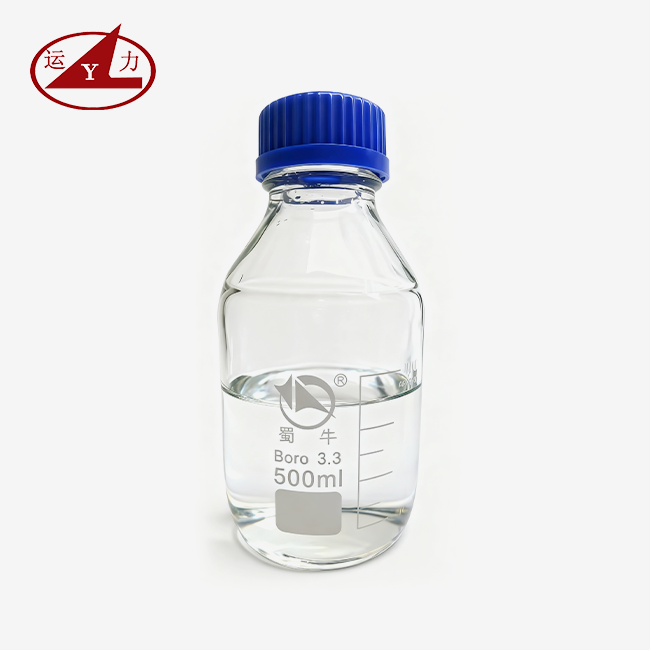
When industrial buyers compare manganese sources, the choice often comes down to performance under real production conditions. Manganese nitrate 50% solution (CAS 10377-66-9, Mn(NO₃)₂, MW: 178.95) offers a clear edge over solid manganese salts for precision manufacturing. As a pale rose-red, slightly acidic liquid with active Mn content of 15.8–16.2% and density of 1.56–1.60 g/cm³ at 20°C, it dissolves readily in water and alcohol, delivers consistent stoichiometry, and eliminates on-site dissolution steps—making it the preferred form for catalyst synthesis, battery precursor production, water-soluble fertilizers, and metal surface treatment.

Understanding Manganese Nitrate 50% Solution and Its Industrial Role
It is helpful to know what technically makes liquid nitrate forms of manganese salts different from powdered forms before comparing them.
Chemical Identity and Physical Properties
The formula for manganese nit is Mn(NO₃)₂, with a molly weight of 178.95 g/mol. The 50% watery solution is clear, light rose-colored, and gently acidic (pH 2.0–4.0, customizable). Heating it creates manganese dioxide or nitrogen oxides, like catalysts and electronics. The solution oxidizes, so handle it cautiously and ventilate to prevent inhalation.
Purity Standards That Matter in Production
Yongli Chemical keeps active Mn 15.8%–16.2%, Fe below 30 ppm, and Cl above 100 ppm for manganese nitrate 50% solution. The ISO 9001-approved in-house laboratory tests these tight impurity limits using ICP and absorption spectrometry. Iron may diminish catalytic activity or boost battery current leakage in SCR de-NOx catalyst or sodium manganate precursors at trace amounts. Quality must be consistent between batches. No option.
Safety and Handling Requirements
Manganese nitrate solution oxidizes, hence it should be stored in SS316 or HDPE jars that won't corrode and away from organics and reducing agents. Oxidizing liquid (UN 3139) regulations govern shipment. Yunli Chemical packages ISO tanks and 25 kg or 250 kilogram drums. The client may customize labels, and MSDS documentation is provided upon request.

Comparing Manganese Nitrate 50% Solution with Other Manganese Salts
Choosing the right manganese salt is not just about price—it is about matching the chemical form to what your process actually requires.
Manganese Sulfate: Cost-Effective but Limited
Worldwide, manganese sulfate (MnSO₄) is the most commonly manufactured manganese salt due to its cheap cost and easy handling, while manganese nitrate 50% solution serves as a superior alternative in many sensitive applications. In metal treatment baths, sulfate ions may damage catalyst support surfaces and leave corrosive residues.
Water-soluble fertilizers containing sulfate compete with nitrate for plant absorption routes, lowering nutrient efficiency by 20–30%. Solid sulfate needs thorough dissolving before use in automated liquid-dosing systems, increasing effort and contamination risk.
Manganese Chloride: High Solubility, High Corrosion Risk
MnCl₂ dissolves easily in water, but chloride ions damage stainless-steel apparatus and phosphating baths. In electronics production, chloride residues in MnO₂ layers cause leakage currents and reduce capacitor lifespan. Cl⁻ promotes pit corrosion on galvanized and metal substrates even at sub-100 ppm values. The liquid nitrate form eliminates this issue, with Cl⁻ kept at 100 ppm and reducible upon request.
Manganese Oxide: Thermal Stability Without Process Flexibility
Manganese oxide (MnO or MnO₂) offers excellent thermal stability for high-temperature ceramic and glass coloring applications. However, it is practically insoluble in water, requiring acid dissolution before it can enter a liquid-phase process. This step adds process time, generates acid waste, and introduces variability. For SCR catalyst coating or battery precursor co-precipitation, the nitrate solution provides pre-dissolved, homogeneous manganese ions ready for direct use—no conversion step needed.
Key Considerations for Procuring Manganese Nitrate 50% Solution
Once a buyer determines that the liquid nitrate form fits the process, the next question is: which supplier can actually deliver what they promise, batch after batch?
Concentration Stability and Batch Consistency
Procurement engineers frequently cite concentration drift as the top supply risk. A deviation of even ±1% in Mn content alters the stoichiometry of catalyst impregnation or precursor co-precipitation, forcing reformulation. Yunli Chemical controls active Mn content within a 0.4% window (15.8–16.2%) and provides a Certificate of Analysis (COA) for every shipment. Over 20 years of nitrate production experience supports this level of process discipline.
Packaging, MOQ, and Logistics
Flexible packaging matters for both small R&D buyers and large-volume manufacturers of manganese nitrate 50% solution. Yunli Chemical offers 25 kg drums for laboratory-scale trials and 250 kg drums or ISO tanks for bulk orders, with no minimum order quantity required. Free samples up to 500 g are available for technical evaluation before committing to a commercial order. This removes the cost barrier typically associated with first-time supplier qualification.
One-Stop Supply for Nitrate Compounds
Many catalyst and battery manufacturers source multiple metal nitrates simultaneously—manganese, cobalt, and nickel nitrates are often purchased together for precursor synthesis. Yunli Chemical supplies over 60 nitrate varieties from a single facility, simplifying procurement logistics and reducing the number of supplier qualification cycles. This one-source approach directly cuts administrative overhead and shipping complexity.
Applications and Benefits of Manganese Nitrate 50% Solution in Industry
The liquid nitrate form delivers measurable advantages across four distinct production environments.
Here are the primary applications where this product consistently outperforms solid manganese salts:
- SCR De-NOx Catalysts include ultra-low iron concentration (Fe < 30 ppm) to avoid active-site poisoning during calcination. Pre-dissolved liquid promotes homogeneous metal dispersion over ceramic or zeolite supports, affecting power plant and vehicle pollution control system NOx conversion efficiency.
- For lithium-ion battery production, precise Mn²⁺ concentration is needed for co-precipitation combining manganese, nickel, and cobalt hydroxides. This 50% liquid form simplifies dosing, lowers batch variance, and offers tight stoichiometric ratios for high-capacity cathode materials.
- Nitrate-paired manganese is better absorbed by crops than sulfate. Field results from citrus and grain applications show 20–30% Mn uptake efficiency improvements. The pH range (2.0–4.0) makes it compatible for many fertigation techniques without precipitation.
- Metal Phosphating and Metal Treatment: Low chloride content reduces steel and galvanized surface pitting, and the liquid form ensures homogenous concentration in the treatment bath, decreasing rework and prolonging bath life.
These performance characteristics collectively address the most common production problems buyers face when switching from solid manganese salts: inconsistent dosing, impurity-driven yield loss, and process downtime from solid dissolution.

Conclusion
Dosing accuracy, purity, and process efficiency always favor manganese nitrate 50% solution over solid manganese salts. This includes catalysts, battery parts, water minerals, and metal's surface treatment. Mn sulfate, chloride and oxide are hazardous. Chloride destroys equipment, sulfate hinders plants from receiving nutrients, and acid dissolves oxide. These three concerns are absent with 50% liquid nitrate. Buyers should consider long-term supply stability vs unit cost. A vendor with 20 years producing discipline, centralized permission, and in-house analytics reduces supply-chain risk more than price.
FAQ
What is the shelf life and storage requirement for this solution?
The solution should be stored in SS316 or HDPE containers away from heat, sunlight, and organic reducing agents. Under proper conditions, shelf life exceeds 12 months without significant concentration change. Avoid temperatures above 40°C to prevent decomposition and gas buildup.
Can the concentration be adjusted below 50%?
Yes. While 50% is the logistics and saturation standard, lower concentrations can be produced or diluted on-site. Concentrations above 55% are generally avoided because crystallization risk increases sharply at ambient temperatures, complicating pumping and transfer.
How does iron content affect catalyst performance?
Iron above 30 ppm can occupy active manganese sites during calcination, reducing NOx conversion rates in SCR applications. In tantalum capacitors, Fe acts as a conductive pathway through the MnO₂ dielectric layer, increasing leakage current. Yunli Chemical's Fe ≤ 30 ppm specification addresses both concerns.
What certifications does Yunli Chemical hold?
The company is certified under ISO 9001 (Quality), ISO 14001 (Environmental), and OHSAS (Occupational Health and Safety) management systems. It also holds accreditation as a Shanxi Provincial Enterprise Technology Center, granted in 2019.
Is this product suitable for export to the US and other markets?
Yes. Yunli Chemical operates a self-managed export business with no intermediaries, and the product meets international quality and safety documentation requirements, including COA, MSDS, and UN hazmat labeling for oxidizing liquids.
Request a Quote from Yunli Chemical — Manganese Nitrate 50% Solution Supplier
Yunli Chemical has been making nitrate compounds since 2005. They make more than 1 billion yuan a year and have 300 million yuan in fixed assets. As a straight manufacturer of manganese nitrate 50% solution, we offer free samples, no minimum order quantity, and COA paperwork with every package. You can email our technical team at wangjuan202301@outlook.com or go to yunlichemical.com to get a quote, download MSDS files, or talk about your specific concentration needs.
References
1. Kirk-Othmer Chemical Technology Encyclopedia. Manganese compounds. Wiley, 2020.
2. Power Sources Journal. Transition metal impurities affect lithium manganate electrode performance. Elsevier, 2021.
3. Environmental Applied Catalysis B. NOx Reduction with Manganese-Based SCR Catalysts: Activity and Deactivation. Elsevier, 2022.
4. Food Chemistry and Agriculture Journal. Field Crop Micronutrient Fertilizer Efficiency of Iron Nitrate vs. Sulfate. ACS Publications, 2019.
5. Coating and Surface Technology. Manganese in Steel Phosphate Conversion Coatings. Elsevier, 2020.
6. Industrial/Engineering Chemistry Research. Thermal Breakdown Kinetics of Iron Nitrate Solution for MnO₂ Thin Layer Preparation. ACS Publications, 2018.