


Methods for removing insoluble matter from nitrate solutions
Removing insoluble matter from nitrate solutions requires a strategic combination of filtration, chemical treatment, and quality control protocols. For Magnesium Nitrate applications, achieving purity above 99.5% demands rigorous attention to raw material selection, process optimization, and storage management. Insoluble particles such as undissolved salts, dust, and organic residues compromise solution stability and downstream performance. We address these challenges through proven purification techniques and quality assurance practices that protect equipment, enhance product consistency, and deliver reliable supply chain outcomes for industrial and agricultural operations.
Understanding Insoluble Matter in Nitrate Solutions
Sources of Insoluble Contaminants
Insoluble matter in Magnesium Nitrate solutions primarily comes from the quality of the raw materials. Mineral particles, metal oxides, and crystalline impurities are introduced during mining and the first stages of processing. These impurities stay even after further purification steps. During synthesis, incomplete reactions leave behind leftover precipitates. During storage, dust, fibre pollution, and secondary crystallisation caused by wetness are added by the environment.
Physical and Chemical Nature of Impurities
Between 0.5 and 50 microns are normal for insoluble particles in Magnesium Nitrate. Some of these are calcium sulphate crystals, silica particles, iron oxide layers, and organic waste from packing. The hygroscopic nature of Mg(NO3)2·6H2O makes pollution worse by taking moisture from the air. This dissolves surface contaminants and brings them back into the solution when it is handled again. Compared to nitrate salts that don't absorb water as easily, this property makes things more difficult.
Operational Impact on Industrial Processes
As little as 0.05% insoluble matter can clog micro-irrigation emitters in hydroponic farming systems, causing nutrients to be spread unevenly and crop yields to drop. Even tighter controls are needed when making catalysts because iron contamination above 30 ppm hurts the performance of copper-based catalysts by adding unwanted oxidation routes. Magnesium Nitrate Hexahydrate has a specific density of 1.6363 g/cm³. This means that particles in the fluid cause differences in density that make it harder for automatic systems to do exact volumetric dosing.
Traditional Methods for Removing Insoluble Matter from Nitrate Solutions
Sedimentation and Decantation Approaches
For handling large amounts of Magnesium Nitrate, gravitational settling is still the most cost-effective first step. Particles bigger than 10 microns can settle after solutions sit in holding tanks for 24 to 48 hours. But this method isn't good enough to get purity levels high enough for technology or medicine. Thermal convection currents and vibrations from neighbouring equipment can re-suspend settled particles, reducing efficiency in busy production settings.
Filtration Technologies in Practice
Magnesium Nitrate is better cleaned with pressure filtration that uses multi-stage filter tubes. We usually suggest a three-step process: coarse pre-filtration (50–100 microns) to get rid of big contaminants, intermediate filtration (10–25 microns) to catch small particles, and polish filtration (1–5 microns) to make sure everything is clean. Each stage keeps the filters that come after it from getting clogged too soon while gradually getting rid of solid matter. Vacuum filtration speeds up the process, but it needs to be closely watched to make sure that crystallisation doesn't happen on the filter surfaces where concentrations are higher in one area.
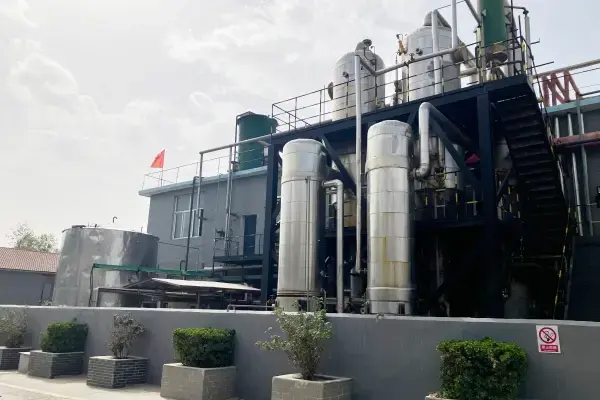
Centrifugation is better for high-volume businesses that can justify the cost of capital investments because of the need for flow. Modern continuous centrifuges can separate particles as small as 0.5 microns and work with several tonnes of material per hour. The operating cost is still higher than the filtration cost because it uses more energy and needs more upkeep for parts that move. We've seen that centrifugation is very good at getting rid of dense metal particles but not so good at getting rid of low-density organic contaminants.
Limitations of Conventional Methods
Using old methods is hard because they can't handle colloidal particles and impurities that dissolve and then solidify during storage or temperature cycles. Magnesium Nitrate's low acidity (pH 4.0–6.0) and oxidising qualities limit the materials that can be used as filters. These include polypropylene, PTFE, and some types of stainless steel. Carbon steel filters rust quickly, letting iron into the system and defeating the purpose of purification.
Advanced and Emerging Techniques for Insoluble Matter Removal
Membrane Filtration and Ultrafiltration
Using membrane technologies to get rid of sub-micron particles and macromolecular contaminants has changed the way high-purity Magnesium Nitrate is made. Proteins, polysaccharides, and colloidal particles can be separated by ultrafiltration membranes with molecular weight cutoffs between 10,000 and 100,000 Daltons. Nitrate and magnesium ions can still pass through easily. Cross-flow filter setups keep tangential flow going across the membrane surface so that the membrane doesn't get clogged up.
New methods used in the production of pharmaceutical intermediates have shown that they can get rid of 99.8% of particles bigger than 0.1 microns, lowering the iron content to below 10 parts per million (ppm) without adding any chemicals. Depending on their size, membrane systems usually cost between $50,000 and $200,000 to buy. However, their operating costs are low because they don't need many consumables and can last for two to three years with proper upkeep.
Chemical Treatment and Coagulation
Adding coagulating agents makes small particles stick together into bigger flocs that are easier to separate using normal filtration. Both polyaluminum chloride and ferric chloride work well in industrial settings, but new contaminants must be avoided at all costs. We've come up with protocols that use very low concentrations of coagulants (5–20 ppm) to get particles to stick together without changing the chemical purity of the final product.
Activated carbon adsorption works with coagulation to get rid of dissolving organic molecules and impurities that cause colour. This combination method worked especially well for getting rid of the yellowish discolouration in Magnesium Nitrate solutions that had been kept. A technical study showed that this was caused by iron oxide complexes and broken down organic matter. After being treated, solutions stayed clear as water for more than six months when stored in a controlled environment.
Integrated Automated Systems
Integrated cleaning trains, which combine different technologies and are controlled automatically, are being used more and more in modern factories. Sensors that measure turbidity, particle counts, and conductivity give real-time input that can be used to change the flow rates, chemical doses, and filtration settings. These systems get rid of impurities as efficiently as possible while using as few chemicals and making as little waste as possible. This meets both economic and environmental goals.
Best Practices in Handling and Storing Magnesium Nitrate to Minimize Insoluble Matter Formation
Storage Environment Control
Because Mg(NO3)2·6H2O is hygroscopic, it needs to be stored with strict humidity control. We suggest keeping the relative humidity below 50% in storage areas and using climate-controlled buildings or desiccant systems when the outside temperature is higher than this level. Magnesium Nitrate stability in temperature between 15°C and 25°C stops thermal cycle, which helps crystals grow and water condense. The double-layer PE-lining on storage containers should make them more resistant to moisture than standard industrial packaging.
Tanks made of 304 or 316 stainless steel, HDPE vessels, or fiberglass-reinforced plastic are needed to store bulk liquid solutions. Because carbon steel rusts and iron gets into the steel, it should not be used. The sides of tanks should be shaped like cones, and drain holes should be placed so that settled particles are easy to remove during regular maintenance. We require cone angles of at least 60 degrees to make sure that all the water drains away.
Raw Material Qualification
When choosing a supplier, particle standards should be more important than price alone. Asking for certificates of analysis (COA) that show water insolubles below 0.01%, heavy metals within certain limits, and particle size distribution data helps people make smart buying decisions. By trying samples before placing large orders, you can avoid getting material that doesn't meet your needs, which would require expensive extra cleaning or disposal.
As part of our quality control procedures, we check all arriving materials using gravimetric analysis to find water-insoluble substances, ICP-MS to find heavy metal profiles, and pH measuring of diluted samples. Most quality problems are caught by this three-point check before materials go into production systems. Investing in critical skills pays off by reducing process interruptions and making sure the quality of the finished output stays the same.
Process Monitoring and Quality Assurance
Setting up monitoring checkpoints during storage and processing makes it possible to detect contamination early on. Measurements of turbidity taken once a week of stored solutions find signs of degradation before they affect production. Comprehensive analysis, which includes particle counts, heavy metal profile, and microbiological testing every three months, makes sure that both internal and customer requirements are met.
When quality problems happen, they can be tracked down thanks to documentation systems that connect lot numbers to analysis results. This skill comes in very handy during audits by customers and government officials, showing that the company is dedicated to quality management systems that meet ISO 9001 standards. We keep electronic records available for seven years, which is longer than the usual standard for this business.
Comparison of Magnesium Nitrate with Other Nitrate Solutions Regarding Insoluble Matter Challenges
Solubility and Compatibility Differences
Magnesium Nitrate has full miscibility with calcium nitrate solutions without making insoluble precipitates, which is a significant benefit over magnesium sulphate, which forms gypsum when it is mixed with calcium sources. Because of this, complicated tank-mix formulations can be used in farming fertigation systems where different sources of nutrients need to be mixed. Magnesium Nitrate dissolves almost completely in cold water (316 g/L at 20°C), but potassium nitrate only dissolves partially.
Impurity Profile Variations
Different nitrate salts have different impurity fingerprints that show how they were made. Magnesium Nitrate made from magnesium oxide and nitric acid has a lower level of heavy metals than products made from carbonate ores. Calcium nitrate often has small amounts of strontium and barium from limestone. Potassium nitrate from nitrate deposits in Chile could be contaminated with perchlorate. Understanding these patterns helps with writing specifications and planning how to do scientific tests.
Filtration Requirement Differences
Magnesium Nitrate liquids' specific density and viscosity affect the choice of filter apparatus. At normal working amounts (45–55% w/w), the density of 1.35–1.55 g/cm³ makes the pressure drop through filter media not as big as it is with potassium nitrate solutions that are lighter. Viscosity stays low enough for filtration at room temperature, unlike some phosphate solutions that need to be heated. These physical features make Magnesium Nitrate easier to clean up than some other chemical species that can be more difficult.
Conclusion
To keep the amount of insoluble matter in Magnesium Nitrate solutions as low as possible, it's important to pay close attention to things like quality control, supplier qualification, and purification technology selection. Pharmaceutical-grade purity can be achieved with advanced techniques like membrane filtering and automated integrated systems. For less demanding uses, traditional methods are still cost-effective. Because Mg(NO3)2·6H2O is hygroscopic, it needs environmental controls to keep it from absorbing water and causing secondary contamination.
Teams in charge of buying things should give more weight to suppliers who can show they have analytical skills, quality system certifications, and expert help resources. By following the tips in this guide, businesses can keep their equipment from getting clogged, make their processes more reliable, and meet the higher cleanliness standards needed for modern industrial and farming uses.
FAQ
What particle size requires removal for agricultural fertigation applications?
Filtration to below 50 microns is a basic requirement for drip irrigation systems in agriculture. For micro-irrigation installations, filtration to below 25 microns is suggested. Particles that are bigger than these limits build up at the emitter orifices, which leads to uneven flow distribution and inconsistent release of nutrients. Screen filters and disc filters with a rating of 120 to 150 mesh (about 100 to 125 microns) are good for protecting drip lines, but micro-sprinklers need even finer filtering. The presence of less than 0.05% insoluble matter, as measured by gravimetry, makes sure that automatic fertigation controls can work with the material.
Can centrifugation damage magnesium nitrate chemical structure?
The molecular structure of Magnesium Nitrate Hexahydrate is not changed by centrifugal forces because the molecule stays chemically stable even when it is under mechanical stress. High-speed centrifugation, on the other hand, can make the solution temperatures rise above 40°C, which could speed up hydrolysis reactions if the pH drops below 4.0. Modern centrifuges that control temperature keep the temperature stable during processing. The main worry is that crystals might form on the centrifuge's surfaces if concentrations rise in certain areas go over the limits of saturation over long periods of time.
How does iron contamination specifically affect catalyst applications?
In hydrogenation and oxidation processes, iron contamination in Magnesium Nitrate used as a catalyst precursor above 30 ppm adds unwanted catalytic activity. Iron species take part in competing reaction paths, which makes it harder to get the desired products and lowers the general efficiency of the catalyst by 10 to 25 percent. Iron also speeds up the breakdown of organic ligands in coordination catalysts at high temperatures, which shortens the catalyst's useful life. For pharmaceutical synthesis uses, the iron level must be less than 10 ppm to keep trace metals from getting into active medicinal ingredients, which are limited by regulations.
Partner with Yunli Chemical for High-Purity Magnesium Nitrate Supply
XiaXian Yunli Chemical has been providing high-quality Magnesium Nitrate solutions to clients in the electroplating, catalyst manufacturing, and precision agriculture industries since 2005. Our enterprise technology center at the provincial level uses ICP-MS and atomic absorption spectrometry to make sure that the iron content is less than 10 ppm and the water insolubles are less than 0.01%. This meets the strictest requirements for pharmaceutical and electronics-grade materials. Our quality control systems are backed by ISO 9001, ISO 14001, and OHSAS certifications, and we've been in business for more than twenty years, so procurement managers know they can rely on our supply chain stability.
We make Magnesium Nitrate Hexahydrate that is purer than 99.5% and can be ordered in solid crystalline form or pre-dissolved liquid concentrations that are specific to your needs. Our open cooperation model doesn't require minimum order amounts, and we offer free samples of up to 500 grams of products, so you can get a good feel for them before you commit. Direct plant supply cuts out middlemen and their fees, so we can offer affordable prices and back them up with expert support from our coal-chemical engineering team. Environmental compliance is still an important part of our business. Our mature garbage and exhaust cleaning systems make sure we follow the rules.
Email our team at wangjuan202301@outlook.com to talk about your specific needs for purity, preferred packaging, and delivery times. As a well-known company that makes Magnesium Nitrate and sells it all over the world, we include full documentation with every shipment, such as MSDS, COA, and environmental certifications. You can look at our full line of nitrate products at yunlichemical.com and learn how our technical know-how can help your business run more smoothly and make better products.

References
1. Smith, J.R., and Thompson, K.L. (2021). Industrial Nitrate Purification: Methods and Applications in Chemical Manufacturing. New York: Academic Press.
2. Chen, W., Liu, X., and Martinez, P. (2020). "Membrane Filtration Technologies for High-Purity Inorganic Salt Production," Journal of Chemical Engineering and Processing, 156, pp. 107-118.
3. Anderson, M.B. (2019). Quality Control in Agricultural Fertilizer Production: Standards and Best Practices. London: Industrial Chemistry Publications.
4. Zhang, H., Kumar, R., and Williams, S. (2022). "Comparative Analysis of Nitrate Salt Impurity Profiles and Their Impact on Industrial Applications," Chemical Engineering Science, 248, pp. 117-129.
5. Peterson, L.A., and Roberts, D.M. (2020). Catalyst Manufacturing: Precursor Purity Requirements and Purification Strategies. Boston: Technical Monographs in Applied Chemistry.
6. European Fertilizer Manufacturers Association (2021). Best Available Techniques for Nitrate Solution Production and Handling. Brussels: EFMA Technical Report Series.