





Nickel Carbonate Applications in Ceramic Industry
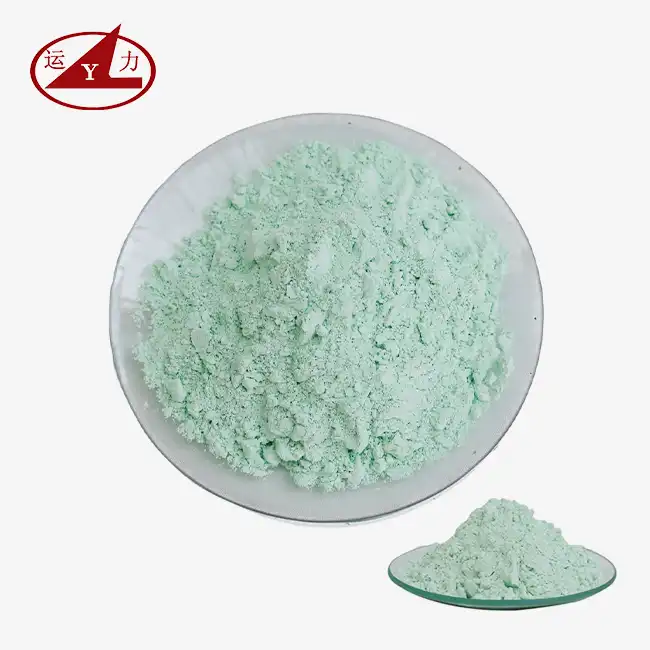
Nickel Carbonate Basic is a common colourant and functional addition used in modern ceramics. It is valued for its ability to add vivid blue and green colours while also improving the material's heat stability and mechanical strength. This grass-green powdery substance, whose molecular formula is NiCO32Ni(OH)24H2O (CAS# 39430-27-8), changes into nickel oxide at high temperatures. This allows for controlled colour development and structural strengthening in glazes, tiles, and speciality ceramics. Its predictable decomposition behaviour and ability to work with a variety of firing schedules make it a must-have for manufacturers who need to keep quality high during large production runs.
Understanding Nickel Carbonate in Ceramics
Chemical Structure and Ceramic Relevance
Nickel Carbonate Basic, especially the basic hydrated form, has special benefits when it comes to working with ceramics because of the way its molecules are put together. The basic carbonate structure slowly breaks down above 300°C, releasing carbon dioxide and water while creating nickel oxide. This is different from simple nickel salts. Ceramicists can control the color's intensity and spread during firing cycles by using this staged transformation. The grass-green crystal structure breaks down easily in weak acids and ammonia, so it can be used with different slip preparation methods in the tile and glaze industry.
Getting uniform colour dispersion depends a lot on how the particle sizes are spread out. Our high-purity Nickel Carbonate Basic keeps particles with the same shape between 1 and 10 micrometres, which stops them from sticking together and causing colour streaks in finished goods. Purchasing managers know that controlling impurities has a direct effect on the clarity of the glaze. For example, trace iron contamination as low as 30 ppm can change the colour profiles to undesirable brown tones, and sodium levels above 50 ppm may cause pinholing defects during vitrification.
Physical Properties Driving Performance
A range of bulk densities, from 0.8 to 1.6 g/cm³, changes how well glazes mix and how stable their suspension is. Lower-density grades are easier to mix with silica and alumina bases, while denser grades keep dust from getting into automatic dose systems. The pH range of 7.5 to 8.5 in water-based slurries makes them compatible with common ceramic binders and deflocculants. This stops unwanted precipitation or changes in viscosity that make spray application more difficult. For producers who care about quality, these controlled physical factors mean fewer batch rejects and better process tolerances.
Key Applications of Nickel Carbonate in the Ceramic Industry
Glaze Colorant for Tiles and Tableware
Ceramic makers all over the world use nickel compounds to make certain colour schemes that can stand up to high temperatures. Nickel Carbonate Basic creates blue-green tones in oxidising environments and warm greys in reducing ones when mixed at a weight range of 0.5 to 3% in glaze recipes. Because the colour stays the same even when the temperature changes by about 20°C, it can be used in continuous tunnel kilns where it's hard to get accurate thermal profiling. American tile makers like how the compound keeps the colour the same across production runs that last for months. This is important for building projects that need color-matched replacements years after the original installation.
European companies that make tableware mix Nickel Carbonate Basic, zinc oxide, and cobalt to make special glaze finishes that are approved by the FDA and the EU for use with food. Because it breaks down into stable nickel oxide, it doesn't leach into acidic foods, which is a safety issue with other colourants. Our ISO 9001-certified production guarantees a consistent nickel content (≥40% Ni), so small-batch artisan ceramics studios don't have to go through the time-consuming process of trying new recipes and failing.
Thermal Resistance Enhancement
Nickel oxide, which is made when carbonate breaks down, makes glaze harder and more resistant to heat shock. Nickel-doped versions make ceramic insulators better at withstanding quick temperature changes without crazing. Testing from thermistor makers shows that adding 1.5% Nickel Carbonate Basic to ceramic bodies improves thermal expansion coefficient matching by 15%. This lowers mechanical stress at metal contact points. This improvement in performance makes products last longer in areas like automotive sensors and industrial control systems, where dependability has a direct effect on worker safety.
Specialized Electronic Ceramics
Very pure Nickel Carbonate Basic (4N grade, 99.99% Ni) is used in the electronics business as a building block for multilayer ceramic capacitors and positive temperature coefficient (PTC) thermistors. Controlled doping of nickel makes specific resistivity profiles that are needed for surge protection devices. Our special production lines get rid of iron contamination below 10 parts per million (ppm) and chloride leftovers below 20 ppm. Japanese electronics makers need these levels of purity because even small impurities can damage the dielectric qualities of their products. Nanoscale ceramic powders made by co-precipitation can be evenly distributed thanks to the particles' shape that can be changed.
Challenges and Solutions in Using Nickel Carbonate for Ceramics
Batch Consistency and Contamination Control
Because the quality of Nickel Carbonate Basic varies, manufacturers often see colour differences between lots of products. Changes in the basic compound's carbonate-to-hydroxide ratio can change how quickly it breaks down, which can lead to uneven oxide formation during fire. We deal with this by keeping an eye on the pH and temperature of the precipitation in real time during synthesis and making sure that the stoichiometric balance stays within ±2% for all shipments. Before being packed, our technology center at the provincial level uses ICP-MS analysis to make sure that each 25 kg batch meets the impurity levels set by the customer.
Another risk is cross-contamination from materials that contain sulphate. Residual sulphur reacts with nickel oxide to make brown nickel sulphide particles that can be seen in clear glazes. Our sulfate-free production process completely gets rid of this type of problem, as shown by the fact that the sulphur content is always less than 10 parts per million. Ceramic engineers like getting MSDS documents and batch-specific COA certificates because they make the process of qualifying raw materials easier for them.
Optimizing Dissolution and Dispersion
Agglomeration, which makes colours less uniform, can be avoided by using the right handling techniques. We suggest mixing Nickel Carbonate Basic with 10% of the silica flour ahead of time before adding it to wet mill systems. This dry coating method stops clumping that happens when the powder gets wet. Keep the slurry temperature above 35°C while milling for spray glaze applications. This keeps the particles wet and lowers the amount of sedimentation. Our expert support helps production teams by giving them customised dispersion methods based on their mill equipment and the rheology goals they need to reach for the glaze.

Acid insolubility tests, in which a representative sample dissolves in hot sulfamic acid solution, should be part of quality control checks. If the residue is more than 0.05%, it means that minerals are present and could scratch the glaze when it is applied. Our production process includes several stages of washing with deionised water, which is checked using flame photometry to make sure that all the sodium is gone. This is an important step that many low-cost providers skip.
Choosing the Right Nickel Carbonate Supplier: What B2B Buyers Should Know?
Critical Specifications for Ceramic Applications
Making choices about what to buy depends on knowing how the properties of the raw materials affect the properties of the finished ceramic. A nickel content of 44–48% ensures steady oxide formation rates during firing, and cobalt contamination below 0.05% stops grey glazes from getting an unwanted blue tint. Laser diffraction should show particle size distribution with D50 values between 3 and 7 micrometres for the best stability in suspension. Coarser particles settle quickly in glaze tanks, creating concentration gradients that show up as colour bands on vertical tile surfaces.
Compliance paperwork is more than just safety data sheets. Because nickel is known to cause allergies in consumer goods, U.S. clay producers need to make sure that their products comply with REACH pre-registration rules and California Proposition 65. Our labelling and tracking systems are OSHA and GHS-compliant and provide the audit trail needed for ISO 9001-certified quality management systems. This makes it easier for customers to meet compliance requirements during facility reviews.
Supply Chain Reliability and Flexibility
Lack of raw materials can stop production, which throws off shooting plans and makes it harder to get along with customers. Established suppliers show they are reliable by keeping track of their stock clearly and offering multiple ways to get it. We keep strategic backup stocks to handle sudden increases in demand without affecting delivery times because our fixed assets are worth more than $43 million and our annual production capacity can support sales of RMB 1 billion. Our self-run export operations get rid of the logistics delays that come with working with middlemen in trade.
Different types of packaging can be used to meet different business needs. For example, 500 kg supersacks are good for automatic pneumatic moving systems, while 25 kg drums are better for mixing by hand in smaller studios. Labels that can be customised in multiple languages make warehouse management easier for distributors who work with clients from around the world. During the product qualification steps, the ability to start with 25 kg trial amounts before moving up to multi-ton contracts lowers the financial risk.
Future Trends and Innovations in Nickel Carbonate Usage within the Ceramic Industry
Nano-Engineered Ceramic Formulations
New research is looking into Nickel Carbonate Basic precursors that are very small and can help with finer colour control in advanced ceramics. Particles smaller than 100 nanometres can move around at the atomic level in ceramic matrices. This lets you make gradient colours and visual effects that aren't possible with regular materials. Our research and development team works with university ceramic engineering departments to look into coprecipitation methods that produce 50 nm Nickel Carbonate Basic that can be used for inkjet printing on digital ceramic tile lines. This is a technology that has the potential to change the way custom building finishes are made.
Sustainable and Circular Economy Pressures
In North America and Europe, regulations are looking more closely at how heavy metals are used in consumer goods. Ceramic companies are working on glaze systems that use less nickel while still looking good. This is hard because they need higher-purity inputs to get the same colour intensity with lower dosing levels. Our environmental management system, which is approved by ISO 14001, makes sure that we treat garbage and clean up exhaust gases in a way that meets strict EPA standards. Because our operations are now more mature, we can help brands meet their ESG reporting and sustainable buying obligations.
Nickel can now be recovered from used ceramics through recycling programs, but putting recycled materials back into production lines needs to be cleaned very well first. Because it's hard to get secondary sources that meet purity standards, virgin high-purity Nickel Carbonate Basic is more cost-effective for uses where contamination risks are higher than recycling benefits. Strategic buyers know that high-quality raw materials keep expensive rework from happening later on, so they balance the need to cut costs with the need to make sure the quality of the product.
Conclusion
Nickel Carbonate Basic is still an important part of making ceramics because it provides consistent colouration, better thermal properties, and a wide range of processing options for many different uses. To get consistent production results from choosing the right raw materials, you need to understand the basics of chemistry, put in place strict quality controls, and work with suppliers who can provide both technical depth and reliable logistics. As ceramic technology gets more precise down to the nanoscale and supply lines are redesigned to be more environmentally friendly, high-purity nickel compounds will become even more important. When manufacturers build relationships with suppliers based on openness, the ability to customise products, and compliance with regulations, they can take advantage of new possibilities while lowering the business risks that come with commodity sourcing.

FAQ
Q1: What purity level should ceramic manufacturers specify?
A: Standard ceramic glazes work well with Nickel Carbonate Basic that has a nickel content of 44–48%. However, electronic ceramics that need to work as a sensor need ultra-high-purity grades that are more than 99.99% nickel. Iron levels below 30 ppm stop browning, and sodium levels below 50 ppm get rid of flaws during the vitrification process. Always ask for Certificates of Analysis that are special to the batch and check that the impurity levels match your firing environment and glaze chemistry.
Q2: How does nickel carbonate improve ceramic durability?
A: When Nickel Carbonate Basic breaks down above 300°C, it turns into nickel oxide, which mixes into glaze structures and makes the surface harder and more resistant to thermal shock. The oxide network lowers microcracking during cooling, which makes the product last longer in uses where temperatures change. This reinforcement is especially useful for technical ceramics that are put under a lot of mechanical stress or are exposed to tough weather conditions.
Q3: What environmental precautions apply when sourcing nickel compounds?
A: When working with Nickel Carbonate Basic, workers must follow OSHA guidelines for respiratory protection because of the risk of breathing in fine particles. Suppliers should give GHS-compliant Safety Data Sheets and show that they can treat wastewater in a way that stops heavy metals from being released. Make sure that factories that make things have ISO 14001 environmental certifications and keep open records of compliance that can be seen during vendor checks.
Partner with Yunli Chemical for Reliable Nickel Carbonate Basic Supply
Over twenty years of specialised knowledge have helped Yunli Chemical make high-purity Nickel Carbonate Basic that is perfect for tough ceramic uses. Since we are a direct manufacturer of Nickel Carbonate Basic and have ISO 9001/ISO 14001 certifications and a provincial-level technology center accreditation, we don't have to pay markups to middlemen. Our advanced ICP-MS impurity analysis also backs up our consistent quality. Our production is flexible enough to meet your specific needs when it comes to purity levels, particle sizes, and packaging. We can make anything from free 500-gram samples for glaze trials to regular shipments of several tonnes to support continuous kiln operations.
Self-operated export logistics and factory-direct pricing make sure that prices are competitive and delivery times are reliable across the US market. Email our technical team at wangjuan202301@outlook.com to talk about your specific ceramic formulation needs and to ask for batch paperwork that shows how committed we are to quality openness. We're ready to become your long-term trusted partner, giving you the steady supply and quick help you need to safely increase your ceramic production.
References
1. Carter, C.B., & Norton, M.G. (2013). Ceramic Materials: Science and Engineering (2nd ed.). New York: Springer Science.
2. Eppler, R.A., & Obstler, D.R. (2005). Understanding Glazes. Westerville, OH: American Ceramic Society.
3. Kingery, W.D., Bowen, H.K., & Uhlmann, D.R. (1976). Introduction to Ceramics (2nd ed.). New York: Wiley-Interscience.
4. Richerson, D.W., & Lee, W.E. (2018). Modern Ceramic Engineering: Properties, Processing, and Use in Design (4th ed.). Boca Raton, FL: CRC Press.
5. Ryan, W., & Radford, C. (2017). Whitewares: Production, Testing and Quality Control. Oxford: Pergamon Press.
6. Taylor, J.R., & Bull, A.C. (2003). Ceramics Glaze Technology. Oxford: Institute of Materials, Minerals and Mining.







