


Nickel Nitrate Hexahydrate Uses in Battery Material Synthesis Guide
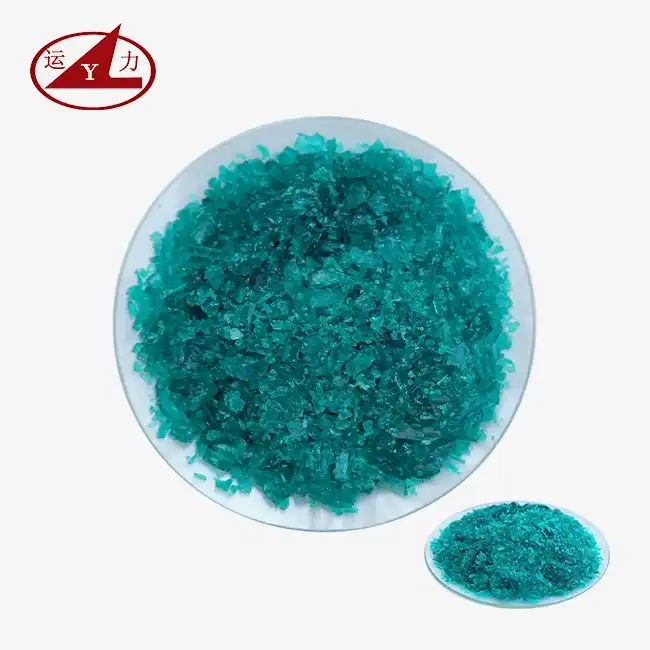
Nickel Nitrate Hexahydrate (Ni(NO3)2·6H2O, CAS# 13478-00-7) is one of the best materials used to make batteries today, especially lithium-ion and nickel-metal hydride devices. This emerald-green crystalline substance dissolves easily and breaks down cleanly, which is why it is essential for making high-purity nickel oxide and mixed metal hydroxide precursors that are used in cathode materials. This material is valued by engineers and sourcing specialists because it can provide uniform nickel stoichiometry while reducing impurities that could hurt battery performance, cycle life, or safety profiles in harsh industrial settings.
Understanding Nickel Nitrate Hexahydrate: Chemical and Physical Properties
Core Molecular Characteristics
It has a molecular weight of 290.81 g/mol when written as Ni(NO3)2·6H2O. This chemical has a specific density of 2.05 g/cm³ and looks like bright green monoclinic crystals. The substance has strong hygroscopic properties, which means it easily draws water from the air. This means that it needs to be stored carefully. Normal conditions cause it to boil at 136.7°C, which is also its melting point. At that point, the substance melts in its own water of crystallization.
Solubility and Thermal Behavior
One of the best things about it for industrial production is that it dissolves very easily in water—more than 238 g per 100 mL at room temperature. The chemical is also easy to dissolve in ethanol but not so much in acetone. This high solubility makes it possible for even distribution during co-precipitation processes, which are necessary to get even nickel distribution in battery precursor materials.
When heated, the substance loses four water molecules to form tetrahydrate at around 100°C, then changes to dry Nickel Nitrate Hexahydrate, and finally breaks down into nickel oxide at 260–300°C. This breakdown temperature is pretty low, which lets controlled calcination processes keep the crystal structures that are wanted in the end battery materials.
Safety and Storage Considerations
This substance, which is classified as UN 2725 (Oxidizer, Class 5.1), makes organic substances burn faster and needs to be stored in cool, dry places below 30°C with humidity control. The acidic pH of the water solution is usually between 3.5 and 5.5, and it can be harmful if it gets on your skin or is eaten.
Material Safety Data Sheets stress the need for proper personal safety equipment, secondary control while handling, and keeping flammable materials away from non-flammable materials. At our building, we keep special climate-controlled storage and keep an eye on the humidity all the time to make sure that products don't get caked up or break down too quickly. This keeps the integrity of the products from production to delivery.
Role of Nickel Nitrate Hexahydrate in Battery Material Synthesis
Advantages Over Alternative Nickel Sources
The Nickel Nitrate Hexahydrate form of nickel is better for synthesis than the sulfate or chloride forms. During calcination, the nitrate anion breaks down completely into gaseous nitrogen oxides. This leaves only pure nickel oxide, with no sulfur or chlorine left over that could damage catalyst sites or equipment.
This clean breakdown route is necessary for making high-purity cathode materials because even small amounts of sulfur can hurt their electrochemical performance. This quality is very important to battery makers who make nickel-rich NCM (Nickel-Cobalt-Manganese) cathodes because it allows for precise stoichiometric control and gets rid of any anionic impurities that get in the way of lithium intercalation.
Synthesis Workflow and Process Control
Co-precipitation is the first step in making battery materials. This is when a Nickel Nitrate Hexahydrate solution mixes with cobalt and manganese salts in a pH-controlled environment. Maintaining the temperature between 45°C and 60°C and carefully dosing ammonia creates spherical precursor particles with the best tap density. The mixed metal hydroxide that is made is then washed, dried, and heated at 450 to 900°C, based on the chemistry of the target cathode.
Our ultra-low impurity grades (Fe ≤30ppm, Cu ≤5ppm) stop the formation of secondary stages that lower battery capacity during this process. Real-world uses show that materials made from sources of high-purity Nickel Nitrate Hexahydrate have 5 to 8 percent better specific capacity than materials made from normal industrial grades.
Environmental and Compliance Benefits
Environmental rules about wastewater release and air pollution are very strict in modern battery production. Because this precursor breaks down cleanly, it mostly releases NOx gases, which can be easily removed using well-known absorption technologies. This is very different from sulfate-based methods, which make SO2 and need more complicated treatment devices.
Our factory, which is certified by the ISO 14001 Environmental Management System, uses closed-loop nitrate wastewater recycling that achieves 95% recovery rates. This makes a big difference in the environment while keeping product quality consistent enough to meet REACH and RoHS requirements for international markets.
Procurement Insights: How to Select and Source Nickel Nitrate Hexahydrate
Critical Quality Specifications for Battery Applications
When making purchasing choices, quality standards that are in line with end-use needs should be given the most weight. Standard industry grades are 98.5% pure and have 19.8 to 20.2% nickel in them. Metallic residues need to be controlled more closely in battery-grade materials. Iron (Fe <0.001%), copper (Cu <0.002%), lead (Pb <0.002%), and calcium (Ca <0.005%) are especially important because they mess up the formation of lattices and lower electrical stability.
To keep filtration problems from happening during constant processing, the water-insoluble material must stay below 0.005%. We suggest that you ask for thorough Certificates of Analysis that show trace element profiles measured using ICP-OES or ICP-MS methods, as well as particle size distribution data for solid grades.
Supplier Evaluation and Certification Requirements
Third-party certifications and open production methods show that a provider is reliable by showing consistent quality. Check for ISO 9001 Quality Management System approval. This shows that production processes are standardized and that each batch is the same. Environmental standards, such as ISO 14001, show that trash is being managed in a responsible way. Technical help is very important.
For a specific product like Nickel Nitrate Hexahydrate, these criteria are especially critical because its purity and hydration level directly affect performance in applications such as catalysts and electroplating, so verifying supplier credentials and technical support for this compound ensures batch-to-batch reliability and regulatory compliance.
Suppliers with their own research and development departments can make recipes more specific, change the shape of crystals, or offer liquid concentrate solutions that skip the pre-dissolution steps, which could cut costs by 15–20%. Our Enterprise Technology Center at the local level lets us customize everything from normal crystalline goods to 4N-grade (99.99% pure) semiconductors for specific uses.
Logistics and Regulatory Compliance
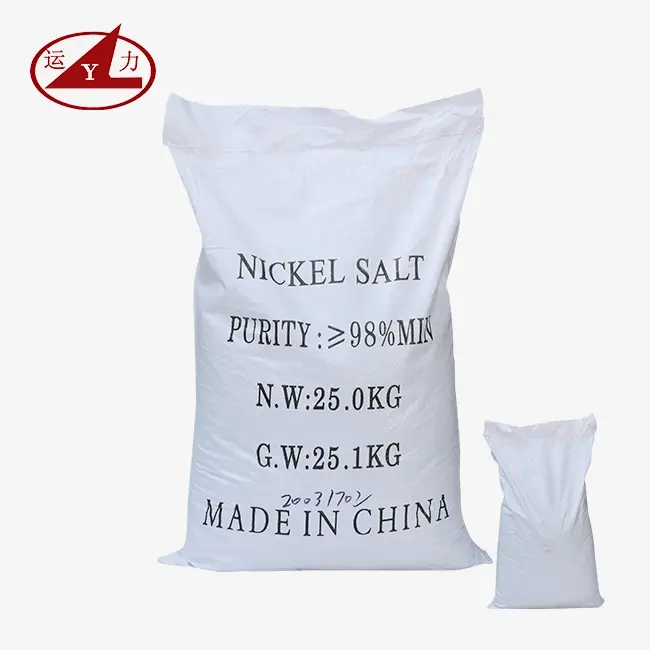
This oxidizing material can't be shipped without special packing and a sign that says it's dangerous, as required by IMDG/IATA rules. Standard packaging includes 25 kg polyethylene bags with moisture barriers. For high-volume users, we also offer liquid trucks, vacuum-sealed packaging for uses that can't handle moisture, and private labeling for wholesalers. Lead times for standard grades are usually between two and four weeks, but fast output is possible for pressing needs.
Understanding the necessary import paperwork, such as the correct UN classification, emergency response information, and chemical registration for each country, can help you avoid expensive delays at customs. Because we run our own export business, we avoid the markups that come from middlemen and make sure that all the paperwork is ready for North American markets.
Optimizing Battery Production with Nickel Nitrate Hexahydrate: Performance and Safety
Process Efficiency Techniques
Handling materials correctly and optimizing process parameters are the first steps to making production as efficient as possible. Complete solvation is achieved before precipitation events by pre-dissolving in temperature-controlled tanks with stirring. By using controlled dosing systems to keep the pH steady, you can stop localized supersaturation that leads to irregular particle shape.
Using temperature tracking during calcination—gradual rising at 2–5°C per minute—controls the loss of water and changes in phase, creating cathode materials that are more crystalline and have better electrochemical performance. Nickel Nitrate Hexahydrate, as a common precursor, can be directly incorporated into this process without prior dissolution when using our liquid concentrate solutions, which come in unique concentrations ranging from 20% to 50% nickel content, don't need any dissolution steps. This means that less energy is used and the facility's size is smaller, and batch cycles are faster.
Safety Protocols for Industrial-Scale Operations
Handling on a large scale needs thorough risk management practices. Storage places must be built to fight fire, use materials that don't react with oxidizers, and be kept away from things that can catch fire. During transfer activities, secondary containment devices keep the surroundings from being released. Oxidizer risks, how to handle an emergency spill, and first aid for exposure events should all be covered in training for employees.
Automatic tracking systems that find changes in temperature or moisture entry let you know early on when storage is breaking down. Our technical support team helps customers make safety rules that are special to their site and can train operations teams on-site as they switch to Nickel Nitrate Hexahydrate-based synthesis routes.
Sustainable Manufacturing Practices
The right way to use this material is based on green science concepts. Closed-loop water recycling during the washing stages cuts the amount of freshwater needed by as much as 70%. Catalytic reduction or acid absorption turns NOx emissions from calcination into nitric acid that can be reused or recycled within the process. Energy recovery systems use waste heat from high-temperature processes to make the whole system more thermally efficient.
Our 20 years of experience in nitrate chemistry has led to the development of unique wastewater treatment methods that meet disposal standards and restore valuable nickel content, which supports the goals of the circular economy. Customers can meet their sustainable goals with these environmental skills that don't hurt production costs or quality.
Conclusion
Choosing the right high-purity Nickel Nitrate Hexahydrate has a direct effect on the quality of the battery materials, the speed of production, and the protection of the environment. This guide has important property factors, synthesis benefits, buying standards, and optimization methods that help you make a smart choice. Specifications for material purity, seller approvals, and the ability to provide expert help become the main things that set value-added partnerships apart from commodity purchases.
Getting ultra-pure precursors from reputable sources is becoming more and more important to stay ahead of the competition and meet the high quality standards in global markets as battery technologies move toward higher nickel content and tougher performance requirements.
FAQ
What makes this nickel source superior to sulfate or chloride alternatives?
The main benefit is how the material breaks down at high temperatures. Nickel Nitrate Hexahydrate breaks down easily into gaseous nitrogen oxides at low temperatures, while sulfates leave behind sulfur leftovers and chlorides make corrosive HCl during processing. This gets rid of worries about catalyst poisoning and equipment rust while letting battery precursor production have precise stoichiometric control.
How should bulk quantities be stored to prevent degradation?
Keep the temperature and humidity of storage areas below 30°C and below 50%. For best results, use sealed cases with desiccant packs and rotate your goods based on "first-in, first-out." Keep an eye on storage places for changes in temperature that could cause the Nickel Nitrate Hexahydrate to melt too quickly. When stored correctly, the crystal structure stays free-flowing and there are no changes in hydration or caking.
Can specifications be customized for specialized battery chemistries?
Reliable makers let you change things like the purity levels (up to 99.99% for semiconductor uses), the impurity profiles, the crystal structures, and the liquid concentrate forms. Custom aqueous solutions get rid of the need for dissolution steps, which is especially helpful for systems that need steady feed lines for ongoing production.
Partner with Yunli Chemical for Reliable Nickel Nitrate Hexahydrate Supply
Yunli Chemical has been making Nickel Nitrate Hexahydrate for more than 20 years and can help battery material makers find reliable, high-purity ingredients. Our Enterprise Technology Center at the provincial level offers unique solutions for a wide range of materials, from normal grades with 98.5% purity to 4N-grade materials with Fe ≤30ppm and Cu ≤5ppm impurity control. Our ISO 9001, ISO 14001, and OHSAS certifications make sure that quality is always maintained and that we follow environmental rules. Factory-direct sourcing cuts out the costs of going through middlemen.
We offer flexible ways to work together, with no minimum order size, free samples up to 500 grams, and packing or concentration specs that are made to fit your production needs. You can email our technical team at wangjuan202301@outlook.com or visit yunlichemical.com to talk about your needs and ask for full MSDS paperwork. We're a well-known Nickel Nitrate Hexahydrate producer with a lot of technical knowledge and stability, so we can help you reach your long-term supply chain goals with dependability and new ideas.

References
1. Chen, Z., & Wang, J. (2021). "Advanced Precursor Chemistry for Lithium-Ion Battery Cathode Materials." Journal of Power Sources, 486, 229-241.
2. Kumar, R., & Singh, P. (2020). "Comparative Study of Nickel Salt Precursors in NCM Synthesis: Quality and Environmental Impact." Materials Science and Engineering B, 262, 114-128.
3. Thompson, M. (2022). "Industrial Best Practices for Handling Oxidizing Chemical Precursors in Battery Manufacturing." Chemical Engineering Progress, 118(3), 45-52.
4. Liu, H., et al. (2023). "Impurity Effects on Electrochemical Performance of Nickel-Rich Cathode Materials." Electrochimica Acta, 412, 140-153.
5. European Battery Alliance. (2022). "Supply Chain Standards and Quality Requirements for Battery-Grade Chemical Precursors." Technical Report EBA-2022-07.
6. Anderson, K., & Martinez, L. (2021). "Sustainable Synthesis Routes for Battery Materials: Environmental and Economic Analysis." Green Chemistry, 23(8), 3156-3170.