

What are the key safety precautions for handling chromium nitrate nonahydrate?
Chromium Nitrate Nonahydrate (CAS 7789-02-8, molecular formula Cr(NO3)3·9H2O) needs to be handled with care to protect people and things. To stay safe, people should put on safety glasses, gloves, and clothes that can handle explosives. Also, they should make sure there is enough air flow so they don't breathe in the compound. They should keep it somewhere cool and dry, away from things that can catch fire, and clean up any spills right away. Businesses that use this trivalent chromium product need to have clear rules about how to handle it, train their workers well, and keep their Safety Data Sheets up to date. This is because it rusts and causes corrosion.

Understanding Chromium Nitrate Nonahydrate and Its Hazards
Chemical Properties and Physical Characteristics
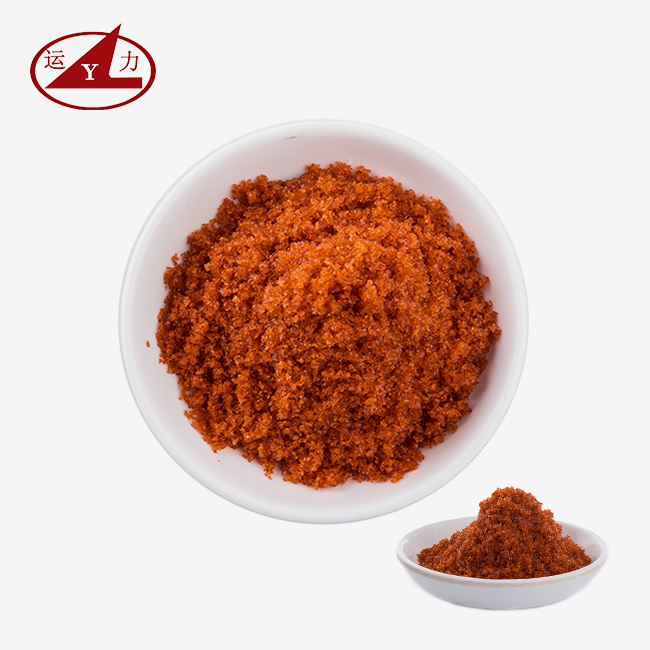
Chromium Nitrate Nonahydrate is a powder made of dark purple-red crystals that weighs 400.15 grams per mole. It is easy for the material to take in water from the air around it because it is very hygroscopic. There are new rules about how to keep and care for it. Some of the things that mix fully with it are water, ethanol, acetone, and different chemical acids. When you add heat to watery liquids, they change color in a special way. As they cool down, they turn a purple-red color. This helps make sure the things being made are good while they are being made.
Because it changes when it gets hot, there is a right way to handle this chromium salt. Chemicals can break down if they are kept or worked on at high temperatures. It takes 125.5°C (258°F) for them to break down, and 60°C (140°F) for them to freeze. There is a chance that the material could start a fire if it comes in touch with something that can catch fire. You have to follow strict rules at storage units to keep things separate.
Toxicological Risks and Exposure Routes
Trivalent chromium compounds, such as Chromium Nitrate Nonahydrate, are less dangerous than hexavalent chromium compounds. But you still need to be careful with these chemicals. Powder can make people sick if they touch it, breathe in the dust or fumes while handling it, or eat it by accident. As long as you touch it for a long time, the acidic qualities can hurt your skin and breathing if there is too much dust in the air.
If you eat it, it can burn and turn your skin hot, hurt your eyes and lens, make it hard to breathe with sore throats and coughs, and upset your stomach. Being around something for a long time can make you more sensitive to it, and handling it without enough air flow or safety gear can make it hard to breathe.
Regulatory Frameworks and Documentation Requirements
Many countries around the world are in charge of keeping an eye on things that have chromium in them. It has its own rules for how to name things and put them in groups. We have OSHA rules about how to report risks and the EPA rules about how much trash can go into the ocean in the US. People in Europe need to know a lot about a drug in order to register it for REACH. Rules set by RoHS limit some uses to keep the world safe.
The Safety Data Sheet is the most important piece of knowledge about how dangerous drugs are. It has sixteen standard sections that cover things like identifying the chemical, labeling it as dangerous, what it is made of, first aid, firefighting procedures, how to handle and store it, how to limit exposure, exposure controls, physical and chemical properties, stability data, toxicological information, environmental concerns, how to get rid of it, transport rules, and the chemical's regulatory status. If you work in purchasing, make sure that the Safety Data Sheet papers that suppliers give you are up-to-date and meet the GHS change standards for where you work.

Identifying Key Safety Risks in Handling Chromium Nitrate Nonahydrate
Environmental Storage Conditions
It's important to keep an eye on temperature and humidity to keep chemicals stable and the workplace safe. If you put Chromium Nitrate Nonahydrate somewhere wet, it will soak up water more quickly. These things can hurt the package in some other way or cause it to clump together. That way, things will stay in place and not break down too quickly. The temperature should be between 15°C and 25°C, and the relative humidity should be less than 60%.
There are a lot of safety risks when you can't control the temperature. When things are wet and stuck together, they make more dust when they're moved. When the temperature changes close to 60°C, objects in storage cases may melt in some places. This can make sealed containers feel more squished. There is a greater chance that workers will get hurt while moving things, and the conditions make the result less good. This will change how it is made in the future.
Transportation and Bulk Handling Challenges
People who work with a lot of chemicals need to be extra careful about safety when they get, load, and move the chemicals. Sometimes, Chromium Nitrate Nonahydrate is sent in fiber drums that are wrapped in polyethylene, plastic bags that are sealed inside metal containers, or, for bigger numbers, intermediate bulk containers (IBCs). These things can all handle getting wet. To keep its shape while being shipped, each kind of wrapping needs its own set of tools and methods for handling.
There are many unique rules that must be followed when sending things through foreign mail. These are the risk groups that Chromium Nitrate Nonahydrate is put into by the UN. In other words, it needs the right tags and papers. The DOT makes it clear how to pack in North America. If it comes to ships, IMDG codes set the rules. For air freight, IATA rules do the same. Every package that is sent needs to have the right shipping marks, danger signs, and emergency contact information put on it by the shipping company.
Real-World Consequences of Improper Handling
Having strict rules is important because of the problems in the field. Not properly sealed drums leaked while they were being stored, making a big mess. The solution of about 200 kg of chromium nitrate got on the floor of a building in the Midwest. A reaction team had to help, the building had to be shut down so that it could be cleaned up, and the government had to be told because that's what CERCLA rules say must happen. The costs were already over $75,000, and having to stop work and deal with the government warning made them even higher.
One company that made catalysts didn't train its employees well enough, so they mixed chromium nitrate with organic acids that didn't clean well together. The next reaction released heat and poisonous fumes into the air, which made everyone leave the building. Two workers had to go to the hospital because they were having trouble breathing. When things go wrong in the process, small risks can become expensive events that put workers' safety, the company's ability to stay in business, and its reputation with officials at risk.
Essential Safety Precautions and Handling Procedures
Personal Protective Equipment Requirements
The first thing you need to do to keep yourself safe is choose the right PPE for the job. Safety gloves that can handle chemicals are a good way to keep germs off of your skin. Nitrile and rubber can be used to make everyday things. Natural rubber and PVC can both be used in some situations. Tests of breakthrough time should help you choose long-term jobs, though. Chemical splash goggles that meet ANSI Z87.1 standards are needed to protect your eyes. You can feel safer when moving heavy things if you wear a face cover.
Technical controls alone aren't enough to keep levels in the air below what workers are allowed to be exposed to. In these cases, they need to wear breathing gear. N95 filtering facepiece respirators might be enough if you work with powder a lot and in a room with good air flow. Some jobs need people to wear half-face or full-face respirators that clean the air. These respirators have tubes that mix acid gas and particulate matter. To meet OSHA guidelines, breathing protection systems must have medical checks, fit tests, and records of training.
How safe you are and how long the job lasts will determine what safety gear you need to wear. It's enough to wear a lab coat or cover that won't get damaged by chemicals for small jobs. When people work with chemicals, move drums, or clean up after a spill, they have to wear full chemical-resistant suits made of materials that can handle acids and flames.
Optimal Storage Environments and Labeling
Setting up storage should take into account more than just keeping things at the right temperature. It should also think about how well it works with other things, how easy it is to get to, and what to do in an emergency. Chromium Nitrate Nonahydrate shouldn't be near strong bases, reducing agents, live things, or things that can catch fire. In chemical shops, storage areas should have spill pallets, additional containment berms, or boxes that can hold 110% of the biggest container volume in case the packing fails.
Labels on packages must make it clear what risks they pose, and they must stay on while they are being stored. On labels, you should find the product's chemical name and CAS number, pictures that meet GHS standards that show how dangerous it is, words that describe how bad the dangers are, precautionary statements that explain how to avoid them and what to do if they happen, and the provider's name and link. Some inventory management systems keep track of lot numbers, arrival dates, and end dates. This helps you keep an eye on quality and move stock around so it doesn't sit around for too long.
Spill Response and Disposal Protocols
Leaks that happen by accident don't get into people or the environment because of rapid control. Asbestos, vermiculite, or diatomaceous earth should be in spill reaction kits so that they can be used for both solid and watery forms. Keep these close to where things are stored and handled. To keep things under control, trash cans, absorbent socks, and non-reactive scoops can be used to quickly separate the sick areas. This keeps the sickness from getting into drains or the ground.
People who aren't needed are sent away and skilled helpers are called as part of the response. Firefighters who have the right PPE move upwind and build walls to keep people out. Before dry spills can be cleaned up, a fine mist of water must be used to keep the dust down. So the dust doesn't get spread while the area is being cleaned up. As soon as a liquid spill happens, it needs to be contained with absorbent materials that are pushed in from the spill's edge to make walls that keep the liquid from spreading. When trash is picked up, it needs to be put in the right bins that are clearly marked until it can be thrown away by approved hazardous waste workers who follow state and federal rules.
Comparison of Safety Considerations: Chromium Nitrate Nonahydrate vs Other Chromium Salts
Different types of chromium salt need to be handled in different ways. This changes the safety rules and the things that are bought. Another trivalent substance that is just as dangerous is chromium(III) chloride hexahydrate. The other side is that it adds chloride ions, which can speed up the rusting of stainless steel items and change catalyst formulas that are sensitive to them. Because it doesn't soak up as much water, it's easier to keep. However, it's harder to use as a liquid because it melts at a higher temperature.
Chromic acid sulfate basic is another chemical with three charges that is used to tan leather and make fabrics. It is safer to handle powder because it doesn't dissolve as quickly as the nitrate form. Half-dissolving, on the other hand, can make it harder to control the process during preparation steps. There is a small amount of sulfur that can make high-purity catalysts work less well when they are being made. This is because there are times when the sulfate counter-ion matches better.
When Chromium Nitrate Nonahydrate is broken down into chromium oxide, no salt or sulfate is left over. To keep it from getting too wet, you need to be more careful with it now that it's better for making catalysts. It's easy to keep the right mix in surface treatment pools and when mordanting cloth because it dissolves completely. You need to be more careful with the nitrate anion than with the chloride or sulfate forms so that it doesn't mix with organic things. Because it oxidizes, on the other hand, it can be useful sometimes, like when you want to stop rust or add to concrete.
If they know about these different safety factors, they can pick the best chromium sources for their manufacturing processes, the metals they use in their tools, their need for purity, and the safety systems they already have in place.
Procurement Guidance: Ensuring Safety Through Trusted Sourcing
Supplier Qualification and Product Certification
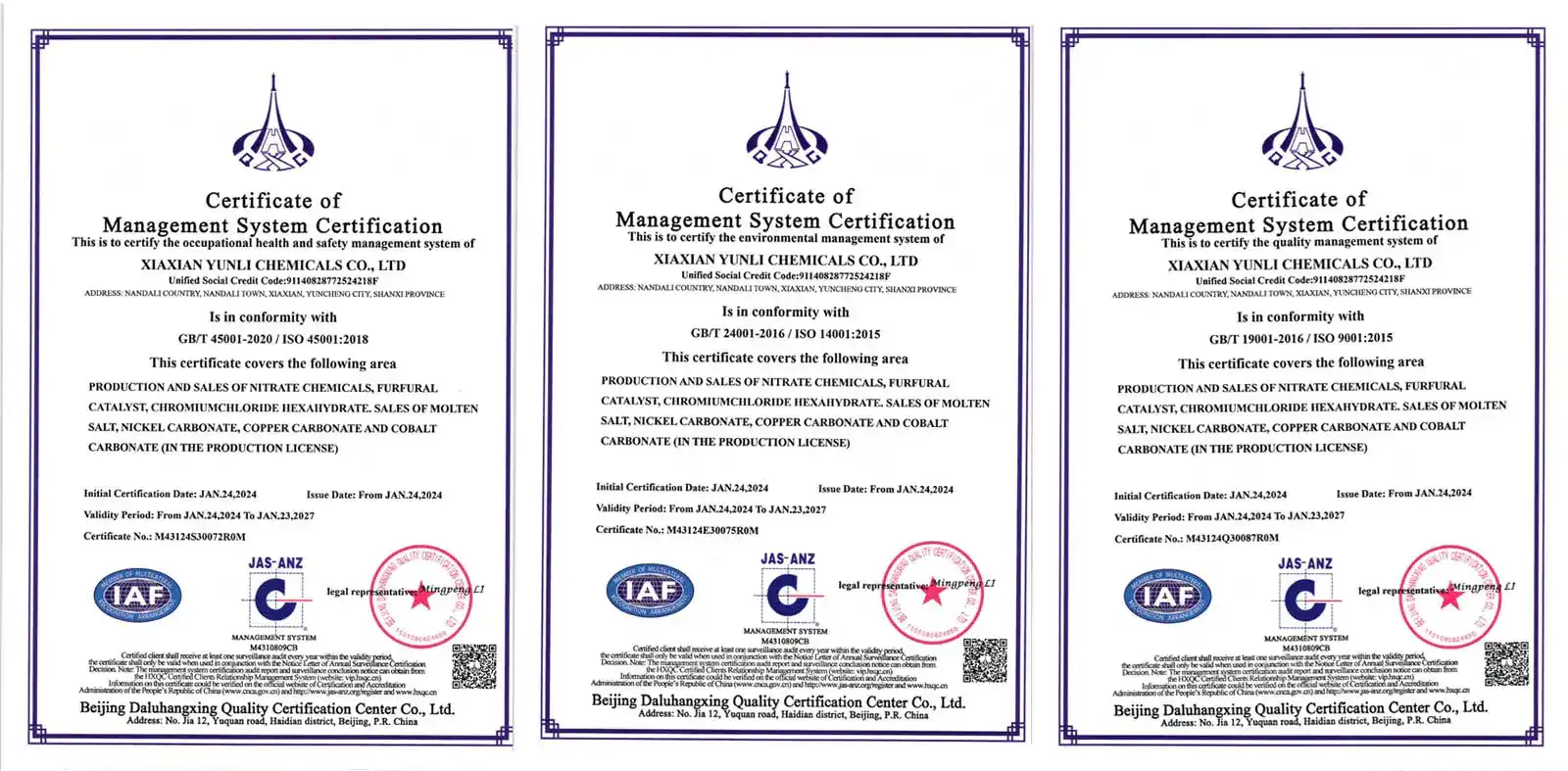
Safety starts at the top, with strict buyers who are checked out in more ways than just price. It is important for businesses that make Chromium Nitrate Nonahydrate to have ISO 9001, ISO 14001, OHSAS 18001, or ISO 45001 standards. These show that they know how to run health and safety programs, handle quality processes, and care for the environment. This proof from a third party shows that the business is run in an organized way and that the management system is stable.
If a strategic partner has the technical know-how to handle complex apps, they are not the same as basic providers. A regional or national technology center is a place that can do cutting edge research and development and solve technical problems. Lab tools like ICP-MS, atomic absorption spectroscopy, and ion chromatography can be used to accurately measure impurities. Iron levels below 30 ppm and salt levels below 50 ppm have a big effect on how well the product works in electronics, medicines, and catalysts. This is very important.
It has been around for more than 18 years, makes more than 1 billion yuan a year, and has 300 million yuan in fixed assets. Yunli Chemical is a great example of this type of company. This shows that it has a good income and can make many things. As a state technology center, we have a lot of analytical tools that let us make 98–99.9% pure standard goods and tailor-made recipes. To change the pH level (from 5.0 to 7.0), we can also change the amount of impurities in the water. Rules are followed everywhere in the world thanks to certifications like REACH, RoHS, and full ISO systems. This makes it easier to buy things from other countries by cutting down on the paperwork that needs to be filled out.
Product Verification and Documentation
Every Chromium Nitrate Nonahydrate box should have a lot of information on it. This lets you see how good it is and make sure you're following the rules. For each batch, it shows the exact amount of chromium that is in it, as well as its purity levels, impurity profiles, pH values, and other physical properties that meet the standards. By comparing them to older data, you can see if there are any differences between the lots that could change how they are further dealt with.
For each place they are meant for, Safety Data Sheets must have the most up-to-date GHS change standards. Any language versions must also follow the rules of that country. If a company wants to sell its goods in more than one country, it should keep copies of its Safety Data Sheets for each country. These copies should have changes made to the classification, exposure limits, and ways to handle emergencies that are specific to each place. To show that you are following the rules, you may need to show more paperwork. On the other hand, you might need to show your REACH registration number in places in the European Union. For medicine uses, you might need to show proof that you are registered with the FDA. If you want to use it for food, you might need to show proof that it is kosher or halal.
Logistics Planning and Transit Safety
There are more things to think about than just price when you buy in bulk. Safety is another thing you should think about. It's not enough to just look at the unit price when deciding how much to order. You should also look at things like the items' shelf life, shop space, and how fast they sell. Having too much stuff can make it harder to buy things and make any mistakes happen in storage worse. It also makes you more likely to get hurt.
The package's specs make it safe and easy to handle. When a small business has to move things by hand, fiber drums with multiple bags that don't get wet work well. Intermediate bulk barrels, on the other hand, are less expensive per unit and easier to move for big users who have the right tools. Nitrogen purging, adding a desiccant, or vacuum closing are some of the different types of custom packing that can help keep things more stable for a long time or in bad weather.
Once you've planned your transportation, make sure you follow the rules and everything goes as planned. Freight costs less per unit when packages are grouped together, but it's harder to place orders and you need to keep extra materials on hand. When the package is shipped straight from the plant, it is safer because it doesn't have to be handled as much, which could break the bags' openings. If you want to buy something from another country, you need to know when customs checks take place, if there are any inspections that need to be done, and how the seasons affect journey times and conditions.

Conclusion
It is very important to follow all safety rules when working with Chromium Nitrate Nonahydrate. People are safe, work gets done quickly, and companies follow the rules in a wide range of workplace settings. The thing needs to be moved and kept in a certain way so it doesn't get too hot or too cold. This is because of its chemical and physical traits, like its capacity to take in water, rust, and decay. Safety should be thought about at every step, from sending the things out to checking them.
Dealing with these goods in the future comes with some risks that rest on how good the goods are and how well the paperwork is done. Find out how the safety of different chromium sources varies and only do business with buyers who are qualified and technically skilled. This will make your business safer and more efficient while also meeting stricter health and environmental standards.
FAQ
Q1: What safety gear do you need to wear when working with chromium nitrate nonahydrate?
A: You only need nitrile or neoprene gloves that can resist poisons, safety goggles that meet ANSI Z87.1 standards, and clothes that can keep you safe. When people work with dust or when moving around isn't enough to keep the air safe, they need to wear respirators. Each piece of PPE has a Safety Data Sheet that you should look at along with the risk assessment that was done at your workplace.
Q2: In order to keep it safe, how should you store chromium nitrate nonahydrate?
A: It should be kept away from things that can catch fire, biological materials, and chemicals that break down things. Keep it somewhere cool (15–25°C) and dry, with less than 60% humidity. Back up control systems should be set up, and dangerous items should have clear signs on them. Pack things in boxes with seals that stay in place and don't leak. You can find broken packing before it leaks if you check your goods often.
Q3: If a Chromium Nitrate Nonahydrate spill occurs, what should I do right away?
A: Get everyone out of the area who isn't needed, put up guards around the edges, and call for assistance. Responders wearing the right PPE should work from the edges in to limit the spill with materials that can soak up the liquid. If you use a fine water spray, sticky spills won't turn into dust. Do not put dirty things in bins that are not compatible with others. Only people who are allowed to handle dangerous waste should put them away.

Partner with Yunli Chemical for Certified, High-Purity Chromium Nitrate Nonahydrate
Yunli Chemical stands as your reliable Chromium Nitrate Nonahydrate manufacturer, combining two decades of production expertise with rigorous safety and quality standards. Our ISO 9001, ISO 14001, and OHSAS-certified facility produces chromium nitrate with exceptional purity (98–99.9%), ultra-low iron content (≤30ppm), and customizable specifications supporting catalyst production, electroplating, textile processing, and corrosion inhibition applications. We provide comprehensive safety documentation including REACH-compliant Safety Data Sheets, batch-specific Certificates of Analysis, and technical support from our provincial technology center team.
With flexible packaging options, no minimum order quantity barriers, complimentary samples up to 500 grams, and direct factory pricing eliminating intermediary costs, we simplify procurement while ensuring supply chain reliability. Contact our team at wangjuan202301@outlook.com to discuss your Chromium Nitrate Nonahydrate requirements and receive expert guidance on specifications, logistics, and regulatory compliance tailored to your industrial applications.
References
1. American Conference of Governmental Industrial Hygienists (ACGIH). Threshold Limit Values for Chemical Substances and Physical Agents. Cincinnati: ACGIH Press, 2022.
2. National Institute for Occupational Safety and Health. NIOSH Pocket Guide to Chemical Hazards: Chromium Compounds. Publication No. 2010-168. Washington: DHHS, 2020.
3. European Chemicals Agency. Guidance on the Application of the CLP Criteria: Guidance to Regulation (EC) No 1272/2008 on Classification, Labelling and Packaging of Substances and Mixtures. Helsinki: ECHA, 2021.
4. Occupational Safety and Health Administration. Chemical Hazard Communication Standards: 29 CFR 1910.1200. Washington: U.S. Department of Labor, 2021.
5. International Labour Organization. Safe Handling and Use of Chromium Compounds in the Workplace. Geneva: ILO Publications, 2019.
6. National Fire Protection Association. NFPA 400: Hazardous Materials Code. Quincy: NFPA Standards Council, 2022.