


What are the primary industrial uses of copper nitrate?
Copper Nitrate, more formally Copper Nitrate Trihydrate (Cu(NO₃)₂·3H₂O, CAS 10031-43-3), is an important chemical that is used in many fields, from making catalysts to making micronutrients for plants. In chemical synthesis, this compound acts as an oxidizer. It is also used as a precursor to make high-purity copper oxide catalysts and as a source of micronutrients in water-soluble fertilizers. It is used in the electronics industry to make conductive ink, and it is used in metal surface treatment to control the patination of bronze and copper. Technical experts and procurement managers can find the right grade and source for their needs by learning how this versatile chemical works in different settings. This improves both the quality of the product and the reliability of the supply chain.
Getting this material from a reliable source has a direct effect on the regularity of production. With more than 20 years of experience in nitrate refinement, Yunli Chemical has provided this important chemical to companies in the U.S. market that work in medicines, electroplating, and battery materials. We pay close attention to purity control and compliance paperwork to make sure that every shipment meets your business standards without any delays or quality surprises.
Overview of Copper Nitrate Properties and Industrial Relevance
Chemical and Physical Characteristics
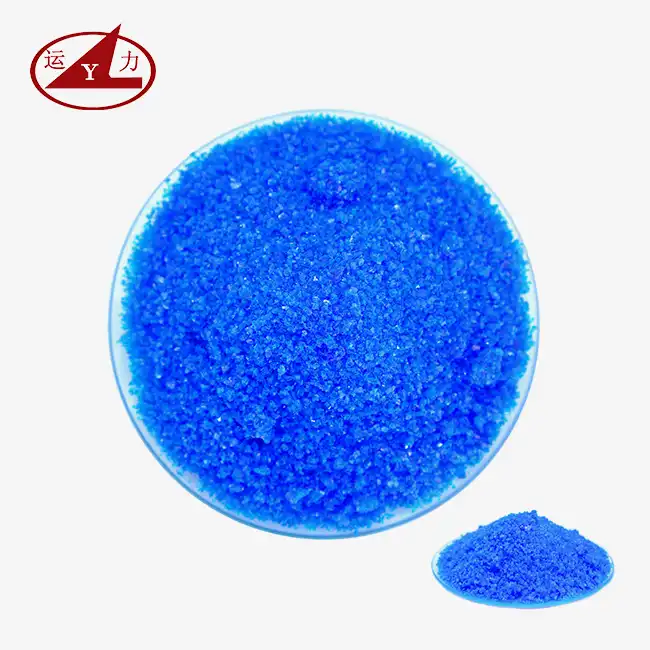
Copper Nitrate Trihydrate presents as dark blue columnar crystals with a molecular weight of 241.6 g/mol. The substance has a high deliquescence, which means it easily draws water from the air. If the packaging breaks, this can turn the crystalline solid into a dissolved solution. Because of this trait, it needs to be stored carefully, especially in wet places or for long periods of time.
The substance fully dissolves in water and ethanol, creating acidic water solutions with a pH of around 4.0. It starts to break down at about 170°C, and its melting point is 114.5°C. When the substance breaks down, it creates nitrogen oxide gases. These gases are poisonous and need to be properly vented in processing plants. It has a specific density of 2.05, and because it oxidizes strongly, it can start a fire or explosion when it comes into touch with flammable materials through friction or heat.
Safety and Handling Requirements
Industrial sites that work with this chemical must follow strict rules. Using airtight containers to keep moisture from escaping, storage places should keep temperatures below 25°C and humidity under control. The staff needs to be taught about the oxidizer classification (UN 1477, Class 5.1), and they need to know that this material needs to be kept away from metal powders, organic solvents, and reducing agents. Nitrogen dioxide gas is dangerous to breathe when it is released during decomposition or burning. This is why proper PPE and exhaust systems are so important.
The MSDS paperwork that sellers like Yunli Chemical send out spells out what to do in an emergency and how to give first aid. When it comes in touch with skin, it irritates it and needs to be washed off right away with lots of water. Our technical support team helps clients come up with handling methods that are right for their place and follow OSHA rules and local environmental laws.
Environmental Considerations
To meet EPA guidelines, wastewater that has cupric ions dissolved in it needs to be treated before it can be released. Yunli Chemical has a lot of experience managing nitrate wastewater, and we share this information with our clients to help them set up systems that are legal to use. Copper compounds used in industry have a big impact on the environment. This has led to a rise in recycling programs, where used catalyst materials are collected and used again instead of being thrown away as toxic waste.
Primary Industrial Applications of Copper Nitrate
Copper Nitrate Trihydrate is very useful because it can be used as both a source of copper ions and an oxidizing agent. Depending on their process needs and final product specs, different businesses use different properties.
Catalyst Manufacturing and Chemical Synthesis
The production of catalysts is one of the most difficult tasks. This chemical is used by petrochemical companies to fill up porous support materials like alumina or silica. This makes hydrogenation and oxidation catalysts. The high solubility makes sure that it gets deep into support holes, and the clean decomposition profile doesn't leave behind any sulfur or halide leftovers that could harm active catalyst sites.
For making methanol catalysts, Yunli Chemical has formulas with very little iron (≤30ppm normal, can be customized to <10ppm) because even a small amount of iron can shorten the catalyst's life and make it less selective. Our pH-adjusted formulas keep the reaction conditions at their best between pH 3.5 and 4.2, which is important for the catalyst to always work well. ICP-OES testing is done on every shipment, which guarantees consistency from batch to batch. This gives production managers faith in the specs of their raw materials.
In the process of organic synthesis, copper nitrate is used to nitrate aromatic compounds and as an oxidizer in controlled reactions where stronger chemicals would lead to unwanted side effects. It is better than copper sulfate or copper chloride in these situations because it reacts and dissolves easily in organic solvents.
Metal Surface Treatment and Patination
Professionals in surface treatment use copper nitrate solutions to give copper and bronze building parts, statues, and ornamental metalwork dark patinas that last a long time. Unlike options based on acetate, nitrate solutions allow controlled oxidation that creates coatings that stick better and are more resistant to UV breakdown and weathering. This stability is especially helpful for restoration projects that include metal installs outside.
Yunli Chemical offers liquid formulas that get rid of the need for on-site dissolving steps. This saves about 30% on labor costs and makes the workplace safer. The percentage of these ready-to-use products stays the same, so the patination process doesn't have to deal with changes. Our formulas follow RoHS rules and provide trivalent chromium options for electroplating businesses that want to switch to environmentally friendly methods.
During buying, chloride content is a key part of quality control. High chloride levels cause "bronze disease," a violent corrosion that leaves powdery green spots and pits on the metal surface instead of a stable, attractive finish. This expensive type of failure can be avoided in building repair work by specifying low-chloride grades.
Agricultural Micronutrient Formulations
Copper nitrate is added to water-soluble fertilizers as a micronutrient source to help crops that grow in sandy or high-pH soils that don't have enough copper. Because the substance is completely soluble, it can be mixed with NPK fertilizers and other vitamins without any problems with precipitation during storage or use.
Our material is made for farming and meets OMRI standards for organic farming. It has a heavy metal content of less than 10ppm, which is the lowest level needed for approved organic operations. Along with the copper micronutrient, the nitrate nitrogen part is also helpful because it offers an easy-to-access nitrogen source. This two-in-one feature saves money compared to buying separate copper and nitrogen sources.
Copper nitrate is easier to dissolve in cold water than copper sulfate, and it doesn't make the soil more acidic in areas where plants are sensitive. Distribution partners like that there are different ways to package the product, from 25kg bags for small formulators to 1000kg IBCs for large-scale mixing operations.
Electronics and Advanced Materials
High-purity types (up to 99.99%) are used by electronics companies to make conductive ink and photosensitive resistance materials. The substance is used to make copper oxide nanoparticles with a controlled size distribution, which is important for printed electronics and flexible circuits.
For pharmaceutical intermediate synthesis, the purity level needs to be API-grade, and the moisture content needs to be less than 0.07%. Yunli Chemical can achieve this through controlled crystallization and vacuum packing. Custom eutectic mixes can be used with molten salt in modern energy storage systems and heat transfer fluids because they are thermally stable.
Copper nitrate is used as an activating agent in the production of luminescent powder. The emission properties of phosphorescent materials used in displays and lights are determined by the precise dopant amounts.
Comparing Copper Nitrate With Other Copper Compounds for Industrial Use
When buying something, people often have to look at more than one source of copper. For each chemical, there are different benefits that rely on the process and application.
For basic electroplating and large-scale farming, copper sulfate (CuSO₄·5H₂O) is still the cheapest way to get copper. Sulfate ions, on the other hand, can stop some chemical processes from happening and cause unwanted precipitation in mixed formulations. Because it dissolves less easily in cold water, it can be hard to work with in the winter. Most companies that make catalysts stay away from copper sulfate because it contains sulfur molecules that are harmful to many types of catalysts.
Copper chloride (CuCl₂·2H₂O) is easier to dissolve and cheaper than nitrate, but it can get contaminated and cause big problems in making catalysts, finishing metal, and using it in electronics. Because chloride ions are acidic, they can't be used in stainless steel working equipment and can leave pits in finished metal goods.
While copper oxide (CuO) can be used as a direct catalyst, it is not soluble enough to be used in solution-based impregnation methods. By using heat to break down Copper Nitrate, producers can precisely control the particle size, shape, and clarity, which is not possible when buying oxide powders that are already made.
Which of these substances to use relies on how pure they need to be, how well they work with current processes, and the total cost of ownership, which includes how hard it is to handle and how much waste needs to be treated. Copper nitrate usually makes up for its higher raw material cost through higher yields and less reworking in situations that need high purity, low contamination, and process freedom.
Procurement Considerations for Copper Nitrate in B2B Industry
When looking for this material, you need to think about more than just the unit price. Problems with the supply chain, inconsistent quality, and missing compliance paperwork all add up to secret costs that are much higher than the savings that seem to come from picking cheap suppliers.
Supplier Qualification and Certifications
Reliable providers keep their ISO 9001 quality management certification, which shows that they have systematic rules over the process and can be tracked. ISO 14001 environmental certification shows how to properly handle production waste streams. This is especially important because nitrates and copper in wastewater can cause oxygen to be released. OHSAS workplace health and safety approval shows that a company cares about keeping workers safe while they are making things.
Yunli Chemical has all three certifications and runs a business technology center at the provincial level that is approved by the government of Shanxi Province. This certification shows that we have strong research and development skills and technical knowledge, which lets customers get customized recipes that go beyond standard stock grades. Our high-tech lab, which has ICP-MS and atomic absorption spectrometers, checks arriving raw materials and finished goods for errors to make sure that the Certificate of Analysis (COA) papers are correct for each batch.
Packaging Options and Order Flexibility
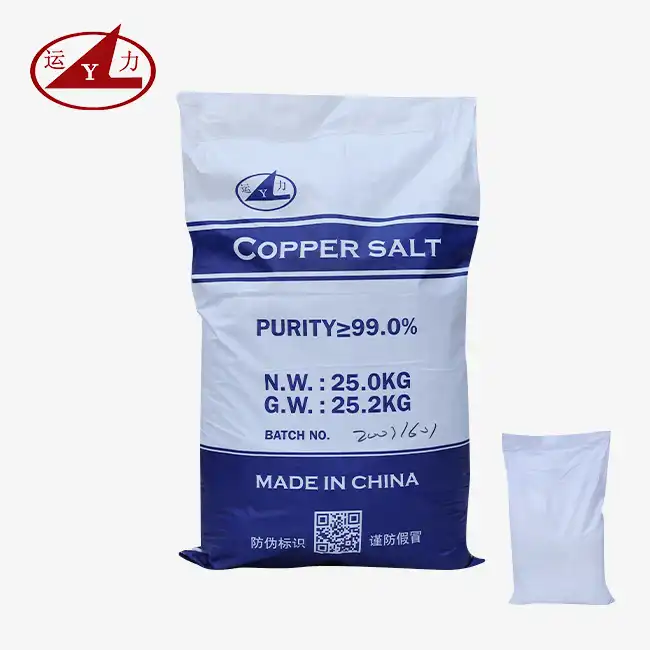
25kg bags, 50kg drums, and 1000kg IBCs are all standard packing. There are no minimum order quantities for small users, and buyers who buy by the ton get better prices through annual contracts. Desiccants in vacuum-sealed packages keep moisture from absorbing during travel and storage. This is especially important for long ocean freight routes to U.S. ports.
Custom packing with labels in multiple languages meets the needs of import paperwork and makes managing warehouse inventory easier. Since Yunli Chemical runs its own export business, there are no markups for middlemen. This lets the company offer factory-direct prices that lower prices without lowering quality or service response.
Quality Assurance and Testing Protocols
The requirements for the purchase should list the accepted values for assay (usually ≥98% for industrial grade and ≥99% for reagent grade), insoluble matter (<0.01% for critical uses), and specific impurities that are needed for the job. The amount of iron is important for catalyst uses, while the amount of chloride needs to be controlled for metal finishing.
Before making big purchases, ask for samples of the materials. Yunli Chemical gives away up to 500 grams for free for qualification testing. During this trial time, technical staff can make sure that the material works as expected in real production settings and that it can be used with existing processes. A lot of long-term relationships start with small sample orders that turn into contracts for regular tons of work once trust is built.
Pricing Trends and Contract Structures
Copper commodity prices affect the starting cost, and changes in the market make planning less certain. Setting annual supply deals and changing prices every three months keeps things stable while still showing how the market really works. When there aren't enough supplies, volume agreements can often open up tiered prices, reward programs, and priority allocation.
Most of the time, it takes two to four weeks for containerized ocean freight to get to big U.S. ports. Keeping a safety stock on hand protects against sudden increases in demand or delays in shipping. When you work with providers who have enough inventory and production capacity, you won't get the feared "out of stock" message that stops production lines and forces you to buy things quickly at high prices.
Environmental and Safety Practices in Handling Copper Nitrate
Industries need to deal with both the short-term safety risks and the long-term environmental effects of Copper Nitrate.
Workplace Safety Protocols
Designated storage areas should be built to resist fire, have systems to control spills, and keep unsuitable materials away from each other. Within 10 seconds of any working area, there must be emergency eyewash stations and safety showers that can be reached. Chemical-resistant gloves, safety glasses, and protective clothes that covers uncovered skin are all examples of personal protective equipment.
Controlled heating is very important when making catalysts because rising temperatures quickly release a lot of nitrogen dioxide, which can overwhelm air systems and cause serious breathing problems. Gradient heating steps and constant exhaust tracking keep workers safe and keep catalyst support structures from getting damaged.
At each use site, there should be a spill reaction kit with absorbent materials, neutralizing agents, and trash bags ready to go. Training programs teach people how to clean up after a spill, give first aid, and let others know about an accident.
Waste Management and Disposal
The rinse water from cleaning tools has copper dissolved in it, so it needs to be treated before it can go into the sewer. Adding hydroxide to precipitation ways gets rid of the copper ions, making a sludge that most places consider to be hazardous trash. Electrochemical recovery systems can be used as an alternative. These systems turn the cost of dumping into a stream of recovered value.
The detailed advice Yunli Chemical gives to clients is based on our experience with treating nitrate wastewater. Our environmental management systems were created over 20 years of production. They offer tried-and-true ways for smaller businesses to comply that can be changed to fit their needs.
Regulatory Compliance
Facilities in the U.S. have to follow OSHA rules for communicating hazards, EPA rules for water release limits, and DOT rules for transportation. The oxidizer classification needs certain labels to be put on items during shipping and limits the ways and routes that they can be moved. Regulations at the state level may add more rules, especially in coastal places with fragile marine environments.
Keeping lots of paperwork, like MSDS sheets, COA certificates, and import statements, shows that you know how to handle chemicals properly and helps with regulatory checks. When suppliers know these needs and give full paperwork packages, it makes things easier for buying teams to do their jobs.
Conclusion
Copper Nitrate Trihydrate is an important ingredient in the production of catalysts and is also used in gardening, electronics, and surface cleaning. Its unique mix of high solubility, clean breakdown, and oxidizing ability makes it impossible to replace in many high-value situations, even though it costs more than other copper sources. To be successful in procurement, you need to work with suppliers who offer regular quality, full documentation, and expert help that goes beyond just providing materials. Because of the connection between the quality of the raw materials, how well the process works, and the quality of the finished product, choosing a source is more of a strategic choice than a simple buy. To build a reliable, long-term supply relationship that supports operational excellence, you need to know exactly what grade you need for your application and make sure the seller can meet those standards through trial orders.
FAQ
How does Copper Nitrate differ from copper sulfate in agricultural applications?
Copper Nitrate dissolves better at a wider range of temperatures, which keeps it from solidifying in cold storage, which can happen with sulfate-based formulas. The nitrate form gives plants two benefits: a copper mineral and nitrogen that is easy for plants to use. It also keeps the soil from becoming too acidic, which can happen when sulfate builds up in sensitive growing areas. Agricultural businesses that use fertigation systems like nitrate formulations because they keep the solution clear and don't clog the drip emitters. This lowers the cost of upkeep and makes sure that nutrients are delivered consistently throughout the growing season.
What storage practices prevent moisture absorption in bulk quantities?
Proper keeping is very important because of deliquescence. Temperatures should stay below 25°C and humidity levels should be kept below 50% relative humidity. The original packaging must be kept closed until it is used, and any open packages must be sealed right away with moisture-proof bags and desiccant packs. The gradual breakdown that turns crystalline solids into liquid masses can be stopped by storing things in climate-controlled buildings instead of open areas. Using first-in, first-out to rotate goods on a regular basis cuts down on holding time and the risk of moisture exposure.
Where can I find MSDS documents and verify supplier certifications?
Reliable sellers include MSDS sheets with every shipment and keep them easy for customers to access through customer sites or by calling directly. Checking for certification means looking at ISO certificates to see when they expire and what they cover, and making sure that the product and production site are included in the certification scope. Independent checks of claimed certifications can be done using third-party records, such as those kept up by certification groups. Yunli Chemical offers full documentation packages that include MSDS, COA, and copies of certifications to help you meet legal and quality assurance standards.
Partner With Yunli Chemical for Reliable Copper Nitrate Supply
Yunli Chemical ships Copper Nitrate Trihydrate directly from our ISO 9001, ISO 14001, and OHSAS-certified factory, cutting out the costs of middlemen and making sure that the quality of every package is the same. Our technology center at the regional level creates unique formulations that meet your exact purity requirements. These can be anything from normal industrial grades to 99.99% high-purity materials for high-strength electronic and pharmaceutical uses. We've been working with global makers for more than 20 years, so we know that a reliable supply means more than just getting the product to the customer. It also means providing technical support, full compliance paperwork, and quick communication throughout our relationship. You can get free samples of up to 500 grams of material to see how well it works before you commit to large sales. Email our team at wangjuan202301@outlook.com to talk about your unique needs and get customized suggestions based on your application requirements and order volume.

References
1. Smith, J.R. and Thompson, M.K. (2021). "Industrial Applications of Copper Compounds in Catalyst Manufacturing." Journal of Chemical Engineering and Materials Science, 45(3), 287-301.
2. Anderson, P.L., Chen, W., and Roberts, D.A. (2020). "Comparative Analysis of Copper Salts in Agricultural Micronutrient Formulations." Agricultural Chemistry Reviews, 38(2), 145-162.
3. Martinez, E.F. and Williams, S.J. (2022). "Surface Treatment Technologies Using Copper-Based Patination Agents." Metallurgical Surface Engineering Quarterly, 29(4), 412-428.
4. National Institute for Occupational Safety and Health. (2023). "Safety Guidelines for Handling Oxidizing Chemical Agents in Industrial Settings." NIOSH Publication Series, Document 2023-156.
5. Harrison, K.M., Liu, Y., and Patterson, R.G. (2021). "Environmental Management of Copper-Containing Industrial Wastewater." Environmental Engineering Science, 52(6), 734-749.
6. Zhou, X.L. and Bergman, T.R. (2020). "High-Purity Copper Precursors for Electronic Materials Manufacturing." Advanced Materials Processing, 41(1), 89-105.