


What are the safety guidelines for handling cobalt nitrate hexahydrate?
It's important to know how Cobalt Nitrate Hexahydrate (CAS# 10026-22-9) breaks down, how it takes in water, and what health risks it might pose before you handle it. It's very important to wear the right safety gear, like masks that can handle chemicals, rubber gloves, and respirators. The stuff should be kept cool and dry, below its melting point of 55–56℃, and away from organic substances and reducing agents so it doesn't blow up or catch fire. To stay safe for workers and follow the rules, industrial processes need to have enough air flow, clean up messes the right way, and do what is written in Safety Data Sheets (SDS).
Understanding Cobalt Nitrate Hexahydrate – Chemical and Safety Fundamentals
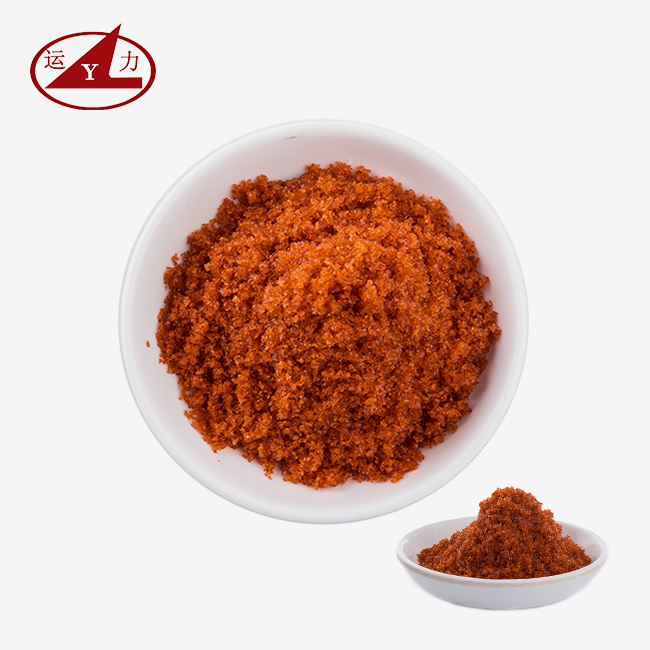
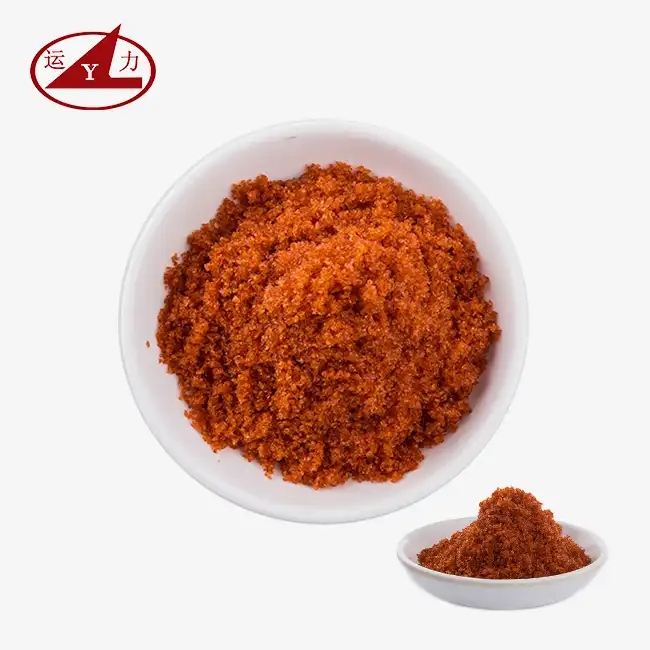
Cobalt Nitrate Hexahydrate is a solid substance that is reddish-brown in color. Its molecular formula is Co(NO₃)₂·6H₂O, and its molecular weight is 291.03 g/mol. This chemical is useful in many areas because it mixes well with water, ethanol, and acetone. The density is 1.88 g/cm³, and the temperature at which it freezes is between 55 and 56℃. In other words, it can dissolve in its own salt water when it's warm outside or while it's being shipped.
It is a strong oxidizing agent at the molecular level. It breaks down thermally when heated to more than 74℃, giving off nitrogen oxides and changing into cobalt oxide. You can't mix it with organic chemicals, things that are already on fire, or reducing agents because it could cause fires or blasts.
Industrial Applications and Exposure Scenarios
Cobalt Nitrate Hexahydrate is a crucial component of numerous processes, including electroplating, surface cleaning, pot making, and battery making. Putting cobalt on alumina or silicon supports that are used to process petrochemicals is simple. These supports are also used to make catalysts. It is used to make lithium-ion cell cathodes by people who make batteries. When mixed with nickel and manganese at the atomic level, it makes the cell more stable at low temperatures and lasts longer. It has to be very pure so that people who make pottery and paints can get bright cobalt blue colors without iron or other small metals getting in the way.
Exposure risks vary significantly depending on the operational environment. Where the work is done has a lot to do with the risks of touch. When making solutions, people who work in plate plants could get burned or take in chemicals that are bad for them. When the triggers are being made, the techs who work on them are also at risk. If people who know a lot about safety and buying make plans to lower risks, they can use these application-specific exposure methods.
Role of Safety Data Sheets in Risk Assessment
To get ready for anything and let people know about risks, the Safety Data Sheet (SDS or MSDS) is the most important thing to keep handy. Because of this, Cobalt Nitrate Hexahydrate is a dangerous oxidizer (Class 5.1, UN Number 1477), an allergen for the skin and lungs, and it may even give you cancer if you are exposed to it. In case of a fire, first aid, or something going wrong, you should know what to do. You should also wear safety gear, which is written in the SDS. People whose job it is to buy things should make sure that sellers give them GHS-compliant SDS files that are up to date. In the US, this is done to make sure the papers follow OSHA rules. In Europe, this is done to make sure the papers follow REACH rules.
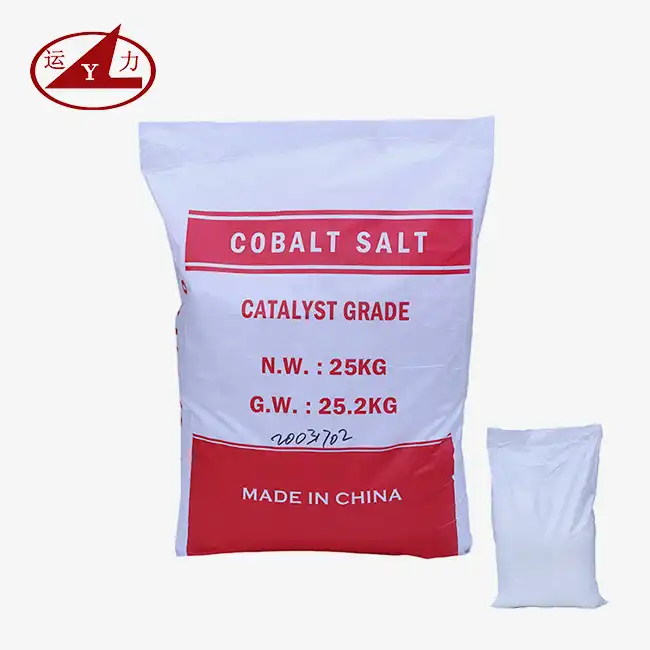
Identifying Hazards and Risks in Handling Cobalt Nitrate Hexahydrate
Chems and possible harm to the body. Cobalt Nitrate Hexahydrate presents multiple layers of risk that must be identified before operations begin.
Physical and Chemical Hazards
It's possible for this stuff to catch fire or blow up right away because it burns. It could start a fire by itself if you don't store it properly or put it near things that don't mix, like sawdust, cloth, or organic chemicals. Neon (NO₂) fumes are harmful and come out of things that break down above 74°F. It's very bad for the lungs to breathe in even small amounts of these gases. They hurt cells that move.
Because it soaks up water, it's hard to work with. It's harder to move, weigh, and measure things that are clumped together or caking together when they take in water. During shipping, if it's hot outside, the crystal water in the stuff can melt. This might make it hard to carry, and the box might break if it's not packed well enough.
Health Hazards and Toxicity
When in direct touch with the skin, Cobalt Nitrate Hexahydrate causes it to become red, itchy, and acne-prone. People can become more sensitive to something after being exposed to it many times or for a long time. This means that they may be allergic to even small amounts of it in the future. Cobalt ions can get into the lungs through mist or dust. For a long time, this can hurt the lungs and make you cough and have trouble breathing. Soluble cobalt salts are very dangerous to eat because they are easy to take through the digestive system. They can hurt the heart, liver, and blood cells.
It has been linked that being around cobalt metals for a long time can make the lungs more sensitive, cause industrial asthma, and maybe even cause cancer. The International Agency for Research on Cancer (IARC) says that cobalt metal and some cobalt products (Group 2B) can cause cancer. Because of this, it's even more important to have strict rules about exposure.
Environmental Risks and Contamination Prevention
Cobalt is a heavy metal that can get into dirt and water if there are spills or not enough trash is picked up. It builds up in the ocean and changes how things work there. Water that has cobalt in it needs to be cleaned up so that the amounts are below the legal limits for release, which in this case are 0.5 to 1 mg/L. Polluted soil needs to be fixed because cobalt ions get into waterways and make crops grow less well.
Regulatory Compliance and Export Controls
There are a lot of rules about how to trade items made with cobalt with other countries. The UN calls it an oxidizer (UN 1477), so it needs to be tagged, packed, and kept separate while it's being shipped. If the goods can be used for both security and high-tech, or if they can be used for both, export deals may need paperwork. A buyer wants to know if a seller is up-to-date on OHSAS 18001 (or ISO 45001) for health and safety at work, ISO 9001 for quality management, and ISO 14001 for environmental responsibility. Everyone in the world will be sure to use the best methods because of this.
Best Practices and Safety Guidelines for Safe Handling
Worker safety is maintained through a combination of engineering controls, rigorous storage standards, and consistent use of protective gear.
Personal Protective Equipment (PPE) Requirements
Picking out the right PPE is the first thing that needs to be done to protect workers from chemicals and direct touch that are risky. Cobalt Nitrate Hexahydrate can get through rubber gloves but not nitrile or neoprene gloves. Wear shades or a face cover that can handle chemicals to protect your eyes while you move, mix, or weigh things. OSHA PEL says that people need to wear respirators with P100 screens or use systems that let fresh air in when there is more dust than what is safe (0.02 mg/m³ for cobalt metal and fake compounds).
Skin doesn't get too close to poisons when lab coats or suits that can handle them are worn. If you wear socks that cover your feet, spills won't get on your skin. They need to get rid of their dirty clothes right away and wash their faces well with soap and water. Employers should make rules about how to put on and take off PPE so that it works well for as long as it's supposed to.

Storage Protocols and Temperature Management
Taking care of things the right way lowers the risks and keeps them from breaking down. Cobalt Nitrate Hexahydrate should be kept in cases with tight-fitting lids that won't let water in. These boxes should be made from the right stuff, like glass or high-density polyethylene (HDPE). So that things don't freeze and soak up water, places where things are stored must be below 55℃ and the relative humidity must be below 60%. If you want the best conditions, use temperature tracking devices and keep them in a climate-controlled space, especially if you live somewhere hot and muggy.
Keep drugs that don't mix together in a different place. You should keep the stuff away from things that can catch fire, organic chemicals, reducing agents, and acids in places where only oxidizers are kept. Make sure there are clear warning signs in storage areas and emergency gear like spill kits, fire extinguishers that can put out Class D oxidizer fires, and eyewash stations close by.
Handling Procedures and Spill Management
If you want to keep the dust level low while moving things, use closed transfer devices or local air ventilation. When you melt the material, don't make clouds. Instead, slowly add it to deionized water while shaking it gently to keep it from spilling. Solutions stay clear and don't break down when nitric acid is added to them. It is very important to do this when making catalysts and plating baths.
Make plans for how to clean up messes in your building and practice them. Be careful not to start a fire when you clean up a small spill, and put the dirty things in containers with labels so they can be thrown away the right way. When there are bigger spills, people who aren't needed must be taken away, neutral absorbents like vermiculite must be used to keep the mess in one place, and reaction teams for dangerous materials must work together. Oxidizers can catch fire if you clean them up with sawdust or paper towels. Dirty places should be cleaned up and given a good water rinse. Pick up and throw away any water that runs off because it is dangerous waste.
Comparison of Supplier Safety Support and Documentation
You can't just look at price and quality standards when you need to find a good Cobalt Nitrate Hexahydrate supplier. The people who make things are different from people who sell them because they offer full safety support and papers.
Certifications and Quality Assurance
People who work for the best service companies keep records that show they care about quality and safety. When you get ISO 9001 approval, you can be sure that the way your products are made is consistent and can be watched. Getting ISO 14001 approval means that environmental management practices are being used. These include keeping pollution under control and cleaning up garbage. This is very important for places that make nitrogen gas and nitrates. Health and safety programs at work that are approved by OHSAS 18001 or ISO 45001 make sure that workers are safe from poisons.
Suppliers who have been approved by a Provincial or National Enterprise Technology Center have the research and development (R&D) skills that let customers change product specs like ratios, solid forms, or purity levels. It is helpful to have this kind of technical versatility in fields like medicine, technology, and high-performance catalysts, where standard types from the business don't work well enough.
Documentation Completeness and Accuracy
There is a lot of paper work that comes with every package from a trustworthy source. It has test results, the amounts of sulfate, salt, and trace metals like iron, nickel, copper, and lead, as well as the amounts of particulate matter. With common tests like EDTA titration for cobalt level or ICP-OES for trace metals, clear COAs are made that can be used over and over.
People who buy things should get the most up-to-date Safety Data Sheets that follow GHS and local rules. These sheets tell buyers about risks and what to do in an emergency. Having export records like customs reports, transport classification certificates, and product specs speeds up the process of getting goods into other countries and makes it easier to do business there.
Technical Support and Training Services
Top-tier providers and transactional vendors are not the same thing because transactional vendors don't provide services that add value. People who buy things can get expert help to find the best recipes, fix problems with quality, and change how things are done to fit their needs. Buyers, engineers, and people who work in production are sometimes trained right where they do their jobs. To stay safe, choose the right PPE, know what to do in an emergency, and follow the rules, there are lessons.
After-sales support, including responsiveness to quality inquiries and willingness to provide free samples for testing (up to 500 grams in some cases) builds confidence and reduces procurement risk. Many suppliers have their own quality control labs with cutting edge tools such as ICP-MS and atomic absorption spectrometry. These labs can test quickly and meet specific purity needs.
Implementing Workplace Safety: Training and Continuous Improvement
Being trained isn't enough to get people to think about safety when they are working with dangerous chemicals. People who have more than one job get training that makes sure they know both the general rules and the risks that come with each one.
Role-Specific Training Programs
Training on how to rate buyers, check paperwork, and make sure rules are followed can help procurement managers do their jobs better. There are smart ways to buy things that put safety and cost first if you know how to read COAs, look over SDSs, and check certifications. Managers and experts in technology need to learn how to safely use PPE, keep tools in good shape, and handle accidents. It makes people feel better about their skills and confidence when they do real things like practice responding to spills and PPE fit tests. People get new training every six months or once a year.
Safety Audits and Monitoring Programs
Every three to six months, safety checks look for things like accidents, broken tools, and changes in how things are done. To get a lot of different points of view, audit teams should have people from business, technical, and safety. Full reviews are possible with the help of checklists that check for things like the availability and state of PPE, the organization of the storage area, the performance of the air system, the usefulness of emergency equipment, and the accuracy of all the paperwork. You can keep track of your exposure by taking air samples at work to verify nitrogen fumes and cobalt dust levels.
Adapting to Scientific and Technological Advances
Tips on how to get used to new science and technology. To keep your job safety up to date, you should know about new research on cobalt poisoning, better tools for the job, and changes to the rules. The American Chemical Society and the National Safety Council are two examples of expert groups that you can join. Trade magazines and classes on chemical safety are also good ways to learn about new best practices. People are safer and less likely to get hurt when better technology is used, like closed-loop transfer systems, automatic systems for moving things, and air quality monitors that work in real time.
Conclusion
Safely handling Cobalt Nitrate Hexahydrate demands comprehensive understanding of its chemical properties, rigorous adherence to protective protocols, and partnership with suppliers who prioritize safety documentation and support. By implementing appropriate PPE, storage controls, spill management procedures, and ongoing training programs, industrial users can protect personnel while maintaining operational efficiency. Continuous improvement through audits, exposure monitoring, and adoption of technological advances ensures workplace safety evolves alongside scientific understanding and regulatory expectations, ultimately supporting sustainable and compliant chemical management practices.
FAQ
What immediate actions should be taken if someone accidentally inhales cobalt nitrate hexahydrate dust?
Right away, take the person outside and hold them still in a way that lets them breathe. Trained staff should give someone air if they are having trouble breathing. Get medical help right away, and give the SDS to the people who help you. If someone is asleep, don't make them throw up. Nitrogen gas may not make you feel anything for hours after you breathe it in. Keep an eye out for signs of slowed breathing.
How should cobalt nitrate hexahydrate be disposed of in an environmentally responsible manner?
To get rid of dangerous trash, people must follow the rules in their area. It's not safe for the mix to go straight into rivers or drains because it could add heavy metals. Get people to help you who are trained to deal with dangerous trash and know how to get rid of heavy metals and oxidizers. Small amounts can be diluted chemically and turn into cobalt hydroxide, which can't be broken down. The trash can then be picked up all at once, but only if the right licenses and tools are in place.
What specialized storage infrastructure is necessary for large-scale cobalt nitrate hexahydrate inventory?
The temperature and humidity must be kept below 50°F and 60% for a lot of things to be stored. Set up alarms to always check the weather and humidity. Oxidizers should be kept in separate places that are not near things that are on fire and have walls that don't catch fire. Make sure there is enough air flow to keep nitrogen gas from building up if the temperature drops. When you move your goods, use first-in, first-out (FIFO) to keep things from going bad. Also, check the quality of the packages often to catch rust or broken seals early.
Partner with Yunli Chemical for Safe, Reliable Cobalt Nitrate Hexahydrate Supply
As a leading Cobalt Nitrate Hexahydrate manufacturer with over twenty years of specialized experience in nitrate chemistry, Yunli Chemical delivers not just high-purity products but comprehensive safety support that protects your operations and personnel. Our ISO 9001, ISO 14001, and OHSAS-certified production facility in Shanxi Province combines rigorous quality control with advanced environmental compliance, featuring closed-loop wastewater recycling and NOx emission treatment systems. We provide complete documentation including GHS-compliant SDS, detailed COAs with trace metal analysis down to 30ppm iron content, and customizable packaging options to match your handling capabilities.
Whether you require granular, crystalline, or aqueous solution formats, we offer flexible order quantities starting at 25kg with free samples available for testing. Our technical team provides consultation on safe handling protocols, PPE selection, and application-specific guidance tailored to electroplating, catalyst manufacturing, battery production, and ceramic industries. Contact us at wangjuan202301@outlook.com to discuss how our one-stop supply of 60+ nitrate derivatives can simplify your procurement while ensuring workplace safety and regulatory compliance.
References
1. Occupational Safety and Health Administration. (2023). Chemical Sampling Information: Cobalt Metal, Dust, and Fume. OSHA Technical Manual Section II.
2. International Agency for Research on Cancer. (2021). IARC Monographs on the Evaluation of Carcinogenic Risks to Humans: Cobalt and Cobalt Compounds. Volume 52.
3. National Institute for Occupational Safety and Health. (2022). NIOSH Pocket Guide to Chemical Hazards: Cobalt Compounds. DHHS Publication No. 2022-140.
4. American Conference of Governmental Industrial Hygienists. (2023). Threshold Limit Values for Chemical Substances and Physical Agents. ACGIH TLV Documentation.
5. European Chemicals Agency. (2020). Guidance on the Compilation of Safety Data Sheets: Version 4.0. ECHA-20-G-01-EN.
6. Chemical Safety Board. (2019). Investigation Report: Oxidizer Storage and Handling Incidents in Chemical Manufacturing. CSB Report No. 2019-02-I-CA.