


What color does cupric nitrate burn?
Cupric Nitrate turns a beautiful blue-green color when burned in a flame. This is a feature of copper compounds that has interested both scientists and people who work in industry. This unique flame color comes from the electric changes that happen when copper ions are heated up. This trait is more than just interesting for academics; it can also be used as a useful identification tool in quality control labs, pyrotechnic formulations, and metal finishing operations where fast material proof is needed to ensure process purity and product consistency.
Understanding Cupric Nitrate: Properties and Chemical Behavior
The Molecular Structure of Copper Nitrate Trihydrate
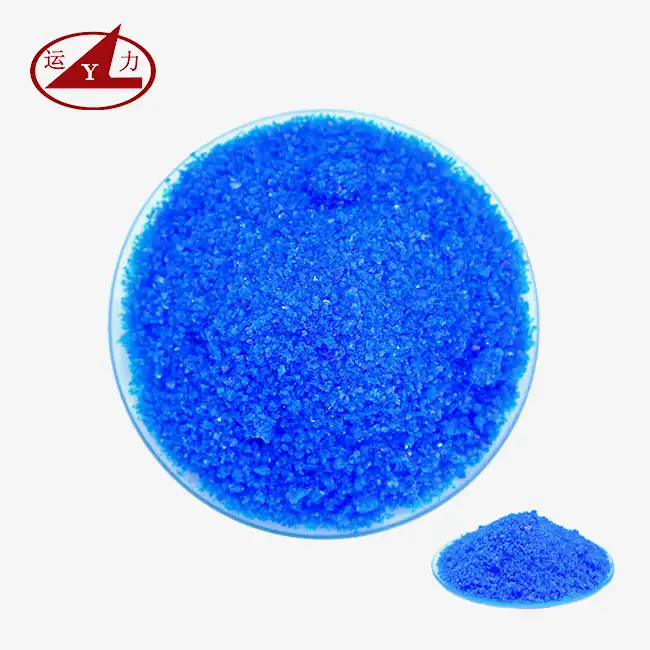
With a molecular weight of 241.6, Cupric Nitrate Trihydrate (Cu(NO₃)₂·3H₂O) is a dark blue crystal that stands out as columns. This hydrated form is different from dry forms because it has three water molecules attached to each Cupric Nitrate unit. The structure of the trihydrate affects both how it behaves when it comes to handling and how it breaks down when heated. It has a specific density of 2.05 and a freezing point of 114.5°C. When heated, the substance dissolves in its own water of crystallization, which makes it behave in a way that procurement managers must take into account when setting storage requirements.
Solubility and Reactivity Considerations
The chemical dissolves very well in both water and ethanol, making acidic water solutions. This makes it useful in reaction settings with uniform conditions. Because it can dissolve in two different types of solvents, it is better than copper sulfate in some situations where alcohol-based liquids are desired. Because the material is hygroscopic, it easily draws water from the air. To keep it from caking and melting, it needs to be stored in a way that keeps air out. Technical experts looking at material specs should keep in mind that the acidity of the water solution (usually between pH 3.0 and 4.0) affects how well it works with reactor materials and how the chemicals respond further down the line.
Safety Profile and Oxidizing Behavior
Cupric Nitrate Trihydrate needs strict safety rules because it is a strong oxidizing agent. The combination breaks down when heated above 170°C, giving off oxygen and nitrogen dioxide gases. The nitrogen dioxide gases are poisonous and corrosive. This ability to oxidize makes the material a fire or explosion risk when it comes into touch with flammable substances through friction, impact, or high temperatures. The Material Safety Data Sheet (MSDS) puts it in UN 1477, Class 5.1, which means there are limits on movement that supply chain managers need to think about when planning logistics. Contact with the skin causes discomfort, so the right personal protection equipment must be worn during handling operations.
What Color Does Cupric Nitrate Burn? The Science Behind the Flame
The Physics of Flame Tests
Atomic science says that when metal salts take in heat energy, their electrons jump to higher energy levels. This is how flame tests work. When these excited electrons go back to their normal state, they give off photons with wavelengths that match the energy difference between the orbital levels. Copper ions have electronic structures that make releases mainly in the blue-green range, more specifically between 510 and 530 nanometers. This effect gives analytical scientists a quick, visual way to find copper without using complicated equipment. This is very useful for testing in the field and making initial quality assessments.
Comparing Flame Colors Across Copper Compounds
Copper compounds have small differences in how they burn. Cupric Nitrate burns blue-green. Copper chloride usually makes a brighter blue-green color with a small greenish tint. This is because chloride changes the shape of electron clouds. Copper sulfate is more likely to be green than Cupric Nitrate. These small differences are important for industrial quality control because they make it possible to quickly tell the difference between batches of raw materials and keep them from getting contaminated. Engineers who are in charge of checking arriving materials can use these color differences as a first screening tool before sending samples to the lab for analysis. This is especially useful when working with samples that aren't labeled or checking that suppliers are being consistent.
Practical Applications in Material Identification
Flame color recognition is important for more than just school displays. It is also used in electroplating, making catalysts, and fireworks. Technicians use flame tests in electroplating pools to quickly check the copper content of additive solutions. This makes sure that the right ion concentration is used for even deposition. Catalyst makers check the identity of the precursors before the synthesis steps, which stops expensive batch fails. For pyrotechnic mixtures to work, the right copper compound must be chosen. The nitrate's oxidizing qualities work well with its blue-green emission to make shows look great. As an addition to more thorough analysis methods, quality managers like this non-destructive testing method.
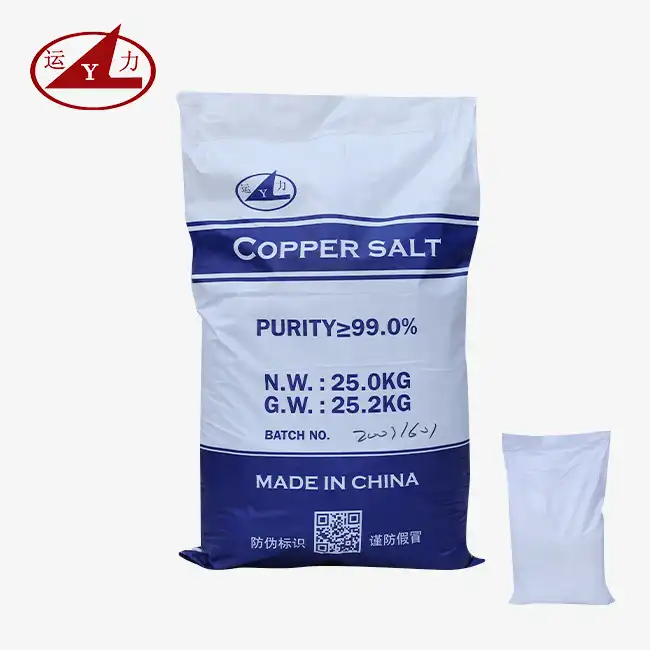
Comparing Cupric Nitrate with Other Copper Compounds for Industrial Applications
Chemical State and Industrial Suitability
In terms of stability and reactivity, Cupric Nitrate (copper in +2 oxidation state) is different from cuprous chemicals (copper in +1 state). Cupric Nitrate is better than copper sulfate in situations where sulfate ions get in the way of process chemistry or damage catalysts. Instead of copper chloride, which releases toxic chloride ions, the nitrate offers a better way for copper to break down into copper oxide, which is important for making catalysts because controlling impurities is what makes them work. When purchasing managers understand these chemical differences, they can exactly match material standards to process needs, avoiding compatibility problems that lower yield or product quality.
When soldering, these changes can be seen and felt. Because it is cheaper, copper sulfate is usually used to make PCBs. However, Cupric Nitrate works better in certain situations that need fast ion exchange or acidic bath chemicals that make sulfate formation a problem. Because the nitrate dissolves completely in water, there are no problems with filtering. This cuts down on upkeep time and makes the bath last longer. In farming, Cupric Nitrate is a source of micronutrients and nitrogen at the same time. This makes it more useful than copper sulfate for foliar treatments that target both nutrient deficits at the same time.
Cost-Benefit Analysis for Procurement Decisions
Different types of copper compounds have different prices. Copper sulfate is usually the cheapest for large-scale uses, copper chloride is in the middle, and high-purity Cupric Nitrate costs the most. Total cost of ownership estimates, on the other hand, show more complex economics. The nitrate is better at dissolving, which cuts down on dissolve time and labor costs in liquid formulation operations. This could make up for higher unit prices by making operations more efficient. It breaks down cleanly into copper oxide, which lowers the cost of treating trash compared to sulfate, which needs to be managed for leftovers. When purchasing managers look at quotes from suppliers, they should take these operational effects into account along with the costs of raw materials to get a better idea of the real value.
How to Safely Handle, Store, and Procure Cupric Nitrate for Industrial Use?
Regulatory Compliance and Documentation Requirements
Following strict Department of Transportation (DOT) rules is necessary when transporting Cupric Nitrate Trihydrate as a reactive solid under UN 1477 classification. Increasing agents, biological materials, and explosive substances must be kept separate from shipments. When shipping goods internationally, they need to be properly labeled with hazards, have emergency contact information, and have transport certifications. Teams in charge of buying things should make sure that sellers give them all the paperwork they need to follow the rules. This includes up-to-date MSDS sheets, a Certificate of Analysis (CoA) for each batch, and environmental compliance certificates. These papers keep buying groups from being sued and make sure that the materials meet building safety rules and environmental permits.
Storage Best Practices and Quality Preservation
Because the substance absorbs water, it needs to be stored in a climate-controlled area below 25°C with a relative humidity of less than 50%. Containers must not let air in. Steel drums lined with plastic or moisture-barrier bags inside fiber drums are common examples. Storage areas should be kept separate from materials that don't go with each other and should have fire control systems that are right for oxidizer risks. Following the first-in, first-out rule for inventory movement keeps things from breaking down from being stored for too long. Technical experts should set up regular tests to check the moisture content of kept goods, since material that absorbs more water than the trihydrate stoichiometry is damaged and needs to be reprocessed or thrown away.
Supplier Evaluation Criteria for Reliable Sourcing
To find approved providers, you need to look at more than just price quotes. Verification of manufacturing capabilities should prove ISO 9001 certification, which shows that the company has quality control systems that make sure consistency from batch to batch. Environmental standards like ISO 14001 show that production methods are responsible, which is becoming more and more important as regulators look more closely at businesses. Technical help is very important. Suppliers with their own labs can make purity grades, particle size specs, and liquid formulas that are exactly what you need for your purpose. Supply chain managers should look at production capacity, inventory depth, and regional transportation to make sure that products will always be available, even when demand changes or there are problems with supplies.
Cupric Nitrate Trihydrate made to precise standards has been used by industry clients of Yunli Chemical for more than twenty years. Our business technology center at the provincial level uses ICP-MS and atomic absorption spectrometry to make sure the quality is very high. It can provide purity grades ranging from 98% standard to 99.99% for very specific uses. We keep a large stock of a wide range of purity levels and can make sure that the iron content is below 30ppm, the pH stays stable within ±0.5, and the particle sizes range from 20 to 80 mesh. Using liquid solutions instead of dissolving things saves time and money on work while still making sure everything is the same. Our operations are environmentally friendly because we use advanced systems to treat garbage and clean up exhaust gases. This gives you peace of mind about our sustainable sources.
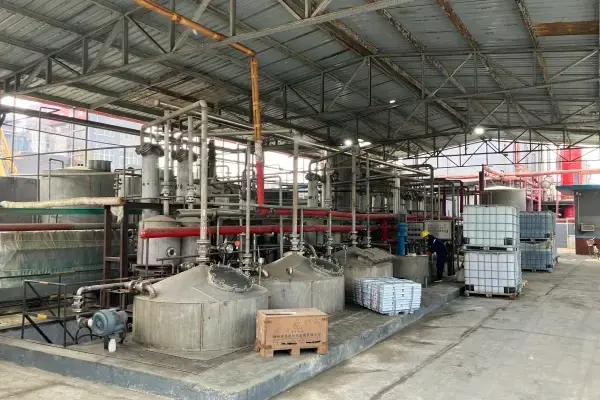
Maximizing Value: Applications and Innovations Using Cupric Nitrate
Catalyst Manufacturing and Performance Enhancement
Copper oxide catalysts made from Cupric Nitrate Trihydrate have more surface area and more activity than copper oxide catalysts made from sulfate precursors. The way that nitrate breaks down thermally avoids leaving behind sulfate residues, which can poison active sites in processes that make methanol, clean up car fumes, and oxidize organic matter. Catalyst makers like this molecule because it can mix closely with other metal nitrates to form precursors. This lets them precisely control the final composition of the catalyst. In ceramic uses, ultra-low iron content requirements (≤30ppm) keep magnetic properties and color changes from happening, and pH-adjusted formulas keep the best conditions for precipitation during synthesis.
Metal Surface Treatment and Electroplating Innovations
Cupric Nitrate is used in the production of printed circuit boards and for artistic plating. It provides copper ions for electrolytic deposition, blackens copper surfaces, and smooths iron treatments. Modern versions that are RoHS-compliant use it instead of trivalent chromium to meet environmental rules while keeping function. Liquid formulas that are already dissolved to the right ratios get rid of batch preparation variability, which makes plating more regular and lowers the number of defects. Technical teams say that moving from powder to liquid forms cuts labor costs by 30%. It also makes the bath more stable and extends the time between maintenance rounds.
Emerging Applications in Sustainable Chemistry
Cupric Nitrate is now used in building materials as a dual-function additive that keeps materials from freezing at -20°C and stops rebar rusting through cathodic protection mechanisms. It is being used more and more in water-soluble fertilizers to add copper and other micronutrients, and the heavy metal level has to be kept below 10ppm to meet organic growing standards. For making bismuth nitrate and other steps, pharmaceutical chemistry uses API-grade materials that have less than 0.07% moisture. More and more people are realizing how useful the compound can be when paired with sellers who can meet the unique needs of each application and work with them technically.
Conclusion
In conclusion, Cupric Nitrate's blue-green spark is more than just a fun way to show how chemistry works; it also shows the compound's unique electric structure, which is what makes it useful in many industries. Cupric Nitrate Trihydrate is an important material for many modern industrial processes, from making catalysts that need ultra-pure precursors to electroplating that needs a steady supply of ions. Procurement workers and technical experts can make better sourcing choices that balance performance, compliance, and cost when they know about a material's properties, safety standards, and specific uses. As industries move toward higher purity standards and environmental responsibility, it becomes more and more important for businesses to work with well-known makers that can offer technical customization and documented quality.
FAQ
What causes the blue-green color when Cupric Nitrate burns?
The blue-green light is caused by the electronic changes in the copper ions. Copper atoms take in energy when they are heated, which moves electrons to higher orbital levels. When these electrons go back to their normal state, they give off photons with wavelengths between 510 and 530 nanometers. Our eyes see these as blue-green light.
How does Cupric Nitrate compare to Copper Sulfate for industrial use?
In situations where sulfate ions get in the way of chemistry or damage catalysts, Cupric Nitrate is better. It breaks down more easily into copper oxide and dissolves better in both water and ethanol. But copper sulfate usually costs less, which makes it better for big uses that need to be price-conscious, like farming, where sulfate doesn't affect performance.
What purity grade should I specify for catalyst manufacturing?
For catalyst uses, the material needs to be at least 98% pure and have less than 30ppm of iron so that the magnetic properties don't change and the activity doesn't decrease. For tough uses like making methanol or pharmaceutical intermediates, the purity may need to be between 99.5 and 99.99%, and the trace metal controls may need to be even tighter. Check your process specs and ask for a Certificate of Analysis to make sure.
Partner with Yunli Chemical for Reliable Copper Nitrate Supply
Yunli Chemical can help your business with high-purity Cupric Nitrate Trihydrate. They have been making nitrates for 20 years and have provincial-level technical certification to back them up. Our factory-direct model cuts out the middlemen, which lets us offer reasonable prices without sacrificing the high standards of quality that industrial uses require. We offer free samples of up to 500 grams, which lets you fully test the process before committing. We can make sure that the material qualities are exactly what you need for your application by changing things like purity up to 99.99%, iron content, pH, and pre-dissolved liquid formulas. Our ISO 9001, ISO 14001, and OHSAS certifications show that we care about safety, quality, and the environment. Get in touch with our expert team at wangjuan202301@outlook.com to talk about your needs with a reliable Cupric Nitrate source who can help you reach your long-term production goals.

References
1. Cotton, F.A., Wilkinson, G., Murillo, C.A., and Bochmann, M. (1999). Advanced Inorganic Chemistry, 6th Edition. Wiley-Interscience.
2. Patnaik, P. (2003). Handbook of Inorganic Chemicals. McGraw-Hill Professional.
3. Greenwood, N.N. and Earnshaw, A. (1997). Chemistry of the Elements, 2nd Edition. Butterworth-Heinemann.
4. Perry, R.H. and Green, D.W. (2008). Perry's Chemical Engineers' Handbook, 8th Edition. McGraw-Hill.
5. Lide, D.R. (2004). CRC Handbook of Chemistry and Physics, 85th Edition. CRC Press.
6. Seidell, A. and Linke, W.F. (1965). Solubilities of Inorganic and Metal-Organic Compounds, 4th Edition. American Chemical Society.