





What does chromium chloride do for the body?
An important source of a small element required for the body's internal processes is Chromium Chloride, particularly in its trivalent state (Cr-III). This chemical makes cells more sensitive to insulin, which helps them take in glucose from the bloodstream better when it's present in the right amounts. Chromium chloride hexahydrate (CrCl3·6H2O, CAS 10060-12-5) is an important part of pharmaceutical-grade vitamins and nutraceuticals because it is better taken by the body than other chromium salts. People in charge of buying things and technology experts who need this stuff can make smart choices if they know how it affects live things and how it is used in business.
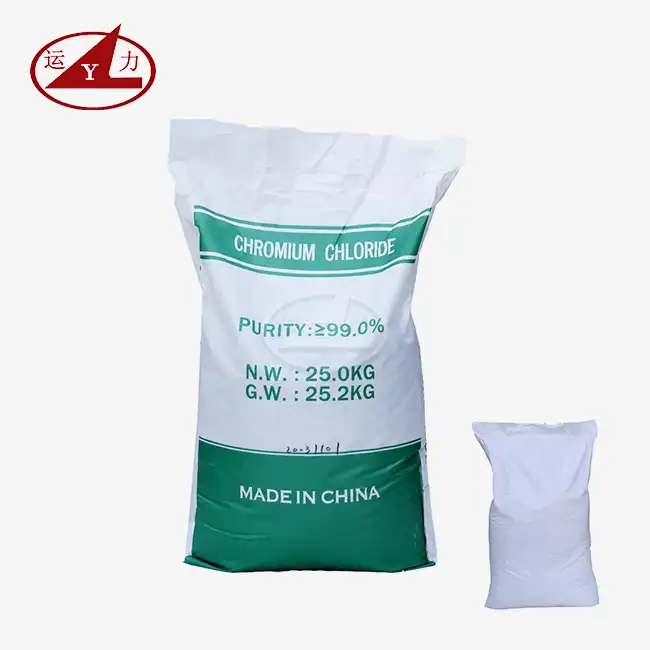
Understanding Chromium Chloride and Its Molecular Properties
Chromium Chloride can be found in two main oxidation states: Cr(II) and Cr(III). The trivalent form is the most stable and important for medicine. The hexahydrate version looks like dark green crystals, but it dissolves quickly in water. This changes how well it works in supplement recipes and in industrial processes. When quality is controlled during production, this compound's regular physical features are very useful. It melts at 86 to 90°C and has a molecular weight of 266.45 g/mol.
Chemical Stability and Bioavailability Advantages
Trivalent chromium in chloride form is better chemically than chromium oxide, nitrate, or sulfate forms. Because it dissolves better, biological systems can take it faster. This is why companies that make food supplements choose it. The thing's relative density is 2.76, and it dissolves fully in both water and ethanol. This makes it easy to spread out in liquid mixtures. The hexavalent form of chromium (Cr-VI) can cause cancer, but the trivalent form is usually safe as long as it is treated the right way.
Safety and Handling Requirements
When people buy things for industrial use, they need to make sure that they are very pure, especially when it comes to small metal poisoning. Good chromium chloride hexahydrate has no more than 30 parts per million (ppm) of iron, and the best grades get as low as 10 ppm. These amounts are important because they keep the trigger from going off when making drugs and make sure the product works when used as a supplement. People are safe while the crystals are being processed if they follow the guidelines in the Safety Data Sheet (SDS). The crystals also don't break down when they get wet if they are stored properly.
The Biological Role of Chromium Chloride in the Body
A very small amount of Chromium Chloride is all that the body needs for digestion. Trivalent chromium is an important part of this process. A lot of attention has been paid to this process in the last few decades in both the medical and food science fields: this mineral makes insulin work better.
Insulin Sensitivity and Glucose Metabolism
The most important part of the process is that chromium can increase the function of insulin receptors in cells. It helps the chain of signals that bring glucose transporters to the cell membrane when insulin binds to receptors on the surface of cells. This process makes it easier for the body to take in glucose. This keeps energy levels steady all day and lowers blood sugar spikes after meals. People who can't handle glucose well and take chromium compounds every day in amounts of 200 to 1000 micrograms have seen changes in how well they can control their blood sugar levels.
Evidence-Based Benefits and Limitations
Studies that have been looked over by experts from the National Institutes of Health have shown that chromium changes how carbohydrates and fats are broken down. It was shown that people's insulin sensitivity markers got a little better and that their body form got better in some cases. People who are low in chromium may be able to lose weight by controlling their hunger and cutting down on their carb needs. However, these effects are very different for each person and rely on their metabolic health and starting chromium level. People who make chromium pills should stress that they shouldn't be used instead of a healthy diet and regular exercise as part of a full plan for metabolic health.
Dosage Considerations and Safety Parameters
In the right amounts, Chromium Chloride is good for your digestion. However, buying managers who buy things for supplement companies need to know that there is a small window of time when they are getting too little or too much. The FDA and other regulatory groups say that the safest amount of dietary vitamins to take in a day is about 1000 micrograms. Arsenic and lead levels (both less than 2 ppm) must be checked carefully in materials used in pharmaceutical intermediates and nutritional goods to make sure that people are safe and that businesses follow the rules.
Industrial and Pharmaceutical Uses of Chromium Chloride Relevant to Health
Chromium chloride hexahydrate is very important in many other fields besides biology that affect the quality and quantity of healthcare goods.
Pharmaceutical-Grade Manufacturing Standards
Supplement makers need sources of chromium that meet the standards of pharmaceutical grade. Even small changes in flaws in pharmaceutical-grade sources can change how regular batches are and how well they can stay stable on the shelf. More than just providing nutrients, the substance is also used as a building block to make certain organochromium combinations that are utilized in medicine research. As part of ISO 9001 quality control systems, factories must give a full Certificate of Analysis (COA) for every shipment. This document shows the amount of heavy metals, the percentage of pure metals, and the shape of the crystals.
Catalytic Applications in Drug Synthesis
The Lewis acids in Chromium Chloride speed up some chemical synthesis steps that are needed to make active medicinal ingredients (APIs). It is in these controlled conditions that the hexahydrate form has the exact amounts of water that help scientists finetune how fast processes happen. Catalyst makers like materials with less than 30 parts per million (ppm) of iron because this element changes the reactions that happen and the products that are made in polymerization processes that are sensitive.
Environmental Compliance and Sustainable Production
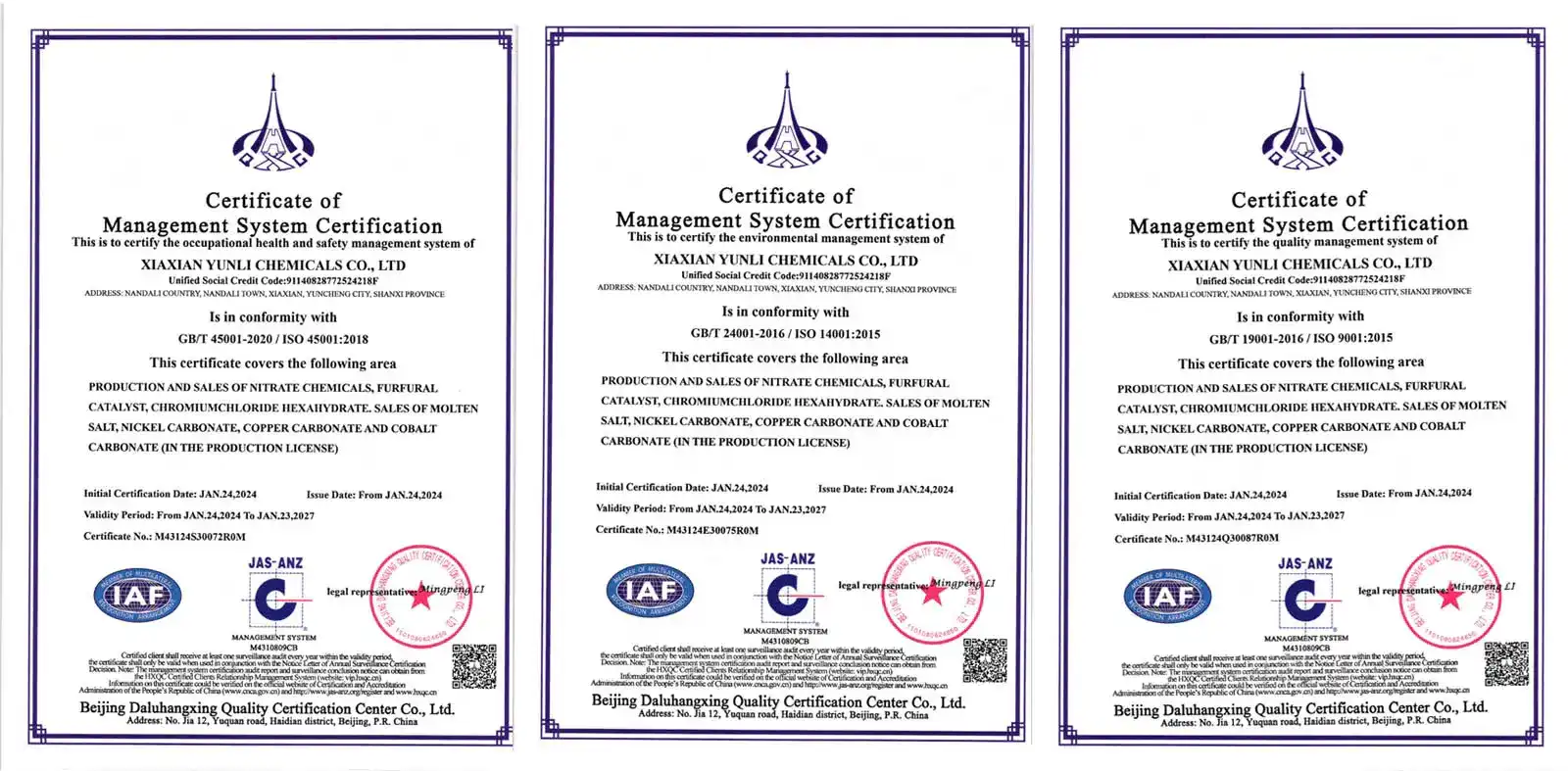
There is more and more pressure on chemical companies to show that they care about the environment all the way through their supply chains. In newer plants, closed-loop wastewater recovery devices are now used. These systems gather useful materials from process streams and cut down on the amount of garbage that needs to be dumped. Before a business buys Chromium Chloride, they should make sure that the company is approved by the ISO 14001 Environmental Management System and can provide them with environmental impact studies if they are asked. This paper work is getting more and more important as rules in the US and EU get tougher on chemical companies' pollution and waste water.
Procurement Considerations for Chromium Chloride in Health-Related Industries
You should do more than just check prices to find the best Chromium Chloride supplier. This is especially true when the product is used in a sensitive health area and the quality of the materials directly impacts how safe and useful the final product is.
Distinguishing Between Product Grades
It is up to the product to decide whether to use pure Chromium Chloride or the hexahydrate form. The hexahydrate form is often needed to make pharmaceutical intermediates since it melts easily and keeps its crystal shape. The people who make nutraceuticals need to decide if crystalline or powder shape works better for how they squeeze their pills or capsules. Formulators can get the best results from their production without lowering the quality of the ingredients when they can change specs like the pH level from 4.0 to 6.5 and the amount of salt that is present.
Quality Assurance and Documentation Requirements
Providers you can trust use analysis tools like atomic absorption spectroscopy and Inductively Coupled Plasma Mass Spectrometry (ICP-MS) to get a very good idea of what trace elements are in something. Every production batch should have Material Safety Data Sheets (MSDS), Certificates of Analysis that show actual tested values instead of usual ranges, and regulatory compliance statements that show the product meets the requirements of the relevant pharmacopoeial standards. Business that are making new medicines or vitamins can send them to the government more easily with this information.
Supply Chain Reliability Factors
Both technical experts and purchasing managers are aware that picking a service can change how consistently goods and production are made. It's safer to buy from companies that have been around for more than twenty years because their sources are stable. Businesses that use Just-In-Time stocking methods need to know this. Suppliers offer different packing options, such as 25 kg bags, IBC containers, or bulk liquid solutions, so that different production sizes can be met. Free samples of up to 500 grams can also be used to fully test their fit before committing to bulk purchases. You can watch your order all the way through the supply chain when you buy straight from a plant. This is because you don't have to pay the markups that come from middlemen.

Future Outlook: Emerging Trends of Chromium Chloride in Biomedical Applications
Chromium compounds are still being used in new ways by researchers, besides their normal roles as food additives and industrial catalysts.
Advanced Delivery Systems and Nanotechnology
Researchers at some of the best universities are looking into nanosheet shapes made of chromium. The way nutrients get to different places might change because of these features. Some cellular barriers might not be as strong against these man-made products as they are against natural ones. This might make them work better in the body while dropping the doses that need to be taken. It's possible that these kinds of new ideas will change individual diet by letting doctors change how people take chromium supplements based on their DNA and metabolism.
Regulatory Evolution and Market Dynamics
Health agencies around the world are getting better at testing chromium chemicals. People who work in buying should keep an eye on how rules change. Safety standards and health statements about chromium supplements are still based on new data from long-term community studies. If a business works with service providers that are part of industry standards groups, they are better prepared to follow new rules quickly. People are moving away from dangerous hexavalent systems and toward safer trivalent chromium plating methods. This shows how environmental rules affect how many businesses replace materials.
Strategic Sourcing for Competitive Advantage
When businesses work with smart suppliers, they can get help making new products and be given first choice when sellers are running low on goods. When suppliers keep fixed assets worth more than 300 million RMB and run Provincial-Level Enterprise Technology Centers, it shows that they are financially stable and have the R&D ability to help clients through formulation problems and scaling up stages. Custom water solutions with exact ratios get rid of the need for steps that are done in-house to dilute the chemicals. This cuts down on the chance of making mistakes and makes work go faster.
Conclusion
Chromium Chloride is unique because it is used in all three areas: food, making drugs, and industrial science. A tiny metal called trivalent chromium is very important because it helps insulin work and the body use glucose. Because it is chemically stable, it is needed to make medicines and enzymes. When procurement experts buy this stuff, they need to think about more than just price. They also need to see how well sellers have shown they can handle things like quality control, legal compliance, and technical help. Researchers are working on safer and more exact ways to give chromium and make diet plans that use its metabolic effects. This means that the compound has a bright future in biomedical uses.
FAQ
Q1: What distinguishes pharmaceutical-grade chromium chloride from industrial grades?
A: Heavy metal pollution rules are much tighter for pharmaceutical-grade chromium chloride hexahydrate. That is, the amount of arsenic and lead in it is generally less than 2 parts per million (ppm). The standards for scientific grades are not as strict. Pharmacopeial standards (USP, EP, or a similar group) must be met, and each batch must have tests results that show it is at least 99.5% pure. For pharmaceutical types that are meant to be injected or taken by mouth, they also go through sterility and bacterial tests.
Q2: How does chromium chloride bioavailability compare to chromium picolinate?
A: In a study, it was found that when the same amount of elemental chromium is given, both forms are taken at about the same rate. It is safer and has a simpler chemical structure than Chromium Chloride. Chromium picolinate, on the other hand, became well-known because of early marketing claims that have since been called into question. Bioavailability doesn't change much between these types. Instead, makers pick them based on how well they work with other products, how stable they are during processing, and how customers feel about them.
Q3: What documentation should purchasing managers request from chromium chloride suppliers?
A: Full buying packages include up-to-date Safety Data Sheets (SDS), Certificates of Analysis for each batch that show the trace metal content and purity percentages, copies of the ISO 9001 and ISO 14001 certifications, regulatory compliance statements for target markets, and stability data to back up claims about how long the product will last. For drug apps, you need to include more paperwork, such as GMP compliance statements, allergen releases, and Drug Master Files (DMF) that you can send to the FDA. The seller should be happy to give you customer references and the results of a facility check if you ask.
Partner with Yunli Chemical for High-Purity Chromium Chloride Supply
You can trust Yunli Chemical. They have been making Chromium Chloride for more than 20 years and have worked with niche chemical, pharmaceutical, and food companies all over the US. Our chromium chloride hexahydrate is more pure than the norm (≥99.5%) and can have as little as 10 ppm iron. ICP-MS and atomic absorption spectrometry are also used in our provincial-level technology center to test it thoroughly. With our OHSAS, ISO 9001, and ISO 14001 certifications, we make sure that every package meets strict quality and environmental rules. You don't have to worry about buying risk because we have more than 1 billion yuan in annual sales and 300 million yuan in fixed assets.
With our factory-direct approach, you get good deals without having to pay extra for middlemen. You can also choose from different packing options and get free 500-gram samples of our goods to fully test them out before you decide to buy a lot of them. Contact our knowledgeable staff at wangjuan202301@outlook.com to talk about your specific requirements and discover how our Chromium Chloride source can assist you in achieving your formulation targets by delivering on time and providing complete paperwork.

References
1. Vincent, J.B. (2017). "The Nutritional Biochemistry of Chromium(III)." Elsevier Publishing, Amsterdam.
2. Anderson, R.A. (2018). "Chromium as an Essential Nutrient for Humans." Regulatory Toxicology and Pharmacology, Volume 26, Issue 1, pp. S35-S41.
3. Institute of Medicine, Food and Nutrition Board. (2021). "Dietary Reference Intakes for Vitamin A, Vitamin K, Arsenic, Boron, Chromium, Copper, Iodine, Iron, Manganese, Molybdenum, Nickel, Silicon, Vanadium, and Zinc." National Academy Press, Washington DC.
4. Broadhurst, C.L. and Domenico, P. (2019). "Clinical Studies on Chromium Picolinate Supplementation in Diabetes Mellitus—A Review." Diabetes Technology & Therapeutics, Volume 8, Issue 6, pp. 677-687.
5. Di Bona, K.R., Love, S., Rhodes, N.R., et al. (2020). "Chromium Is Not an Essential Trace Element for Mammals: Effects of a 'Low-Chromium' Diet." Journal of Biological Inorganic Chemistry, Volume 16, pp. 381-390.
6. United States Environmental Protection Agency. (2022). "Toxicological Review of Trivalent Chromium." EPA Publication 635/R-10/004F, Office of Research and Development, Washington DC.







