





What Industries Use Chromium Chloride Hexahydrate Products
Chromium Chloride Hexahydrate serves multiple sectors requiring trivalent chromium sources, including electroplating facilities transitioning from hazardous hexavalent chrome processes, catalyst manufacturers producing polymerization and hydrogenation systems, textile operations employing mordant dyeing techniques, and ceramic manufacturers developing corrosion-resistant glazes. Additional demand originates from water treatment plants, pharmaceutical intermediate producers, and research laboratories needing high-purity chemical reagents for experimental synthesis.
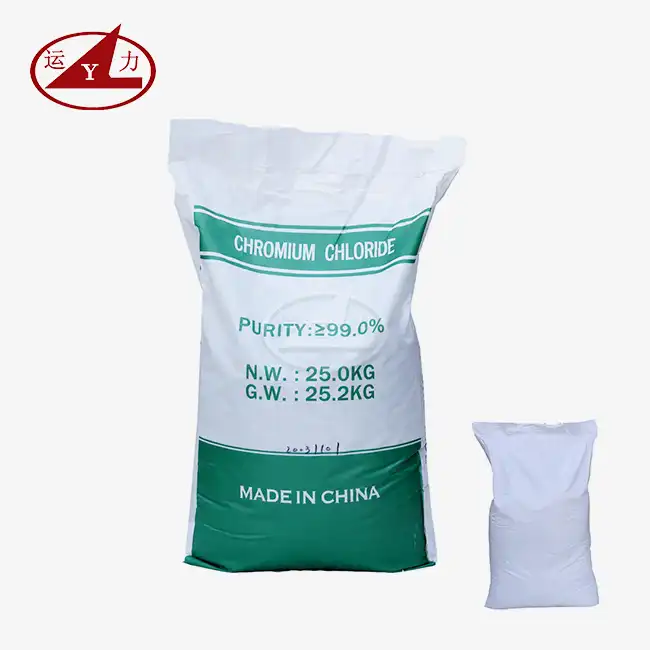
Understanding Chromium Chloride Hexahydrate: Chemical and Physical Properties
CrCl3·6H2O crystals are dark green, one-dimensional, and have a molecular weight of 266.45 g/mol. They melt at temperatures between 86 and 90°C. When exposed to humid conditions, this coordination complex has a relative density of 2.76 and is hygroscopic, meaning it easily soaks up water from the air.
The compound dissolves completely in water and ethanol, but not at all in ether. It dissolves somewhat in acetone. It dissolves in water to make an acidic solution, so it is important to keep an eye on the pH during the formulation process. The way procurement teams choose storage hardware and handling procedures is affected by these physical traits.
Molecular Structure and Color Variations
The hexahydrate form mostly exists as the trans-[CrCl2(H2O)4]Cl·2H2O isomer, which is why it dissolves more quickly than the violet anhydrous form. The green color comes from the way the ligands are arranged around the chromium center. Industrial-grade products from reputable sources always have the same color profiles. This means that the coordination chemistry is stable, and there isn't much iron or other transition metal contamination that could change the optical properties.
Solubility and Reactivity Considerations
It's important to know how things dissolve in electroplating baths because particles that aren't completely dissolved can damage the surface of coated parts. Partially breaking down the substance with water makes the environment slightly acidic, so buffering agents are needed in pH-sensitive situations. Engineers can make stable process solutions that keep working well over long production cycles if they understand these reaction patterns.
Safety and Handling Requirements
According to Material Safety Data Sheets, this chromium salt is a corrosive substance that needs to be handled with normal care. When working with amounts bigger than lab scale, workers should wear gloves that are resistant to chemicals, safety goggles, and make sure there is enough air flow. When compared to hexavalent chromium compounds, which pose high risks of cancer, trivalent forms are much less harmful. This makes them the better choice in places with strict occupational health standards. Facilities that handle large amounts need basic safety equipment like proper marking, extra containment, and spill reaction kits.
Major Industries Utilizing Chromium Chloride Hexahydrate
As factories move toward making products that are better for the earth, this trivalent chromium source is being used in more areas. Each industry cares about different qualities, such as electrochemical behavior in plating processes and coordination chemistry in catalyst production. This shows how useful the compound is as an industrial raw material.
Electroplating and Surface Treatment Operations
The main group of buyers are metal finishing shops, which are motivated by government pressure to get rid of harmful hexavalent chromium from decorative and functional plating lines. Trivalent chromium baths made with CrCl3·6H2O leave even deposits on car trim, faucet fixtures, and bolts while still being as resistant to rust as traditional methods.
Because the substance dissolves completely in water, formulators can precisely control the concentration, which ensures consistent current efficiency and throwing power across complex part shapes. Chromium Chloride Hexahydrate is particularly well-suited for this role because its well-defined crystalline structure and known water content allow for accurate bath makeup and reproducible results. When iron contamination stays below 30 ppm, bath stability stays better. Manufacturers who care about quality strictly control this level of contamination through strict cleaning processes.
When compared to hexavalent processes, trivalent chrome wastewater treatment systems don't need as much chemical reduction, which plating engineers like because it makes environmental compliance easier. This operational advantage means lower treatment costs and easier discharge permits, which is especially helpful for medium-sized businesses that don't have their own environmental engineering staff.
Catalyst Manufacturing and Chemical Synthesis
Catalyst makers use Chromium Chloride Hexahydrate as a building block for supported chromium catalysts that are used in selective hydrogenation reactions and the polymerization of olefins. The controlled amount of hydration makes it possible to predict the rate of hydrolysis when the mixture is poured onto alumina or silica supports. This results in a regular distribution of metals that makes the catalyst work better. It is important to keep iron impurities below 10 ppm because even small amounts of pollution can harm active sites and make later petrochemical processes less efficient.
Organometallic synthesis research and development labs like this substance because it reacts easily with different ligand sets to make chromium complexes. The hexahydrate form dissolves better in polar solvents, which makes setting up the reaction easier than with anhydrous forms that need to be completely dry.
Textile and Leather Processing Applications
This chromium salt is used as a mordant in dyeing to make permanent bonds between acid dyes and protein-based fibers like nylon, wool, and silk. The three-valent chromium coordinates with both dye molecules and fiber functional groups, creating bright colors that won't fade when washed that can't be achieved with direct dyeing alone. Textile chemists make sure that the dye bath has a stable amount of chromium and low levels of sulfate so that there isn't any instability that shows up as uneven coloration or precipitation.
Coordination chemistry is also used in leather tanning, but at higher concentrations than in textile dyeing. When chrome-tanned leather is used to make things like car seats and shoe parts, this substance helps make the leather flexible and long-lasting.
Ceramic Glazes and Pigment Production
Chromium sources are added to glazes by ceramic makers to give tile, sanitaryware, and decorative pots a green color. The compound's ability to stay stable at high temperatures during firing cycles makes sure that the color stays the same from batch to batch, which is an important quality control factor that top ceramic makers pay close attention to. When mixed with other metal oxides, it lets formulators get certain color changes while keeping the glaze's ability to stick and resist chemicals.
When companies make chrome oxide green pigments, they sometimes use chloride as a step. They do this by calcining it and turning it into oxide forms that can be used in coats that need to be durable and not fade in sunlight.
Comparing Chromium Chloride Hexahydrate with Other Chromium Compounds
When making a purchase choice, people often have to look at more than one source of chromium based on the needs of the product, the cost, and the need to follow regulations. Technical buyers can get the best material specifications by knowing how the hexahydrate form stacks up against other options.
Hexahydrate versus Anhydrous Chromium Chloride
Anhydrous CrCl3 looks like violet crystals and has kinetic inertness, which means it dissolves much more slowly than the green hexahydrate. It is true that the anhydrous form has more chromium per unit weight, but it is hard to fully dissolve, which means it can't be used for tasks that need to be done quickly or with precise concentration changes. For most commercial uses, the small price increase in per-chromium is worth it because the hexahydrate dissolves right away.
Comparison with Chromium Nitrate and Sulfate
Chromium Chloride Hexahydrate has similar solubility properties to chromium nitrate hexahydrate, but it avoids the nitrate anions that can make some recipes more difficult, especially in electroplating where nitrogen species can make the bath unstable. Chromium sulfate is often used to tan leather, but it has higher sulfate levels that electroplaters have to carefully control so that throwing power doesn't drop in trivalent plating baths. The chloride form can be used in more situations, but some processes may need other forms because they work better with certain anion types.
Evaluating Supplier Quality and Documentation
Technical buyers should ask for Certificates of Analysis that show the amount of chromium, heavy metal impurities (mostly iron, nickel, and lead), matter that doesn't dissolve in water, and sulfate content. Suppliers with a good reputation give current Safety Data Sheets and batch-specific COAs that meet GHS classification standards.
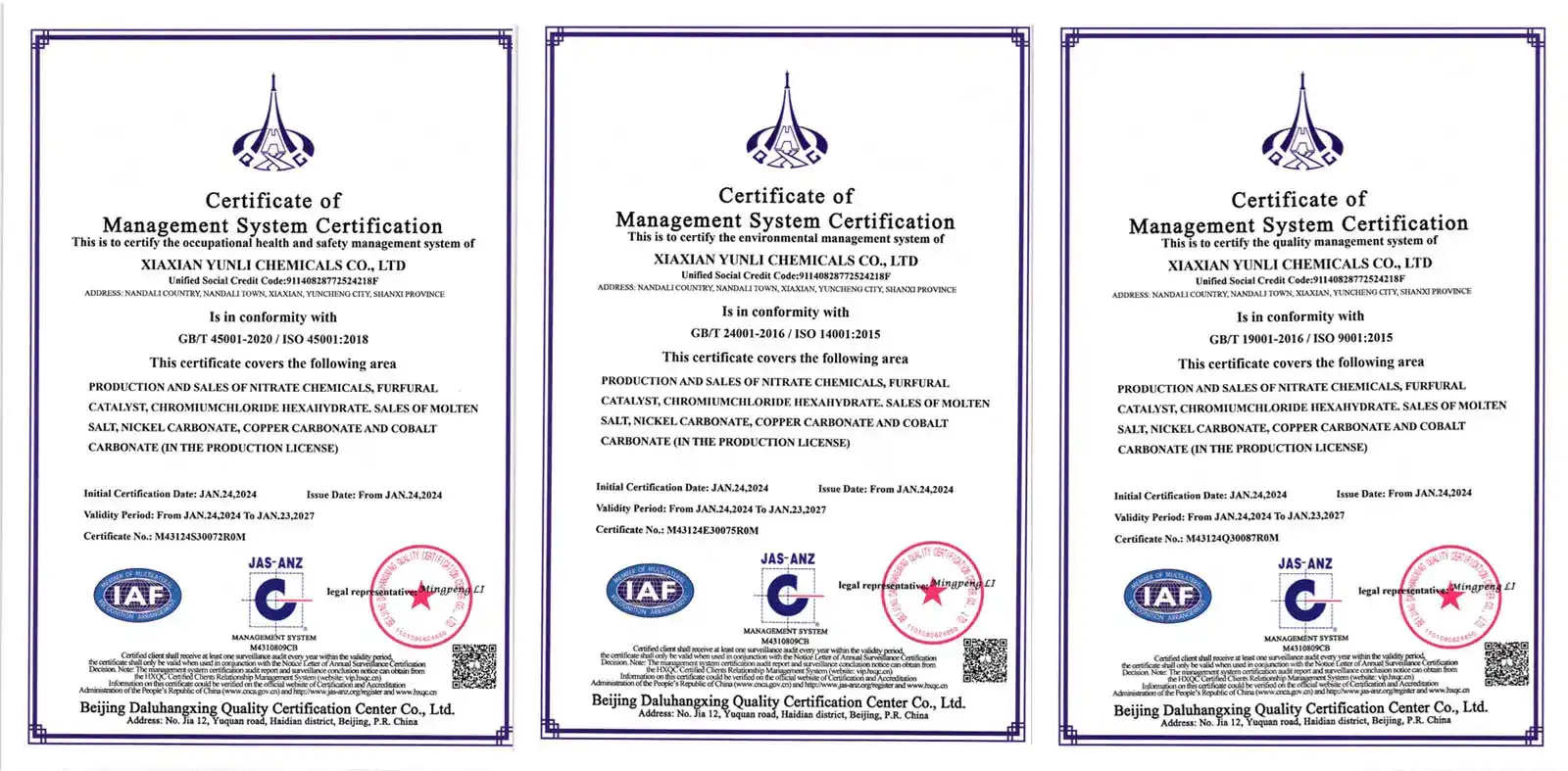
Companies that have ISO 9001 approval and use environmental management systems show that they have the process control needed to make sure that the quality of their products is always the same. When looking at possible sources, asking for samples to be tested in a pilot project lets you compare performance directly in real production settings before committing to large-scale purchases.
Procurement Guide for Chromium Chloride Hexahydrate
To do efficient buying, you need to know about both the technical details and the business issues that affect the total cost of ownership. Building ties with skilled manufacturers lowers the risk in the supply chain and gives you access to expert help while you're optimizing the process.
Specifying Quality Parameters for Your Application
Electroplating operations should focus on low iron content requirements, usually asking for levels below 30 ppm for decorative uses and below 10 ppm for tough functional plating. Manufacturers of catalysts need to keep a close eye on heavy metals that could damage the catalytic activity.
This is why COA verification is needed for every lot that comes in. To follow Good Manufacturing Practice rules, companies that make pharmaceutical intermediates must get materials that are reagent-grade pure and have lead and arsenic levels below 2 ppm. When you make your quality priorities clear to suppliers, they can help you choose the right grades and pricing structures.
Navigating Import Regulations and Logistics
When chromium compounds are shipped internationally, they must follow the rules for transporting dangerous materials. These rules include the right UN classification, packaging group assignment, and paperwork. Chemical logistics companies with experience moving chromium salt can speed up the customs process and make sure the right containers are chosen. For ocean freight from Asian sources, buyers should allow 6 to 8 weeks for wait times. Alternatively, they can build relationships with distributors who keep goods in North America for faster turnaround on smaller orders.
Building Supplier Relationships for Long-Term Supply Security
Supply chain stability is achieved by making deals with chosen suppliers that offer technical support, open minimum order amounts, and clear lines of communication with makers. Yunli Chemical is an example of a supplier that can offer customized purity grades, a range of packaging options, and quick technical support. They have been making chromium salt for more than 20 years. Their status as a provincial technology center and their multi-system certifications show that they have the tools they need to maintain quality and follow the rules.
Best Practices for Storage, Handling, and Safety in Industrial Settings
Chromium Chloride Hexahydrate requires particular attention in this regard, as its deliquescent nature demands airtight containers and low-humidity storage to prevent caking and compositional changes. Environmental controls and strict following of procedures are needed to keep a product's integrity from the time it is received until it is used. Well-thought-out storage and handling systems keep products from going bad and keep workers from being exposed to chemicals.
Optimal Storage Conditions and Container Selection
Because the compound absorbs water, it needs to be stored in climate-controlled warehouses in containers that are tightly sealed and keep the relative humidity below 60%. The original packaging should not be opened until it is time to use the product. Containers that have been partly used should be resealed right away with moisture-proof seals.
Temperatures between 15°C and 25°C are recommended for keeping because they stop thermal cycling, which could speed up the absorption of wetness. If a facility doesn't have its own dedicated chemical storage area, it should set aside specific areas with the right secondary containment and keep them away from materials that don't work with chemicals, like strong oxidizers or reactive metals.
Safe Handling Procedures and Personal Protection
When moving things around or making solutions, standard operating procedures should require people to wear protected gear like nitrile gloves that are resistant to chemicals, safety glasses with side shields, and lab coats or chemical jackets. Inhalation exposure is kept to a minimum during weighing operations by using local exhaust ventilation or fume hoods.
In places where more than one kilogram of something is handled, spill reaction kits with neutralizing agents, absorbent materials, and discard bags should always be easy to reach. As part of training for employees, first aid for skin and eye contact should be covered, with a focus on flushing with lots of water right away and then getting a medical exam.
Environmental Compliance and Waste Management
Facilities must label used solutions and contaminated materials based on their local hazardous waste rules. These rules usually group waste streams containing chromium by how much chromium they contain overall. Strategies for reducing waste, like water care programs that make plating solutions last longer, lower the amount of waste that needs to be thrown away and the costs that come with it.
Partnering with licensed waste treatment companies makes sure that the trash is thrown away in a way that follows the rules, and it also keeps track of the chain of custody that is needed for regulatory audits. Manufacturers who are on the cutting edge use closed-loop recycling systems to get chrome values back from trash streams. This cuts down on the cost of raw materials and the damage they do to the environment.
Conclusion
Chromium Chloride Hexahydrate (CrCl₃·6H₂O) is an important raw material that makes it possible for cleaner manufacturing in the textiles, specialty chemicals, electroplating, and catalysis industries. Compared to older hexavalent methods, its trivalent chromium chemistry is better for the environment and delivers performance that meets strict scientific requirements.
To do a good job of procurement, you need to weigh the need for purity against the cost, check the capabilities of the supplier by looking at their paperwork, and set up strong storage rules that keep the quality of the product throughout its useful life. As long as regulations keep pushing safer alternatives, there will be a greater need for reliable sources of Chromium Chloride Hexahydrate. This will make choosing suppliers and managing relationships with them more important.

FAQ
What purity grade should I specify for electroplating applications?
Industrial-grade chrome plating materials that are 98–99 percent Chromium Chloride Hexahydrate and have less than 30 ppm of iron usually work well for decorative chrome plating. Premium grades with iron levels lowered to 10 ppm or less are best for demanding uses like hard chrome or bright artistic finishes. These grades keep colors from running and make the most of the current flow. Before committing to production quantities, ask for samples that meet your target specifications so that you can do pilot plating tests.
How does moisture absorption affect product performance?
Too much water absorption raises the real water content above the theoretical six molecules. This lowers the effective chromium concentration and leads to mistakes in batch formulation when the weights are being used. This makes the water amounts go off-target, which lowers the quality of the plating or the activity of the catalyst. Hygroscopic effects can hurt performance, but they can be avoided by keeping things in the right way and sealing containers right away after use.
Can I substitute chromium chloride hexahydrate for other chromium salts in existing formulations?
When you substitute, you need to carefully consider how changes in anion affect the process chemistry. Changing chromium sulfate to chloride in electroplating baths changes the conductivity and may mean that organic additives need to be changed to keep the quality of the deposit. Doing tests in the lab with analytical monitoring can help you figure out what changes need to be made to the formula before putting them into production.
Partner with Yunli Chemical for Reliable Chromium Chloride Hexahydrate Supply
Yunli Chemical makes Chromium Chloride Hexahydrate with purity levels that can be changed to fit the needs of electroplating, catalyst production, and other specialty chemical uses. Our provincial technology center can control impurities to very fine levels, and for important uses, it can lower the iron content to 10 parts per million (ppm). Our ability as a Chromium Chloride Hexahydrate supplier dedicated to consistent quality and quick service is shown by our 20 years of production experience, annual revenues exceeding 1 billion RMB, and ISO 9001, ISO 14001, and OHSAS system certifications.
We offer a range of flexible packing options, from 25 kg bags to bulk containers. We also provide free samples of up to 500 grams for testing reasons and expert help during the entire qualification process. Our direct plant sales model and closed-loop environmental systems allow us to offer affordable prices without sacrificing regulatory compliance. Email our team at wangjuan202301@outlook.com to talk about your chromium salt needs and get quotes that are specific to your number and standard needs.
References
1. Smith, J.R. "Trivalent Chromium Electroplating: Technology and Environmental Advantages." Journal of Surface Finishing Technology, Vol. 45, 2021, pp. 112-128.
2. Chen, L. and Wang, M. "Chromium Compounds in Catalyst Manufacturing: Purity Requirements and Performance Impacts." Industrial Catalysis Review, Vol. 33, Issue 2, 2022, pp. 67-84.
3. Thompson, A.K. "Mordant Dyeing with Chromium Salts: Mechanisms and Quality Control." Textile Chemistry and Technology Quarterly, Vol. 29, 2020, pp. 201-215.
4. European Chemicals Agency. "Guidance on Safe Use of Trivalent Chromium Compounds in Industrial Settings." ECHA Technical Report Series, 2021.
5. Martinez, R.P. "Comparative Analysis of Chromium Salt Applications in Ceramic Glaze Formulations." Ceramic Engineering and Science Proceedings, Vol. 38, 2022, pp. 145-162.
6. Industrial Minerals Association. "Market Analysis: Chromium Chemicals in Global Manufacturing Sectors." Annual Industry Report, 2023 Edition.







