


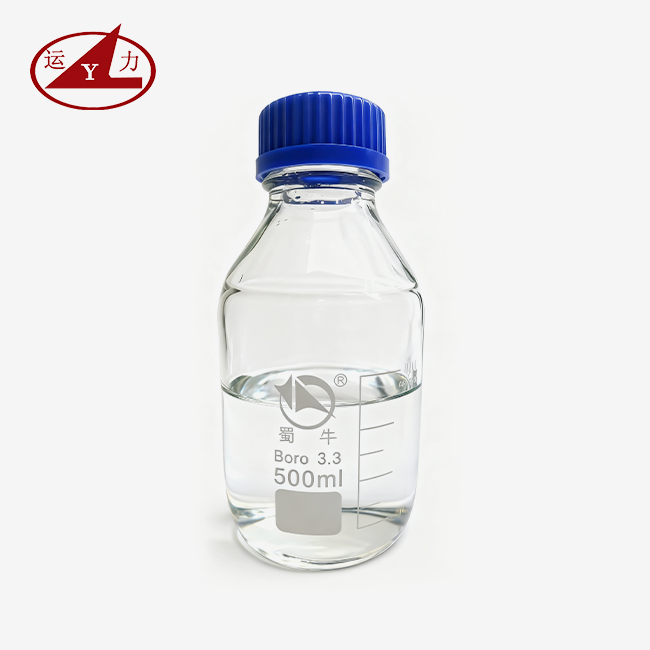
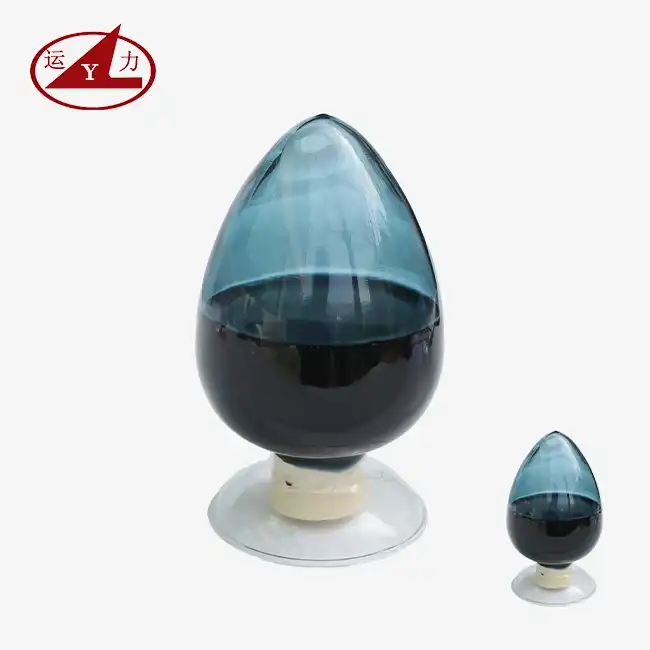
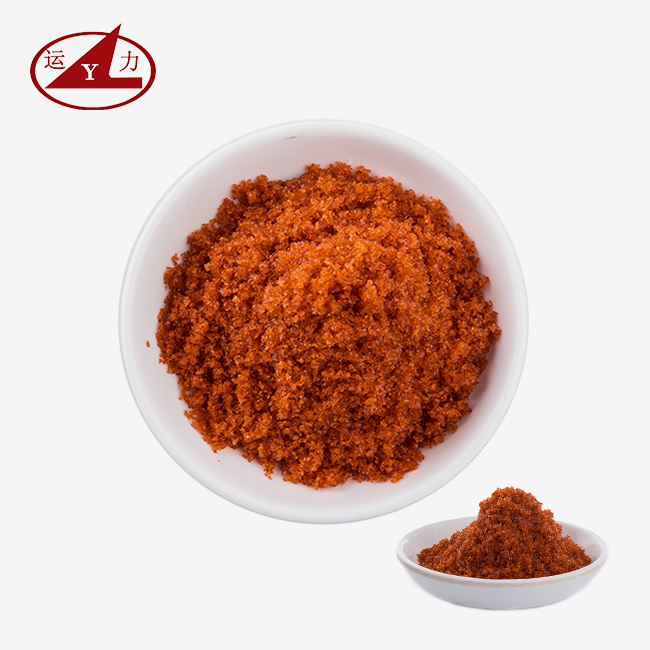
What is the colour of copper nitrate solution?
It is common for Copper Nitrate Solution to turn a deep blue to blue-green colour when mixed with water. This unique colour comes from copper(II) ions (Cu²⁺) that are hydrated and paired with water molecules, creating an aquo-complex in solution. The strength of the colour is directly related to the concentration of copper ions—solutions that are highly concentrated look darker blue, while solutions that are less concentrated look lighter. For quality control and chemical recognition in industrial settings, it's important to understand this visual feature.

Understanding Copper Nitrate Solution and Its Colour
Copper Nitrate Solutions' bright colour tells you important things about the chemical's identity, purity, and condition, as well as being aesthetically pleasing. If you mix copper nitrate trihydrate (CAS# 10031-43-3, molecular formula Cu(NO₃)₂·3H₂O, molecular weight 241.6) with water, the copper ions react with the water molecules around them to make a coordination sphere that absorbs certain light wavelengths. This pattern of absorption in the visible spectrum gives things a blue look that most quality engineers and procurement managers can spot right away.
Chemical Composition and Molecular Structure
When Copper Nitrate Solution is dissolved, it forms dark blue columnar crystals that have a specific density of 2.05 and a freezing point of 114.5°C. Copper ions stay in their +2 oxidation state when these crystals break apart, surrounded by a ring of water molecules that help them stick together. Because copper's d-orbital electrons mostly absorb light in the red-orange range (around 600–800 nm), blue wavelengths can get through and reach our eyes. Our eyes see colour because of this water environment. The water-based solution is acidic because copper ions are breaking down and there is free nitric acid in it. This acidity, which usually leads to a pH well below 3.0, helps keep the colour stable and clear over time.
Factors Influencing Colour Variation
Several factors can change the colour of Copper Nitrate Solutions, which makes them useful testing tools for people who work in quality assurance. Concentration is the easiest thing to understand. Solutions with 13–16% copper metal content (which is what most businesses require) look rich and saturated blue, while solutions with less copper metal content look lighter or even pale turquoise. This change in colour that depends on concentration makes it easy to quickly see how strong a solution is during production or quality testing.
The appearance of impurities has a big effect on colour accuracy. Even at amounts as low as 50 ppm, iron exposure can give the water a greenish tint. On the other hand, too many chloride or sulphate ions can make the colour look hazy or dull because they react with precipitates. Temperature also has a small impact. Solutions that are warmer may look a little more colourful because the molecules are moving around more, which changes the way light is absorbed. However, this effect is not as big as those caused by concentration or purity.
The conditions of storage are very important. Long-term exposure to direct sunlight can break down chemicals, which could change the colour to green or make it cloudy from basic copper salts that have precipitated. Similarly, keeping solutions below 15°C can cause them to crystallise and lose their colour, and keeping them above 40°C can speed up the breakdown processes that hurt both colour and chemistry performance.
Applications and Implications of Copper Nitrate Solution Colour
The unique colour of Copper Nitrate Solutions is more than just a matter of taste; it is also a useful quality sign in many different industry fields. In electroplating, the colour of the bath gives workers instant feedback on the concentration of copper ions, which lets them keep the best plating conditions without having to do constant lab tests. If a bath's colour changes to a pale blue colour, it means that it needs to be refilled, while an unusually dark or greenish colour means that there may be contamination and needs to be looked into.
Industry-Specific Colour Applications
During impregnation methods, colour uniformity is very important for making catalysts. When making car catalytic converters or industrial oxidation catalysts, the Copper Nitrate Solution should be a uniform deep blue colour. This makes sure that the active copper sites are spread out evenly on alumina or silica supports. Any change in colour within a batch could mean that there are concentration differences that could affect how well the catalyst works. This is why eye inspection should be the first line of quality control before expensive analytical tests.
Colour is used to show quality to customers in agricultural applications, especially in water-soluble micronutrient fertilisers. Farmers and agronomists know that the characteristic blue colour means copper content, and any change makes them wonder if the product is real or if it has been tampered with. This visual consistency helps people trust the brand and makes quality checks easier at the field level. Copper Nitrate Solution is used as an oxidiser or reactant in pharmaceutical intermediate synthesis and fine chemical production. Chemical integrity is shown by colour stability over time. A solution that stays blue shows that there aren't any unwanted reduction reactions or contamination that could lower reaction rates or put impurities into sensitive synthetic paths.
Comparative Colour Analysis with Other Copper Salts
Buying teams can make smart substitution choices when they know how the colour of Copper Nitrate Solution differs from other copper salts. Copper sulphate solutions are also blue, but they tend to be more cyan because the copper ion is in a different type of anionic environment. Copper chloride liquids can be green or blue-green, based on the amount of chloride and the pH. This changes the way coordination chemistry works. Copper acetate solutions often look darker blue-green, and sediment can form in them.
Copper Nitrate Solution is better at keeping its colour than these other options because the nitrate anion makes weak complexes with copper, letting water take over the coordination sphere. This gives the colour the most characteristic "copper blue" look and keeps the colour from changing too much when stored or diluted, making it better for uses where consistency in appearance is important.
How to Prepare and Store Copper Nitrate Solution for Optimal Colour and Performance?
To keep Copper Nitrate Solutions' deep blue colour, you need to be careful about how they are prepared and how they are stored. Handling things correctly not only keeps things looking the same, but it also keeps chemicals stable, which is important for reliable industrial performance.
Preparation Guidelines for Colour Consistency
Using high-purity starting materials is the first step in making Copper Nitrate Solutions that stay the same colour. When breaking down copper nitrate trihydrate crystals, the type of water used is very important. Deionised or distilled water keeps impurities that change the colour of the solution from getting in. To avoid burning, which can speed up the breakdown process and make nitrogen oxide gases, the dissolution process should happen at room temperature with light shaking.
The molecular weight of the trihydrate form (241.6 g/mol) and the amount of copper metal that is wanted must be taken into account when figuring out the concentration. A copper metal concentration of 13–16% makes solutions with the best colour intensity and handling properties. Too concentrated solutions may crystallise when stored, and too diluted preparations lose their color's diagnostic value.
Storage Best Practices
A 0.45-micron screen gets rid of any particles or precipitates that haven't dissolved and could cloud the solution and make the colours less clear. This step is very important when making solutions for electroplating or catalyst synthesis, because the suspended matter can lead to flaws or uneven metal distribution.
Copper Nitrate Solution needs to be stored in a certain way and in a certain container in order to keep its colour and performance. High-density polyethylene (HDPE) or cross-linked polyethylene containers keep containers from breaking down and keep metals from getting inside them. For bigger amounts, glass-lined tanks work well. Copper Nitrate Solutions are acidic and oxidising, so they should not be used on stainless steel. Over time, this corrosion introduces iron and other metal contaminants that change the colour.
Controlling the temperature between 15°C and 30°C stops both crystallisation at low temperatures and faster breakdown at high temperatures. Direct sunlight and UV rays should be kept out of storage areas because they can start photochemical reactions that change colours and make precipitates. When containers aren't being used, they should be tightly shut so that the solution doesn't evaporate, which can make it more concentrated and change its colour to darker tones. Visual inspections done on a regular basis can help you spot storage problems early on. If the colour changes from the expected deep blue to green, brown, or cloudy, it means that the material needs to be analysed in a lab to find out where the pollution came from or what products are being broken down before they are used in production.
Comparing Copper Nitrate Solution to Other Copper Salts: Advantages and Key Differences
When making a purchase choice, people often have to pick between Copper Nitrate Solution and other copper salts based on their performance, cost, and application needs. The different colours of these materials show how their chemical properties affect how they can be used in industry.
Chemical Property Comparison
Copper sulphate pentahydrate breaks down into bright cyan-blue solutions that look a lot like Copper Nitrate Solution, but with small differences in colour. The stronger tendency of the sulphate anion to coordinate makes the electronic environment around the copper ion a little different. Copper sulphate solutions are useful for many tasks, but they can cause sulphate to precipitate more easily in alkaline environments and may add sulphur that isn't needed to processes that are already sensitive. When the pH changes, the colour is not as stable as it is with Copper Nitrate Solution.
Copper chloride solutions turn green to yellow-green because chloro-copper complexes form, especially when there is a lot of chloride in the solution. Copper chloride is easy to tell apart from copper blue because it has a unique colour. However, it is less appealing to the eye when the "classic" copper blue is needed or is used to show quality. Chloride is corrosive, which means that it can't mix with certain materials in processing equipment.

Application Suitability Across Industries
Copper acetate makes blue-green liquids that may get darker over time because basic copper acetate forms. The acetate anion's tendency to hydrolyse makes it hard to keep the pH stable and adds organic content that might not be wanted in catalyst or electronic uses. Compared to Copper Nitrate Solution, it is harder to keep the colour consistent. What each copper salt is best used for depends on its colour and how it reacts with chemicals. Copper Nitrate Solution is great for catalyst synthesis because the nitrate anion breaks down completely during calcination, leaving only pure copper oxide and no sulphur, chlorine, or carbon. The solution's stability can be trusted because the blue colour stays the same during processing.
Copper Nitrate Solution's colour stability and purity character make it useful for electroplating. The look of baths stays the same at all temperature ranges, and the low chloride/sulfate content (< 50 ppm in good versions) stops side reactions that damage plating. Colour can be used by operators to see the quantity in real time while scientific tests are being done. Copper Nitrate Solution is used in agricultural micronutrient mixes because it has two uses: it provides copper nutrition and nitrate nitrogen, and the blue colour makes sure that the product is real. Copper sulphate is often used instead of Copper Nitrate Solution because it is cheaper, but Copper Nitrate Solution is better in alkaline soil because the nitrate form makes it easier for the copper to be available.
Procurement Insights: Buying Copper Nitrate Solution with Confidence
Purchasing managers and people who work in the supply chain have to look at more than just unit price when choosing a Copper Nitrate Solution supplier. Colour consistency is a clear sign of quality, but for full due research, you need to look at the paperwork, production capabilities, and supplier qualifications.
Evaluating Solution Quality Through Colour and Documentation
Copper Nitrate Solutions of good quality have a deep blue colour that is the same all the way through the container, with no layers, precipitation, or discolouration. Taking samples from different depths of the container during seller evaluation or incoming check makes sure that the product is properly mixed and not settling. Any change in colour means that there wasn't enough quality control during production or that there are problems with storage that need to be looked into.
Documentation supports what people think a colour means on an emotional level. The Copper Content (CoA) should be shown using approved methods like ICP-OES or titration. The CoA should also include the Impurity Profiles for important elements like Fe, Pb, Ni, Cl, and SO₄, as well as the pH range and specific gravity. These factors directly affect the colour of the solution: high purity makes the purest blue, and reported low impurity levels make sure that the colour shows the real copper content and not just the covering effect of contaminants.
Material Safety Data Sheets (MSDS) must be used for all storage, handling, and planning for emergencies. Copper Nitrate Solution is a strong oxidiser, and when it breaks down, it can produce poisonous nitrogen oxide fumes. This means that certain safety rules need to be followed. Suppliers with a good reputation give detailed safety information that includes a list of these risks and practical ways to lower those risks.
Bulk Purchasing Considerations
When you buy in bulk, there are more things to think about besides just evaluating samples. For ongoing industrial processes, colour consistency between runs is very important. To help make sure equality, asking for batch-specific COAs and the right to check visually before shipment is a good idea. Suppliers who have ISO 9001 certification and well-established quality management systems show that they can keep up with specifications over long periods of time and large volumes.
Copper Nitrate Solutions are priced based on how much copper metal they contain, how pure they are, and how concentrated they are. Electronic-grade materials, which cost a lot more, have impurity levels below ppm, while industrial grades are a good balance between performance and cost-effectiveness. If you know what the real cleanliness needs of your application are, you won't have to pay too much for specs that aren't needed or accept materials that hurt the process.
Copper Nitrate Solution is an oxidiser and has an acidic pH, which makes shipping and handling it difficult. Reliable suppliers take care of the paperwork for dangerous materials, provide the right packaging (UN-approved containers for international shipments), and make sure that transportation rules are followed. Shipping delays or breaking the law can have hidden costs that quickly cancel out any price benefits that new sellers seem to have.
Conclusion
In conclusion, Copper Nitrate Solutions' strong blue to blue-green colour is both a way to identify them and a useful way to tell if they are of good quality in many commercial settings. This colour comes from copper(II) ions that are hydrated, and it changes depending on the concentration, purity, and storage conditions. When procurement workers and technical experts understand these colour patterns, they can quickly judge the quality of a supplier's goods and choose ones that offer consistent, well-documented products. Copper Nitrate Solution is better than other copper salts at keeping its colour, which makes it the best choice for uses that need chemical and visual consistency. Buyers get materials that support stable manufacturing processes and long-term operating success by giving priority to suppliers with well-established quality systems, detailed documentation, and production skills that have been shown to work in the past.

FAQ
Q1: Why does copper nitrate solution appear blue rather than another colour?
A: Copper(II) ions that are hydrated cause the blue colour by changing their electronic states. When white light moves through the solution, copper ions soak up red-orange wavelengths (600–800 nm) but let blue wavelengths through, giving the solution its distinctive blue colour. When copper is in water, its d-orbital electron structure gives it this colour.
Q2: Can colour alone determine copper nitrate solution purity?
A: Colour can help with basic information, but it can't be used instead of analytical tests. Pure solutions look clean and deep blue, with no green or brown tints. However, small amounts of pollution might not be obvious at first glance. Always ask for CoA paperwork that includes ICP-OES or atomic absorption data to check the purity requirements that are important for your application.
Q3: What causes copper nitrate solution to turn green?
A: Green discolouration usually means that iron is present, copper is oxidising to basic copper salts in alkaline conditions, or a chloride complex is forming. Most colour changes can be avoided by storing them properly in HDPE containers at controlled temperatures and keeping the pH level acidic. If greening happens, the exact reason should be found through lab testing before the material is used.
Secure Your Supply of Premium Copper Nitrate Solution from Yunli Chemical
Since 2005, Yunli Chemical has been making high-purity Copper Nitrate Solutions for industries like electronics, automotive catalysts, and precision electroplating that have very high standards. In our provincial-level technology center, we use ICP-MS and atomic absorption spectrometry to make sure that our solutions keep their deep blue colour, which is a sign of quality. Each batch comes with checked CoA paperwork that says the Fe/Na level is less than 30ppm and the chloride/sulfate level is less than 50ppm. These limits keep your processes from failing because of pollution.
We offer ratios that can be changed from 10 to 60% copper content, and there is no minimum order quantity. This means that you can try our products out before you decide to buy in bulk. You can talk to our expert team about your needs and get free samples by emailing wangjuan202301@outlook.com. We are a reliable Copper Nitrate Solution seller with ISO 9001, ISO 14001, and OHSAS certifications. Long-term partnerships need reliable and helpful expert support.
References
1. Cotton, F.A. and Wilkinson, G. (1988). Advanced Inorganic Chemistry, 5th Edition. John Wiley & Sons, New York.
2. Greenwood, N.N. and Earnshaw, A. (1997). Chemistry of the Elements, 2nd Edition. Butterworth-Heinemann, Oxford.
3. Patnaik, P. (2003). Handbook of Inorganic Chemicals. McGraw-Hill Professional, New York.
4. Perry, R.H. and Green, D.W. (2008). Perry's Chemical Engineers' Handbook, 8th Edition. McGraw-Hill, New York.
5. Kirk, R.E. and Othmer, D.F. (2007). Encyclopedia of Chemical Technology, 5th Edition, Volume 7. Wiley-Interscience, Hoboken.
6. Lide, D.R. (2004). CRC Handbook of Chemistry and Physics, 85th Edition. CRC Press, Boca Raton.