


What is the density of cobalt nitrate hexahydrate?
Cobalt nitrate hexahydrate (Co(NO₃)₂·6H₂O, CAS 10026-22-9) has a density of about 1.88 g/cm³ when everything is normal. This crystalline substance has a specific gravity of 1.88, which means that its bulk density changes a little based on the shape of the crystals and the amount of water they contain. For correct formulation, storage estimates, and logistics planning in industrial settings, you need to understand this basic feature. The density number has a direct effect on the accuracy of volumetric dosing, the lowest possible shipping costs, and the efficiency of processes in electroplating, making catalysts, and making battery materials.

Understanding the Basics of Cobalt Nitrate Hexahydrate
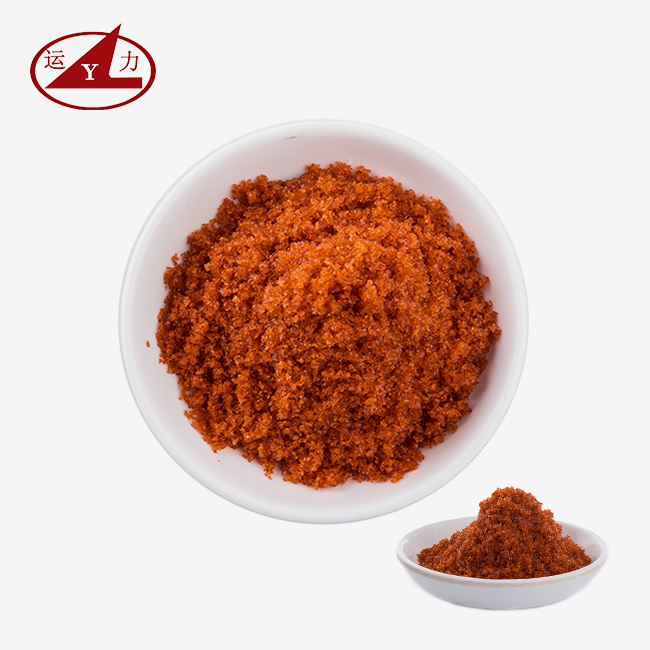
A reddish-brown artificial salt called cobalt nitrate hexahydrate dissolves in water and has a unique crystal structure with only one point. The molecular formula Co(NO₃)₂·6H₂O shows that there are six water molecules attached to each cobalt nitrate unit. This gives the molecules a weight of 291.03 g/mol. This hexahydrate form is most common in business supply chains because it is stable at room temperature and easier to handle than dry forms.
Chemical Identity and Procurement Accuracy
The CAS number 10026-22-9 is the only number that can be used to identify this substance anywhere in the world. This makes it easier to buy and fill out governmental paperwork. When looking for materials for important uses like pharmaceutical intermediates or electronic-grade catalysts, giving the right CAS number keeps you from getting expensive mixes with cobalt salts like cobalt chloride or cobalt sulfate. We've seen that buying teams that only use trade names get the wrong materials sometimes, which slows down production and leads to batch rejects.
Density Values in Material Handling
The stated density of 1.88 g/cm³ helps with important practical choices. For warehouse managers, this number tells them the weight-to-volume ratio they need to plan their store space. Without the empty room between the crystals, a 25 kg drum of cobalt nitrate hexahydrate takes up about 13.3 liters of space. Logistics pros use density data to figure out the freight class, load containers most efficiently, and guess how much handling tools they will need. In automated filling systems, precise gravimetric dosing depends on accurate density input. This is especially important in catalyst impregnation processes where cobalt loading must meet strict requirements (usually 2% to 5% wt% on alumina supports).
Safety and Storage Conditions
This substance has burning properties and reacts strongly with organic materials. If it is handled incorrectly, it could catch fire or explode. Material Safety Data Sheets (MSDS) say that things should be kept in cool, dry places away from things that can catch fire, and the temperatures should stay below 30°C at most to keep them from drying out too quickly. Controlling the humidity is very important because being exposed to amounts of wetness higher than 60% RH can cause deliquescence, which changes crystals into thick solutions that change the useful density and make dosing more difficult. Our collection is kept in climate-controlled warehouses that keep the relative humidity between 40 and 50 percent. This keeps the density consistent and the products' shelf life longer than 24 months.
Physical and Chemical Characteristics Impacting Density
The actual density values seen in industrial use are based on a number of intrinsic qualities that work together. The amount of purity, how well it dissolves, and how stable it is at high temperatures all affect whether the material stays at its normal density of 1.88 g/cm³ or changes during storage and processing.
Solubility and Its Effect on Density Measurements
The cobalt nitrate hexahydrate is very well dissolved in water (about 103 g/100 mL at 20°C), ethanol, and acetone. When measuring solution levels for liquid-phase uses, this property comes in handy. A 40 wt% watery solution has a density of about 1.35 g/cm³, which is much higher than pure water because of the salt that is dissolved in it. When adjusting volumetric tools, analytical labs that make standard solutions need to take these changes in density into account. When making a catalyst, the density of the solution directly impacts the amount of impregnation that is needed to load the desired amount of cobalt onto porous supports.
Thermal Behavior and Density Preservation
Between 55°C and 56°C is the melting point range where the hexahydrate starts to lose its solid water. The combination goes through partial dehydration between 55°C and 74°C, making intermediate hydrates with different densities. Around 200°C, all the water is lost, leaving behind dry cobalt nitrate with a mass of 2.49 g/cm³. During the summer, transportation in places that aren't climate-controlled can accidentally start drying, which can lead to density drift and batch-to-batch variability. Our temperature-monitored transport network stops temperature changes, making sure that the material supplied meets the requirements of the certificate of analysis (COA).
Purity Impact on Accurate Density
Nickel, iron, copper, and sodium salts are examples of impurities that change the effective density by adding compounds with different molar volumes. Material that is 98% pure for industrial use usually has between 1% and 2% moisture and small amounts of metal flaws, which gives it a density of 1.85 to 1.90 g/cm³. Laboratory-grade goods (>99.5% pure) with iron levels managed below 30 ppm have narrower density ranges (1.87–1.89 g/cm³). We use an inductively coupled plasma mass spectrometry (ICP-MS) to measure metallic impurities. This lets us give users thorough impurity profiles that explain any differences in density that they see compared to theoretical values.

Comparing Cobalt Nitrate Hexahydrate Density with Related Compounds
Knowing the variations in density between cobalt salts helps choose the right materials for each step. Depending on the needs for solubility, thermal stability, and reactivity patterns, each variation has its own benefits.
Density Comparison Across Cobalt Salts
Cobalt nitrate anhydrous (Co(NO₃)₂) has a higher density of about 2.49 g/cm³ because it doesn't contain any solid water. This makes it good for uses that need to add little to no water. Cobalt sulfate heptahydrate (CoSO₄·7H₂O) has a density of about 1.95 g/cm³, which is a little higher than the hexahydrate form. Cobalt acetate tetrahydrate (Co(C₂H₃O₂)₂·4H₂O) has a density of about 1.70 g/cm³. These differences affect how much it costs to move, how much space it takes up, and how much to dose. When a catalyst maker changes from sulfate to nitrate precursors, they have to re-calibrate their feed systems to account for the difference in density. This keeps the cobalt absorption rates constant.
Why Density Matters in Application Selection
To make a battery cathode, the cobalt, nickel, and manganese ingredients must be mixed in the right way. Density-based gravimetric doses makes sure that the chemicals are mixed at the atomic level, which stops phase segregation that shortens the life of batteries. Hydrodesulfurization catalyst production depends on evenly dispersed cobalt in alumina pellets. The hexahydrate's medium density (not too high for poor penetration nor too low for excessive void volume) helps pores fill up with water when they first start to get wet. Formulations for ceramic glazes use density information to guess how fast pigments will settle, and they change the thickness of the slurry to keep the colloidal stability while the glaze is being applied.
Selecting Appropriate Purity Grades
Industrial-grade material is used for low-cost tasks like adding to fertilizer and treating wastewater, where small flaws don't have a big effect on how well it works. Hexahydrate that is analytical reagent-grade (ACS standard) can be used for study synthesis and figuring out potassium levels in the lab because it has a consistent density and make-up. Electronic-grade cobalt nitrate has an iron level below 10 ppm and a controlled particle size distribution. It meets the strict needs of making semiconductors and new battery materials. We make customizable purity grades, such as 4N (99.99%) versions for making nanomaterials. Each batch gets a density certificate that can be traced back to NIST standards.
Procurement Insights: Buying Cobalt Nitrate Hexahydrate in Bulk
To make smart choices about buying, you need to know how the market works, how density affects costs, and how to find qualified suppliers. Adding density data to total cost of ownership estimates helps procurement professionals balance quality assurance with budget limits.
Pricing Trends and Density Economics
Prices for industrial-grade cobalt nitrate hexahydrate on the market range from $8 to $15 per kilogram for orders of several tons. These prices are affected by the cost of cobalt metal upstream and the production capacity in the region. The supplied cost per unit volume depends on the density. For salts with a density of 1.88 g/cm³, a normal ISO container can hold about 18–20 metric tons, but only 15–16 tons of lower-density salts like cobalt carbonate. Ocean freight costs that are based on volume (cubic meter rates) prefer denser materials, which lowers handling costs by 10 to 15 percent per kilogram. We have clear pricing that takes density benefits into account along with volume-based savings. This lets customers get the most out of their budgets for both materials and shipping.
Supplier Certification and Documentation
Suppliers with a good reputation keep up with ISO 9001 quality systems, ISO 14001 environmental approvals, and OHSAS safety standards. These standards make sure that the density, cleanliness, and actual form are the same from batch to batch. A certificate of analysis (COA) should be sent with every package. It should list the test, impurity profile, density range, moisture content, and particle size distribution. The MSDS paperwork has to follow the GHS classification and list reactive qualities and materials that can't be used together. We were approved by the Shanxi Provincial Enterprise Technology Center, which shows that we can do research and development in nitrate chemistry and follow strict laboratory validation methods. Atomic absorption spectroscopy and X-ray diffraction are used in our lab to make sure that the crystal structure is stable and that the density factors stay the same.
Logistical Challenges and Minimum Orders
Cobalt nitrate hexahydrate is classified by UN 1467 as a reactive solid, which means it needs special packing and paperwork to be transported. Different suppliers have different minimum order amounts (MOQs). Well-known companies offer 25 kg samples, while large companies set MOQs at 500 kg to 1 metric ton. We offer flexible ordering starting at 25 kg and free samples up to 500 grams, so expert teams can check the density and purity before committing to large purchases. Our export section handles customs clearance and freight handling more efficiently, cutting the time it takes from placing an order to delivery by 30% compared to distributor routes.
How Density Data Supports Effective Application and Usage?
With precise density knowledge, vague requirements can be turned into real process changes. Density data is used to improve working efficiency and product quality in many fields, such as catalysis, battery production, and molecular chemistry.
Catalysis and Dosing Accuracy
Hydrodesulfurization catalysts need gamma-alumina supports to hold 2 to 4 weight percent of cobalt. The needed cobalt nitrate hexahydrate mass is found by multiplying the goal amount, the support mass, and the molecular conversion factors. When making impregnation solutions, density comes into play: a 35 wt% water solution with a density of about 1.32 g/cm³ allows for accurate volumetric addition with measured burettes. We worked with a plant in the Midwest to improve the production of their Co-Mo catalyst. By using density-corrected dosing methods, they were able to lower the variation in cobalt from ±0.3 wt% to ±0.08 wt%.
Battery Manufacturing and Formulation Precision
Co-precipitation is used to make the cathode of a lithium-ion battery. Nickel and manganese salts mix with cobalt nitrate hexahydrate in a controlled pH setting. The cathode's efficiency is based on the stoichiometric ratio; a 0.5% change in the amount of cobalt can lower the battery's capacity by 3–5 mAh/g. At industrial sizes (1000-liter or more reactors), where volumetric flow control is the most important factor, density data allows for correct preparation of precursor solutions. A major U.S. company that makes battery materials cut down on scrap by 22% after switching to our high-purity hexahydrate with certified density standards. This made it easier to repeat batches across various production lines.
Storage and Handling Best Practices
Controlled conditions and the right choice of containers are needed to keep the density integrity throughout the supply chain. High-density polyethylene (HDPE) drums with moisture-resistant sides stop hygroscopic uptake, which changes the density and makes it hard to handle. Automated dispensing systems use load cells that are calibrated against known density values. If the recorded density varies more than ±2% from what is expected, a warning goes off. We suggest checking the density of long-term goods every three months using pycnometry or displacement methods to find dry or contaminated materials before they are used in production.
Conclusion
Cobalt nitrate hexahydrate's density (1.88 g/cm³) is more than just an interesting fact; it's a key factor that affects how companies buy things, how they improve their processes, and how good their products are in many different industries. When technical and buying teams know how this trait affects purity, storage conditions, and thermal history, they can make decisions that save money and make operations more reliable. As quality standards rise and supply lines get more complicated, it's important to work with providers who offer full density documentation and expert help to stay ahead of the competition.
FAQ
Q1: What is the standard density value for cobalt nitrate hexahydrate?
A: It is known that Co(NO₃)₂·6H₂O has a density of 1.88 g/cm³ when it is dry and 20°C. This number is for well-crystallized stuff that is kept at a controlled humidity level (below 60% RH). Samples that are only partly dry or that have too much water may not test in the 1.85–1.90 g/cm³ range.
Q2: How do environmental factors affect density measurements?
A: When the relative humidity (RH) is above 60%, deliquescence starts to happen. This turns solid crystals into water-based liquids whose densities drop to between 1.3 and 1.5 g/cm³, depending on how much they dissolve. When the temperature goes above 55°C, drying starts, and the density slowly rises until it reaches 2.49 g/cm³. These changes in density can be avoided by storing things properly in sealed cases in climate-controlled buildings.
Q3: Why do impurities change the measured density?
A: Metallic impurities, such as nickel sulfate or sodium nitrate, have different molecular weights and crystal structures, which changes the bulk density of batches that have been affected. Iron contamination, which is widespread in lower-quality materials, adds compounds with higher densities. On the other hand, too much water or organic leftovers make the total density lower. The most accurate matching of density with theoretical values is achieved by high-purity grades with confirmed impurity profiles.

Partner with Yunli Chemical for Reliable Cobalt Nitrate Hexahydrate Supply
Finding a reliable cobalt nitrate hexahydrate provider requires more than just good prices. You also need scientific know-how, consistent quality, and quick help throughout the whole procurement process. Yunli Chemical was founded in 2005 and has been specializing in nitrate chemistry for more than twenty years. They provide approved Co(NO₃)₂·6H₂O that meets your exact density and purity requirements. Our provincial-level technology center and ISO-certified production facilities make sure that every batch has the correct density of 1.88 g/cm³, which is backed up by full COA and MSDS paperwork. We provide free trials up to 500 grams, flexible MOQs starting at 25 kg, and tailored solutions with pH and concentration formulas that can be changed. Get in touch with our expert team at wangjuan202301@outlook.com to talk about your cobalt nitrate hexahydrate needs and get a quote from a reputable company that wants your business to succeed.
References
1. Cotton, F.A. & Wilkinson, G. (1988). Advanced Inorganic Chemistry: A Comprehensive Text. Fifth Edition. Wiley-Interscience, New York.
2. Perry, R.H. & Green, D.W. (2008). Perry's Chemical Engineers' Handbook. Eighth Edition. McGraw-Hill Professional, New York.
3. Lide, D.R. (Ed.) (2004). CRC Handbook of Chemistry and Physics. 85th Edition. CRC Press, Boca Raton.
4. Patnaik, P. (2003). Handbook of Inorganic Chemicals. McGraw-Hill, New York.
5. Greenwood, N.N. & Earnshaw, A. (1997). Chemistry of the Elements. Second Edition. Butterworth-Heinemann, Oxford.
6. Seidell, A. & Linke, W.F. (1965). Solubilities of Inorganic and Metal-Organic Compounds: A Compilation of Solubility Data from the Literature. Fourth Edition. American Chemical Society, Washington DC.