


What is zinc nitrate used for
When procurement managers and technical engineers ask, "What is Zinc Nitrate used for?" they find out that it is a very useful chemical that is used in gardening, medicines, electroplating, and making advanced batteries. Zinc Nitrate hexahydrate (CAS# 10196-18-6) is a strong oxidising agent and a zinc source that dissolves in liquids. It makes precise formulation possible in liquid systems where other zinc compounds fail. Because it dissolves so easily in water and works with automated dosing systems, it is a must-have for industries that need to maintain quality and follow regulations.
Introduction
Zinc Nitrate is an important inorganic molecule used in many different types of industries, from surface cleaning plants to companies that make new energy. For global B2B procurement professionals like supply chain managers, technical engineers, and distributors, knowing how this compound can be used in many different ways has a direct effect on how efficiently they source goods and how well their operations run. Our book answers the practical questions you ask every day, like how to make sure your supply chains are stable, your products are pure, you can easily understand your compliance paperwork, and you can find suppliers you can work with for a long time. We have been in the electroplating, textile dyeing, and pharmaceutical intermediates industries for more than twenty years. During that time, we've learned that clear technical information is the first step in making smart buying decisions, and that reliable supplier relationships are the last step.
General Overview of Zinc Nitrate
Chemical Identity and Physical Properties
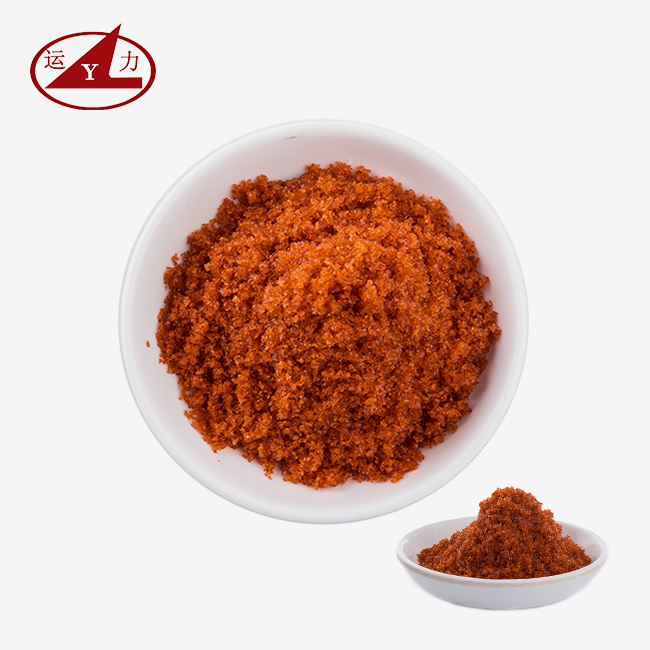
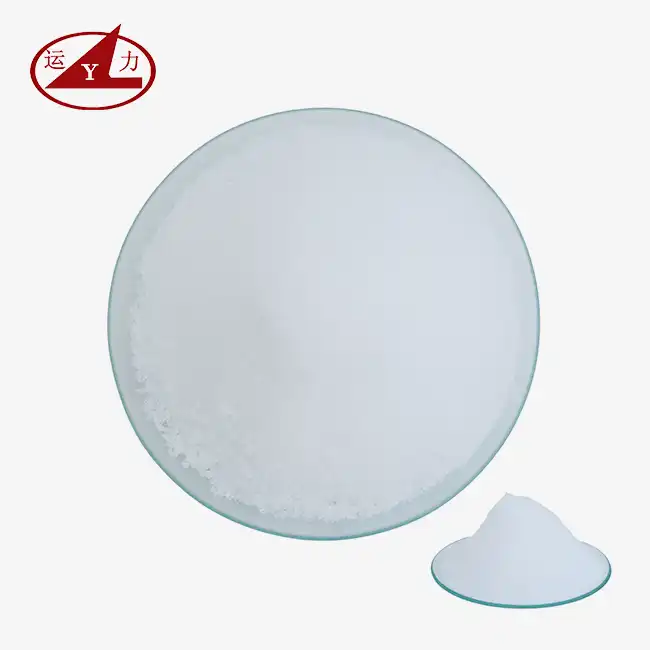
Zinc Nitrate hexahydrate is made up of six colourless crystals that have the formula Zn(NO₃)₂·6H₂O and a molecular weight of 297.47 g/mol. This hygroscopic substance has a specific density of 2.065 and a very low freezing point of 36.4°C. At 37°C, it changes into its anhydrous form. The crystals are easily broken down in water and alcohol, making solutions that are acidic and usually have a pH value between 3.5 and 4.5. Because it is volatile and a classified oxidiser, it needs to be handled carefully and kept away from things that can catch fire.
Manufacturing Standards and Quality Benchmarks
In industrial production, zinc metal or zinc oxide is mixed with nitric acid in a controlled environment. This is followed by crystallisation steps that determine the final level of purity. Standard industrial-grade material is ≥98% pure, but for certain uses, unique grades that are ≥99% pure with tightly controlled impurity profiles are needed. Heavy metal content is an important specification. Iron levels must be kept at or below 30ppm for catalyst uses, and lead levels must be kept at or below 50ppm for agricultural compliance. Controlling moisture during packing keeps the substance from melting too quickly because it absorbs water from the air and dissolves in its own crystal water.
Supply Chain Considerations for Procurement Teams
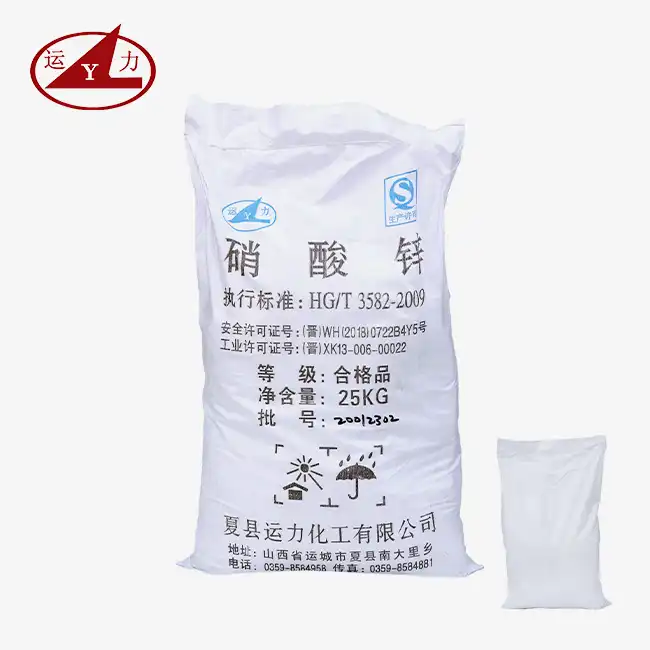
When deciding where to buy something, you need to think about the different types of packaging that will work best with your handling needs. For example, 25 kg moisture-resistant bags work well for smaller operations, while IBC totes and bulk liquid tankers are best for buyers who buy by the tonne. Most foods have a shelf life of 12 to 24 months if they are kept cool and dry and in their original, airtight packaging. Transportation is covered by UN 1514 (Oxidiser Class 5.1), which means that carriers must have experience moving dangerous goods. Suppliers who give full documentation packages, such as Certificates of Analysis (COA), Material Safety Data Sheets (MSDS), and environmental compliance certifications that make regulatory checks and customs clearance easier, are good for procurement pros.
Key Industrial Applications of Zinc Nitrate
In the business world, the compound is useful because it solves certain technical problems that other zinc sources can't do well. Knowing about these uses helps procurement teams make sure that product specs match the needs of the end user.
Metal Surface Treatment and Electroplating
Electro-galvanizing processes use Zinc Nitrate to make protective coatings for steel parts, mostly in the building and car industries. The chemical is an important part of phosphatising products, which make iron and steel surfaces less likely to rust and help paint stick to them. Modern electroplating baths for trivalent chromium use Zinc Nitrate formulations that are compliant with RoHS. These baths replace older hexavalent chromium processes while keeping the quality of the coating. Surface cleaning facilities like that the compound dissolves completely, which keeps the bath from getting dirty and increases the time between maintenance breaks.
Agricultural Micronutrient Delivery
Zinc Nitrate solutions are being used more and more in crop nutrition programs to fix soil problems that hurt citrus groves, rice fields and speciality crops. The compound provides zinc that is immediately bioavailable along with nitrate nitrogen. This helps plants take in micronutrients and grow leaves without adding sulphate or chloride ions, which make the soil more salty. When applied as a foliar spray, it quickly absorbs through the leaf surfaces and treats acute shortage signs within days. In some places, low sodium and chloride versions meet the needs of organic farming. However, buying teams should check regional approval standards before choosing agricultural grades.
Textile Processing and Dye Fixation
Zinc Nitrate is used as a mordant by textile companies to bond reactive colours to cloth fibres. This makes the colours last longer and be less likely to run when washed. The acidic pH of the substance helps open up the fibre structures during the pre-treatment stages. This lets more dye get into the fibres and makes the colour more bright. Processing lines like that the compound can be made into liquids, which work well with automated dosing systems and keep workers from breathing in dust more than powdered versions. Controlling impurities, especially iron content that can change the colour of fabrics, is a big part of textile procurement specifications because it has a direct effect on the quality of the finished product.
Chemical Catalysis and Synthesis
Ultra-pure Zinc Nitrate is used as a catalyst precursor and reagent in the making of pharmaceutical intermediates and fine chemicals. Trace metal control is needed for methanol synthesis and hydrogenation processes. Iron amounts below 30ppm keep catalysts from becoming poisoned, which lowers the reaction's efficiency. Because the compound works with liquid precursor systems, there are no need for energy-intensive dissolution steps. This cuts down on processing time and the amount of time that sensitive intermediates are exposed to heat. For making zinc oxide nanoparticles and advanced ceramic materials, research and development labs use analytical-grade material (As ≤3ppm), and the particle size distribution depends on how pure the source is.
Emerging Applications in Energy Storage
Battery companies that are working on zinc-based energy storage systems need battery-grade crystals that have less than 0.5% moisture to make sure that the electrolyte and cathode synthesis are stable. As a zinc source, the compound is used to make electrodes for both primary and rechargeable battery types. Lot-to-lot accuracy and full quality paperwork are important in the new energy sector because small changes in impurities can have a big effect on cell performance and cycle life.
Advantages of Using Zinc Nitrate in B2B Procurement
Superior Solubility and Process Integration
Traditional zinc compounds, such as zinc oxide or zinc carbonate, are hard to dissolve, which makes the process of making liquids more difficult. Zinc Nitrate dissolves very easily in water (about 184 g/100 ml at 20°C), which lets you make stock solutions with a lot of it and gets rid of residues that don't dissolve that can clog spray nozzles and filtration systems. This trait cuts down on the time needed to maintain equipment and makes sure that products are always the same in ongoing manufacturing processes.
Cost-Effectiveness Through Yield Optimization
At first glance, the unit price may seem higher than zinc sulphate, but a total cost analysis shows that there are benefits in a number of situations. Because the combination has a lot of zinc (about 21.9%), it gives you more basic zinc per kilogram of material, which saves you money on shipping and storage. Complete breakdown gets rid of trash from solid parts, which increases the rate at which materials are used. Over time, lower operational costs are caused by fewer processing steps, especially the removal of solid dissolution equipment and the energy it uses.
Environmental and Safety Compliance
Today's environmental laws look more closely at how much heavy metal is released and how it is released during chemistry processes. Heavy metal pollution is kept to a minimum thanks to controlled production methods. Levels of lead and cadmium meet strict EU Fertilising Products Regulation and US EPA guidelines. When other materials break down at high temperatures, they release sulphur dioxide. Zinc Nitrate's breakdown products make it easier to treat waste gases. Suppliers with well-established environmental management systems (ISO 14001) give customers the records they need for environmental audits and sustainability reporting projects.
Supply Chain Reliability Metrics
As part of the procurement risk assessment, the supplier's production ability, how they handle goods, and how well they've delivered in the past should all be looked at. Companies that make more than 10,000 metric tonnes of goods a year have benefits when it comes to buying raw materials and being able to be flexible with their production schedules. Enterprise technology centers at the provincial level are government-recognized research and development centers that help with customising products and fixing technical problems. Multi-certification portfolios (ISO 9001, ISO 14001, OHSAS 18001) show that quality management systems are mature and lower the risk of rejecting batches and supply interruptions caused by compliance.
How to Select the Right Zinc Nitrate Supplier?
Essential Qualification Criteria
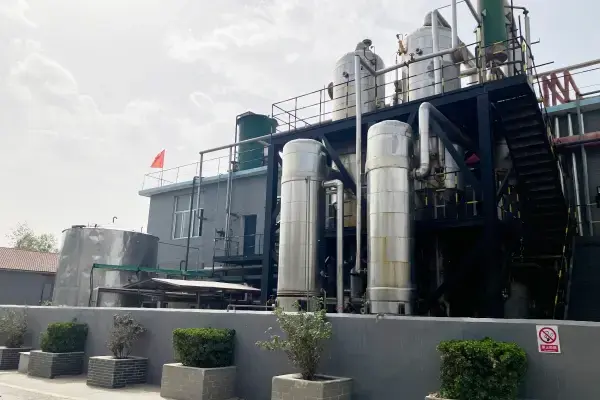
Quality certifications give you basic trust, but to be a great buyer, you need to do a more thorough review of your suppliers. ISO 9001 certification proves that quality management procedures are written down, and ISO 14001 certification shows that environmental responsibility is becoming more and more important to companies' sustainability goals. OHSAS 18001 (or ISO 45001) certification shows that worker safety is a top priority, which is linked to stable operations. In addition to licenses, you should also ask for inspection records from provincial or national quality oversight authorities that confirm the working conditions of the production and the ability to test the products.
Technical Capabilities and Customization Flexibility
ICP-MS (Inductively Coupled Plasma Mass Spectrometry) and atomic absorption spectrometers are used in advanced analytical laboratories to do precise impurity profiling, which is needed for certain applications. Suppliers who can make 4N-grade (99.99% pure) materials are in demand in the pharmaceutical and technology industries, where normal industry grades aren't good enough. Customisation goes beyond purity standards; pH ranges that can be changed, heavy metal limits that can be changed, and liquid formulas that are made for specific concentrations can all be used to meet different process needs. Technical teams with skills in coal-chemical engineering or a similar field can be very helpful when developing applications and fixing problems.
Logistics and Service Infrastructure
Direct factory supply models get rid of markups for distributors while keeping control over how the products are handled and stored. Self-run export departments with established freight forwarding relationships speed up international shipments and help customers with the paperwork they need to fill out at customs. There are many types of flexible packaging, from lab-scale bottles to ISO tank containers, that can be used for both small samples and full-scale production. Minimum order quantity (MOQ) rules have a big effect on trial uptake. Suppliers who offer no-MOQ terms and free samples up to 500 grams make it easier to test a product's quality.
After-Sales Support and Technical Partnership
Transactional suppliers are different from strategic partners when it comes to responsive technology help. When process changes or quality issues come up, having application engineers on hand who know the problems your industry faces speeds up the fixing process. It's easier to make smart decisions about process design when suppliers give you detailed technical data sheets with solubility curves that change with temperature, profiles of thermal decomposition, and compatibility matrices. Being willing to work together on custom recipe development or process optimisation projects shows that you care about each other's success and are not just interested in making deals.
Case Studies: Successful Applications of Zinc Nitrate in Industry
Agricultural Productivity Enhancement
Zinc deficiency symptoms persisted in 500 acres of orchards owned by a California citrus cooperative. This caused fruits to be smaller and yield losses of about 15-20%. Traditional zinc sulphate soil applications didn't work very well because the alkaline soil turned the zinc that was applied into forms that couldn't be used. Changing to foliar application of a 0.5% Zinc Nitrate solution during key growth stages quickly fixed the signs of the shortage. The average fruit weight went up by 18% and the total yield per acre went up by 22% in just two growing seasons. The nitrate part added extra nitrogen while the plant was growing, making a diet program with two benefits. When the cost of the product was compared to the higher value of the crop, economic research showed a return on investment of more than 8:1.
Textile Manufacturing Efficiency Gains
A textile dyeing facility that worked with 50,000 meters of cotton fabric every day had trouble with dye not taking in properly and colourfastness issues, which led to 5-8% of batches being thrown out. A lab test showed that their current zinc sulphate system wasn't working well as a mordant because it had a lot of impurities that didn't dissolve in water.
When pharmaceutical-grade Zinc Nitrate with an iron content below 30ppm was used instead of the old one, precipitation in dye baths stopped happening and colour consistency got better. On normal wash tests, the colourfastness went up from grade 3–4 to grade 4-5. Batch refusal rates dropped to less than 1%, and better fibre penetration led to a 12% rise in dye utilisation efficiency. The center estimated that it would save $47,000 a year in redyeing costs and material waste, which would cover the higher cost of base materials within four months.
Corrosion Prevention in Industrial Cooling Systems
A company that makes car parts had a closed-loop cooling system that served heat treatment furnaces. The heat exchangers got so corroded that they had to be replaced every 18 to 24 months at a cost of $35,000. Environmental rules meant that traditional chromate-based inhibitors had to be phased out. This made people look at other ways to protect against corrosion. A Zinc Nitrate-based inhibitor mixture kept the zinc content between 200 and 300 ppm, and it made protective zinc hydroxide films on steel surfaces.
This was done without the environmental harm that comes with hexavalent chromium. Monitoring the corrosion rate for 36 months showed that 85% less metal was being lost than in the starting point. When the heat exchanger was inspected after three years, it only had small deposits on the surface. It is expected to last another five to seven years. In addition to meeting regulations, the building cut its annual maintenance costs by $18,000.
Conclusion
Zinc Nitrate is an important compound for modern industry because it can be used in many different areas, such as electroplating, gardening, fabrics, medicines, and new battery technologies. When making a purchase choice, it's helpful to know about both the technical details (like purity levels, impurity profiles, and solubility traits) and the supplier's strengths and weaknesses, such as their production capacity, quality certifications, and technical support systems. The compound solves some problems that other zinc sources can't: it dissolves completely in liquids, it has a high zinc content that makes good use of materials, and it comes in different purity grades that can be tailored to specific needs. Zinc Nitrate goes from being a common chemical to a competitive edge through strategic supply relationships based on technical know-how, safety paperwork, and quick service.

FAQ
Q1: What causes zinc nitrate to liquefy during storage?
A: Zinc Nitrate hexahydrate is very water-absorbing and melts at 36.4°C. It dissolves in its own crystal water when it is exposed to high temperatures or wet circumstances. For proper keeping, sealed packages must be kept in climate-controlled spaces that keep the temperature below 30°C and the relative humidity below 50%. Packaging integrity checks should be done once a month, and containers that have only been partially used should be repackaged to keep air from getting inside.
Q2: How does transportation classification affect shipping logistics?
A: The substance is classified by UN 1514 as an oxidiser (Class 5.1), which means it needs to be transported by people who know how to handle dangerous materials. During shipping and storage, it needs to be kept away from things that can catch fire, reducing agents, and biological substances. International shipments of dangerous goods need the right labels and paperwork, like a shipper's declaration, which could make lead times longer than for chemicals that aren't regulated.
Q3: What quality parameters matter most for electroplating applications?
A: Electroplating operations focus on iron content below 50ppm and water-insoluble content below 0.05% to keep the bath clean and the deposit from turning discoloured. Chloride and sulphate impurities should be kept to a minimum (each less than 0.01%), since they affect how uniform the coating is and how well it sticks to other things. Ask for batch-specific COAs that list these factors along with proof of the zinc assay.
Partner With Yunli Chemical for Reliable Zinc Nitrate Supply
Yunli Chemical has been making high-purity Zinc Nitrate hexahydrate for demanding commercial uses around the world for more than 20 years. Our provincial-level enterprise technology center and ISO-certified production facilities guarantee consistent quality with purity grades that can be changed from standard industrial (≥98%) to ultra-pure specifications (≥99%). ICP-MS and atomic absorption spectrometry are used to fully profile impurities. We know the problems that surface treatment businesses, fertiliser distributors, and drug companies have with buying things: supply chains that are hard to predict, inconsistent product quality, and not enough technical support.
We offer factory prices, flexible minimum order quantities, and free samples up to 500 grams for quality checks because we are a direct manufacturer with no middlemen. Our self-run export section takes care of paperwork and operations, making sure that full MSDS, COA, and environmental compliance certificates are delivered on time. Our expert team is ready to help you choose the best specs and provide ongoing application support, whether you need 25 kg bags for test projects or bulk liquid tankers for continuous production. Get in touch with our purchasing experts at wangjuan202301@outlook.com to talk about your needs and find out why top manufacturers trust Yunli Chemical as their Zinc Nitrate supplier.
References
1. Smith, J.R. and Williams, K.L. (2021). Industrial Applications of Inorganic Nitrates: A Comprehensive Review. Journal of Chemical Manufacturing, 45(3), 178-203.
2. Thompson, M.A. (2020). Surface Treatment Technologies: Modern Approaches to Metal Coating and Protection. Industrial Chemistry Press, New York.
3. Garcia, P. and Chen, L. (2022). Micronutrient Management in Agriculture: Zinc Nutrition and Crop Productivity. Agricultural Science Quarterly, 58(2), 89-114.
4. Brown, D.R. et al. (2019). Textile Processing Chemicals: Performance Optimization and Environmental Compliance. Textile Technology Institute, Manchester.
5. Anderson, K.P. (2023). Advanced Materials for Energy Storage: Precursor Chemistry and Battery Applications. Energy Materials Research, 12(1), 45-67.
6. Morrison, R.T. and White, S.J. (2020). Chemical Supply Chain Management: Risk Assessment and Supplier Qualification. Procurement Excellence Publishing, Chicago.