

What makes chromium ii nitrate?
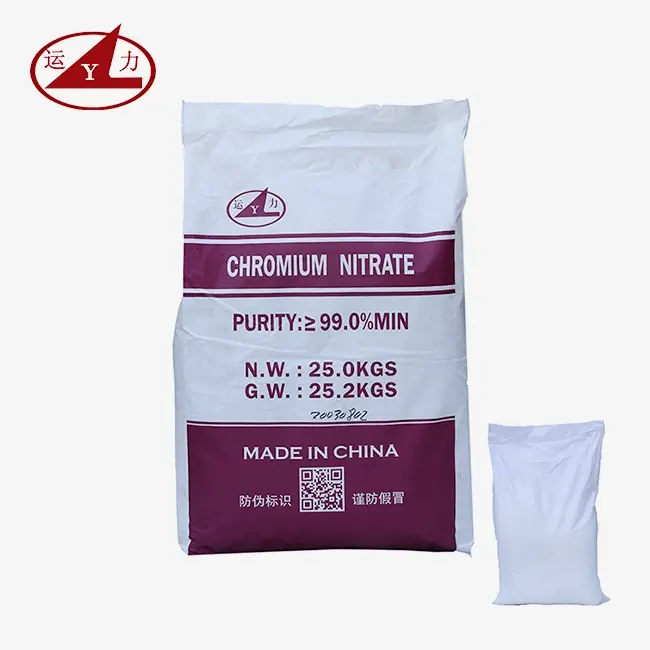
Chromium Nitrate, or chromium(III) nitrate nonahydrate [Cr(NO₃)₃·9H₂O], is created when chromic oxide or chromium hydroxide combines with nitric acid and then forms crystals. When you mix this dark purple-red rock material with water, you get acidic solutions that you need to make catalysts, treat metal surfaces, and stop rust. Buyers and technical experts can choose reliable sources that offer consistent clarity and follow all rules if they know how it is made, what its qualities are, and how it is used in industry.
Understanding Chromium(II) Nitrate: Chemical and Physical Properties
Molecular Structure and Composition
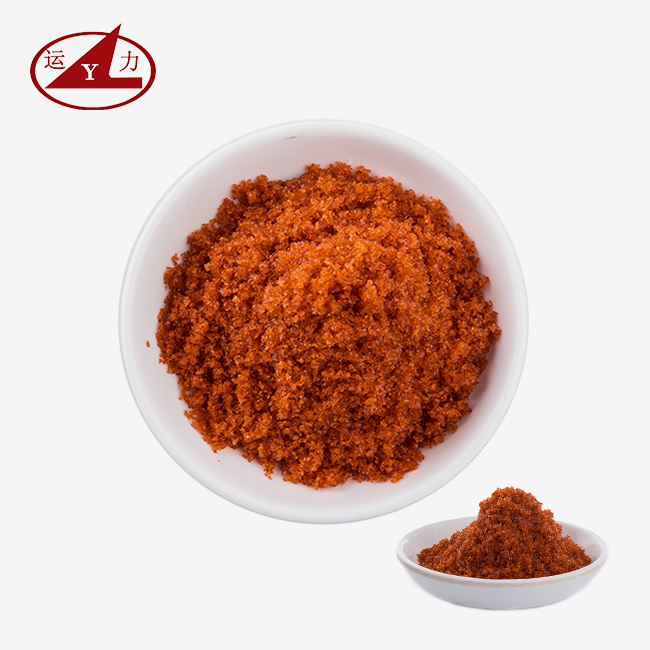
Chromium Nitrate nonahydrate is a chemical that has the formula Cr(NO₃)₃·9H₂O and a molecular weight of 400.15 g/mol. The mix forms a single rock and has a unique color that ranges from deep violet to purple-red. There are three nitrate groups and nine water molecules that work together to make a stable hydrate that doesn't melt under normal conditions. This amount of water directly changes how well something dissolves. At 20°C, 81 grams dissolve in 100 milliliters of water. This makes it simple to use in recipes that call for liquids or in work environments that use water.
The dry form is not as common. It gets rid of water molecules by cooking them in a controlled way. Around 60°C, the material melts, and the drying process begins. It continues until it breaks down at 125.5°C. Things change how they behave, how long they need to be kept, and what they can be used for when they go from wet to dry. This is especially true for processes in industry that don't like water.
Solubility and Stability Characteristics
This is a great thing about Chromium Nitrate: it breaks down quickly in water. This stuff breaks down in ethanol, acetone, and several artificial acids, so it can be used in many different types of liquids. Adding heat to water-based solutions makes them green. When they cool down, they turn reddish-purple. There are now different coordination chemistries and water states. This change in color is a good way to keep an eye on the quality while it's being made and handled.
Chemical stability stays stable in regular storing conditions as long as moisture entry is controlled. It needs to be kept in climate-controlled rooms and covered cases because the substance absorbs water. If it doesn't, it will harden and break down. When used instead of chromium chloride, which can contaminate with chloride ions, or chromium sulfate, which can contaminate with sulfate, Chromium Nitrate is a halide-free alternative that is important for keeping stainless steel equipment and sensitive catalyst formulations safe in petrochemical and pharmaceutical settings.
Safety and Handling Protocols
It can be hard to work with Chromium Nitrate because it quickly oxidizes and corrodes. You could get hurt if you touch chemicals directly. To stay safe, you need safety glasses, gloves that can handle chemicals, and clothes that protect you. To keep things that can catch fire out of storage areas, keep them away from things that can catch fire yourself. Authorized manufacturers' Material Safety Data Sheets (MSDS) tell you how to handle accidents, give first aid, and get rid of dangerous materials in a way that follows OSHA and EPA rules.
Certificates of Analysis (COA) and test results are examples of proof that the product meets environmental standards. They show the exact amounts of impurities that are needed to keep workers safe and the product working well. The best kinds keep the amount of iron in them below 30 ppm and the amount of alkali metal waste below 50 ppm. With these limits, tools and catalysts don't get rusty or poisoned. When procurement teams put these quality standards first, they lower running risks and legal liability in the long term.
Chromium(II) Nitrate Uses and Applications in Industry
Catalyst Manufacturing and Chemical Synthesis
In the oil business, Chromium Nitrate is used to make heterogeneous catalysts that are used in the dehydrogenation and polymerization processes. It fully breaks down when put on alumina or silica supports during calcination, leaving only active chromium sites and no chloride or sulfate poisons that make the catalyst less effective. Because there are no halides, the metal in the reactor doesn't crack from stress rust. This makes the tools last longer and keeps the process stable.
The best pH stability ranges for methanol synthesis and hydrogenation catalysts are between 5.0 and 7.0. This is because they give the best catalytic activity and selectivity. When you work at high temperatures, the surface area stays the same and the stiffening stops because the alkali metal level is below 50 ppm. These technical advantages mean longer catalyst cycles, less downtime, and better return economics for businesses that use chemical processes that run all the time.
Metal Surface Treatment and Electroplating
Hexavalent chromium is being changed to trivalent choices because of rules about the environment. It is safe to finish metal with Chromium Nitrate. Trivalent chromium passivation (TCP) baths with Chromium Nitrate make them just as resistant to rust as hexavalent baths, but they don't cause cancer. The chemical keeps phosphating baths from getting sludge, which keeps the bath solid and lowers the cost of getting rid of trash.
To electroplate metal and zinc, Chromium Nitrate treatments work better because the coating stays on better and is the same thickness all over. By absorbing changes in pH during deposition, the nitrate counter-ion keeps the bath chemistry stable over long production runs. It is easy to follow REACH and RoHS rules for chromium(III) chemicals because they are not as dangerous as their hexavalent cousins. For workers, this makes it easy to follow the rules and laws about safety.
Textile Dyeing and Corrosion Inhibition
Chromium Nitrate is used to make fabrics, mostly cotton and silk, lighter when they are being dyed. When the chemical is added to fiber molecules and dye particles, it forms stable coordination complexes. This keeps the color better after cleaning and makes it last longer. It works better than sulfate-based mordants because it can balance out coloring conditions that are too acidic. Mordants that are based on sulfates can damage fine fibers or make the color spread widely.
Some of the things that corrosion inhibitors are used for are adding to concrete and making protection coats for steel buildings. In cold weather, Chromium Nitrate is added to winter building mixes to help the concrete keep its shape while it cures. In order to do this, it keeps out both cold and rust. Chrome's passivating qualities make thin oxide walls that stop chloride from getting in and air oxidation from happening in places like factories or the coast.
Synthesis and Production Processes of Chromium(II) Nitrate
Industrial Manufacturing Methods
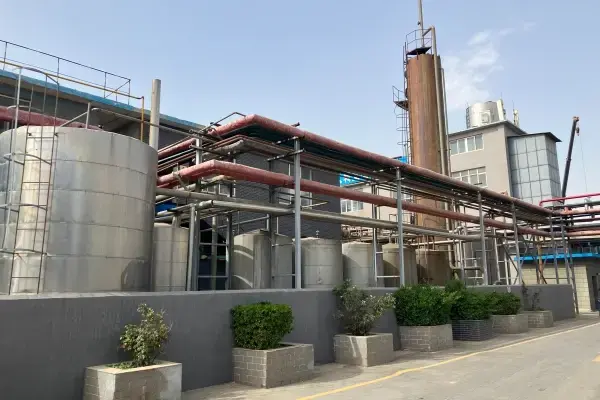
A lot of Chromium Nitrate can be made when strong nitric acid is mixed with chromic oxide (Cr₂O₃) or chromium hydroxide. This reduction process turns chromium(III) into Chromium Nitrate in water. As it dries and crystallizes, it is carefully watched to make the nonahydrate form. The range of crystal sizes and the regularity of the hydration depend on how the temperature is controlled during crystallization. These things have an effect on how quickly the crystals break down and how well they work in a given situation.
Modern manufacturers use constant reaction systems that check the pH level and control the temperature automatically to make sure that each run is the same. steps of filtration get rid of impurities that can't be broken down, and steps of recrystallization make the product more pure than 99.9% so it can be used in medicine or electronics. ICP-MS and atomic absorption spectrometers are used in quality control labs to check trace metal standards. This keeps the amount of iron, calcium, and acidic metals that could be harmful to future uses below a certain level.
Quality Assurance and Environmental Management
There are more than just rules in quality standards. They also look at the spread of particle sizes, the amount of water in the material, and the amount of acid that is still there. In pharmaceutical-grade goods, the amount of nitric acid that is left over is less than 0.1%, which is in line with API production standards set by the USP and EP. If you want to make chips or batteries, you need materials that are 4N pure (99.99%). This is because even small amounts of pollution can make devices less reliable and less effective.
Taking care of nitrate-containing trash and nitrogen gas pollution is part of protecting the environment when Chromium Nitrate is made. To follow the rules set by the EPA and the EU for releasing wastewater, advanced treatment systems use bacterial denitrification and catalytic reduction technologies. The amount of trash and raw materials used goes down with closed-loop acid recycling. This shows that buying teams that care about business social duty are starting to value environmentally friendly ways of making things more and more.
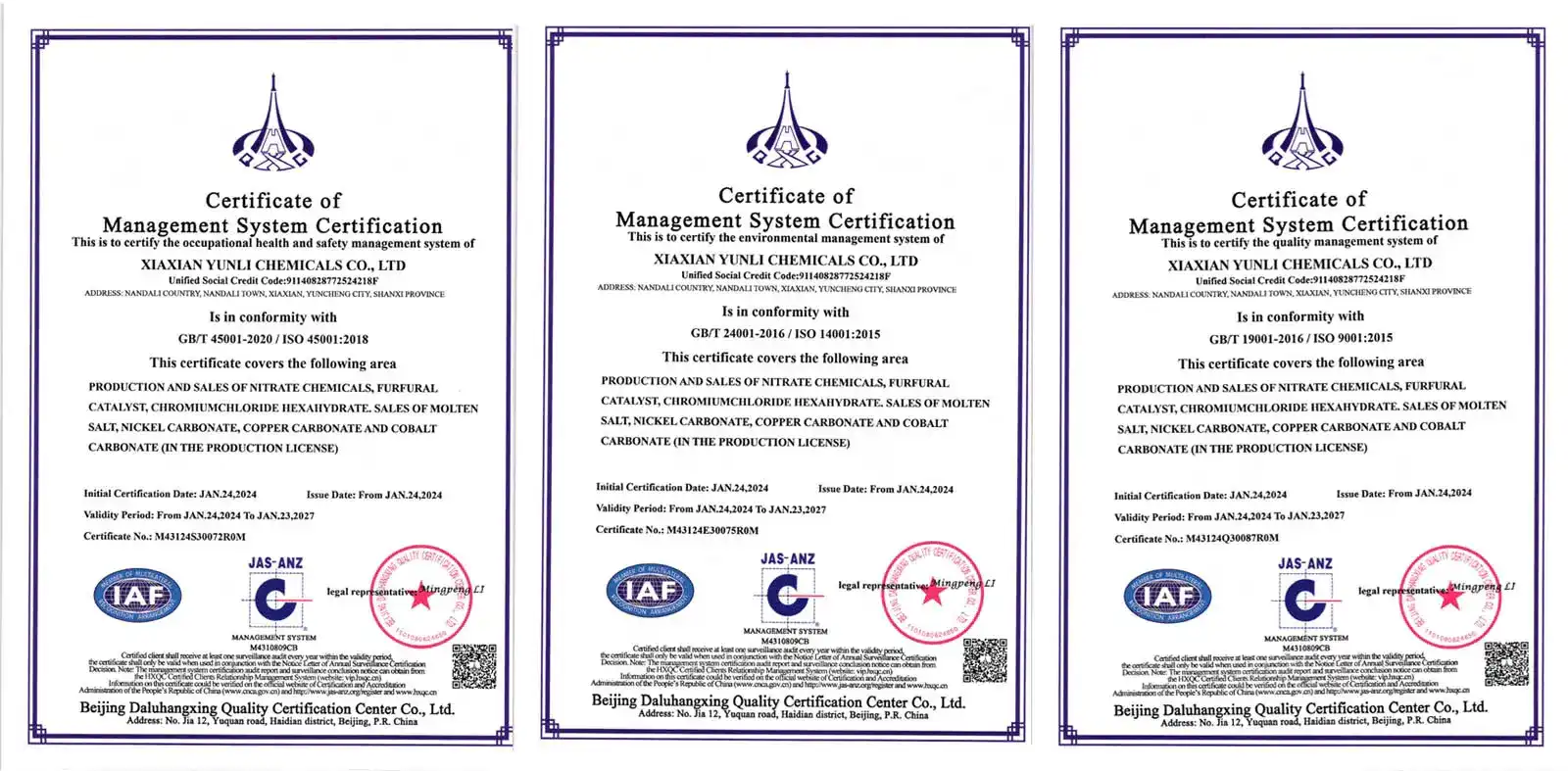
The supply chain is easier to understand when suppliers have ISO 14001 environmental management certification and monitored pollution. This is very important for buyers who need to meet Scope 3 reporting guidelines. Responsible makers can tell the difference between product providers with these skills. They also help build long-term relationships based on shared environmental values and following the rules.
Procurement Guide: How to Buy Chromium(II) Nitrate Efficiently?
Supplier Evaluation Criteria
To find Chromium Nitrate suppliers you can trust, you need to look at more than just price per unit. A company can meet mass orders and keep supplies steady even when the market changes if it has the ability to make things and is financially stable. A company that makes more than 1 billion yuan a year and has fixed assets worth more than 300 million yuan is big enough to be able to keep up steady production rates and stock levels.
Standards for quality management like ISO 9001, ISO 14001, and OHSAS, and rules for worker safety, make sure that things are handled in a planned way and that people follow the rules. Having a business named a regional or national technology center means that it does research and development that can make purity grades, pH standards, and impurity profiles that meet the needs of a certain industry. These rules cut down on the risk of buying and speed up the process of finding good sellers.
The technical support system is what makes people who sell standard things different from partners who can work together to fix issues. It is faster to validate goods and make processes better when you have access to application experts, analysis labs, and pilot-scale testing sites. Companies find it easier to get approvals and send in regulatory papers when their providers give them all the information they need, such as MSDS, COA, and environmental safety certificates.
Pricing Dynamics and Order Optimization
The price of Chromium Nitrate on the market changes based on how much chromic oxide and nitric acid cost as well as how much demand there is from the catalyst and plating businesses around the world. When you buy in bulk, the price per kilogram is usually 15–25% less than when you buy it on the spot. Prices stay the same with contracts that last three months or a year. Minimum order sizes of about 1,000 kilos are good for medium-sized buyers because they cover both the cost of shipping and the cost of having stock on hand.
Flexible packaging, such as 25-kilogram bags that don't absorb water and 1,000-liter IBC tanks for liquid recipes, can be handled in a number of different ways. Custom concentration solutions that range from 20 to 50 percent by weight get rid of the need for steps that dilute the product. It's easy to handle and less likely to get dirty this way. As long as the provider has water-based products whose pH and iron/chloride levels can be changed, they can be added to existing processes right away, without having to wait for the recipe to be changed.
Labeling dangerous goods is part of following the rules for foreign shipping. DOT and IMDG rules say that Chromium Nitrate is a Class 5.1 oxidizer. A lot of exporters take care of all the paperwork that needs to be done, such as customs checks, shipping statements, and import licenses. This cuts down on customs delays and demurrage fees that raise the cost of landing. It saves you money to buy from the plant itself instead of going through a middleman. This saves 10 to 15 percent of the cost and still keeps track of records for each batch of production.
Comparison and Decision-Making: Chromium(II) Nitrate vs Other Chromium Compounds
Chromium Nitrate Versus Chromium Chloride
Since chromium chloride is less expensive, it is used instead. However, it gives off chloride ions that damage stainless steel reactor parts and lines. This rust makes upkeep go faster and raises the risk of contamination in places where food and drugs are made, since metal leaking breaks rules about purity. These fears are taken away by Chromium Nitrate, which is a source of chromium that doesn't have any halides in it. This keeps money from having to be spent on new tools and extends the time between shutdowns.
Catalytic uses work best with formulas that don't have salt in them. Ions of chloride harm noble metal catalysts and zeolite supports. This makes the hydrogenation and cracking processes less effective and selective. When you change the catalyst to Chromium Nitrate, it keeps working well even after many renewal rounds. There is less cost in the process because the catalyst lasts longer and works better in the stream. The extra cost—usually 20–30% more than chloride salts—is worth it because it makes more crops and reduces the need for refills.
Chromium Nitrate Versus Chromium Sulfate
Chromium sulfate is used a lot to color leather and treat metals with chromium because it is cheaper to make. On the other hand, sulfate ions can make hard water scale in heat exchangers and can mix with calcium or barium in process waters to make solid salts. It takes longer to clean and water treatment systems need more chemicals because of these issues with how things work.
Environmental release rules are putting more and more limits on the amount of sulfate in wastewater. This is especially true in places with strict total dissolved solids (TDS) limits. Chromium Nitrate cuts down on the amount of sulfate that needs to be added while still letting chromium be used for coloring and polishing. It is easier to make concentrated liquids with this mix because it is easier to dissolve. This makes it easier to store and ship than sulfate salts, which need more solution to get the same amount of chromium.
In compound selection, decision grids look at more than just the item's price. They also look at how much it will cost to own the whole thing. Technical teams often decide that the higher price of Chromium Nitrate saves money in the long run because it lowers operational costs and risk over the long lifecycles of equipment and regulatory planning periods. This is because the higher price of Chromium Nitrate makes the process work better and costs less to follow environmental laws.
Conclusion
There are many industries that need Chromium Nitrate nonahydrate. It is used to make catalysts, polish metals, process fabrics, and stop rust. Since it doesn't have any halides in it, it doesn't damage catalyst systems or equipment. It also helps with the move to trivalent chromium processes that are better for the earth. When deciding what to buy, you should think about more than just price. You should also think about the seller's professional know-how, quality standards, and care for the environment. It's easy to add their goods to what you're already doing when you deal with well-known companies that offer customization, analytical help, and regulatory paperwork. There are also fewer risks in the supply chain because they make sure that goods are always supplied on time and up to the same high standards.
FAQ
Q1: What safety precautions are required when handling chromium nitrate?
A: Because it corrodes and oxidizes, Chromium Nitrate needs safety gear that can handle chemicals, like shields, gloves, and protective clothing. Places to store things should be clear of things that can catch fire and have enough air flow. For emergency procedures, you should follow the MSDS rules, and there should be eye wash stations and safety showers close by. According to local rules, getting rid of dangerous trash generally means neutralization and the right way to handle trash.
Q2: How does hydration state affect chromium nitrate performance?
A: The nonahydrate form is easier to work with and dissolves better in water. On the other hand, the anhydrous form is better for dry tasks. It is important for bath formulation consistency in plate processes that hydrated forms mix at the same rate every time. Chromium Nitrate is found in higher amounts in liquids that are not water-based and are used to make certain catalysts. It depends on the job, the liquid chemistry, and the working conditions to choose the best hydration state.
Q3: What distinguishes premium-grade chromium nitrate from standard specifications?
A: Premium types keep the iron level below 30 ppm and the alkali metals level below 50 ppm. This is important for catalysts and electrical materials where small amounts of contaminants can hurt performance. Pharmaceutical grades follow USP rules for heavy metals and leave out no more than 0.1% nitric acid. There may be 100 to 200 ppm of impurities in standard commercial grades. These are fine for basic metal and cloth uses, but not for making high-purity chemicals or advanced materials.
Partner with Yunli Chemical for Reliable Chromium Nitrate Supply
When you need Chromium Nitrate, you can trust Yunli Chemical. These people have been making high-quality goods for the specialty chemical, electroplating, and catalyst businesses around the world for more than 20 years. In our regional technology center, we have purity grades that can be changed from 98% to 99.9%, pH ranges that can be changed, and ultra-low impurity profiles that meet the tight needs of electronics and medicines. We care about quality and the environment because we have ISO 9001, ISO 14001, and OHSAS certifications.
By going straight to the plant, you skip the broker and their fees, and since we run our own export operations, we can make sure that transfers to other countries go smoothly with little paperwork and handling. We keep our relationship models open by not setting a minimum order size for the first tests and by giving you free samples of up to 500 grams, so you can try everything out before committing to big orders. The needs of your business can be met by custom wrapping in forms that don't soak up water and specially made water-based solutions.
Our coal-chemical engineering team helps make goods that work better and fixes issues that come up along the way. This is done with the help of high-tech research tools such as ICP-MS and atomic absorption spectrometry. Talk to our procurement experts about your Chromium Nitrate needs at wangjuan202301@outlook, and find out how our stable supply, reasonable price, and technical partnership approach can make your supply chain more resilient.

References
1. Cotton, F.A., Wilkinson, G., Murillo, C.A., and Bochmann, M. (1999). Advanced Inorganic Chemistry, 6th Edition. John Wiley & Sons, New York.
2. Greenwood, N.N. and Earnshaw, A. (1997). Chemistry of the Elements, 2nd Edition. Butterworth-Heinemann, Oxford.
3. Kirk-Othmer (2007). Encyclopedia of Chemical Technology, 5th Edition, Volume 7: Chromium Compounds. John Wiley & Sons, Hoboken.
4. American Society for Testing and Materials (2018). ASTM B117-18: Standard Practice for Operating Salt Spray (Fog) Apparatus. ASTM International, West Conshohocken.
5. European Chemicals Agency (2020). Guidance on the Application of the CLP Criteria: Guidance to Regulation (EC) No 1272/2008 on Classification, Labelling and Packaging (CLP) of Substances and Mixtures. ECHA, Helsinki.
6. Zhang, L., Wang, H., and Chen, Y. (2021). "Advances in Trivalent Chromium Plating Technology and Environmental Compliance." Journal of Cleaner Production, Vol. 289, pp. 125-138.