


What safety precautions should I take when handling calcium nitrate fertilizer?
It is important to wear the right safety gear, store Calcium Nitrate fertilizer safely, and be ready for anything that might happen when you are dealing with it. The molecular formula for this chemical is Ca(NO3)2·4H2O. It is a strong oxidizing agent that can burn skin and things that are flammable. To handle something safely, you need to know how it works with other things. You should also set aside clean places and follow thorough spill response methods to keep everyone in your supply chain safe.
Understanding the Risks of Handling Calcium Nitrate
Working with Calcium Nitrate: Dangers and Benefits. The people in charge of buying things and technical experts need to fully understand the problems that Calcium Nitrate tetrahydrate causes. You have to be careful with this substance because it reacts badly with other chemicals. However, it is very useful as a water-soluble fertilizer in gardening, electroplating, and mixing concrete.
Chemical Properties That Create Workplace Hazards
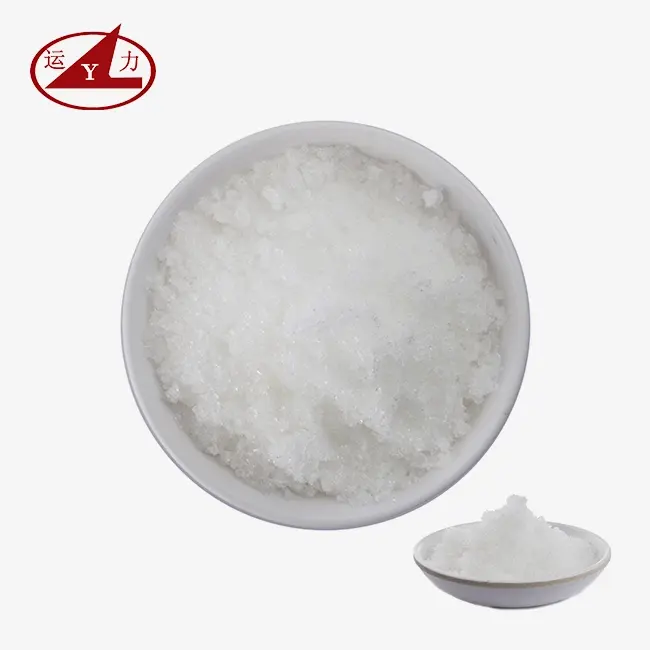
Calcium Nitrate tetrahydrate is made up of crystals and a white columnar monoclinic system. The density of it is 1.895, and it breaks down at temperatures above 132°C. This barrier against decomposition is very important in industrial settings where heat or friction could break down materials by mistake. It's easy for water, methanol, ethanol, and acetone to break down the chemical. This means it can spread fast if it gets spilled and needs to be stopped right away.
The fact that this material is an oxidizer makes things even more dangerous. When oxidizers come in contact with oils, organic materials, or reducing agents, they speed up the burning process much more than simple salts do. The nitrate ion part sets off this process. It basically gives fires concentrated oxygen that burns much hotter than air alone.
Regulatory Frameworks Governing Safe Handling
The U.S. Calcium Nitrate is a dangerous drug that needs Safety Data Sheets everywhere it is used or kept, according to OSHA rules. Because the chemical is an oxidizer, it needs to be kept away from things that can catch fire and chemicals that don't mix well with it, like ammonium compounds. RCRA rules say that the EPA is in charge of controlling dumping, especially when trash streams have concentrated solutions or materials that are polluted.
If you follow these rules, you can keep your business out of problems and protect your employees. When a company buys a lot of tonnage, they need to have written compliance plans that show they follow these rules. During site reviews, auditors and insurance companies often pay close attention to these tools.
Environmental and Health Impact Considerations
The risks are different for each way of being exposed. If the Calcium Nitrate liquid is too strong, it can hurt the skin and even burn you because it is toxic. Making eye contact is more dangerous because if you don't treat it right away, it could hurt you for a long time. The dust you take in when you move or handle bags can hurt your lungs, and being exposed to it for a long time makes you worry about how your body handles nitrates.
Nitrate ions get into groundwater when environmental spills happen. This increases the amount of eutrophication in the surface water and goes over the safe drinking water limit of 10 mg/L for nitrate-nitrogen. To clean up spills that go into the ground or drains costs a lot of money. Preventative steps are very important for safety and money reasons.
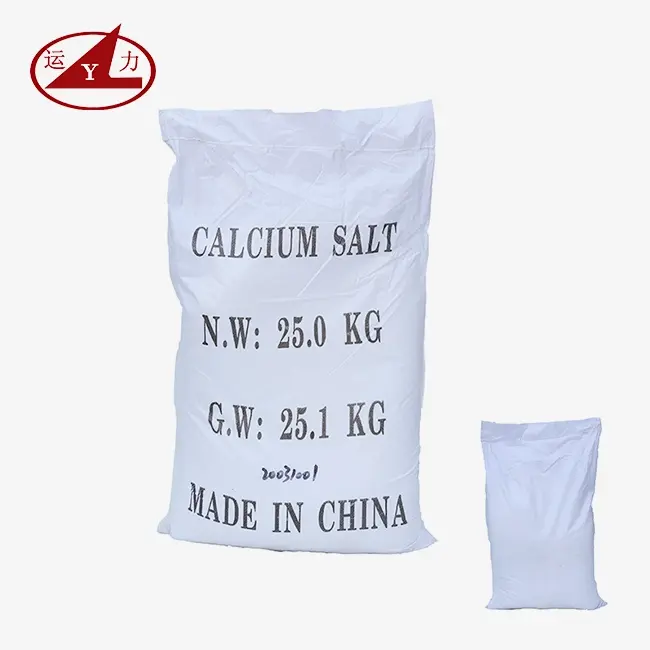
Key Safety Precautions When Handling Calcium Nitrate Fertilizer
Tips to Keep You Safe When Working with Calcium Nitrate Fertilizer. Stacking safety controls makes working with Calcium Nitrate less dangerous. The settings show us how to set up these safety measures, with the most useful ones at the top.
Personal Protective Equipment Requirements
People who work with Calcium Nitrate must wear the right PPE as a last line of defense against getting exposed. Nitrile or neoprene gloves that are resistant to chemicals will keep your hands safe while you work with bags, make solutions, and fix things. If you touch something with a strong solution for a long time, regular latex gloves won't protect you well enough.
Safety masks with side covers keep your eyes from getting splashed when you're mixing or moving things around. Because they cover the whole face, full-face covers are better for places where dust is likely to form, like where bags are dumped. When working with fine powders or in small spaces without enough air flow, you need to protect your lungs. Any N95 mask that has been cleared by NIOSH will do for annoying dust. But for jobs that make a lot of fumes, you need half-face respirators with P100 screens.
Proper clothing, like chemical-resistant masks and long-sleeved work shirts, should be worn when making solutions to avoid getting too much skin on them. Safety shoes with closed toes keep your feet safe from things that fall and get spilled on the ground. To follow cleanliness rules, you have to wash your hands right away after touching someone, and you can't eat, drink, or smoke where people are working on things so that you don't accidentally eat or drink something.
Storage Protocols That Prevent Incidents
Based on how well you store it, your Calcium Nitrate stock could either stay a good thing or turn into a problem. The chemical is hygroscopic, which means it pulls water from the air and turns it into wet solutions that damage containers and make them hard to handle. Sites that store things must keep the relative humidity below 60% by controlling the temperature or letting enough air flow through.
It's just as important to control the temperature. However, Calcium Nitrate is safe at room temperature. It should be kept away from heat sources, direct sunlight, and steam lines that could heat the area to 132°C, which is the temperature at which it begins to break down. Burning materials, organic chemicals, and reducing agents can't get dirty when they are kept away from each other by fire-rated walls.
It's important to always check that products are safe. Packaging should have moisture covers on it, and bags that have been opened should be closed again in a way that keeps air and moisture out. Putting pallets on higher platforms to store them gets them out of the way of groundwater and makes it easy to check for damage or leaks. Labels that are clear about what's inside, how dangerous it is, and how to reach someone in an emergency must be able to be seen and read while the item is being stored.
Transportation Safety Measures
Moving Calcium Nitrate from where it is kept to where it is used involves some risks that can be handled well with well-thought-out plans. Moving things with specialized tools keeps them clean so they don't get dirty with things that don't mix with things that are left over from other loads. The people who drive forklifts need to be taught how to handle oxidizers safely and be told that any hits or punctures are immediately dangerous.
The DOT says that when moving large amounts of oxidizing substances, they must follow the rules for Hazard Class 5.1. These rules include specific marking, packing, and driver training. Vehicles that carry Calcium Nitrate must have fire extinguishers that can put out oxidizer-fueled fires. These units are made of water and won't mix with the poison. People try to plan their routes so that they don't go through busy towns and look for emergency tools along major roads.
There are information sheets, emergency plans, and ways to get professional help 24-hour a day, seven days a week that come with every package. You can get full shipping papers from Yunli Chemical that are up to foreign standards. This way, your management team will know everything they need to know to safely move your goods between states or between countries.
Emergency Response and Spill Management
It's important to be careful, but spills do happen and need a quick, skilled response. As usual, the affected area must first be blocked off, staff who aren't needed must be removed, and the right response teams must be called. Workers who are trained and have the right PPE and containment materials can clean up small messes that weigh less than 50 kg.
This is done so that diseases don't get into pipes, dirt, or bodies of water. Materials that don't react with liquids, like sand or industrial spill pads, soak up spills. Tools that don't spark are used to sweep dry material spills into bins that won't catch fire. Wood chips and other organic absorbents can start fires when they get wet with oxidizers. Following EPA rules, things that are polluted must be thrown away as dangerous trash.
The emergency services are called when there are large-scale leaks that can't be handled by the system itself. Fire departments need to know right away what kind of fire it is so they can put it out in the best way possible. There is dust in the air that is spread by water fog, and things that are too hot are cooled down by it. However, water fog makes nitrate-contaminated water that needs to be controlled. Facilities that work with a lot of chemicals already have connections with chemical reaction specialists who can help in ways that fire departments usually can't because they have skills and tools that fire departments don't have.
Best Practices in Calcium Nitrate Fertilizer Application to Ensure Safety
How to Safely Use Calcium Nitrate Fertilizer: Best Practices. In both farms and industry, the results of safety tests depend on how they are applied. When technical details are right, the compound's good effects are increased while contact to people and the environment is decreased.
Dosage Precision Across Application Methods
Care must be taken to keep the percentage of Calcium Nitrate in hydroponic systems where it is the main source of calcium and nitrate-nitrogen. A lot of nutrient treatments have 100 to 200 ppm of calcium in them. Calcium Nitrate tetrahydrate, which has 16.9% calcium, is soaked in a certain amount of water to do this. Too much concentration is bad for plants and makes it more likely that there will be spills when the solution is changed. Too little focus loses stuff and makes the crop less good.
You have to be even more exact when you use drip irrigation to fertilize because concentrated stock solutions are used to make the final mixture that you spread on the field. A common way to dilute something is 100:1 or 200:1. In other words, stock products have a lot more and need tighter safety rules when they are made. When oxidizer service is done on injection equipment, parts that are resistant to chemicals must be used, and workers must be taught about both the fertigation system and the chemical's danger level.
If you put grainy or prilled forms on the ground in a band or a spread design, you have to touch them directly. It is important that application tools are only used for Calcium Nitrate so that it doesn't mix with nutrients that don't work well together. People don't get exposed to dust when they're working in the field because of things like using damping material before loading and working when there isn't much wind.
Fertilizer Compatibility Verification
Some fertility products can respond badly with Calcium Nitrate when mixed with them. This can happen through precipitation reactions that make the products less useful. Fertilizers that are based on ammonium and Calcium Nitrate should never be kept together because they can combine and make ammonium nitrate, which is much more dangerous and can sometimes explode.
Pound and magnesium sulfate are sulfate nutrients. When they are mixed with strong Calcium Nitrate solutions, they settle down and turn into gypsum, which is not soluble in water. It rains a lot, which stops water lines and makes minerals less available. Another thing that phosphate sources do is make calcium phosphate precipitates. You can avoid these issues by mixing the tanks properly and making sure they are right for the job. Because of this, Calcium Nitrate should always be put into Tank A and phosphates/sulfates should always be put into Tank B in fertigation systems.
Staff Training and Supervision Standards
People are to blame for most chemical accidents. People can actually follow safety rules when they go through in-depth training programs that teach them about chemical properties, spotting dangers, using PPE, handling situations, and application methods. Hands-on demos, scenario-based activities, and skill verification work better than just lessons when it comes to training.
New team members are watched over during their first few applications to make sure they follow through with their training in the right way. People who work there for a long time can show others how to do things right and also tell when someone needs more training. Everyone on your team should get refresher training at least once a year. This helps them remember important messages and keep them up to date on changes to processes or lessons learned from other parts of your business or industry.
Procurement and Supply Chain Considerations for Safe Calcium Nitrate Usage
Things to Think About for Safe Use When You Buy Calcium Nitrate and the Supply Chain. Choices about where to get things have a big effect on how safe things are in the long run. You have to deal with risks and problems that hurt your bottom line when you have to choose between providers whose quality is different.
Supplier Selection Criteria Beyond Price
It's important to find the best deal on something, but the detailed details will tell you if Calcium Nitrate will work well and safely in your situation. It tells you how much non-target material you're working with by how pure it is. There are fewer flaws in something that is more pure, so it won't mess up your process or give you unexpected results. Yunli Chemical's high-purity Calcium Nitrate tetrahydrate has less than 0.001% iron and less than 0.01% matter that doesn't dissolve in water. It meets the strict needs of precise farming, making medical intermediates, and electroplating.
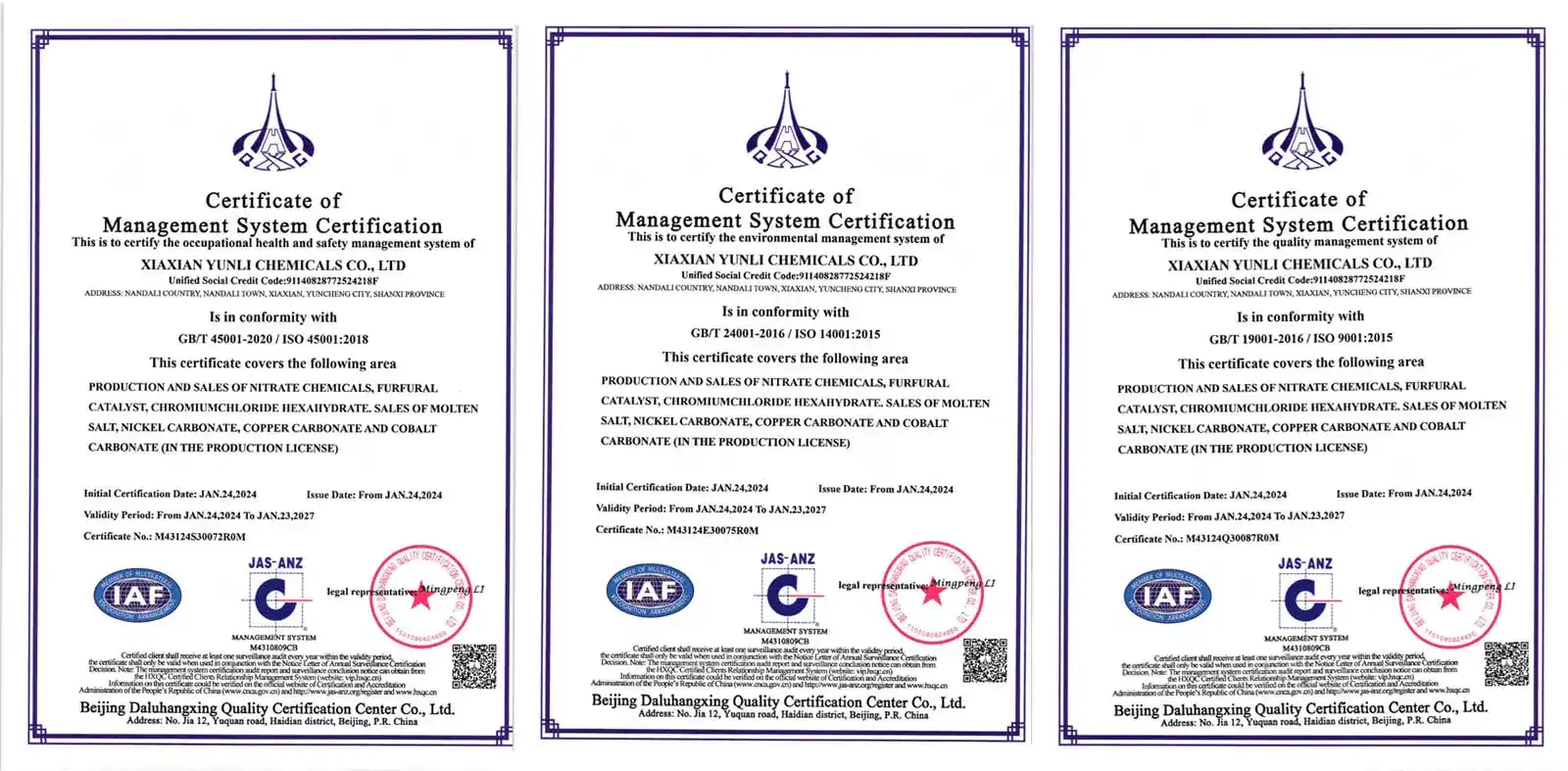
Getting certified is a reliable way to show that your safety and quality control are up to par. If you have ISO 9001 certification, you can control quality in a planned way. If you have ISO 14001 certification, you can handle the environment in a way that makes it less likely that you'll get goods from factories that don't follow the rules. If a service company is OHSAS certified, it means they have health and safety plans in place to keep their employees safe. It looks like the items they sell will be safe because of this.
As regulators pay more attention, it's more important for the supply chain to be open. If you know where and how your Calcium Nitrate is made, you can figure out the risks that come with making sure the product is always the same, follows the rules, and will be open in the future. Direct manufacturing by Yunli Chemical cuts out middlemen who could make it harder to track. From production to delivery, there is clear information that shows the chain of ownership.
Quality Assurance Through Testing and Documentation
When you buy something, you can be sure that it meets certain standards because it comes with a Certificate of Analysis. The amount of iron, heavy metals, chlorides that can't be present, the pH, the amount of water, and the amount of nitrogen (11.7%) are all important things to think about. If you compare the things you get to these standards, you can find problems with quality before they hurt your business.
Material Safety Data Sheets are the technical foundation of the safety plans at your business. They describe the risks, how to give first aid, how to burn something, how to handle it safely, and government rules. Everyone who might come into touch with the material should be able to read MSDS sheets that are up-to-date, full, and easy to understand. It shows that providers care about their customers' safety when they keep these papers up to date as rules change.
How safe it is to handle depends on how well the package is made. Hygroscopic moisture can't get inside moisture-resistant bags with inner covers while they are being moved or kept. So it doesn't break when you touch it, the bag should be strong enough for its weight. Yes, Yunli Chemical can make packaging that fits your needs for tools and storage. These include 25kg bags for carrying by hand, 1000kg super sacks for forklifts, and bulk truck sizes for big users.
Building Long-Term Supplier Partnerships
The source of Calcium Nitrate needs to be stable for it to be useful in farming and manufacturing processes. There will be problems if you move providers after testing a material source with samples and first production runs. You will have to go through all the approval steps again. Replacing something often costs more than the savings that seem to come from switching companies. This is because testing, process changes, and the chance of quality problems all add up.
When you work with the same providers for a long time, they can learn about your specific wants and application issues. This could get you better expert help or even things that are made just for you. There are professionals at Yunli Chemical who have been making chemicals for more than 20 years. They help customers fix problems, find better ways to use Calcium Nitrate goods, and improve the way they are applied.
When you plan to buy a lot, you can usually get better deals, faster service when supplies are low, and more flexible payment terms that help you keep your cash flow under control. Our direct manufacturer model brings in more than 1 billion yuan a year and can handle orders for tons. This gives end users and dealers in the industry the scale and trust they need to make long-term plans.

Case Studies and Real-World Examples of Safety Compliance
Case studies and real-life cases of following safety rules. Systematic safety plans have been shown to work, and problems that can happen in real life can be shown to be avoidable with careful planning.
Agricultural Implementation Success
A big nursery in California that grows great tomatoes put in place a full Calcium Nitrate safety program after some people got skin irritations while the fertigation system was being set up. The factory changed how it worked so that there were special mixing areas with water pumps for washing your eyes. The right PPE was also worn by everyone, and managers were asked to check it. Also, equipment was inspected twice a day to find leaks before they became problems.
Calcium Nitrate exposure did not cause any lost-time accidents over the next 18 months. There was also 40% less material waste from spills and overfilling, and crop quality was better because nutrients were given more exactly. The safety expense, which was about $15,000 for training and gear, paid for itself in seven months because of lower costs for workers' compensation and savings on materials.
Distribution Center Risk Management
It scared the insurance company that a local chemical dealer that worked with a lot of nitrate compounds might have fires in their stores. Because of these worries, they set up strict rules for dividing things. Fire-resistant walls separate Calcium Nitrate from things that don't work with it. They also made their fire system stronger and taught warehouse workers again about the risks of oxidizers and what to do in an emergency.
The division rules stopped a potentially dangerous accident where a forklift damaged barrels of both Calcium Nitrate and an organic liquid. This was found during a monthly audit. It's possible that the chemicals never came into contact with each other, even though the containers were broken into. The materials stayed together before they could mix because of quick cleanup steps. When the distributor's insurance company saw that their investments had made the business less risky, they cut the rates by 20%.
Learning From Incidents
A maintenance worker used a dirty rag to clean some equipment at a plant that used Calcium Nitrate to make concrete set faster. This caused a flash fire. Even though the rag had been washed, it still had enough organic matter on it from being used with hydraulic oil for it to catch fire when Calcium Nitrate solution was added to it. Their hand got a little burned, and the accident taught them a lot of important things.
The way the building handled its cleaning supplies and made sure people didn't get sick from touching each other was looked into and found to be flawed. To fix the issue, cleaning supplies were made specifically for areas with Calcium Nitrate, tools were given different colors to indicate their purpose, and training was better to stress that washing absorbent materials does not always remove all the dirt they pick up. Simple changes to the process got rid of the danger zone that caused the accident.
Conclusion
To handle Calcium Nitrate fertilizer safely, you need to pay attention to your own safety, how it is kept, how it is used, and how good the seller is. By understanding how the compound reacts and oxidizes, you can make rules that keep processes going easily and protect people and property. Accidents happen less often, insurance costs go down, and materials are used more efficiently when you spend money on the right PPE, training programs, and building structures. A lot of downstream risks are reduced when you buy from companies that care about quality, have strong certifications, and offer expert support. Calcium Nitrate can be a problem that needs to be handled, but if you work with well-known companies that offer consistent product specs, clear paperwork, and helpful customer service, it can become a reliable input that helps you reach your production goals.
FAQ
What immediate first aid should I provide after calcium nitrate exposure?
As soon as I'm done being around Calcium Nitrate, what kind of first aid should I give? If it gets on your skin, you should wash your face with lots of water right away and for at least 15 minutes while taking off any dirty clothes. The best way to get rid of the drug on your skin is with water. If you get water in your eyes, you should wash them right away with cool running water or an eyewash station. Keep your eyelids open for 15 to 20 minutes to make sure they are fully washed. Help a doctor right away after the first watering.
Can I store calcium nitrate with other fertilizers in my warehouse?
Calcium Nitrate will be stored in my building with other chemicals. Is that okay? Some chemicals in them change how they are stored with other nutrients. When you keep Calcium Nitrate with ammonium-based fertilizers, organic materials, or reducing agents, they can catch fire or blow up, which is not safe. Standards usually say that things that don't belong together must be kept at least 20 feet apart or by fire-resistant walls. Because sodium nitrate and potassium nitrate both react with oxygen in the same way, they can generally be kept together.
What are the legal requirements for storing bulk quantities?
What do the laws say about keeping big amounts? The United States has rules about bulk storage from OSHA and the EPA. The rules change based on how much is kept. Over 500 pounds, OSHA's Hazard Communication Standard says that Material Safety Data Sheets and proof that staff have been trained must be put up. Some states have added rules called "Right-to-Know" laws that say things like when storage goes over certain limits, you have to tell the community.
Partner With Yunli Chemical for Safe, Reliable Calcium Nitrate Supply
Work With Yunli Chemical for a Reliable, Safe Calcium Nitrate Supply. With a well-known company, you can be sure that the Calcium Nitrate you buy will be of high quality and come with full expert help. Our ISO 9001, ISO 14001, and OHSAS standards show that Yunli Chemical cares about quality, the environment, and worker safety. We've been in business for more than 20 years and make things. As a well-known Shanxi Provincial Enterprise Technology Center, we keep our analysis tools like ICP-MS and atomic absorption spectrometry up to date. This way, we can keep a close eye on how pure and impurity-free the goods you need are.
Because it is very pure (≥99.0%) and has almost no iron in it, our Calcium Nitrate tetrahydrate doesn't get into processes that should stay clean. It is used in farming, manufacturing, and making medicines. We can work together in a number of ways, and there is no minimum order size. You can also get free samples of up to 500 grams, and the way they are packed can be changed to fit how you handle them and store them. There are no middlemen in this chain, so prices come straight from the manufacturers. This makes the whole thing clear and easy to watch. Talk to our knowledgeable staff at wangjuan202301@outlook.com about your Calcium Nitrate needs and learn how working with a reliable Calcium Nitrate provider can make your business safer, your products better, and your ability to perform better.

References
1. Occupational Safety and Health Administration. (2021). Hazard Communication Standard: Safety Data Sheets. U.S. Department of Labor, Washington, DC.
2. National Fire Protection Association. (2020). NFPA 400: Hazardous Materials Code, Chapter 16 - Oxidizers, Oxidizing Gases, and Oxidizing Cryogenic Fluids. Quincy, Massachusetts.
3. United States Environmental Protection Agency. (2019). Guidelines for Water Reuse: Nutrient Management in Agricultural Applications. EPA Office of Water, Cincinnati, Ohio.
4. American Society for Testing and Materials. (2022). ASTM E659-78: Standard Test Method for Autoignition Temperature of Chemicals. West Conshohocken, Pennsylvania.
5. International Fertilizer Association. (2018). Safe Handling and Storage of Straight and Complex Fertilizers: Industry Practices Manual. Paris, France.
6. Centers for Disease Control and Prevention, National Institute for Occupational Safety and Health. (2020). Pocket Guide to Chemical Hazards: Calcium Nitrate. DHHS Publication No. 2020-124, Cincinnati, Ohio.