


Where can I buy chromium acetate 50% for industrial use?
If you buy industrial-grade chromium acetate solution from a qualified maker, you don't have to worry about quality problems or supply problems. Yunli Chemical in Shanxi Province has been making Chromium Acetate 50% (CAS 1066-30-4) for more than 20 years. They sell it to many different businesses, from coloring leather to making catalysts. Our plant has ISO 9001, ISO 14001, and OHSAS certifications, so we can offer factory-direct options without going through middlemen. Chromium Acetate 50% is available in quantities that can be changed, with iron impurities kept below 30 ppm, and comes with all the compliance paperwork that procurement managers in the electroplating, textile dyeing, and pharmaceutical sectors need, such as MSDS and COA certificates.
Understanding Chromium Acetate 50% – Properties and Industrial Applications
Chemical Composition and Molecular Structure
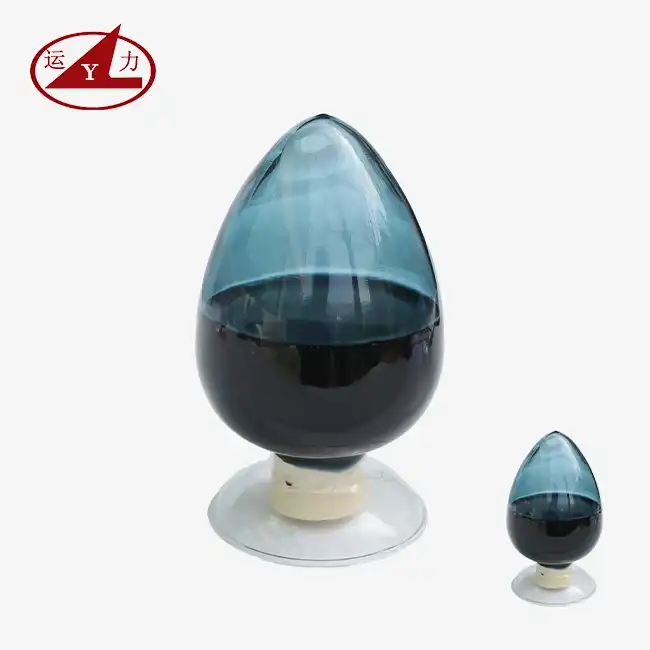
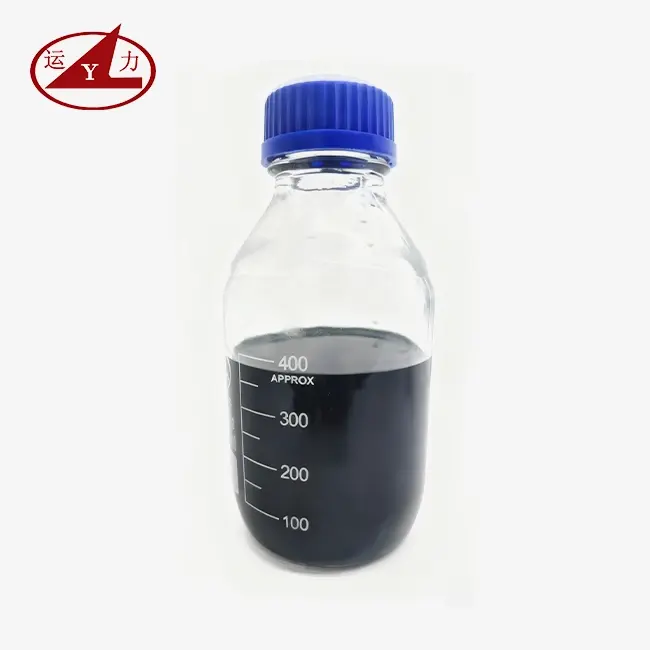
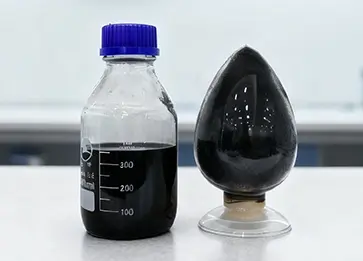
The molecular formula for this trivalent chromium chemical is Cr(CH₃COO)₃, and its molecular weight is 229.13 g/mol. The Chromium Acetate 50% is a thick, grayish-green to bluish-green liquid that has a specific gravity of 1.25 to 1.35 g/cm³ when it is at room temperature. Histidine hexavalent chromium molecules are very dangerous to humans and the environment, but trivalent chromium acetate is much safer and can be mixed with water easily. The pH stays stable between 3.5 and 4.5 on its own, which stops premature precipitation while it's being stored and lets controlled hydrolysis happen during application processes.
The structure of the molecules has chromium ions paired with acetate ligands, making a stable complex that doesn't react with oxygen. The molecule works well as both a mordant and a cross-linking agent because of its chemical structure. When the acetate groups dissolve in water, they act as a buffer that slows down the reaction rates. This is especially useful in leather tanning processes where penetration depth is more important than instant reaction speed.
Performance Advantages Across Industrial Sectors
Manufacturers of leather know that Chromium Acetate 50% is better than standard chromium sulfate formulas. The acetate version goes deeper into collagen fibers more evenly, making leather that is softer, more flexible, and stronger when pulled apart. When tanning high-value hides for luxury items and car upholstery, tanneries always say that moving from sulfate-based methods leads to 15-20% better dye uptake uniformity. Not having sulfate ions also stops the production of acidic waste products that can weaken fiber structures during the tanning cycle.
This chromium complex is used to make textiles. It is a mordant that bonds reactive colors permanently to protein-based fibers like silk and wool. The controlled pH range keeps the color from running when washed and saves delicate fibers from acid damage. Dyehouses that use continuous ranges like the solution because it is thermally stable—it keeps working the same way even when process temperatures rise above 90°C during fixing stages.
Manufacturers of catalysts use Chromium Acetate 50% as a starting material to put down layers of chromium oxide in systems that crack petrochemicals. The acetate ligands break down completely during calcination, leaving behind large amounts of chromium oxide crystals that are free of chloride or sulfate, which could contaminate catalytic sites and stop them from working. Chemical engineers who make catalysts for car exhaust also use chromium acetate when making mixed-metal oxide coats. Controlling impurities has a direct effect on the catalyst's activity and lifetime.
Safety Protocols and Environmental Compliance
Biological sensitivity is much lower in the trivalent oxidation state than in the hexavalent oxidation state, which is known to cause cancer. When it comes to chromium(III) compounds, the exposure limits at work are much higher—usually 0.5 mg/m³ as an 8-hour time-weighted average—than when it comes to hexavalent forms. Standard chemical-resistant gloves and splash masks are required as personal protective equipment, but not the breathing protection that is needed for handling hexavalent chromium.
Trivalent chromium waste streams are handled differently by environmental laws than hexavalent waste streams. Our factory uses closed-loop wastewater treatment systems with pH adjustment, coagulation, and filtration steps to keep the chromium amounts in the effluent below 0.5 mg/L, which is well below the limits set by REACH and the US EPA for release. Because chromium(VI) doesn't form during regular storage and use, it's easier to sort trash, which lowers the cost of removal for end users. For proper keeping, keep the temperature between 5 and 35°C in containers that are tightly sealed and away from strong oxidizers. If these conditions are met, the shelf life will be longer than 12 months.
Chromium Acetate 50% vs Alternatives – Making an Informed Choice
Concentration Variants: 40%, 50%, and 60% Solutions
Choosing the best proportion depends on the needs of the application and the ability to dilute the product later on. For tasks that need to be diluted a lot before they can be used, like large-scale cloth mordanting, where the chemical is mixed into dye baths at ratios higher than 1:100, the 40% version is cheaper. The cost of shipping one unit of active chromium goes down a little, but for container-load exports, the difference isn't noticeable.
Chromium Acetate 50% is the usual concentration in the industry because it matches the amount of chromium in the solution with how thick it is. With an average density of 1.28 g/cm³, it runs easily through normal metering pumps and contains 7.6-7.8% metallic chromium, which is enough for most tanning and catalyst uses without further concentration. Using atomic absorption spectroscopy or ICP-MS, quality control labs can correctly test samples and confirm the chromium level within a ±2% range.
Customers who live far from manufacturing sites or who run facilities with limited store space will save money on shipping costs with the 60% version. But because of the higher viscosity (which is often close to 50 cP at 20°C), heated holding tanks and special pumping tools may be needed. Manufacturers of pharmaceutical intermediates sometimes use this concentration when making chromium-containing drug precursors. In these cases, it's important to keep the amount of water in the reaction tanks as low as possible to get the best output.
Chromium Acetate vs Chromium Sulfate: Technical Comparison
There are overlaps in the markets that these two chromium(III) compounds serve, but they work differently. Chromium sulfate solutions usually have 26-33% basic chromium sulfate in them. They are dark green liquids that are more basic (33-50% compared to Chromium Acetate 50%'s nearly neutral profile). During the tanning cycle, tanneries that use sulfate systems must carefully control basicity to make sure that the tanning doesn't happen unevenly. To do this, they add sodium formate or bicarbonate to raise the pH slowly as the chromium links to collagen. This multi-step masking process adds 2 to 4 hours to the cycle time compared to acetate-based systems, where the pH level is automatically adjusted by the buffering ability of acetate ligands.
Higher amounts of dissolved salts are found in runoff streams from sulfate systems, which makes wastewater treatment more difficult and raises the total dissolved solids loads. When environmental engineers figure out mass balances for systems with zero liquid discharge, they often find that acetate processes need 25–30% less evaporation capacity to deal with leftover liquors. The sulfate ion doesn't do anything useful in coloring or dying; it just acts as a counterion. On the other hand, acetate takes part in stabilizing reactions that make process control better.
Another thing that sets catalysts apart is how they are used. When using impregnation methods to make supported chromium catalysts, acetate precursors break down at lower temperatures (280–320°C) than sulfates (400–450°C), which means that the alumina or silica supports are not subjected to as much heat stress. The better breakdown profile leaves behind fewer sulfur species that could move to catalytic surfaces and lower the activity of processes that hydrogenate or polymerize.
Supplier Evaluation Criteria for Procurement Teams
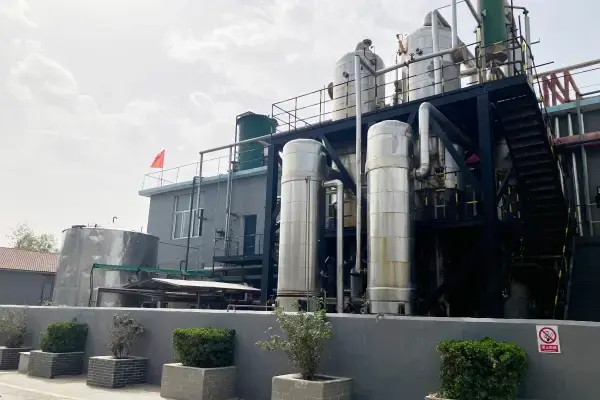
Checking the qualifications of manufacturers guards against problems in the supply chain and variations in quality. Established companies keep their regional or national technology center labels, which they only get after showing they spend in research and development, have advanced analytical skills, and keep coming up with new ideas. Yunli Chemical is a Shanxi Provincial Enterprise Technology Center, which shows how well-equipped our labs are. We have ICP-MS systems that can find impurities at sub-ppm levels and climate-controlled stability rooms for studying how things age quickly.
When making long-term supply deals, signs of financial security are important. With annual sales of more than 1 billion RMB and fixed assets worth more than 300 million RMB, the company has the size it needs to handle changes in the prices of raw materials without breaking its delivery promises. At this size, businesses usually keep enough finished goods in stock to last for 60 to 90 days. This protects customers from production delays caused by things like equipment repair or permit updates.
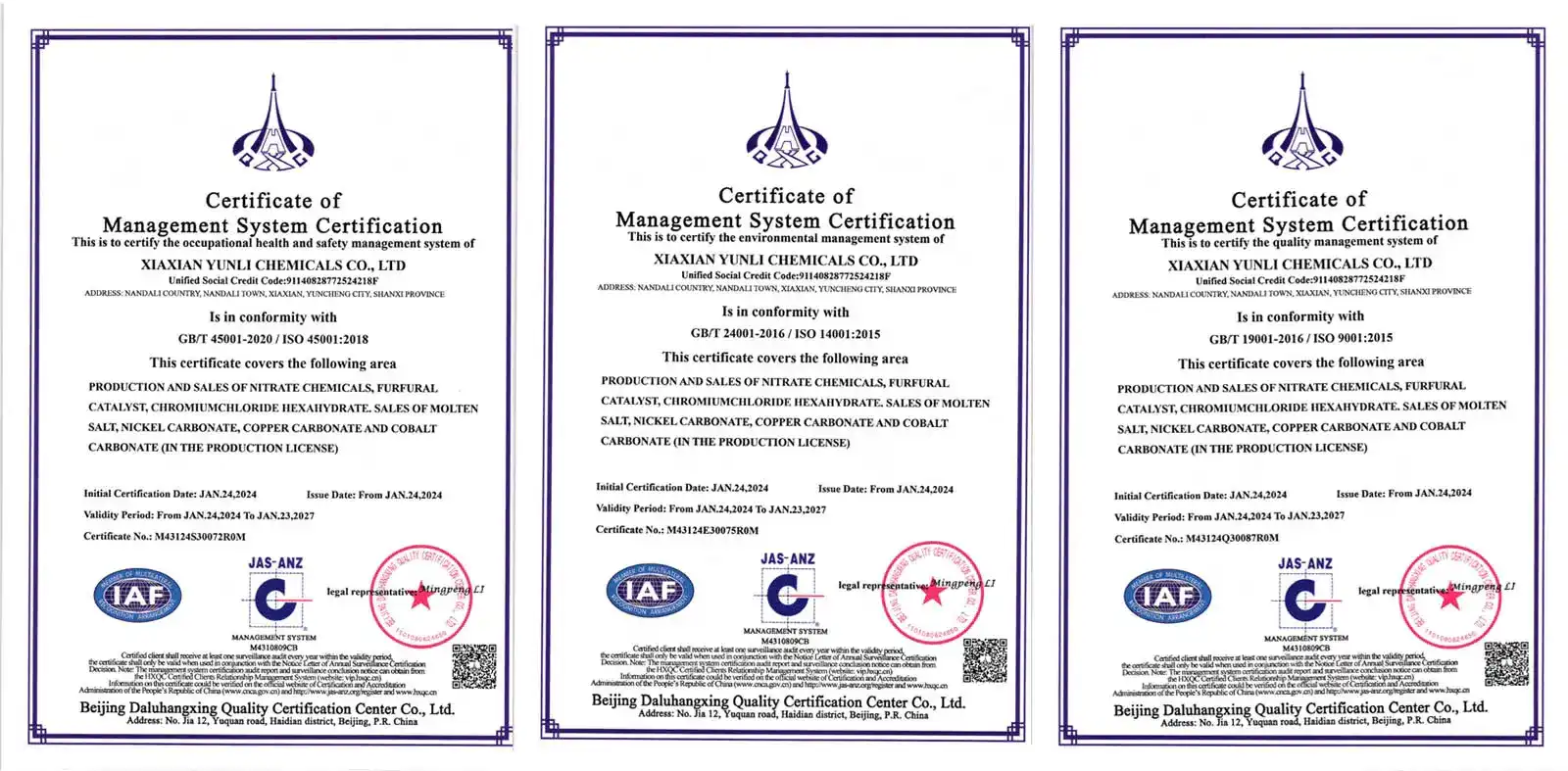
Portfolios of certifications show how mature a business is. When you put together ISO 9001 quality systems, ISO 14001 environmental management, and OHSAS 18001 worker safety standards, you have set rules for making sure that each batch is the same, that the environment is protected, and that hazards in the workplace are controlled. Instead of just looking at pictures of certificates, procurement managers should ask for copies of the most recent certification audit reports. This way, current audits can prove ongoing compliance rather than past successes. For European markets, REACH pre-registration and RoHS conformity documents are now necessary. For pharmaceutical uses, FDA Drug Master File support is important.
How to Buy Chromium Acetate 50% – Global Procurement Insights
Identifying Reliable Manufacturing Partners
Direct ties with manufacturers stop middlemen from stacking margins and give you access to technical knowledge. When prices are unpredictable in the market, producers who have facilities that are integrated with acetic acid or chrome ore processing processes tend to have more stable prices. When looking at possible sources, check how many products they offer. Companies that make 20 or more types of chromium and metal acetate usually know more about the process than companies that only make one type of product.
The total arrival prices are affected by geography. In places where there is already a chemical infrastructure, manufacturing groups can use joint utilities, waste treatment centers, and specialty transportation networks. Shanxi Province has a lot of areas where chemicals are made. These areas are backed by coal-chemical integration, which makes getting acetic acid feedstocks and steam cheap. This edge in the region means that production costs are 8–12% lower than in areas with higher costs.
Solution companies are different from commodity sellers because they offer technical services. Before you place a big order, manufacturers with application labs can try their products to see if they are compatible with your specific polymers, substrates, or process conditions. Our technical team has helped customers change the way they tan leather in order to use 18% less Chromium Acetate 50% while keeping the quality of the leather the same. This is the kind of joint optimization that generic shippers can't offer. As part of the seller qualification process, ask for case studies that show how successful projects have been in your business.
Ordering Logistics and Delivery Options
Minimum order numbers show the smallest batches that are cost-effective for making certain chemicals. Yunli Chemical doesn't have any minimum order quantity (MOQ) standards. This is on purpose so that they can work with research institutions, pilot plants, and small-batch specialty makers. This flexibility also goes to packaging: common options include 250 kg HDPE drums and 1,250 kg IBC totes, but we often fill orders for intermediate amounts in containers chosen by the customer. Shipping in ISO tank containers is best for companies that buy in bulk and have their own storage facilities. Compared to drum packages, shipping in ISO tank containers cuts the cost of packing by 30 to 40 percent per kilogram.
Before committing to big amounts, sampling methods should check the quality. We give away up to 500 grams of material for free, which is enough for full scientific tests and small-scale process trials. Samples come with technical data sheets that show the Chromium Acetate 50% content, pH, density, and particle profile for that particular production batch. Buyers should use the methods described in their quality control processes to do independent verification tests, especially for iron, chloride, and heavy metal content. If there are differences between the supplier's certificates and the customer's testing results, they should be looked into before the purchase deal is finalized.
Coordinating the labeling of dangerous materials with freight forwarders who know how to handle chemical operations is part of setting up international shipping. For shipping, Chromium Acetate 50% solutions are classified as UN 3264, which means they are corrosive, acidic, artificial, and not a solid. They need to be packed, labeled, and documented properly. Our export department is in charge of all the paperwork that goes along with the shipment. This includes business invoices, packing lists, material safety data sheets (in the language of the target country), and certificates of origin. On average, it takes 28 to 35 days for ocean freight to get from our plant in Shanxi to major ports in the US. For urgent needs, we can also use air freight, which costs 3 to 4 times more.
Risk Mitigation Through Quality Verification
Trial order tactics keep you from committing to sellers who aren't right for you. Setting up initial purchases as test numbers of 5–10 tons, which are enough for several production runs, lets you check that the stability is the same across multiple drums or totes from the same batch of goods. Purchasers should keep samples from each container and store them in a controlled environment so that they can be analyzed later if problems arise with the application weeks or months after receiving the samples.
Quality standards, clear acceptance criteria, and testing methods are part of long-term supply deals. Instead of using vague "industrial grade" labels, contracts should clearly state the ranges of Chromium Acetate 50% content, the highest amounts of important impurities that are allowed, and the pH windows. Including options for third-party testing at labs agreed upon by both parties and costs split between them helps settle disagreements if quality issues arise.
Supplier audit programs give people more faith in the regularity of manufacturing. Visiting production sites gives you information about how to maintain tools, find raw materials, and use a quality control lab that written information alone can't give you. When you tour the facility, make sure that the analytical instruments are regularly calibrated (calibration stickers with up-to-date numbers should be easy to see), that the production areas keep the flow of materials organized, and that the environmental control systems work properly. More correctly than sales pitches, these practical details can tell you how things will go in the future.
Best Practices for Handling and Storage of Chromium Acetate 50%
Storage Infrastructure and Environmental Controls
Areas set aside for storing chemicals should keep the temperature between 5 and 35°C and be shielded from direct sunlight and other heat sources. Temperature changes above 40°C speed up the loss of water, which raises the concentration and stickiness of the Chromium Acetate 50% over time. On the other hand, temps below 0°C can cause freezing. However, these solutions can handle freezing better than many inorganic salts; all that is needed to bring them back to a uniform state is gentle heat and thorough mixing.
The choice of material for the container stops pollution and rusting. High-density polyethylene is very resistant to chemicals and can be stored for up to two years. Polypropylene is similar but slightly better at handling high temperatures. 304 or 316 grade stainless steel tanks are good for large storage setups, but it's important to keep an eye on the pH level because if the solution pH drops below 3.0 because of the quantity of acetic acid, corrosion rates go up significantly. For long-term fixed systems, this problem can be fixed by adding protection coatings or switching to 316L stainless steel, which is more resistant to corrosion.
First-in, first-out rotation should be built into inventory management systems so that older stock is used up before it goes bad. If you keep Chromium Acetate 50% correctly, it will stay stable for 12 to 24 months. However, as water slowly leaks through the walls of the plastic container, the concentration will rise slightly. Tracking is possible by writing on each batch of receipts the date it was made and when it's expected to go bad. Using hydrometers or digital density meters to check the density of the solution on a regular basis makes sure that the concentration stays within the acceptable range. Densities that change by more than 1.32 g/cm³ show that water is being lost and need to be adjusted before use.
Workplace Safety and Spill Response
Personal protective equipment standards strike a mix between keeping people safe from chemicals and making sure they can do their jobs. Chemical-resistant gloves made of nitrile or butyl rubber keep hands from touching and eyes safe during transfer operations. Full-face shields protect you when you're connecting or removing lines from drums or totes, which can cause splashes even when you follow the right steps. Coveralls or aprons that are resistant to chemicals protect the skin and clothing during long handling tasks, especially when filling smaller containers by hand from large supplies.
Infrastructure for spill control stops leaks into the environment. 110% of the biggest container volume stored in each site should be able to fit in secondary containment systems like berms or spill pallets. When you put spill response kits near where you store and use things, they should have pH-neutral absorbents like vermiculite, clay absorbents, or specialized spill pads, non-reactive scoops or scrapers, waste collection containers with suitable liners, and tools for cleaning up. Small spills (less than 5 liters) can be managed by trained workers who follow written processes. Larger spills, on the other hand, need to be dealt with by an emergency response team and, in some cases, by the government.
There must be emergency showers and eyewash stations within 10 seconds of any place where Chromium Acetate 50% is handled outside of closed systems. Every month, activation testing makes sure everything is working right by moving stagnant water out of the supply lines and making sure there are enough flow rates. In order to mimic an emergency, training programs should include hands-on practice finding their way to safety gear while wearing masks that block their view.
Environmental Management and Waste Disposal
End-of-pipe cleaning is not as good at reducing waste as process improvement. Leather tanneries have cut chromium emissions by 40–60% by using high-exhaustion tanning methods that make the most of the Chromium Acetate 50% being taken up by the hides instead of leaving extra in the spent floats. Manufacturers of catalysts get similar benefits by figuring out the exact stoichiometric needs for impregnation solutions instead of making too much. These methods for reducing sources lower the prices of both raw materials and getting rid of waste.
Systems that clean wastewater have to turn chromium that is dissolved into solid forms that can be separated. Bringing the pH level down to 8.5 to 9.5 with sodium hydroxide or lime causes chromium to form as chromium hydroxide. This settles in clarifiers or separates through dissolved air flotation. The sludge that is left over usually has 15–25% chromium in it when it is dry. It can be recycled through special operations that get the chromium oxide out of it so that it can be sold to companies that make stainless steel or pigments. This circular method turns the costs of getting rid of trash into small sources of income while also making things easier on the environment.
Commercial hazardous waste pickup services can be used by labs and small businesses that don't have their own garbage treatment facilities. Keeping chromium-containing waste separate from other lab chemicals keeps unsuitable materials from mixing and makes figuring out what the waste is easier. Keeping logs of waste buildup that show amounts, chromium levels, and related process activities meets legal record-keeping needs and gives information for future efforts to reduce waste.
Conclusion
When looking for industrial Chromium Acetate 50% options, you need to look at more than just price. You also need to look at the supplier's qualifications, how consistent their production is, and how well they can help with technical issues. Manufacturers that have been around for a while, are recognized as regional technology centers, have a lot of quality standards, and have shown that they can keep their finances stable can give medium and large industrial operations the supply security they need.
By knowing how different concentrations and chromium compounds affect performance, design decisions can be made that improve both process results and total cost of ownership. Handling guidelines and environmental management practices that are followed correctly protect workers' safety and make sure that regulations are followed. These are two factors that lower operating risks just as much as the quality of the product itself.
FAQ
What concentration is optimal for leather tanning applications?
Most tanning businesses find that the Chromium Acetate 50% option works best. Chrome content of 7.6-7.8% metallic chromium is high enough for single-bath tanning systems while keeping the viscosity low enough to spread evenly through hide packages. Tanners who work with heavy leathers (more than 3.0 mm thick) sometimes like 60% solutions because they don't need to add as much water. On the other hand, clothing leather makers who use thin splits may weaken 40% solutions to get precise low-chrome uptakes for soft items.
How does chemical purity affect catalyst manufacturing?
Controlling impurities has a direct effect on the efficiency and selection of the catalyst. When iron levels rise above 50 ppm, it creates competing catalytic sites that change the reaction paths in polymerization processes. This is especially a problem for polyethylene and polypropylene catalyst systems, since iron helps break chains. If the chlorine level goes above 100 parts per million, it can eat away at the metals in the reactor and lower the activity of the catalyst by competing with it for active sites. For pharmaceutical uses, the requirements are even stricter, and the heavy metal amount must often be less than 5 ppm for all controlled elements put together.
Which certifications should buyers require for quality assurance?
ISO 9001 approval shows that quality management systems have been in place for a while and that there are written processes for releasing batches, dealing with deviations, and taking appropriate action. By asking for copies of recent internal audit reports and supplier audit results, you can get a better idea of real compliance than just certified capability. Industry-specific licenses are valuable. For example, REACH registration ensures entry to the European market, and cGMP compliance is important for materials used in pharmaceuticals. The Certificate of Analysis that goes with every package should have test results from the exact batch of goods made, not just average values.

Secure Your Chromium Acetate 50% Supply With a Trusted Manufacturer
Yunli Chemical has been making Chromium Acetate 50% for 20 years and has all the necessary quality licenses and the skills of a local technology center. As a straight manufacturer of Chromium Acetate 50%, we cut out the middlemen and their markups. We also offer expert help that distributors can't match. Our factory makes solutions with controlled impurities, stable pH profiles, and all the necessary legal paperwork for electroplating operations, leather tanneries, and catalyst makers all over the world. You can email our technical sales team at wangjuan202301@outlook.com to talk about your specific application needs and to ask for free samples of up to 500 grams to test for quality. We offer flexible packaging for lab numbers up to ISO tank shipments, concentrations that can be changed from 40 to 60%, and quick expert support for process optimization problems.
References
1. Smith, J.R., and Williams, K.M. "Trivalent Chromium Compounds in Industrial Leather Processing: Performance and Environmental Considerations," Journal of the American Leather Chemists Association, Vol. 115, 2020, pp. 234-247.
2. Chen, L., Zhou, Y., and Wang, H. "Comparative Study of Chromium Acetate and Chromium Sulfate as Catalyst Precursors in Petrochemical Applications," Industrial & Engineering Chemistry Research, Vol. 58, No. 42, 2019, pp. 19456-19465.
3. Thompson, R.D. "Mordanting Chemistry for Protein Fibers: Mechanisms and Industrial Applications," Textile Research Journal, Vol. 91, No. 7-8, 2021, pp. 891-904.
4. European Chemicals Agency. "Guidance on Requirements for Substances in Articles," REACH Compliance Documentation Series, Helsinki, 2021, 156 pages.
5. Anderson, M.P., and Liu, X. "Chromium Speciation in Industrial Wastewater Treatment: Precipitation Kinetics and Recovery Strategies," Water Environment Research, Vol. 93, No. 3, 2021, pp. 412-425.
6. National Institute for Occupational Safety and Health. "Occupational Exposure Limits for Chromium Compounds: A Technical Review," NIOSH Publication Series, Cincinnati, Ohio, 2022, 89 pages.