


Where can I find aluminum nitrate nonahydrate with certification for lab use?
To find approved Aluminum Nitrate Nonahydrate for lab use, you need to carefully look at providers who follow strict quality standards and keep full records. We suggest getting your supplies from ISO-certified companies like Yunli Chemical. This company gives you full certification paperwork, like a COA and an MSDS, which makes sure you're following international lab standards. Direct relationships with manufacturers get rid of middlemen, making it easier to track products and make sure they meet the same standards, which is important in study settings. Suppliers that have been around for a while and have technology centers at the provincial level can promise the purity levels and impurity control that lab-grade uses need. This makes them trusted partners for both trial samples and long-term purchasing deals.


Understanding Aluminum Nitrate Nonahydrate: Properties and Specifications
Chemical Composition and Molecular Structure
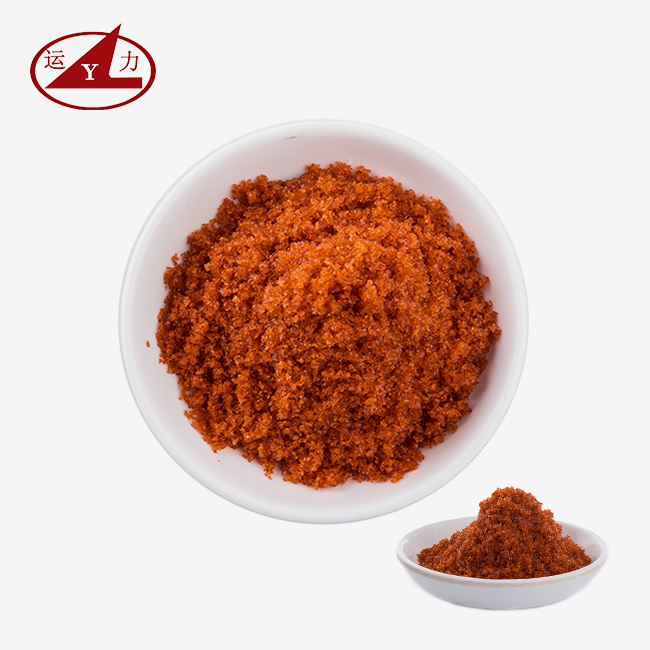
Its CAS number is 7784-27-2 and its molecular weight is 375.13 g/mol. Aluminum Nitrate Nonahydrate has the formula Al(NO3)3·9H2O. This white crystalline substance doesn't smell and has strong hygroscopic properties, which means it easily takes in water from the air. The nonahydrate form is different from dry forms because it has nine water molecules bonded within its crystal structure. This directly affects how it reacts in the lab.
The structure of the substance affects how it reacts with other chemicals and how it stores. It melts at 73.9°C from a solid form to a liquid form that dissolves in the water that it formed in. When heated above 150°C, thermal breakdown happens, releasing nitrogen oxides and finally making aluminum oxide. It is very important to understand these thermal qualities when choosing this material for processes that need to use heat or keep the temperature very precise.
Physical Properties and Solubility Characteristics
Because of how easily it dissolves, this aluminum salt is very useful for lab work. At 25°C, it dissolves easily in water (64 g/100 mL), which makes it easy for researchers to make concentrated stock solutions. This high solubility in water makes it easier to spread out evenly in reaction mixtures and guarantees total dissolution without any leftover particles that could mess up measures or make it hard to repeat an experiment.
There are different ways that solubility behaves in organic solvents. The chemical doesn't dissolve well in alcohols or ethylene glycol, which can be helpful when steps like selective precipitation or purification are needed. Because of breakdown processes that make aluminum hydroxide and free nitric acid, solutions have an acidic pH. This acidity needs to be taken into account when choosing suitable reaction vessels and glassware to keep the equipment from breaking down during long tests.
Safety Considerations and Handling Protocols
The fact that Aluminum Nitrate Nonahydrate can oxidize things means that it needs to be handled safely in the lab. As a Class 5.1 oxidizer, it can make the burning of organic materials stronger. It should be kept away from flammable substances, reducing agents, and materials that can catch fire. Because it is acidic and oxidizing, it irritates skin when it comes into contact with it. This is why chemical-resistant gloves, safety masks, and lab coats must be worn during handling processes.
When dealing with this substance, it's important to have good ventilation, especially when heating it up, which can release nitrogen oxide fumes. These vapors are dangerous to breathe in and need to be contained in a fume hood. In order to clean up a spill, weak bases like sodium bicarbonate solution should be used instead of straight water application, which could cause heat and splashing. In places where this drug is used often, emergency eyewash stations and safety showers must always be easy to get to.
Key Certification Standards and Quality Criteria for Lab Use
International Quality Standards and Compliance Frameworks
Aluminum Nitrate Nonahydrate for laboratories has to meet strict quality standards set by international standards groups. When a company has ISO 9001 approval, it means they have quality management systems in place that make sure production processes are consistent, batches are all the same, and quality control methods are written down. This certification gives purchasing teams faith that suppliers check the quality of their products in a planned way instead of randomly trying them.
REACH compliance is now a must for suppliers who want to do business in Europe and with global research centers. This set of rules needs a lot of safety information about chemicals, like toxicology profiles, studies of their effects on the environment, and advice on how to handle them safely. Suppliers who show they follow REACH have spent a lot of time and money characterizing their products in great detail. This gives buyers confidence that the material has been carefully checked for safety concerns related to human health and the environment.
GMP approval is mostly used in pharmaceutical research where Aluminum Nitrate Nonahydrate is used as a raw material or to speed up the production process. Good Manufacturing Practices make sure that factories have controlled settings, cleaning methods that have been proven to work, and strict systems for keeping records. To meet regulatory requirements for drug development paths, research institutions that are making pharmaceutical goods or doing preclinical studies usually need chemicals that are GMP-certified.
Purity Specifications and Analytical Testing Methods
When it comes to lab-grade drugs, purity levels are the most important quality factor. For general lab use, standard specifications usually call for purity of at least 98.0%. For electronic-grade uses, the purity must be 99.9% or better. These purity standards have a direct effect on the repeatability of experiments because small impurities can mess up catalytic reactions, analytical measures, or synthesis routes in sensitive situations.
Methods for analytical testing are the building blocks of quality assurance. Inductively Coupled Plasma Mass Spectrometry, or ICP-MS, can find metallic impurities at parts-per-million levels. This is very important for finding iron contamination below 0.01% or heavy metals below 0.005%. Atomic absorption spectrometry is an additional way to check for certain elemental pollutants. Titration methods find the amount of active aluminum and confirm stoichiometric ratios. Moisture analysis shows the nonahydrate form instead of damaged forms with different water contents.
Essential Documentation: COA and MSDS Requirements
Certificates of Analysis are like a quality ticket for each batch of production. They show how the real test results compare to the limits set by the specifications. A full COA has the batch number, the date it was made, the date it goes bad, and complete analytical data about the product's purity, impurity profiles, physical qualities like pH and appearance, and compliance statements. Professionals in procurement should make sure that the COA data matches the needs of their particular application and that the testing methods are clearly stated.
Material Safety Data Sheets (MSDS) have a lot of safety information in a way that follows the Globally Harmonized System (GHS) rules. Identification, classification by hazard, composition, first aid, firefighting, accidental release responses, handling and storage guidelines, exposure controls, physical and chemical properties, stability and reactivity data, toxicological information, ecological impact, disposal considerations, transport regulations, and regulatory compliance status are all covered in these sixteen-section documents. Suppliers who give both COA and MSDS show that they care about being open and keeping customers safe.

Comparison of Aluminum Nitrate Nonahydrate with Other Aluminum Salts for Lab Applications
Hydration State Variations and Reactivity Implications
The nonahydrate form is better than both the pure Aluminum Nitrate and the tetrahydrate form in a number of ways. Anhydrous types are more reactive because they don't contain any water molecules. This can make them harder to handle and store in damp places. The linked water in the nonahydrate keeps it stable during shipping and storage, but it will naturally escape during thermal breakdown. This controlled release of water makes it better for sol-gel synthesis and catalyst preparation, both of which need to control hydration because it affects the shape of the end product.
Tetrahydrate forms have qualities that are halfway between dry and nonahydrate forms because they have fewer water molecules. The two forms have very different storage stability. Under normal lab settings, the nonahydrate form is less likely to dry out. This advantage of stability lowers the chance that the makeup will change over long periods of time. This keeps the stoichiometry stable for quantitative analysis work and preparative chemistry where accurate aluminum content is important.
Alternative Aluminum Salts: Sulfate and Chloride Comparisons
It is cheaper to use aluminum sulfate, but it can cause problems with some chemical or catalytic processes because it releases sulfate ions. Sulfate contamination is especially bad in situations where ion-exchange cleaning is needed later or where sulfur-sensitive methods are used later. Aluminum Nitrate Nonahydrate offers an alternative without introducing sulfate ions, though its different solubility and pH profiles also require careful consideration. Different solubility and pH profiles are also seen in the sulfate form, which makes solutions that are more acidic and may need extra steps to neutralize them.
Aluminum chloride has problems with corrosion that the nitrate form doesn't have. Chloride ions damage stainless steel tools and add halide pollution that hurts some catalyst systems, mostly those used in industrial processes. The nitrate version doesn't have these rust problems and gives a better way for the heat to break down pure alumina. When making catalyst supports or high-purity aluminum oxide, the nitrate precursor gives better results because it doesn't have any halide impurities that would hurt the catalytic activity.
Where and How to Source Certified Aluminum Nitrate Nonahydrate
Identifying Reputable Manufacturers and Suppliers
The most safe places to get laboratory-grade drugs are from well-known companies that have been making them for decades. Companies with provincial-level technology center certifications show that they keep investing in research and quality improvement projects. These names, which are given by the government after a thorough review, show advanced technical skills that go beyond basic manufacturing skills. Manufacturers with these kinds of qualifications usually keep high-tech labs with ICP-MS and atomic absorption spectrometers so that they can check the quality of their products thoroughly before putting them on the market.
The size of the production gives you an idea of how reliable and financially stable a source is. Manufacturers with yearly sales of more than one billion RMB and fixed assets worth more than 300 million RMB have the tools and facilities to keep supplies steady even when the market is down. This level of financial strength allows the business to run continuously, avoids supply disruptions caused by lack of cash, and invest in high-quality systems that smaller businesses can't afford. If supply chain managers want to work with suppliers for a long time, they should look for ones that are both technically excellent and financially stable.
Procurement Channel Comparison and Selection Strategy
When you deal directly with a maker, you avoid having to pay markups to middlemen and can talk more easily about specs, customization needs, and technical support. By buying directly from the factory, you can talk to production staff who know the product's features and specs down to the smallest detail. This makes it easier to solve problems when they come up during use. Companies that run their own export offices make it easier to do business with other countries because they handle all the paperwork, make sure they follow customs rules, and coordinate operations, which can be hard to do when buying through a middleman.
Authorized dealers play important parts in markets that need to have a local presence to follow the rules or get goods quickly. When compared to foreign shipping, lead times are shorter when regional wholesalers keep stock on hand so that products can be shipped right away. But buyers should make sure that the wholesalers they work with only get their products from certified makers and can show full paperwork chains that go all the way back to the factory where the products were made. The trade-off between working directly with a maker and working with a distributor relies on how much you need to buy, how you want to customize it, and how important it is to talk to production experts about technical issues.
Online markets make it easy to look around, but you need to do more research on the qualifications of suppliers. Platforms give buyers access to many vendors, but it is up to the buyer to make sure that the vendors have the right licenses, production skills, and quality systems in place. Before signing a large-volume deal, procurement workers who use online channels should ask for detailed paperwork, get references from current customers, and think about sample orders. It might look like online shopping saves money, but that savings could go away if there are problems with the quality of the products or supply problems.
Certification Verification and Compliance Assurance
Verification of seller licenses stops false claims and makes sure that quality standards are really being met. Buyers should ask for certificate numbers and check the validity of the certificates in the records of the organizations that issued them. Aluminum Nitrate Nonahydrate is one example of a specialty chemical whose quality claims should be verified through such certification checks. ISO certification groups keep public records of companies that are recognized, the scope of their certification, and when it expires. It doesn't take long to check seller claims against these formal records, and it gives solid proof of certification status.
In order to move dangerous goods legally, sellers must keep the right records of classification, packing, labeling, and paperwork in line with international transport rules. Shipments of Aluminum Nitrate Nonahydrate, which is a Class 5.1 oxidant, are covered by UN number 1438. Declarements of dangerous products, emergency reaction information, and transport-specific MSDS are all parts of the right shipping paperwork. Suppliers who regularly deal with foreign chemical trade know how to handle these rules. On the other hand, suppliers who don't do it as often may cause shipment delays or regulatory violations that throw off buying plans.
Best Practices for Ordering and Managing Aluminum Nitrate Nonahydrate Inventory
Balancing Cost with Certification Quality
To optimize procurement, you need to look at the total cost of ownership instead of just the unit price. Certified goods that cost more often offer better value by reducing mistakes in experiments, improving reproducibility, and lowering the number of safety issues. Lower-cost options that don't have the right certifications could have hidden costs like rejecting batches, damaging equipment with contaminants, or not following the rules correctly, which could stop research projects.
Volume agreements make it possible to negotiate prices while keeping the supply stable. Manufacturers usually offer tiered prices based on annual volume promises, with lower unit costs for bigger deals. This system is good for everyone because it gives suppliers a stable supply of goods, which helps them plan their production more efficiently, and it gives customers lower costs, which helps them stick to their budgets. Tonnage-level agreements work well for schools that have ongoing needs across many production lines or study groups.
Inventory Management and Storage Best Practices
Chemical purity is maintained throughout the span of a product if it is stored properly. Aluminum Nitrate Nonahydrate needs to be stored somewhere cool, dry, and away from materials that won't work with it. Controlling the temperature below 25°C slows down the rate of breakdown and the absorption of water, while controlling the humidity stops deliquescence, which changes the concentration and handling qualities. Separated chemical storage places with enough ventilation, secondary containment, and separation by danger class keep the lab safe and protect the quality of the products.
Management of the shelf life stops decay that could ruin the results of an experiment. Properly kept items stay stable for a long time, but keeping track of receipt dates and using first-in, first-out rotation makes sure that older stock is used up before newer batches arrive. Before each use, the container should be looked at visually for darkening, caking, or damage. Setting maximum storage times based on how sensitive an application is provides a regular inventory turnover that keeps product performance uniform.
Building Supplier Relationships Through Effective Communication
When you first contact a provider, you should be clear about what you need, such as the purity standards, the maximum impurity levels, the type of packaging you want, when you need it delivered, and any paperwork that is needed. Detailed demand specifications let sellers prove their abilities and figure out right away if they might need to make any changes. Technical buyers should talk to both business partners and technical staff to make sure that everyone from the start understands the needs of the application and the quality standards that are expected.
Before committing to big quantities, sample assessment programs make sure that the product is suitable. Reliable sellers give away free samples, usually up to 500 grams, so that you can test them thoroughly in real-life situations. A full review of a sample should check the analytical specifications, try its performance in target uses, and check to see if all the paperwork is complete. This investment in validation up front lowers the chance of expensive specification fails after large purchases have been made, and it also sets performance standards for ongoing quality tracking.
Conclusion
To get certified Aluminum Nitrate Nonahydrate for lab use, you need to pay close attention to the supplier's qualifications, quality paperwork, and product specs. Manufacturers that are ISO-certified, have well-established technology centers, and can do a wide range of analytical tasks are reliable enough for critical study settings. Direct manufacturer partnerships are better than intermediary outlets when it comes to price, technical help, and being able to see what's going on in the supply chain.
When buying things, it's important to find a good mix between cost and certification quality. High-quality materials are worth the extra money because they make things easier to copy and lower practical risks. Clear communication, careful sample evaluation, and ongoing quality tracking that makes sure standards are still being met are the building blocks of good provider relationships.

FAQ
What certifications should I verify when purchasing lab-grade aluminum nitrate nonahydrate?
Check to see if the company has ISO 9001 quality management certification, REACH approval for European markets, and GMP certification for medicinal uses. Ask for copies of up-to-date certificates with expiration dates and check the registration numbers in the records of the organizations that issued them. Make sure that sellers include batch-specific COA and GHS-compliant MSDS paperwork with every package.
How can I authenticate chemical purity and supplier reliability?
Ask for a thorough COA that shows how the sample was analyzed and the real test results for heavy metals, metallic impurities, and purity. Find out what kinds of analysis tools they have, such as ICP-MS and atomic absorption spectrometry. Check the credentials of the seller, such as their production history, financial security, and certifications for their technology centers. Before buying in bulk, you might want to order some trial samples to make sure the specs will work in your situation.
What storage conditions maintain product stability?
Keep things in cool, dry places below 25°C with managed humidity to keep them from absorbing water. Always cover things well when they're not in use. Keep away from materials that don't work well together, like flammables, reducing agents, and combustibles. Use auxiliary filtration and make sure there is enough air flow. Follow the "first-in, first-out" rule for inventory and check packages often for signs of wear and tear.
Partner with Yunli Chemical for Certified Aluminum Nitrate Nonahydrate Supply
Yunli Chemical is a reliable source for Aluminum Nitrate Nonahydrate. They have been in business for more than twenty years and make more than one billion RMB in sales every year. Our ISO 9001, ISO 14001, and OHSAS certifications show that we are dedicated to meeting the safety, quality management, and environmental standards needed for lab uses.
As a well-known Shanxi Provincial Enterprise Technology Center, we keep up-to-date analysis tools like ICP-MS and atomic absorption spectrometry, which makes sure that impurities are strictly controlled for sensitive study uses. We offer factory-direct prices, solutions that are tailored to your needs, concentration-adjusted solutions, and free samples of up to 500 grams to help you with your evaluation. Email our technical team at wangjuan202301@outlook.com to talk about your unique needs and get full product information to help you make your purchase choice.
References
1. International Organization for Standardization. "Quality Management Systems — Requirements for Chemical Manufacturing." ISO 9001:2015 Standards Documentation, 2015.
2. European Chemicals Agency. "Registration, Evaluation, Authorisation and Restriction of Chemicals: Aluminum Nitrate Guidance." REACH Compliance Framework, 2020.
3. American Chemical Society. "Analytical Methods for Inorganic Salt Purity Verification in Laboratory Applications." Journal of Chemical Education, Vol. 98, No. 4, 2021, pp. 1247-1256.
4. National Institute for Occupational Safety and Health. "Handling and Storage Guidelines for Oxidizing Inorganic Salts in Laboratory Environments." NIOSH Chemical Safety Manual, 2019.
5. Society for Chemical Manufacturing. "Best Practices in Chemical Procurement: Quality Assurance for Research-Grade Reagents." Industrial Chemical Sourcing Guidelines, 2022.
6. U.S. Department of Transportation. "Hazardous Materials Regulations for Oxidizer Transport and Classification." CFR Title 49 Transportation Standards, 2023.