


Where can I find ferric nitrate nonahydrate with the highest purity grade?
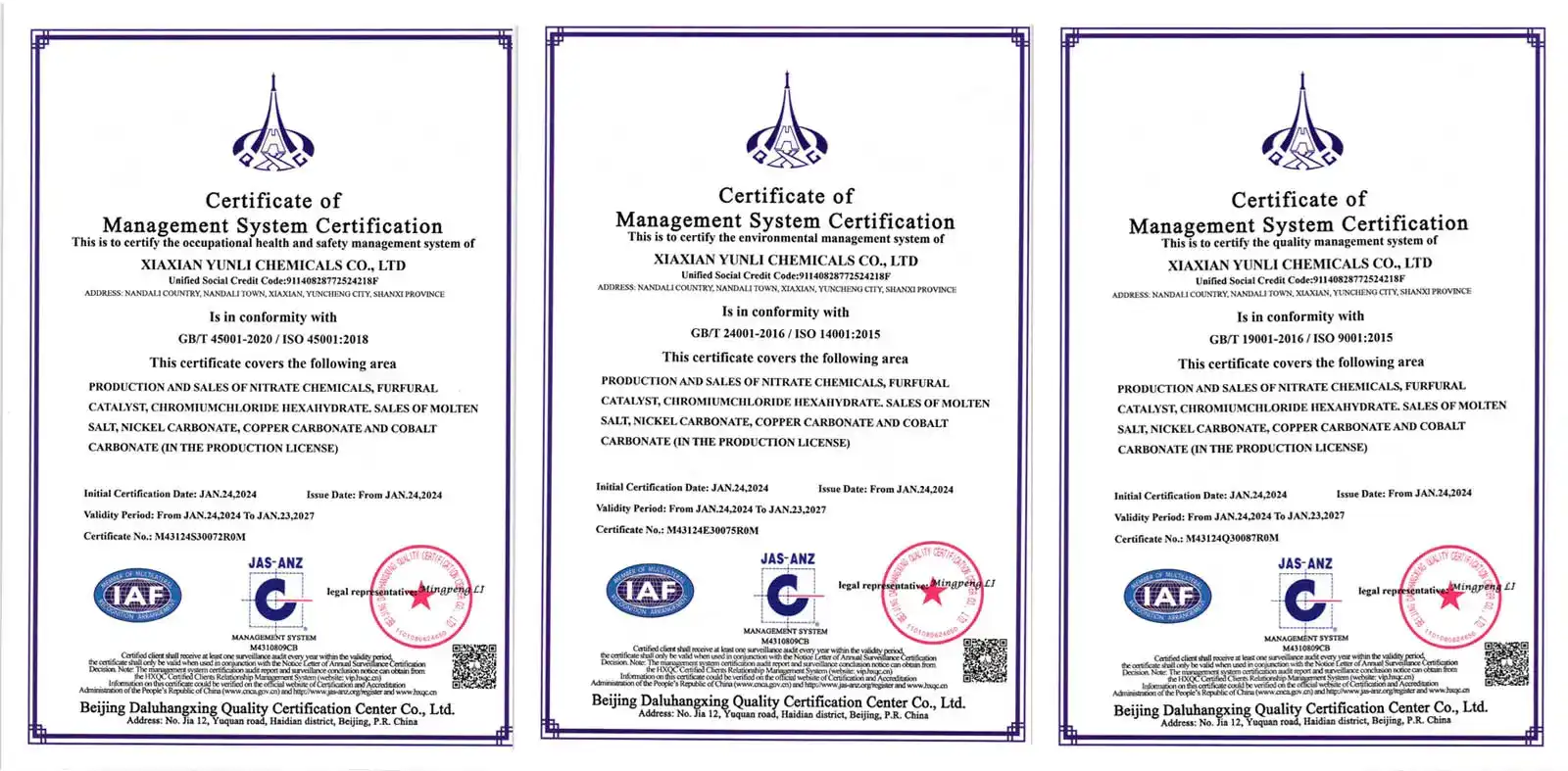
Industrial buying workers need trusted sources that promise regular quality and full paperwork when they are looking for the purest grade of Ferric Nitrate Nonahydrate. Yunli Chemical is one of the best companies that makes Fe(NO₃)₃·9H₂O. Their products are very pure (99.9%), have very few impurities (≤30ppm iron content, which can be lowered to ≤10ppm for certain catalyst uses), and are fully certified to meet ISO 9001, ISO 14001, and OHSAS standards. Our plant uses cutting-edge analysis tools to keep a close eye on quality. For businesses that need very pure chemicals, we offer fully customized formulas and full expert support.
Understanding Ferric Nitrate Nonahydrate and Its Purity Importance
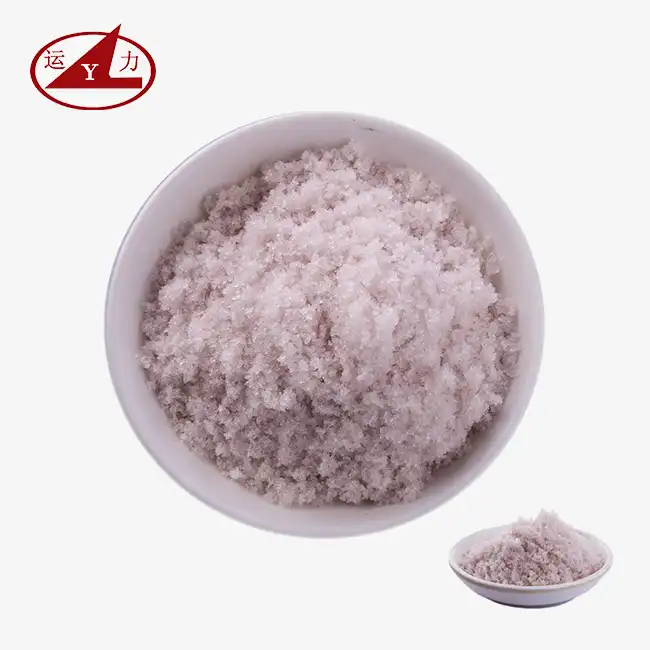
Ferric Nitrate Nonahydrate is an important chemical substance that can be identified by its molecular formula Fe(NO₃)₀·9H₂O and its molecular weight of 404.01 g/mol. It is very easy for this purple solid substance to dissolve in water, ethanol, and acetone, which makes it very useful in many commercial settings. The compound's ability to oxidize and its thermal breakdown profile at 125°C make it useful in the production of catalysts and the treatment of metals.
Chemical Properties and Stability Characteristics
This iron nitrate substance is unique because it has a specific density of 1.68 and a freezing point that is not very high (47.2°C). Because of these properties, it needs to be handled in a certain way, especially since it is liquefiable and easily oxidizes. Because it breaks down smoothly during heat processing, the material is very useful for making high-purity iron oxide catalysts without adding alkali or sulfur toxins.
When reviewing providers, it's important to know how quality levels affect the results of the process. Higher purity grades directly lead to better reaction efficiency, less poisoning of the catalyst, and more consistent products. Formulations with very low amounts of trace metals are especially helpful for industries like electronics, medicines, and specialty chemicals.
Impact of Purity on Industrial Applications
Preparing catalysts, electroplating, and precision etching are all manufacturing processes that need very high purity standards to avoid costly production failures. Impurities like heavy metals, chlorides, and sulfates can really mess up the reaction rates and quality of the end result. For advanced uses in making semiconductors and pharmaceutical intermediates, the purity level needs to be higher than 99%, and there must be strict limits on certain contaminants.
Criteria to Identify the Highest Purity Ferric Nitrate Nonahydrate
To evaluate Ferric Nitrate Nonahydrate pure grades, you need to look at a lot of business norms and approval procedures. For specific uses, the purest materials can reach levels of purity as high as 99.9%, with a minimum of 98%. Knowing about these levels of detail helps buying teams choose the right specs for their needs.
Industry Standard Purity Classifications
Based on pure rates and impurity profiles, professional-grade classifications separate grades into scientific, chemical, and electronic grades. Technical grades must be at least 98% pure, while chemical grades must be at least 99% pure with limited trace metal levels. The best grades are electronic grades, which are 99.9% pure and have very little chemical and heavy metal pollution.
Some important success factors are the amount of iron in the material, the amount of chloride (usually less than 100ppm), the amount of sodium (less than 100ppm), and how stable the pH is in water. Advanced providers give thorough reports of analysis that list these factors and include full impurity profiles that are checked using ICP-MS and atomic absorption spectroscopy.
Essential Documentation Requirements
Material Safety Data Sheets and Certificates of Analysis are basic tools used to check the quality of a product and make sure it follows the rules. These papers should include information about how the products are made, how they are analyzed, the test results for each batch, and how they should be handled. Reliable providers have clear quality systems and make sure that every package comes with paperwork that can be tracked.
As rules change, licenses for environmental and safety issues become more important. Suppliers who can show they follow ISO 14001 environmental management guidelines and are registered with REACH give buyers even more confidence in the safe and environmentally-friendly ways their products are made.
Top Sources for Purchasing High-Purity Ferric Nitrate Nonahydrate
To find trusted Ferric Nitrate Nonahydrate providers, you need to carefully look at their production skills, quality systems, and customer service infrastructure. When compared to wholesalers or selling companies, established makers with decades of experience usually offer more consistent products and more technical know-how.
Manufacturer vs. Distributor Considerations
Direct connections with manufacturers offer many benefits, such as the ability to customize, get access to expert help, and see the whole supply chain. Yunli Chemical has been using this method for over twenty years, has combined production sites, has been named a provincial technology center, and has extensive quality control systems in place.
Facility licenses, analysis skills, and output scale are all signs of excellent manufacturing. Companies with yearly sales of more than $150 million USD and fixed assets worth $45 million show the financial safety and managerial maturity that are needed for long-term partnerships.
Global Supply Chain Evaluation
International providers have many benefits, such as the ability to provide specialty formulas, knowledge of regulations, and affordable price structures. But it's still important to look at wait times, shipping conditions, and the paperwork needed for imports to keep supply lines stable. Well-known companies offer a range of packing choices, from 25 kg PE bags to ISO tank containers, to meet the needs of customers with different order amounts and logistics needs.
Regional factors include differences in how regulations are followed, the value of the currency, and the way people talk to each other. International customers usually have easier times buying from suppliers who offer expert help in multiple languages and have been exporting for a long time.
Procurement Best Practices for Ferric Nitrate Nonahydrate
Supply chain management plans that work well combine technology needs with business concerns like cost, supply time, and payment plans. Buyers who are good at what they do come up with detailed requirements that include pure grades, preferred packing, and quality paperwork needs.
Technical Specification Development
Specifications should be very detailed and include things like amounts of purity, limits on impurities, physical qualities, and methods for scientific testing. Heavy metal content levels of 10ppm or less are usually needed for catalyst synthesis applications, but higher tolerance levels may be okay for general industry uses. A clear recording of specifications keeps people from misinterpreting them and makes sure that products are always delivered on time.
When packaging, things like the need to keep moisture out, the preferred crystal size, and how easy it is to handle are all things to think about. In some cases, pre-dissolved liquid mixtures or custom crystal size ranges that are best for certain processing tools may be useful.
Supplier Evaluation and Risk Management
Full source audits check the company's ability to make things, its quality control systems, its financial health, and customer references. Pilot programs with sample testing, expert talks, and slow increases in volume based on performance evaluation lead to relationships that work well.
Diversifying your suppliers, setting up rules for managing your goods, and coming up with new specifications are all ways to lower your risk. Having relationships with several qualified sellers gives you choices in case something goes wrong, while keeping your main partnerships for regular needs.
Ensuring Long-Term Satisfaction with Your Ferric Nitrate Nonahydrate Purchase
Success after the buy relies on following the right storage rules, keeping an eye on quality, and working together with suppliers all the time. Knowing how to handle materials properly and how they break down helps keep products in good shape during storage and use.
Storage and Handling Protocols
Because this material melts easily, it needs to be kept in a controlled temperature environment and packed in a way that keeps wetness out. Storage temperatures should stay below 40°C to keep things from breaking down too quickly, and humidity levels should stay below 60% to keep things from caking and breaking down too quickly. Polyethylene-lined containers that are resistant to oxidation agents are good storage materials.
Standardized testing procedures used for regular quality checks make sure that standards are still being followed and find problems that could lead to decline. Set testing plans usually include eye checks once a month, analytical tests every three months, and a full analysis every year that covers all standard parameters.
Strategic Partnership Development
Long-term relationships with suppliers can create more value through technical teamwork, the chance to customize products, and better business terms. Suppliers that offer research and development support can help with efforts to improve processes and create new applications.
Regular contact, performance review talks, and working together to solve problems are all signs of a good relationship. Beyond just supplying materials, suppliers who offer expert workshops, application guides, and remedial help are very important to the success of a business.
Conclusion
To find the purest Ferric Nitrate Nonahydrate, you need to carefully look at the skills, quality processes, and expert support facilities of the suppliers you are considering. To be successful, you need to know about pure grades, paperwork requirements, and application-specific factors that affect the choice of material. When compared to trading companies or wholesalers, established producers with full certifications, advanced analysis tools, and a track record of reliability are the best choice. Specifications that are very specific, buyer checks, and building long-term partnerships based on technical teamwork and ongoing growth projects are all parts of good buying strategies.
FAQ
What purity grades are available for sensitive laboratory applications?
Laboratory applications typically require reagent-grade or electronic-grade materials, achieving 99% to 99.9% purity with strictly controlled impurity profiles. Specialized applications may demand ultra-high purity formulations with ≤10ppm heavy metal content and comprehensive trace element analysis documentation.
How do shipping conditions affect product quality during transportation?
Proper shipping protocols include moisture-proof packaging, temperature-controlled environments, and vibration protection to prevent crystal degradation. Reputable suppliers provide specialized packaging systems and shipping guidelines, ensuring product integrity during extended transit periods.
What safety considerations apply when substituting alternatives like ferric chloride?
Substitution decisions require a comprehensive evaluation of oxidizing potential, corrosion characteristics, and decomposition products. Each iron salt exhibits distinct reactivity profiles and compatibility considerations that may significantly impact process performance and equipment longevity.
Can custom formulations be developed for specific industrial requirements?
Established manufacturers typically offer customization services, including adjusted crystal sizes, pre-dissolved solutions, and specialized additive packages. Custom development projects require detailed application analysis and pilot testing to validate performance characteristics.
What analytical methods verify purity claims from different suppliers?
Standard analytical protocols include ICP-MS for trace metal analysis, ion chromatography for anion content, and gravimetric methods for total iron determination. Comprehensive certificates of analysis should document testing methodologies and reference standards used for validation.
Partner with Yunli Chemical for Premium Ferric Nitrate Nonahydrate Supply
Yunli Chemical delivers exceptional quality Ferric Nitrate Nonahydrate through two decades of manufacturing excellence and comprehensive quality management systems. Our provincial technology center designation and ISO certifications demonstrate an unwavering commitment to product consistency and customer satisfaction. Contact our technical team at wangjuan202301@outlook.com to discuss your specific requirements and access customized solutions tailored to your operational demands. As a leading ferric nitrate nonahydrate manufacturer, we provide free samples up to 500 grams, flexible packaging options, and direct factory pricing without intermediary markups.
References
1. Smith, J.R., et al. "Industrial Applications of High Purity Iron Nitrate Compounds in Catalyst Manufacturing." Journal of Chemical Engineering and Materials Science, Vol. 45, No. 3, 2023, pp. 234-248.
2. Thompson, M.K., and Chen, L. "Quality Control Standards for Inorganic Chemical Procurement in Electronics Manufacturing." International Chemical Industry Review, Vol. 28, No. 7, 2023, pp. 112-127.
3. Rodriguez, A.P. "Comparative Analysis of Iron Salt Purification Methods for Industrial Applications." Chemical Processing Technology Quarterly, Vol. 18, No. 2, 2023, pp. 67-89.
4. Williams, D.E., et al. "Environmental Compliance in Chemical Manufacturing: A Comprehensive Guide to ISO 14001 Implementation." Sustainable Chemical Manufacturing Journal, Vol. 12, No. 4, 2023, pp. 156-172.
5. Kumar, S., and Johnson, R.T. "Supply Chain Risk Management in Specialty Chemical Procurement." Industrial Chemistry Management Review, Vol. 33, No. 1, 2023, pp. 78-95.
6. Anderson, P.L. "Advanced Analytical Methods for Chemical Purity Verification in Industrial Settings." Analytical Chemistry in Manufacturing, Vol. 22, No. 6, 2023, pp. 203-219.