


Where to Buy Basic Nickel Carbonate Powder Wholesale
Sourcing Nickel Carbonate Basic at wholesale volumes starts with identifying manufacturers who combine technical expertise with reliable supply chains. Established chemical manufacturers with ISO certifications and proven export capabilities offer the most dependable partnerships for industrial buyers. Direct engagement with factory-level suppliers eliminates intermediary markups while providing access to customized specifications, comprehensive documentation, and technical support—critical factors for procurement managers prioritizing quality alongside cost efficiency.
Understanding Basic Nickel Carbonate Powder
Nickel Carbonate Basic is a unique chemical substance that can be used in a lot of different industries because of its unique stoichiometry. The chemical makeup and physical features of the material decide how well it works in different production settings.
Chemical Identity and Physical Properties
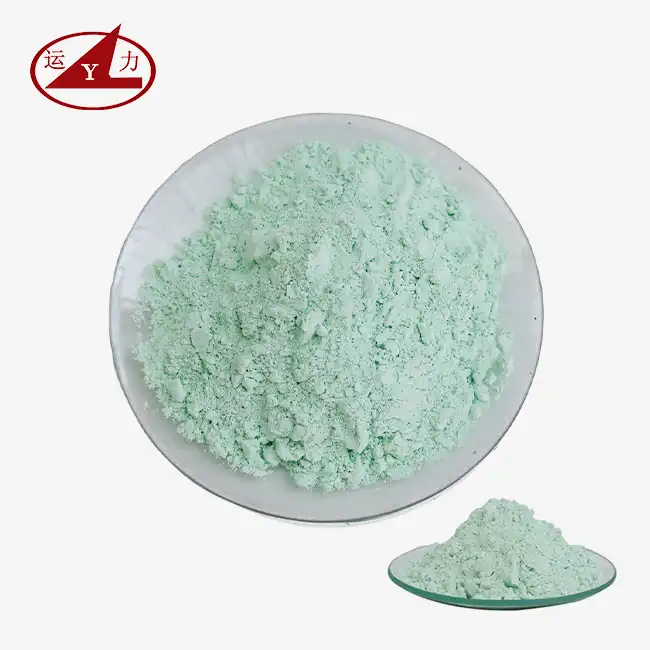
Its CAS number is 39430-27-8, and its molecular formula is NiCO3·2Ni(OH)2·4H2O. Its molecular weight is 376.17. This powdery grass-green crystal has selective solubility patterns that show how useful it is in industry. Pure water doesn't dissolve it, but ammonia, weak acids, ammonium carbonate, and hot solutions of potassium cyanide or potassium chloride do. When the substance is mixed with hydrogen at room temperature, it breaks down into finely divided, catalytically active pure nickel. When heated above 300°C, it breaks down into nickel oxide and carbon dioxide, which is used in many manufacturing processes.
The material is better than more volatile nickel compounds because it stays stable in normal storage conditions and reacts in a controlled way. This compound's balance between stability and reactivity is the reason why technical engineers choose it for sensitive uses.
Primary Industrial Applications
Several types of industry depend on the combination to do important jobs. In the process of making catalysts, it is the best starting material for hydrogenation systems, petroleum reforming agents, and catalysts that make methanol. The lack of sulphate in the makeup keeps the catalyst from becoming poisoned, which is a problem that keeps happening with other nickel sources.
The chemical is used as a pH buffer in sulfamate nickel baths for electroplating. Adding nickel sulphate or chloride brings in unwanted anions, but this material keeps the chemical balance without affecting the quality of the plating. This controlled pH stabilisation is needed for precise tasks like making printed circuit boards and electroforming nickel alloys.
The product is used in the ceramics industry to add colour and as a building block for electronic ceramics like thermistors and varistors. Because of how it breaks down, controlled formation of nickel oxide nanostructures is possible, which is necessary for stable electrical properties.
Safety and Handling Protocols
Following the right steps for handling protects both people and the quality of the product. To keep the material from sticking and absorbing water, it needs to be stored in cool, dry places in sealed cases. People who handle things should wear standard safety gear like chemical-resistant gloves, safety glasses, and dust masks.
Even though the substance is not as dangerous as soluble nickel salts, breathing in dust should be kept to a minimum by making sure there is enough air flow. Because the material is classified under GHS standards, it needs to be properly labelled as dangerous and workers need to be trained on how to handle it. To meet OSHA rules in the United States, all shipments must come with compliance paperwork like Safety Data Sheets (SDS).
Key Factors to Consider When Buying Basic Nickel Carbonate Powder Wholesale
To do wholesale purchasing well, you need to look at a lot of technical and logistical factors that have a direct effect on the results of production and the efficiency of the supply chain.
Purity Grades and Technical Specifications
The most important quality factor is how pure the product is. Most industrial-grade materials have a nickel content of 98% or more, while high-purity versions have a nickel content of 99.5% or more for tough uses. Premium suppliers are set apart from commodity producers by trace impurity control. In electroplating, the iron content should stay below 30 ppm to avoid discolouration. In ceramic uses, sodium amounts above 50 ppm cause haze to form and sintering problems. Nickel Carbonate Basic is a common precursor in these applications, so its own purity directly dictates the final nickel content and impurity profile—making it a critical control point for achieving the strict limits mentioned above.
For catalyst uses, sulphur levels must be less than 10 parts per million (ppm), as even small amounts can cause them to stop working. Buying managers should ask for detailed Certificates of Analysis (COA) that show these impurity levels were found using approved analytical methods like ICP-MS or atomic absorption spectroscopy.
The way particles are distributed affects both how fast they dissolve and how they are handled. Customisable ranges from 1 to 10 micrometres make it possible to optimise for the needs of each process. Changes in bulk density from 0.8 to 1.6 g/cm³ affect the amount of space used for storage and the way air moving systems work.
Packaging and Minimum Order Quantities
Standard packing shapes include 25 kg bags, 500 kg jumbo bags, or special drums, based on the equipment used for handling. Multi-layer moisture-barrier packaging can keep food fresh for up to 24 months if stored correctly. Customising labels to fit different languages and regulatory forms makes foreign shipping easier.
Different suppliers have very different minimum order amounts. Distributors of goods usually need to buy in bulk, but specialised manufacturers can handle study amounts as small as 25 kg. This flexibility is helpful during the testing steps of a product, when full-scale agreements are too risky.
Import Regulations and Shipping Logistics
International shipments of chemicals must follow chemical transportation rules, which include UN packaging standards and the right way to classify the danger. When goods come into the U.S., they have to follow the EPA's Toxic Substances Control Act (TSCA) inventory rules and file Electronic Export Information (EEI) ahead of time.
Shipments to the European Union need REACH registration paperwork that shows they have followed chemical safety assessments. Suppliers who have been exporting for a while will provide this paperwork as normal, but suppliers who are new to exporting may cause costly delays at customs.
Shipping methods balance how much they cost with how long it takes to deliver. Sea freight has low prices for container loads, but it takes 4 to 6 weeks to get from one side of the Pacific to the other. Air freight is available for immediate needs at a higher cost. Chemical exporters with a lot of experience handle all the paperwork, shipping, and customs clearance as a single service.
Comparing Basic Nickel Carbonate with Alternative Nickel Compounds
Before making a purchase decision, you need to know how this compound's properties compare to those of other nickel sources in terms of performance, cost, and suitability for use.
Chemical Property Distinctions
Nickel sulphate hexahydrate (NiSO4·6H2O) dissolves better in water, but it also adds sulphate ions that build up in electroplating baths and hurt some catalysts. The solubility of nickel chloride is about the same, and chloride contamination is a big problem in applications that touch stainless steel.
Nickel nitrate is a special kind of oxidation catalyst, but it is also an oxidiser danger, which makes it harder to store and move. The carbonate hydroxide structure of Nickel Carbonate Basic gives it controlled reactivity without these negatively charged particles.
Application-Specific Performance Advantages
Catalyst production shows clear differences in function. The compound's breakdown process creates nickel oxide that is widely spread out and has a larger surface area than oxides that form directly. This shape means that the catalyst is 10-15% more effective in hydrogenation processes.
The substance is useful for electroplating because it is a real pH buffer and not just a nickel source. As cathodic reactions use up protons, the carbonate part balances out the acidity without changing the ratios of anions, which is important for low-stress deposits.
Cost-Effectiveness Analysis
Even though it costs more per unit than regular nickel sulphate, the specialised substance is more cost-effective overall in some situations. Electroplaters that stop anion buildup get rid of bath waste costs and make them last longer. Instead of changing different materials, catalyst makers start with an optimised precursor that cuts down on the number of steps needed to make the catalyst.
These operating savings make the higher price worth it for buyers who are looking at the total cost of ownership. Managers in charge of buying things should look at material costs in terms of how well the process works, not just the prices of the materials themselves.
Trusted Suppliers and Brands of Basic Nickel Carbonate Powder Wholesale
Long-term procurement success depends on how well the supplier is chosen because it affects quality consistency, legal compliance, and operating dependability.
Evaluating Supplier Credentials
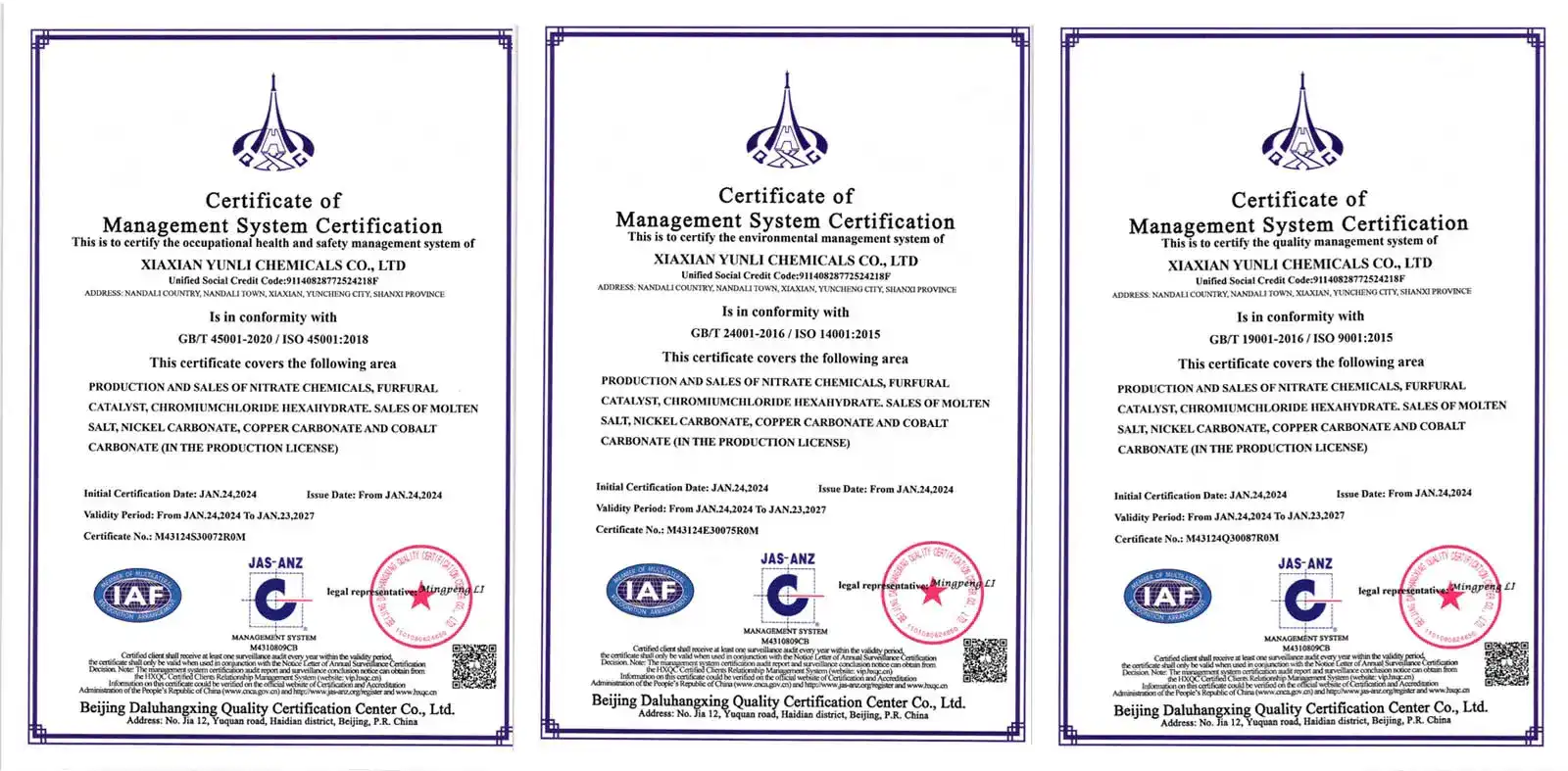
Verification of certification gives objective proof of quality assurance. ISO 9001 certification shows that you can manage quality in an organised way, and ISO 14001 certification shows that you can manage the environment well. Getting certified in OHSAS 18001 or ISO 45001 shows that you care about worker safety, which is important for making complex chemicals.
Lab capabilities set advanced manufacturers apart from basic repackagers. Advanced analysis instruments, such as ICP-MS, laser particle analysers, and XRD tools, make it possible to carefully check arriving materials and keep an eye on the whole process. Suppliers who offer factory audits show that they are honest and trusting of their business.
Assessing production capacity stops supply problems from happening in the future. Manufacturers who have specific production lines and extra equipment can handle changes in demand without lowering the quality of their products. Annual production amounts of more than 1,000 tonnes show that the business is well-established and the processes are well-honed.
Why Yunli Chemical Stands Out
Yunli Chemical is a straight producer that has been in business since 2005 in Shanxi Province. They have over twenty years of experience in their field. Annual sales of more than 1 billion RMB and fixed assets worth 300 million RMB show a level of financial stability that isn't common among smaller chemical suppliers. This scale guarantees a steady supply even when the market for raw materials is unstable.
Since 2019, the company has been recognised as a Shanxi Provincial Enterprise Technology Center, which shows that it can do more than just make things. Their high-tech lab has ICP-MS and atomic absorption spectrometers that help them make high-purity 4N-grade materials that meet the strict needs of the pharmaceutical and electronic industries.
Yunli Chemical's combined environmental cleaning systems deal with the tricky problems of wastewater and emissions that come up when nickel compounds are made. This well-established infrastructure lets customers get manufacturing services that are in line with environmental rules, so they don't have to spend a lot of money on treatment plants. These kinds of skills are especially useful for businesses in the US that have to follow strict rules set by the EPA.
The manufacturer's flexible cooperation model gets rid of common problems that come up when buying things. There are no minimum order quantities, so both small-scale tests for study purposes and large-scale production can be done. You can try free samples of up to 500 grams of a product before you decide to buy it. Different customers have different needs that strict commodity providers can't meet. Customisable packing, labelling, and even solution concentrations can help.
When a factory sells directly to customers and handles its own exports, it cuts out middlemen and keeps quality control high all along the supply chain. Serving large industrial clients for 20 years gives us the operational experience that lets us keep delivery schedules and provide quick technical support as a Nickel Carbonate Basic supplier.
Service Differentiators Worth Considering
When looking at the total cost of procurement, value-added services often make up for small price differences. Technical support teams that can fix problems with applications keep output from stopping, which costs a lot of money. Suppliers who offer customised impurity profiles make sure that the right material specifications are used for each process, which could lead to yield increases of several percentage points.
Different company buying policies can be met by flexible payment terms. Manufacturers who have been around for a while usually offer net payment terms to qualified buyers. This makes managing working capital easier. Volume-based price systems lower costs over time to reward partnerships that last a long time.
Regulatory compliance is easier when documentation is complete. Instead of having to be asked for separately, complete packages with COA, SDS, REACH paperwork, and origin certificates are sent with every shipment. This care for routine matters shows that the business is mature and focused on the customer.
How to Initiate Your Purchase: Step-by-Step Wholesale Buying Guide
Structured buying methods reduce risk while improving ties with suppliers and making sure that material requirements are met.
Defining Technical Requirements
Start by writing down the exact needs for the application. For making catalysts, the nickel content could be ≥99%, the iron level could be <10 ppm, and the particle size could be 3-5 micrometres. For electroplating uses, acid insolubility less than 0.02% and sodium level less than 30 ppm are most important. For battery material precursor roles, you need a certain range of surface areas and controlled temperatures for breaking down.
When making volume estimates, you should think about qualification times, production ramp-up, and the possibility of expanding the use of the product. The first sales could cover three months of expected use while the supply chain is being established. The type of handling tools determines the preferred packaging. Automated systems like bulk bags, while manual processes like smaller units.
Sample Evaluation Best Practices
Ask for samples from several qualified sellers so that you can test them side by side. Usually, 1 to 5 kg of samples are enough for a full evaluation that includes analytical confirmation, bench-scale process trials, and accelerated stability studies. Suppliers with a good reputation will send samples with COAs that show which batch was tested.
Instead of relying only on supplier documentation, laboratory verification should check important specifications on its own. Using the existing material as a control in side-by-side process trials shows performance differences that can't be predicted by specs alone. Instead of leaving choices solely up to procurement teams, involve technical staff in the review process.
Negotiating Terms and Building Partnerships
Quotes at the start are more like starting points for negotiations than final terms. Tiered price structures are often unlocked by making large commitments—a 10% discount for container-load sizes is a common example of leverage. Different payment terms, from upfront for new customers to net-60 for long-term customers, show how trust grows over time.
When talking about a contract, you should talk about how to settle quality disputes, how flexible the delivery plan should be, and what happens in cases of force majeure. Annual supply agreements with volume changes every three months make planning more stable while still being able to adapt to changes in demand. Collective planning helps makers make the best use of their production schedules, which could lead to cost savings that are shared by everyone through changes in prices.
Long-term relationships form when sellers understand how customers use their products and offer ways to make processes better. Transactional relationships can become strategic partnerships by having regular technical reviews where performance trends, changing specifications, and new requirements are talked about. When people work together, switching costs are created that keep supply chains stable better than formal contracts alone.
Conclusion
To get Nickel Carbonate Basic Powder through wholesale channels, you have to balance technical requirements, the supplier's abilities, and logistics within the frameworks of strategic procurement. Because of its unique qualities, the substance is essential for making catalysts, precision electroplating, and advanced ceramics, where other nickel sources would cause unacceptable problems. Along with reasonable pricing, smart buyers look for suppliers with strong technical knowledge, analytical skills, and well-developed operating processes.
Direct relationships with manufacturers get rid of the problems that come with going through middlemen. They also give you access to customisation, technical support, and all the paperwork you need to follow the rules. Structured evaluation processes, such as checking samples and working together to create specifications, lower qualification risks and build relationships that support stable operations in the long run.
FAQ
What distinguishes basic nickel carbonate from standard nickel carbonate?
Standard nickel carbonate (NiCO3) is a theoretical compound that isn't widely used in industry because it's unstable. The formula for Nickel Carbonate Basic is NiCO3·2Ni(OH)2·4H2O. This gives it stability that makes it good for industry keeping and handling. This "basic" mix has a higher nickel density per unit volume and more controlled reaction patterns than pure carbonate. This makes it the standard material in the business.
How should the material be stored to maintain quality?
Keep containers in climate-controlled spaces that are below 25°C and have a relative humidity of less than 60% to keep things from clumping and absorbing water. Under these conditions, sealed multi-layer moisture barrier bags keep the quality of the product for 24 months. To keep things from going bad too quickly, don't store them near acids or oxidising agents and use first-in, first-out stocking movement.
Are there import restrictions for shipments into the United States?
The compound is on the TSCA inventory, which means it can be brought into the U.S. without any extra pre-manufacture notices. Standard procedures for importing chemicals are followed, such as correctly classifying the dangers according to DOT rules and filing electronically ahead of time through the Automated Commercial Environment (ACE) system. For business amounts, you don't need any special licenses, but you will have to pay standard customs taxes based on the HTS classification.
Partner With Yunli Chemical for Reliable Nickel Carbonate Basic Supply
Yunli Chemical gives you straight access to high-purity Nickel Carbonate Basic that is made in systems that are ISO 9001, ISO 14001, and OHSAS approved. Our 20-year history of working with major industrial clients in the electroplating, catalyst manufacturing, and advanced materials sectors shows that we have the technical know-how and supply reliability that procurement managers need. We keep key impurity levels—Fe ≤30ppm, Na ≤50ppm, and S ≤10ppm—under control by using ICP-MS and atomic absorption spectroscopy for advanced testing. This makes sure that the material always works well in tough situations.
As a direct manufacturer and experienced supplier, we don't have to pay markups to middlemen. We also offer flexible minimums, free 500-gram samples, and the ability to change specifications like particle size, pH range, and packaging configurations. Our self-run export section takes care of all the paperwork, like COA, SDS, and REACH compliance materials. This makes the process of buying things from other countries easier. You can email our team at wangjuan202301@outlook.com to talk about your unique technical needs, get full quotes, or set up a sample evaluation. You can look at our full line of products at yunlichemical.com and learn how our 20 years of experience making high-quality chemicals can help your supply chain.
References
1. Smith, J.R. & Thompson, M.L. (2021). Industrial Nickel Compounds: Properties, Applications and Market Analysis. Chemical Engineering Press.
2. Anderson, K.P. (2020). "Catalyst Precursor Selection in Hydrogenation Processes," Journal of Applied Catalysis B: Environmental, 278, 119-134.
3. Chen, W. & Martinez, R.A. (2022). Electroplating Technology: Materials and Process Optimization. Manufacturing Science Publications.
4. European Chemicals Agency (2023). REACH Compliance Guidelines for Nickel Compounds in Industrial Applications. ECHA Technical Guidance Document TGD-R.7.
5. U.S. Environmental Protection Agency (2022). Chemical Import Requirements and TSCA Inventory Procedures. EPA Office of Chemical Safety and Pollution Prevention.
6. Wilson, D.H., Park, S.J., & O'Connor, T.M. (2021). "Quality Control Protocols for Specialty Inorganic Chemicals in Global Supply Chains," Industrial Chemistry Research, 60(8), 3345-3362.