



Who should avoid chromium?
Chromium compounds, particularly Chromium Chloride Hexahydrate (CrCl3·6H2O, CAS 10060-12-5), are crucial in a variety of industrial processes, from the production of metals to the creation of drugs. Chromium chloride hexahydrate and other trivalent chromium materials are much better than hexavalent chromium materials. But some people should have less or no touch because it might be bad for their health. People with tender skin, who are pregnant, who have trouble breathing, or who are known to be allergic to chromium should be extra careful. Every day, procurement managers, safety engineers, and technical staff work with this dark green solid. They need to know these risk profiles to follow OSHA rules and keep their workers healthy.
Understanding Chromium and Chromium Chloride Hexahydrate
Chemical Nature and Molecular Characteristics
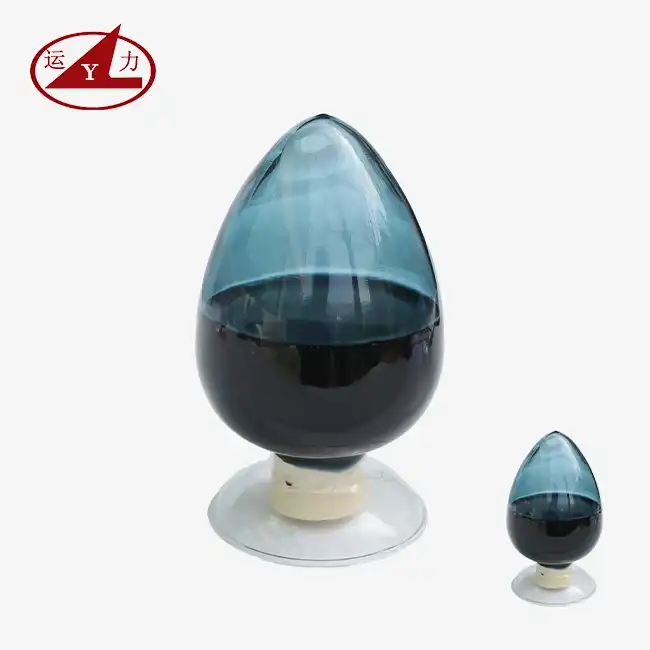
Chromium Chloride Hexahydrate is a solid that is dark green, permeable to water, and has only one crystal structure. It contains 2.76 times as much water as air and can freeze at temperatures between 86°C and 90°C. The dry form of chromium chloride doesn't do anything and doesn't mix well in water, but the hexahydrate form does. It has this feature because of how it's put together—it usually looks like trans-[CrCl2(H2O)4]Cl·2H2O—which lets it react with polar liquids right away.
The product doesn't just break down in water; it also breaks down in acetone and ethanol, but not in ether. It breaks down in water to make acidic solutions (pH 4.0–6.5 at 5% strength), which changes how well it works as a mordant and in electroplating pools. Industrial types with a high level of purity keep the chromium level above 19.5% and keep elements like iron (≤30ppm, changeable to ≤10ppm) and sulfates (≤0.05%) in check. These are important to keep the water steady and stop it from turning colors.
Industrial and Laboratory Applications
Because it is bendable, the material is used in a lot of different places. It makes it possible to use RoHS-compliant trivalent chromium etching and gets rid of the harmful effects of hexavalent chromium contact. It also makes the metal less likely to rust. Its micro-discontinuous structure helps companies that make cars and toilets get smooth finishes on difficult forms where other chromic acid solutions fail.
The making of catalysts is another important area of use. To make methanol and hydrogen, Chromium Chloride Hexahydrate can be used. It has a pH that doesn't change and can be kept steady. Because it has very little iron, the catalyst doesn't lose its ability to work. Some very pure types (As/Pb <2ppm) are used to make active pharmaceutical chemicals in the pharmaceutical business. This is especially true for medicines for stomach issues, where worry about minor metal pollution is high among regulators.
When dying clothes, it is used as a mordant to help the color molecules stick to protein-based fibers like wool and nylon. When you wash high-end fabrics, this feature makes sure that the color doesn't run or fade. Ceramicists like how the colors stay the same in glazes, and pigment makers use it to make coats that don't rust.
Safety Data and Handling Precautions
MSDS sheets for Chromium Chloride Hexahydrate say that it is an allergen that needs to be treated with care. Since it soaks up water, it needs to be kept somewhere dry so that it doesn't harden and lose its shape. Things should be kept between 15°C and 25°C in cases with tight lids and away from things that don't go with them, like strong oxidizers.
Because the water-based versions of the substance are acidic, you need tools that don't rust to handle them. Trivalent chromium salts are not as harmful as hexavalent chromium compounds, which are known to make people get cancer. However, they can still be harmful if they stay on your skin for a long time or if you take in dust that has them in it. OSHA says that workers can't be exposed to more than 0.5 mg/m³ of trivalent chromium substances for 8 hours. This shows how important it is for industrial areas to have ventilation devices and PPE.
Who Should Avoid Exposure to Chromium Compounds?
Vulnerable Populations and Health Considerations
When people handle chromium salts, they are more likely to hurt their skin. Most people who get sick at work get contact dermatitis. After coming into touch with it several times, it makes the skin red, itchy, and sore. People with acne or psoriasis are less able to handle chromium and often become so allergic to it that they can't be around it again, even if there are hurdles in the way.
Chromium compounds might affect pregnancy, so women who are pregnant or nursing should stay away from them as much as possible. This type of chromium is not as easily taken by the body as hexavalent types, but if you are pregnant and need to work with it, you should still look for another job that doesn't expose you to it. For women who nurse and work in places that electroplate or make catalysts, talking to an occupational doctor about the trace metals that get into their milk is a good idea.
Breathing problems are another important thing to think about. People who work with chromium-containing dust or mists may get worse asthma, COPD, or other lung problems. Small pieces of the substance can get deep into lung tissue and cause inflammation, which over time makes it harder to breathe. People who are allergic to chromium should never be at work where they could be exposed to it.
Occupational Risks in Industrial Settings
Workers are subjected to Chromium Chloride Hexahydrate in a number of ways when companies use it. A powder transfer job is the most dangerous time to take in dust because the amount of dust can be higher than the area's ventilation. Aerosol mists are sent into the air when electrodes create hydrogen bubbles or stir up chromium pools. These mists spread tiny drops of metal all over the work area. There are still risks that people can make when they fix things or respond to emergencies, even with the right protection systems and mist suppressants.
When you touch solid substances or highly concentrated liquids, they can hurt your skin. Gloves protect, but skin can get through if they tear or aren't put on or taken off properly. The substance can pull things through broken walls because it can soak up water. This makes it more absorbent. When people work with 25 kg bags or IBC barrels without automatic transfer systems, the risks they face add up over time.
Ingestion risks are caused by dirty things, even though they don't happen very often. Chrome that is still on your hands gets into your mouth if you smoke, eat, or drink in the workplace. When mixed with other chemicals you are exposed to at work, even small amounts that build up over months can be dangerous.
Regulatory Frameworks and Compliance Requirements
The General Industry Standards (29 CFR 1910.1000) set the boundaries for chromium exposure in the US. These standards point out the highest amounts and levels that need to be tracked more closely. If a building's exposure levels are higher than half of the allowed levels, it needs to make plans for controlling those levels, take samples of the air every six months, and keep medical records by doing things like baseline and regular biological tests.
The EPA controls chromium compounds under the Toxic Substances Control Act (TSCA) and makes makers keep thorough records of how much they make, how it is used later on, and how much they release into the environment. New changes to the National Emissions Standards for Hazardous Air Pollutants (NESHAP) make it harder for painting businesses to give off emissions that contain chromium. This has a direct impact on places that use trivalent ponds for electroplating.
European REACH has rules that are even tighter. Users have to talk to each other about safe ways to use it and sort chromium molecules by their oxidation state. If someone wants to bring Chromium Chloride Hexahydrate into the EU, they need to make sure that the seller is registered and get Safety Data Sheets that follow the rules set out in CLP Regulation (EC) No 1272/2008.
Safely Handling and Storing Chromium Chloride Hexahydrate
Storage Protocols and Environmental Controls
The first thing that needs to be done to store Chromium Chloride Hexahydrate properly is to keep the temperature in check. Because the compound soaks up water, the relative humidity should stay below 60% in stores so that the compound doesn't soak up water and form crystals. It's harder to move things around when their actual state changes, and the amounts of solutions can change during melting, which makes the process less uniform.
Keeping the temperature between 15°C and 25°C stops thermal breakdown and keeps the sides of cold objects from getting wet. Store areas should not have strong bases, oxidizers, or explosive metals nearby because they don't mix well. Chemicals are kept in special rooms with epoxy-coated floors that keep them contained in case of an accident and make cleanup easy.
Tracking the quality of containers is another important step. When the substance comes in contact with water, it turns acidic. Over time, this can damage normal metal drums. The product stays fresh for 24 months if it is stored in acid-resistant steel bins or high-density plastic cases with seals that are still in place. It is important to check the packages, labels, and additional control systems on a regular basis to make sure they are in good shape.
Personal Protective Equipment and Handling Techniques
Safety gear (PPE) is not as important as engineering rules, but it is still needed for everyday chores. Putting on rubber or neoprene gloves can keep chemicals from getting on your skin. What kind of gloves you use will depend on how long you will be around the chemical and how strong the solution is. There are break times on safety data sheets that tell you how often to change your gloves.
What kind of breathing protection is needed is based on measurements of the amount of airborne substance. N95 respirators that fit right are enough to keep dust away while handling bags as long as the exposure levels are below the limits. Half-face or full-face air-purifying respirators with cartridges that get rid of both organic gas and particulate matter are needed for jobs that make more of it. When going into a small space or to an emergency, you need to wear an atmospheric mask.
Your eye and face protection needs to keep out both force and chemical drops. At the very least, safety glasses with side covers should be worn for low-risk jobs. But people who move things between containers or charge process tanks need to wear helmets or face shields. When it comes to low-viscosity chromium solutions, liquid can get behind standard safety glasses because of capillary action. With splash-proof goggles, this can't happen.
Procurement Best Practices and Supplier Selection
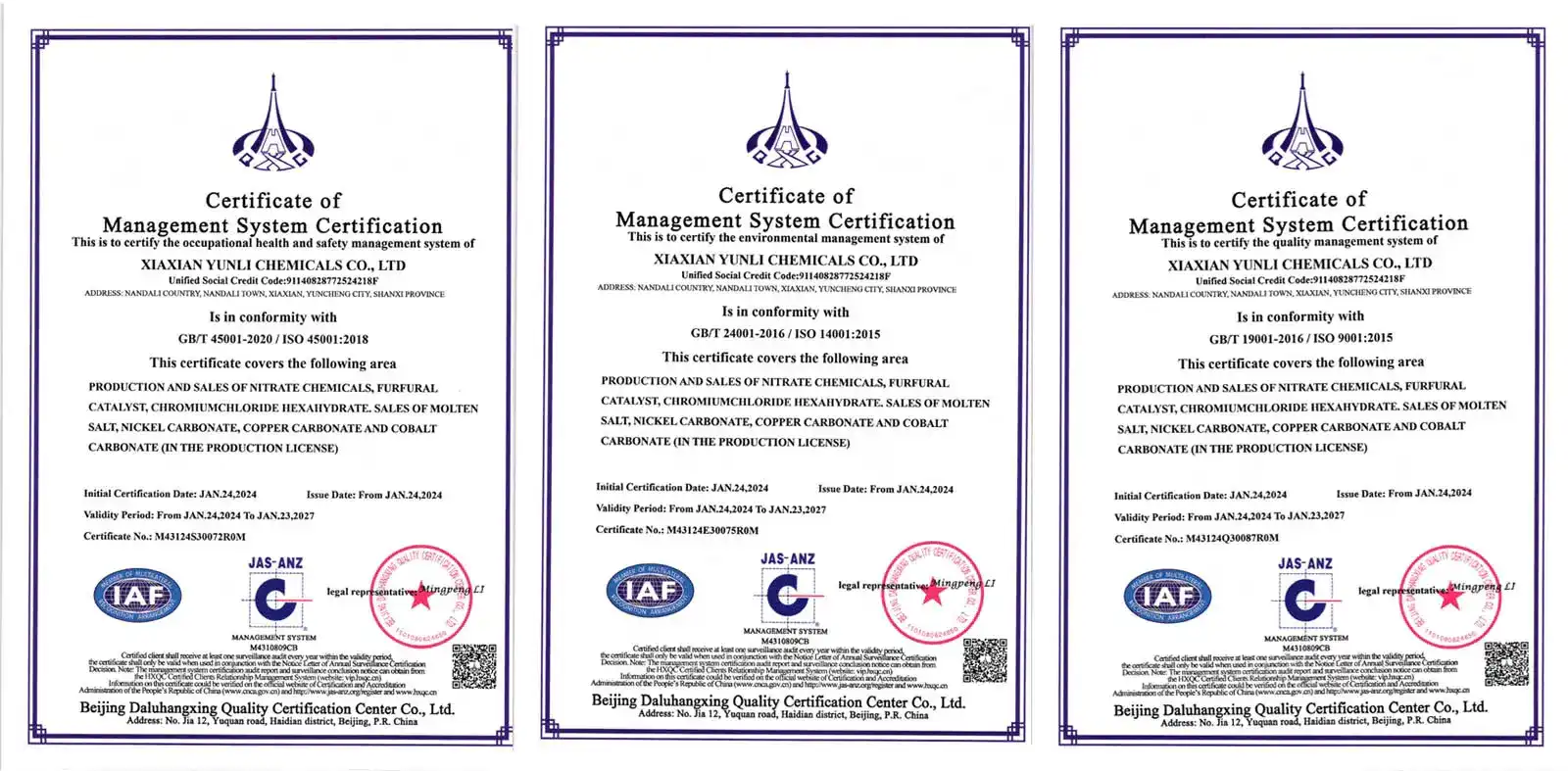
To get large amounts of Chromium Chloride Hexahydrate, sources need to be carefully looked at. Companies that buy things should make sure that any sellers they consider have both ISO 9001 and ISO 14001 environmental safety certifications. These international standards make it possible for products to have consistent specs, for systems to keep track of them, and for people to be careful about the environment.
Technical papers have to be made. For every package, there must be a full Certificate of Analysis (COA) that shows the purity levels, trace metal contents, and physical properties that have been checked by a reputable lab. High-tech research tools, such as ICP-MS and atomic absorption spectrometry, can help suppliers find impurities at levels below ppm that can change how the process works later on.
Customized formulas are another thing that gives them an edge over their competitors. Many providers offer different iron levels (≤30ppm standard, ≤10ppm on request), pH ranges, and shapes (powder vs. crystals) so that you can find the best one for your needs. This is especially helpful when going from making something in the lab to making it on a big scale, where process variables may need to be changed many times.
Emergency Response and Incident Management
No matter how careful people are, spills still need quick, organized responses. Trained workers can clean up small spills (less than 1 kg) with sand or special spill pads that soak up the liquid. After that, trash can be put in plastic bins and taken away. The dirty area should be balanced with a weak sodium bicarbonate solution before being cleaned with water for the last time.
People who aren't needed have to be evacuated during large spills, pollution zones have to be set up, and the facility's emergency response teams have to be called in. When you use absorbent booms or dikes to limit things, they don't get into drains or other bad places for the environment. Chemical recovery vacuum tools can speed up the cleanup process and cut down on the amount of trash that is created.
When someone is exposed, they need to follow certain first aid steps. If it gets on your skin, you should wash your face with lots of water right away and for at least 15 minutes while taking off any dirty clothes. The same steps should be taken for eye exposure, such as using an eyewash station or a gentle water flow that doesn't stop. People who have breathed something in should go outside right away and get oxygen if they start to have trouble breathing while they wait for more help.
Comparing Chromium Chloride Hexahydrate with Alternatives
Chemical Form and Reactivity Differences
Procurement experts need to know the difference between wet and dry types of chromium when they look at sources for it. A violet rock called anhydrous chromium chloride (CrCl3) is hard to dissolve in water because of the way its molecules are set up. This form can't be used in real life because it needs to be dissolved at high temperatures or chemically triggered. This is true even though it has a lower molecular weight and more chromium par mass.
There are coordination water molecules in Chromium Chloride Hexahydrate that help it breakdown quickly. This makes stock solutions that can be used right away for chemical synthesis, electroplating, and catalysis. As the hexahydrate is already ready to go, there is no need for steps that use energy and make the process uncertain. The hydrated form has about 40% water by mass, which means it has less chromium per kilogram. However, in industrial settings, its usefulness usually outweighs this impression of waste.
There are two more kinds of trivalent chromium: chromium sulfate and chromium nitrate. Each one has its own traits. There is less chromium sulfate per unit of chromium, but it adds sulfate ions that can make some uses less helpful or make it harder to treat wastes. Chromium nitrate is easy to dissolve, but it also heats up easily and is more likely to oxidize. This means it can't be used for long amounts of time or at high temperatures.
Purity Considerations and Process Impact
When chromium molecules are mixed with other things, it changes how well they work in different situations. As a rule, problems with quality are caused by iron pollution. This makes electroplating pools cloudy and clay glazes lose their color. The rules for high-purity Chromium Chloride Hexahydrate say that it can't have more than 30ppm of iron. Better processing ways can help premium types get less than 10ppm.
With different amounts of sulfate and chloride in a fluid, the way electricity moves and how well it carries electricity changes. When there is too much chloride, it can rust certain parts of stainless steel process equipment, and when there is too much sulfate, it can change the chemistry of the bath over long production cycles. The costs of running bath dumps and rebuilding go down when providers keep these anionic impurities under control.
Heavy metal toxins, like arsenic, cadmium, and lead, are bad for both people and the earth. This is especially true when making medicines. Chrome chloride hexahydrate that is used in pharmaceuticals has arsenic and lead amounts below 2ppm. This means that it meets the high quality requirements for making APIs. The same rules need to be followed when making electronic materials so that device stability issues aren't caused by metallic impurities in thin-film manufacturing methods.
Cost Analysis and Value Proposition
Chromium Chloride Hexahydrate is cheaper when bought in bulk for business uses that need a lot of it. For industrial grade, the material costs between $2.50 and $4.50 per kilogram. Because they have to be more pure and have tighter paperwork needs, pharmaceutical and computer grades cost 30–50% more. When you look at these prices, you can see how economies of scale and investments in quality control set specialty chemical makers apart from those who make commodities.
There is more to the total cost of ownership than just the price of the unit. It also includes things like a steady supply, help from experts, and guidance on how to follow the rules. You can get 25 kg bags, intermediate bulk bins, and custom solutions from providers. These options make it easier to handle the goods because you don't have to do as much work or throw away as much. Before deciding to volume amounts, free samples of up to 500 grams can be used to test the process.
The costs of following environmental rules are growing in importance when deciding what to buy. Suppliers with closed-loop wastewater treatment systems and environmental management that has been cleared are less likely to be regulated. This means that police operations that cut off power lines are less likely to happen. Customers don't have to worry about tricky foreign rules because the things can be made to meet REACH, RoHS, and FDA standards.
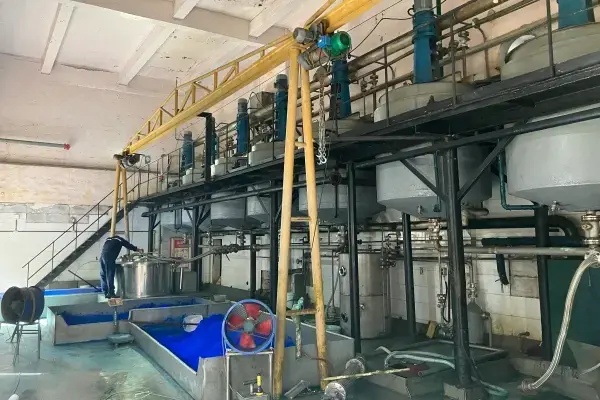
Making an Informed Procurement Decision for Chromium Chloride Hexahydrate
Supplier Qualification and Assessment Criteria
There are a lot of things you need to think about when you are looking for a Chromium Chloride Hexahydrate provider. Being able to make things and being financially secure are the building blocks. They can handle changes in the market and the quantity of raw materials if they make more than $100 million a year and have fixed assets worth more than $30 million. Because long-term partnerships depend on sellers staying in business, it's a good idea to start by learning about their finances.
There is a gap between skilled makers and people who only sell things when it comes to technology infrastructure. Places that run regional or national technology centers and have high-tech testing tools can check the quality of goods right away and make special ones for customers. With ICP-MS, atomic absorption spectrometers, and wet chemistry labs, you can find impurities as small as ppm and do complex matrix analysis to show that the product meets the standards.
If a management system has certification files, they show how mature it is. Processes are written down, internal checks happen, and there are ways to keep getting better. ISO 9001 quality management approval makes sure of all of these things. Getting ISO 14001 environmental approval shows that you care about the earth and are doing what you need to do to stop waste. Getting OHSAS 18001 certification for health and safety at work shows that you care about your employees.
Customization Options and Technical Support
Standard stock goods can't give modern industry uses the freedom they need. When you can pick the shape (fine powder vs. large crystals), pH ranges (4.0–6.5), and impurity limits, you can make processes work better for a lot of different purposes. It's important to be able to shift when moving from lab work to mass production, where small changes in specs can have a big impact on quality and output.
There is a difference between premium sellers and transactional sellers: premium sellers give professional support. It's easier to fix things during the development phase when you have access to process experts who know about the apps that will come after. Technology moves faster when suppliers offer application notes, measurement tools, and match data. Experiments don't have to be redone as often when suppliers do these things.
Analytical testing services help sellers in more ways than just getting their things to buyers. In order to get approved by the aerospace and pharmaceutical industries, vendors who do custom impurity tests, stability studies, or comparison reviews have to go through strict steps. Giving back samples for reference testing or to settle a dispute shows that you care about quality, which is good for long-term supply relationships for both sides.
Partnering with Yunli Chemical for Reliable Supply
One company that fits the descriptions in this book is Yunli Chemical, which has been around since 2005 and is a Shanxi Provincial Enterprise Technology Center. The company has been in business for more than 20 years and makes more than 1 billion yuan a year. This helps keep production stable and its finances strong, which is important for supply chains to work well. Three hundred million yuan in fixed assets help improve processes and boost capacity in a way that fits customers' growth plans.
They care about quality and the environment because they have ISO 9001, ISO 14001, and OHSAS standards. Advanced analysis tools, such as ICP-MS and atomic absorption spectrometry, can check for very low levels of impurities. For everyday use, the iron level is kept at 30ppm, but it can be lowered to 10ppm for tough jobs. Pharmaceutical-grade versions that meet strict heavy metal standards (As/Pb <2ppm) are used in the industry that makes medical devices and APIs.
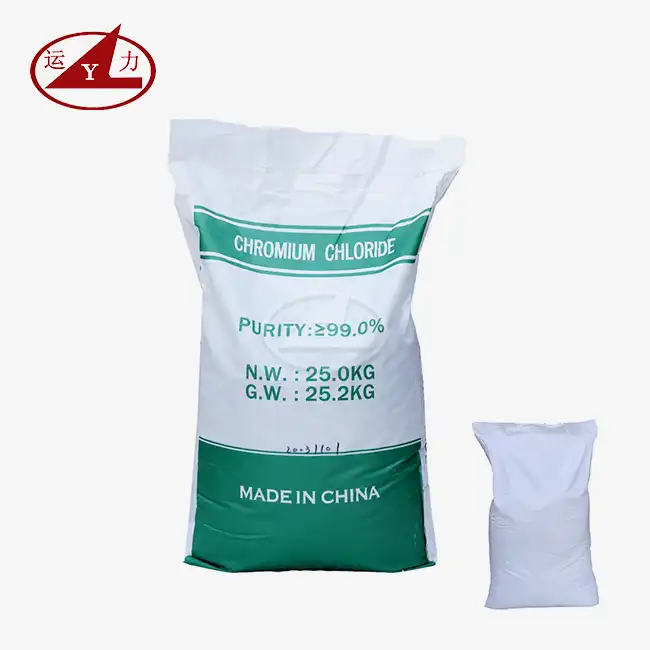
Chromium Chloride Hexahydrate isn't the only thing that Yunli Chemical sells. It also has more than 60 kinds of nitrates and mineral salts that are linked to them. People can now buy more from fewer sellers, which helps them save time and money. There are many transportation needs that can be met with labels that can be changed and different packing options, such as 25 kg bags, IBC containers, and large liquid. The closed-loop wastewater disposal system is a promise to take care of the earth.
Factory-direct delivery, costs are low because there are no middlemen who add a markup. This means that quality and service are not compromised. You don't have to buy a certain amount to start, and you can get free samples of up to 500 grams. It's now easier and less risky to check out providers and confirm methods. Export companies with a lot of experience make sure that all the papers, talks about risks, and shipping rules are followed so that shipments to other countries go easily.

Conclusion
It is important for companies that work with Chromium Chloride Hexahydrate to know who should not be around chrome and follow the right safety rules. This keeps their workers safe. People who are more likely to get hurt, like those with sensitive skin, breathing problems, or known allergies, need extra care. Pregnant workers should also be protected by building controls or being taken out of the danger zone.
When you choose to buy something based on more than just price, the total cost of ownership is lower. When making these choices, you should also think about the supplier's certifications, the help of experts, and the quality of the paperwork. Industrial customers can run their businesses more smoothly and avoid the risks that come with getting common chemicals when they work with well-known companies that have a good track record, advanced research tools, and follow all the rules.
FAQ
Q1: What immediate safety measures should we implement when handling Chromium Chloride Hexahydrate?
A: Setting up technical controls, like local air ventilation for moving powder and controlled process systems for working with solutions, is important. Give workers nitrile or neoprene gloves, chemical splash masks, and the right breathing gear based on how much of the chemical is in the air. Set up places to store things that will stay between 15 and 25°C and have less than 60% relative humidity.
Q2: How do we differentiate between hydrated and anhydrous chromium chloride during procurement?
A: Chromium Chloride Hexahydrate is a dark green rock that breaks down easily in water that is not hot or cold. A molecule of it is made up of CrCl3·6H2O atoms, and each atom weighs 266.45 grams. Anhydrous chromium chloride (CrCl3, 158.36 g/mol) is a violet rock that is very hard to dissolve in water. It needs to be heated up or set off chemically. Certificates of Analysis that show how much water there is, what it looks like, and how it breaks down should be asked for.
Q3: What emergency protocols apply to chromium chloride exposure incidents?
A: If it gets on your skin, wash your face with water for 15 minutes and take off any clothes that are dirty. Views that itch for more than 15 minutes should be taken to a doctor. If someone gets eye contact, they need to wash their eyes with warm water for 15 minutes straight at an eyewash stand and get an eye exam right away. People who have breathed it in should get out into the fresh air right away. If they start to have trouble breathing, they should be given oxygen.
Trust Yunli Chemical for Your Chromium Chloride Hexahydrate Supply Needs
Chromium Chloride Hexahydrate (CAS 10060-12-5) from Yunli Chemical is approved and very pure. It has been carefully made for 20 years and has been shown to meet international standards. We make our own chromium chloride hexahydrate, so we don't have to pay extra for agent fees. The amount of iron in it is ≤30ppm, but it can be lowered to ≤10ppm. It also meets the requirements for heavy metals used in medicine. The grade of our goods stays the same from batch to batch thanks to our provincial technology center and modern analytical labs.
A full COA and MSDS file that meets REACH and RoHS guidelines makes this possible. Because we don't have a minimum order number, we can meet the needs of buyers in the pharmaceutical, catalyst manufacturing, and electroplating industries, whether they need sample amounts of 25 kg or full tons in IBC containers. If you email our expert team at wangjuan202301@outlook.com, you can tell them about your unique application needs, get free samples, or get access to detailed safety tools that will make it easier to find sellers.

References
1. National Institute for Occupational Safety and Health. (2019). Chromium Compounds: Workplace Safety and Health Guidelines. U.S. Department of Health and Human Services, Centers for Disease Control and Prevention.
2. Agency for Toxic Substances and Disease Registry. (2021). Toxicological Profile for Chromium. U.S. Department of Health and Human Services, Public Health Service.
3. European Chemicals Agency. (2020). Guidance on the Application of the CLP Criteria: Chromium Compounds Classification and Labeling. Helsinki, Finland.
4. American Conference of Governmental Industrial Hygienists. (2022). TLVs and BEIs: Threshold Limit Values for Chemical Substances and Physical Agents. Cincinnati, OH.
5. Occupational Safety and Health Administration. (2018). Chemical Sampling Information: Chromium Compounds. U.S. Department of Labor.
6. International Agency for Research on Cancer. (2020). IARC Monographs on the Evaluation of Carcinogenic Risks to Humans: Chromium, Nickel and Welding. World Health Organization.