


Why does copper nitrate solution conduct electricity?
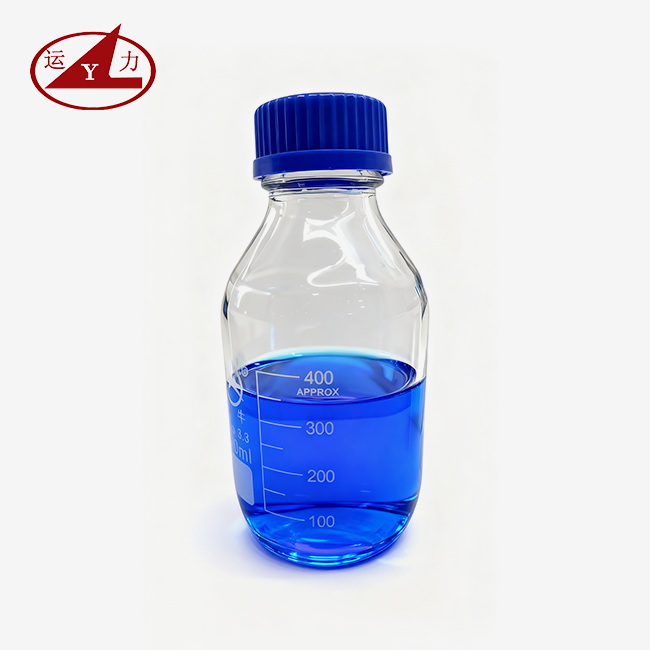
Copper Nitrate Solution moves electricity because when it mixes with water, the substance breaks apart into copper ions (Cu²⁺) and nitrate ions (NO₃⁻), which are negatively charged. These ions can move around freely and carry charges, which lets electricity flow through the solution. This water-based system's ionic nature is a key part of its use in electroplating, catalyst synthesis, and analytical chemistry, where precise control of conductivity has a direct effect on the correctness of the process and the quality of the result.
Understanding the Electrical Conductivity of Copper Nitrate Solution
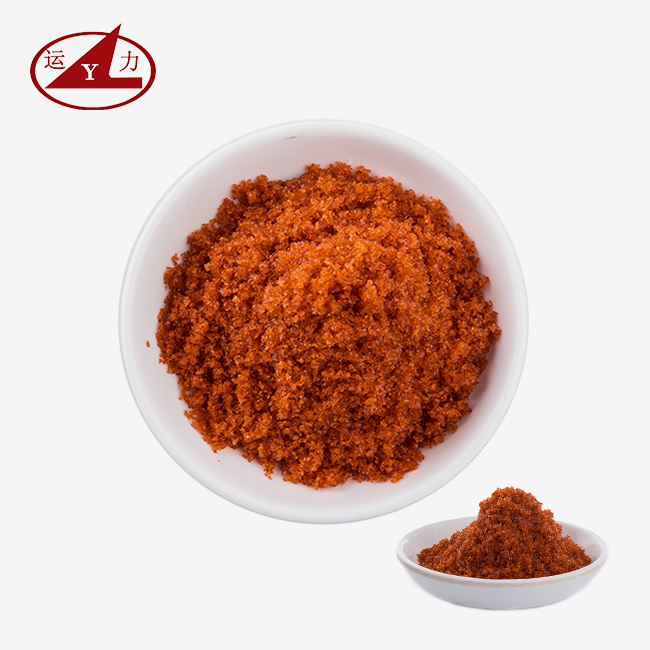
Copper Nitrate Solution in water can carry electricity because of how its ions break apart. If you mix copper nitrate trihydrate (Cu(NO₃)₂·3H₂O, CAS# 10031-43-3) with water, the crystal structure breaks apart. This lets the Cu²⁺ cations and NO₃⁻ anions enter the solvent. A solid that doesn't carry electricity is changed into an electrolyte that does. Ionic salts, like copper nitrate, fully disassociate at normal commercial amounts, unlike covalent compounds that keep their molecules together in solution. This gives them a lot of charge carriers that are needed for electricity to flow.
The Role of Ionic Dissociation in Conductivity
In solution, one copper ion and two nitrate ions are made by each copper nitrate molecule. Copper nitrate trihydrate has a specific density of 2.05 g/cm³ and a molecular weight of 241.6. This makes it possible to make solutions with exact amounts of ions that are always strong. When an electric potential is put across the solution, NO₃⁻ ions move toward the anode (positive electrode) and Cu²⁺ ions move toward the cathode (negative electrode). The electric current is made up of this directed flow of ions. How much conductivity there is is directly related to the number of ions, how fast they move, and their charge.
Factors Influencing Conductivity in Industrial Settings
The quantity of the solution has a big effect on how well the conductivity works. Higher copper content (10% to 60% Cu metal by weight) raises the density of the ions, which in turn raises the electrical resistance. Temperature is also very important; high temperatures make the solution less thick, which lets the ions move around more easily and raises the conductivity. Keeping the temperature in the bath between 20°C and 45°C during electroplating processes improves conductivity without affecting chemical stability. The solution's acidity (pH usually less than 1.0) adds more hydronium ions (H₃O⁺), which help conductivity even more.
The amount of impurities has a big effect on the steadiness of conductivity. If there are chloride ions above 50 ppm, they can make it hard for the ions to spread out evenly. If there is too much iron or sodium (>30 ppm), it can form solid compounds that stop the flow of current. At XiaXian Yunli Chemical, our precision-grade formulations strictly control these impurities, making sure that the conductivity is the same across all production runs. This is very important for uses like catalyst impregnation and surface treatment, where even small changes can lead to problems.
Comparing Copper Nitrate Solution with Other Copper Salts in Electrical Conductivity
When planning electrochemical processes, industrial buyers often look at more than one copper salt choice. Copper Nitrate Solution is different from copper sulfate, copper chloride, and copper acetate. Knowing the differences between these materials helps buying teams choose the best materials for each conductivity need.
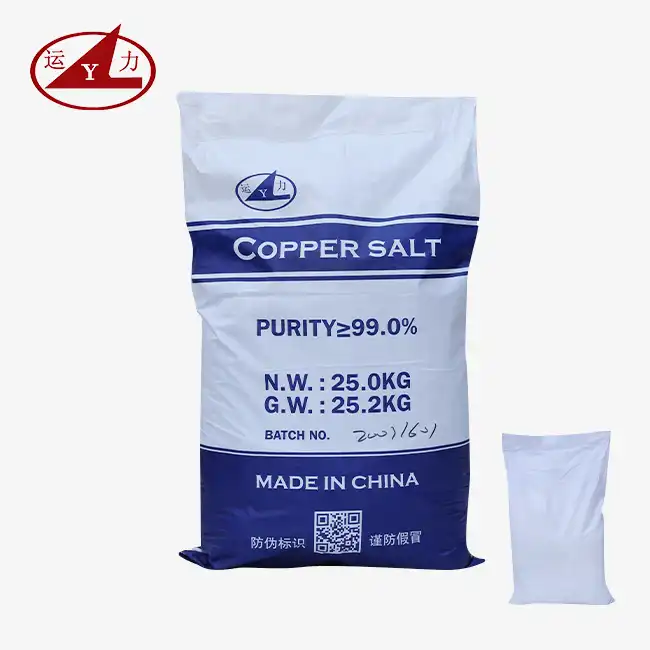
Conductivity Characteristics Across Different Copper Salts
Copper sulfate (CuSO₄) is often used in electroplating because it is cheap and has stable electrical properties. But sulfate ions are divalent, which means that each molecule makes three ions instead of three for copper nitrate. The main difference is the movement of the anions—nitrate ions are more mobile than sulfate ions, which makes them more conductive at the same copper amounts. Because of this, copper nitrate solutions are very useful for high-speed plating tasks where fast ion transport speeds up the coating rate.
Purity Requirements and Their Effect on Performance
Copper chloride (CuCl₂) is a very good conductor because chloride ions are very mobile and have a small radius. Still, the fact that chlorine is acidic creates big problems. Chloride ions attack stainless steel equipment very strongly, so expensive titanium or polymer-lined tanks are needed. Also, chloride contamination in catalysts can poison active sites forever, making them useless for oxidation processes. Because of these problems, our copper nitrate solutions, which have chloride levels kept well below 50 ppm, are better options for making catalysts and processing electrical materials.
Copper acetate (Cu(CH₃COO)₂) is less conductive than nitrate ions because acetate molecules are bigger and move less easily. Copper acetate has some uses in organic chemistry, but it can't be used in high-current electroplating systems because it isn't a good conductor. Copper nitrate solutions are acidic because they contain nitric acid leftovers. This keeps the ions stable and stops hydrolysis that could make copper hydroxide precipitates that are not conductive, which can happen with neutral or alkaline copper salt solutions.
Industrial-grade copper nitrate with less than 20 parts per million of iron and controlled solid matter (<0.005%) makes sure that the solution has the same level of conductivity all the way through. When people buy liquid copper nitrate, they should make sure that the analysis certificates they get back confirm these specs. Our provincial technology center lab uses ICP-MS and atomic absorption spectrometry to check purity levels. This makes sure that every batch meets the strict requirements of pharmaceutical intermediate synthesis and electronic-grade surface treatments.
Preparation, Safety, and Handling of Copper Nitrate Solution for Optimal Performance
Copper Nitrate Solutions keep their electrical qualities as long as they are prepared and handled properly. This also keeps the workplace safe. Knowing these steps helps technology teams keep the process running smoothly and in line with regulations.
Standardized Preparation Methods for Consistent Conductivity
It is very important to do correct concentration estimates when working with copper nitrate trihydrate crystals to make solutions. Because the substance is hygroscopic, it tends to absorb water. This means that the crystal weight may include extra water, which could lower the goal concentrations. The exothermic hydration process makes heat when the solid is dissolved in deionized water. Gradual addition with constant shaking stops burning in one area, which could lead to the release of nitrogen oxide gas. The watery solution that is made is very acidic, so the pH needs to be checked to make sure it's in the right range, which is 1.5 to 3.0 for most commercial uses.
Safety Protocols for Handling Oxidizing Solutions
Copper nitrate is a strong oxidizer, which means it can speed up the burning of organic materials or reducing agents. Alcohols, oils, or wood dust are all flammable, so the chemical should never come into touch with them. Friction or heat could start strong oxidation reactions. HDPE, PVC, or glass-lined materials must be used to make storage containers because the acidic solution eats away at normal stainless steel, contaminating it with iron and causing the containers to break. Our environmental management systems, which are approved by ISO 14001, use closed-loop storage systems that keep oxidizers from being exposed and use absorption systems to catch any nitrogen oxide emissions.
Acid-resistant gloves, face shields, and chemical masks are some of the safety gear that people who work with liquid copper nitrate need to wear. If you touch it on your skin, it will irritate it, and breathing in the mist or droplets can hurt the cells in your lungs. Neutralization with sodium carbonate and a full rinse with water should be part of the spill reaction plan. Transportation needs to follow the UN 3141 classification for oxidizing corrosive liquids, which means they need special hazmat shipping paperwork and packing. The export operations team is in charge of these rules and regulations. They make sure that all of our customers' shipping needs for dangerous materials are met, which speeds up foreign purchases.
Procuring Copper Nitrate Solution: What B2B Buyers Need to Know?
To choose the right provider, you need to look at more than just unit price. Long-term procurement success depends on technical know-how, quality testing methods, and the dependability of the supply chain regarding Copper Nitrate Solution.
Evaluating Supplier Certification and Manufacturing Standards
ISO 9001 approval means that quality control is carried out in a planned way throughout the whole production process, from checking the raw materials to testing the finished product. Suppliers with ISO 14001 environmental certification have proven they can handle advanced waste treatment. This is especially important for nitrate chemistry, which creates acidic wastewater and nitrogen gas fumes that need special systems to remove them. XiaXian Yunli Chemical has been in business for 20 years and is a province firm technology center. This shows that the company has consistently invested in improving processes and taking care of the environment.
Balancing Cost Efficiency with Quality Requirements
Through economies of scale in production and transportation, buying in bulk cuts the cost per liter by a large amount. Long-term contract price protects buyers' budgets from market fluctuations when they order large amounts of tonnage for ongoing electroplating operations. But the lowest price isn't always the best deal when high amounts of impurities cause problems in later stages of production. A copper nitrate solution that is 15% cheaper than the market average but has 200 ppm of chloride will cost a lot more in catalyst replacement, plating flaws, and process downtime than a premium-grade product that has less than 50 ppm of chloride.
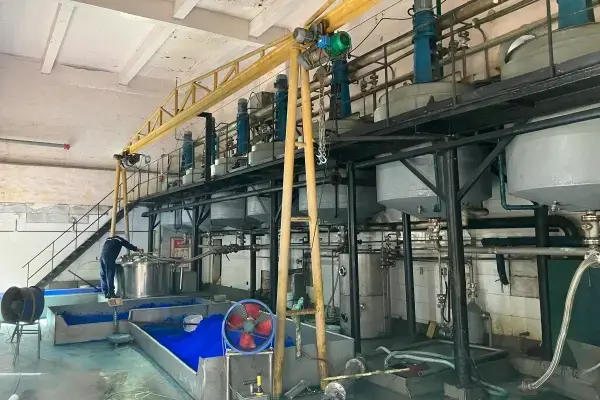
Customization Options for Specialized Applications
For many industrial processes, copper concentrations higher than the usual 13–16% Cu percentage are needed. Catalyst makers may need 25% Cu solutions for impregnating high-loading supports in a single step, while precision electroplating of thin-film electronics needs diluted 8% formulations with tightly controlled pH. Suppliers who offer concentration changes from 10% to 60% Cu content get rid of the need to dilute or concentrate on-site, which cuts down on handling steps and makes the workplace safer. Because we can add additives like brightening agents for artistic plating or chelating agents for farming micronutrient mixes, we can give our customers options that are ready to use right away, which speeds up their production processes.
It is smart to spend money on sample tests before committing to large-volume sales. Supply chains with a good reputation offer free samples of up to 500 grams, which allow purchasing teams to check the conductivity, chemical compatibility, and process outcomes. This trial-and-error method lowers the risk that comes with moving sources or adding new chemical formulations to production systems that are already in place.
Practical Applications and Case Studies: Why Conductivity Matters in B2B Use Cases?
The best way to see how solution conductivity affects industrial performance is to look at real-life situations where ionic movement has a direct effect on results for Copper Nitrate Solution.
Electroplating and Surface Treatment Operations
Copper Nitrate Solution baths are used by companies that make auto parts for ornamental chrome-over-copper finishing systems. Conductivity directly impacts how current flows through complicated part shapes. Higher conductivity encourages even deposition in deep areas, lowering the "burning" effect that happens when high-current-density zones get too much metal buildup. A case study from a European car provider showed that moving from copper sulfate to high-purity copper nitrate solution improved plating uniformity by 23%, lowered reject rates from 8.5% to 6.1%, and made line speeds 12% faster.
When making printed circuit boards, companies that make electronics need copper options that keep their conductivity stable over long production runs. Changing the temperature during electrodeposition changes the conductivity. Solutions with a lot of impurities have conductivity drift that is hard to predict because contaminants settle out or dissolve again when the temperature changes. Our stabilized formulas keep the pH between 1.5 and 3.0 and have almost no sulfate. They also show less than 2% change in conductivity when the temperature changes by 20°C. This level of stability is important for through-hole plating in multilayer PCBs with micrometer-sized limits for dimensions.
Catalyst Manufacturing for Chemical Processing
To make a heterogeneous catalyst, porous clay or alumina supports are mixed with a copper nitrate solution and then heated until the solution breaks down, creating active copper oxide sites. The solution's conductivity affects how deep it can go into support pores. A better conductivity combined with the right density makes sure that the solution is spread out evenly within the network of pores. A North American company that makes methanol synthesis catalysts said that using our low-sodium (<30 ppm) copper nitrate solution made the active site distribution more uniform by 31%, as seen under an electron microscope. This led to 18% higher catalytic activity in pilot reactor testing.
Laboratory and Analytical Chemistry Applications
In the lab and in analysis, chemistry is used. For electrochemical studies or making copper-based chemicals, research labs need liquids whose ionic strength is known to be exact. Conductivity tests check the concentration of a solution; any changes show that the solution is contaminated or breaking down. High-purity grades that meet ACS reagent standards allow for repeatable experiments, which is very important when creating new processes or making sure that analysis methods work. Universities and business R&D centers like providers who give full certificates of analysis (COA) that show conductivity and chemical makeup. This makes it easier to track products and make sure they are of good quality in controlled research settings.
Conclusion
Copper Nitrate Solution moves electricity through ionic dissociation, creating mobile charge carriers for Cu²⁺ and NO₃⁻ that are needed for electrochemical uses. The amount of conductivity is affected by quantity, temperature, and purity, all of which have a direct effect on the uniformity of electroplating, the performance of the catalyst, and the accuracy of the analysis. When impurity levels are kept in check, copper nitrate has better ion movement and a lower chance of corrosion compared to other copper salts. Pricing is only one part of a successful procurement process. You also need to look at the supplier's certifications, ability to customize, and expert assistance. When procurement professionals understand these conductivity principles and sourcing factors, they can choose solutions that make processes more efficient while also meeting regulations and ensuring a reliable supply chain over the long run.
FAQ
Q1: How do I measure conductivity of copper nitrate solution on-site?
A: Accurate field readings can be made with portable conductivity meters that are set with standard potassium chloride reference solutions. Allow the temperature to stabilize, then fully submerge the probe and record both the conductivity (usually given in mS/cm) and the temperature. This is because conductivity rises by about 2% per °C. To make sure the Copper Nitrate Solution is strong, compare the readings to what the provider says it should be at the same temperature.
Q2: What concentration works best for electroplating applications?
A: Most electroplating baths have 13–16% Cu metal content, which is the right amount of ionic conductivity and solution thickness for easy handling. Lower amounts (10–12%) are often used for decorative plating to get finer grain structures, while 18–20% may be used for industrial hard chrome systems to get higher coating rates. The best percentage relies on the temperature, current density, and the needs of the plating.
Q3: Is copper nitrate solution safer than copper chloride for catalyst manufacturing?
A: Copper Nitrate Solution with chloride levels that are kept below 50 parts per million (ppm) get rid of the problems that come with chloride-based systems, like rust and catalyst poisoning. Both copper nitrate and nitric oxide are oxidizers that need to be handled carefully. However, copper nitrate is better for sensitive catalyst uses because it is compatible with common industrial materials and doesn't contain volatile chlorine compounds.
Partner with Yunli Chemical for Reliable Copper Nitrate Solution Supply
XiaXian Yunli Chemical makes Copper Nitrate Solution precisely designed to meet the needs of demanding industrial uses. As a Shanxi Provincial Enterprise Technology Center with more than 20 years of experience in production, we offer high-purity formulations with iron and sodium levels below 30 ppm, chloride levels below 50 ppm, and copper amounts that can be changed from 10% to 60%. Our ISO 9001, ISO 14001, and OHSAS certifications make sure that our quality standards are always met, that we don't harm the environment, and that our supply chain is reliable.
We make it easy for electroplating companies, catalyst makers, and chemical wholesalers across North America to get what they need by offering factory-direct prices, sampling without a minimum order quantity, a variety of packing choices, and full technical support. You can email our team at wangjuan202301@outlook to get product datasheets, set up trial samples, or talk about your unique copper nitrate solution needs.

References
1. Newman, J. and Thomas-Alyea, K.E. (2004). Electrochemical Systems, 3rd Edition. John Wiley & Sons, Hoboken.
2. Bard, A.J. and Faulkner, L.R. (2001). Electrochemical Methods: Fundamentals and Applications, 2nd Edition. John Wiley & Sons, New York.
3. Pletcher, D. and Walsh, F.C. (1990). Industrial Electrochemistry, 2nd Edition. Chapman and Hall, London.
4. Richardson, J.T. (1989). Principles of Catalyst Development. Plenum Press, New York.
5. Dean, J.A. (1999). Lange's Handbook of Chemistry, 15th Edition. McGraw-Hill, New York.
6. Schlesinger, M. and Paunovic, M. (2010). Modern Electroplating, 5th Edition. John Wiley & Sons, Hoboken.