


Why does iron 3 nitrate nonahydrate disoolve in water?
Iron Nitrate nonahydrate (Fe(NO₃)₃·9H₂O) is easy to dissolve in water because it is made up of ions and those ions have strong bonds with water molecules. When the mixture comes in touch with water, it breaks apart on its own, releasing Fe³⁺ and NO₃⁻ ions. Since water is neutral, it can trap and circle these ions by making them wet, which is a good thermodynamic process. Nine molecules of water are already set up in the crystal structure. The hard structure can be broken apart with less energy because of these molecules. This makes the melting process go faster. Iron Nitrate nonahydrate is needed for electroplating, dying fabrics, and making catalysts because it dissolves so quickly and completely. This is necessary to keep performance uniform and reaction kinetics predictable.
Understanding Iron(III) Nitrate Nonahydrate and Its Chemical Properties
Molecular Structure and Identification
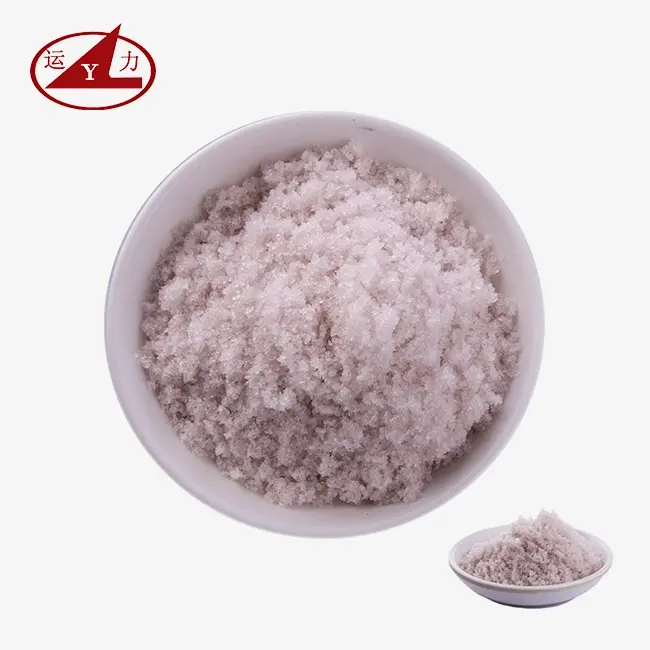
CAS number 7782-61-8 is for Iron Nitrate nonahydrate, and its formula is Fe(NO₃)₃·9H₂O. It weighs 404.01 grams per mole. Buying managers and quality control engineers know that looking at the product physically is one of the best ways to check for this material. It shows up as unique purple crystals. The nine molecules of water aren't just water on the surface; they're also structural parts of the crystal that are joined together. This drops the compound's freezing point to 47.2°C, which changes how well it dissolves in water.
Physical and Chemical Characteristics
This material has a specific mass of 1.68 g/cm³ and a strong deliquescent action, which means it takes in water from the air and dissolves in that water. Since this happens, goods need to be packed and kept in a certain way to keep their quality all the way through the supply chain. The material breaks down at 125°C, giving off nitrogen oxides and leaving behind iron oxides. This chemical can also be broken down in water, ethanol, and acetone. In this way, formulators can pick from different liquids for various industry needs. Because it oxidizes, it should be treated with care since it can blow up or catch fire organic chemicals. Tech experts who know these terms can make sure that the supplier's specs meet the needs of the job and that safety rules for sending and storing oxygen are followed.
Why Does Iron(III) Nitrate Nonahydrate Dissolve in Water? - Scientific Explanation
Ionic Dissociation Mechanism
Water causes Iron Nitrate nonahydrate to break down. Sometimes, when water molecules push against charged Fe³⁺ and NO₃⁻ particles, the ionic bonds that hold them together break. This reaction can be written as Fe(NO₃)₃·9H₂O → Fe³⁺(aq) + 3NO₃⁻(aq) + 9H₂O. There is more energy in the exchanges between the ions and water than there is in the crystal itself, so it breaks apart on its own.
Hydration Shell Formation
There are many water molecules around Fe³⁺ ions when they are divided. The negatively charged oxygen atoms in these molecules point toward the positive iron center. This shape, called a hydration shell, keeps the ferric ion steady in solution, even though it would usually move around a lot. They are bigger and have less charge, so they are not as closely joined together as nitrate ions. When you add water to crystals, these hydration interactions happen. They give off energy and help the breakdown process be more exothermic.
Role of Crystalline Water
The nine water molecules that make up the makeup of the Iron Nitrate nonahydrate are very important for breaking it down. These connected water molecules break down the structure of the crystal during breakdown. This lowers the activation energy barrier that needs to be crossed. It is easier for the Iron Nitrate nonahydrate crystal to dissolve than it would be if it were dry. This is because the crystal already has some water in it. Shape-wise, this is what makes nonahydrate forms dissolve more quickly and completely than their dry cousins. This is helpful for fast industrial processes.
When something breaks down, a drop in Gibbs free energy is what makes the physical situation better. It takes energy to separate ions, but when they mix with water, they give off a lot more energy. The process happens on its own when everything is normal. This idea from thermodynamics makes sure that the dissolving process stays the same even if the ingredients in the batch change or the temperature is above or below average.
Practical Implications of Solubility in Industrial and Agricultural Applications
Learning how breakdown works can help you in a lot of different areas of your life. There is a clear link between quick and full dissolution and how regular and active the finished catalyst is. This is because it makes sure that the precursor solutions are mixed equally. If a company wants to make methanol synthesis or hydrogenation catalysts, they need iron sources that break down totally without leaving behind any pieces that could make the catalyst beds hot or cold.
The combination is very easy to dissolve, which is great for textile processes. As a mordant, it needs to dissolve all the way so that it spreads out evenly on the fabric and makes sure that the dye soaks in evenly and stays true to color. Yunli Chemical's chloride-controlled grades (which keep chloride below 50 ppm) keep fibers from breaking down while they are being dyed. A lot of cloth makers have had problems with bad goods that made colors run or fabrics lose their strength. This fixes one of those problems.
Because Iron Nitrate nonahydrate dissolves readily in water, you can use this Iron Nitrate nonahydrate to prepare treatment baths for metal surfaces ready for plating or coating. Iron Nitrate nonahydrate eliminates heating requirements since it dissolves completely at room temperature, reducing processing time and energy consumption. Our pH-stabilized Iron Nitrate nonahydrate formulations maintain working solutions consistently between pH 1.5 and 2.5, preventing precipitation that could compromise Iron Nitrate nonahydrate surface preparation quality.
It is important to remember that the substance tends to melt when it is being stored and handled. We recommend keeping containers in places with climate control, where the air stays below 25°C and the humidity stays below 60%. Some goods made by Yunli Chemical have special anti-caking agents added to them. This helps them stay stable for longer on the shelf, even in slightly damp areas, without changing how fast they dissolve when they are used. The new formula is meant to help people who work in procurement and warehouses who are in charge of delivery networks with many places that have different environmental controls.
Comparison and Procurement Insights for Iron(III) Nitrate Nonahydrate
Performance Advantages Over Alternative Iron Sources
It is better to use Iron Nitrate nonahydrate than Iron Sulfate or Iron Chloride when you need clean breakdown patterns. If you burn the nitrate part, it turns into nitrogen oxides, leaving only pure iron oxide that isn't mixed with chlorine or sulfur. When making electronics and drug intermediates, this quality is very important because even small mistakes can make the end product less useful or not follow the rules. Dry iron nitrate is not as good for working with as Iron Nitrate nonahydrate that is not bound to water.
The water droplets that are already there keep dust from forming during shift work. This makes it less likely that workers will be exposed and that goods will be lost. The rates of dissolution are about 40% higher than for anhydrous forms when studied in standard settings. Factory floors with tight schedules can now make batches faster and finish more work.
Supplier Selection Criteria for Technical Buyers
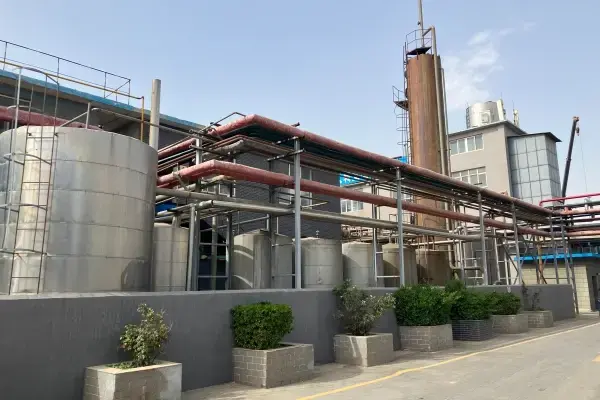
Buyers should give more weight to companies that have ISO 9001, ISO 14001, and OHSAS 18001 certifications when they need to buy Iron Nitrate nonahydrate. These show that they have a way to keep quality high, protect people, and be good to the world. Yunli Chemical was started in 2005, and in 2019 it was named a Shanxi Provincial Enterprise Technology Center. It still has these rights, makes more than 1 billion yuan a year, and has fixed assets worth 300 million yuan. This shows that it is financially stable, which is important for long-term supply partnerships.
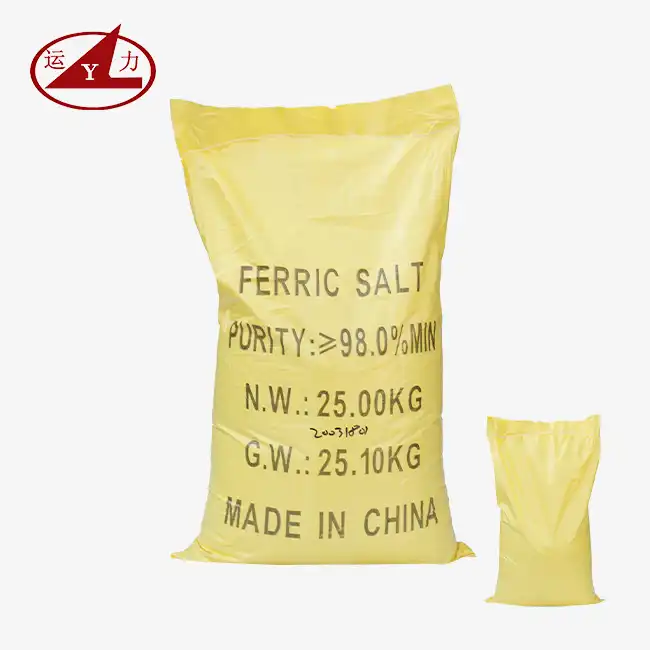
It's very important to have professional skills for certain uses. Advanced analysis tools like ICP-MS and atomic absorption spectrometers can help suppliers meet regular purity standards and respond quickly to requests for custom formulas. Yunli Chemical makes standard grades with a purity level of at least 98% and high-purity 4N-grade materials with a purity level of 99.99%. These are used in technology and medicine. They have strict quality records, such as MSDS, COA, and batch-specific impurity analyses, to back up their high-quality goods.
Pricing Dynamics and Order Flexibility
The price of industrial types of Iron Nitrate nonahydrate on the market ranges from $800 to $1,200 per metric ton. Specialist types with high purity, on the other hand, can cost up to $3,000 per metric ton, depending on how pure they are. We have low minimum order sizes that can be anything from a single 25-kg bag for tests to 500-kg drums and ISO tank containers for regular production plans. You don't have to commit to a certain number of items right away with this tiered method; it can be used for both the initial approval steps and scalable production needs.
Regulations from DOT and IMDG say it needs to be labeled as a Class 5.1 oxidizer so it can be moved. In other words, it needs special packing and paperwork to be sent to a different country. For Yunli Chemical, exporting is its own business, so there are no agents who add a price. Also, the company makes sure that all U.S. import rules are followed. Wait times for standard grades are cut down to 15 to 20 days with our straight plant supply approach. Personalized formulas, on the other hand, take 25 to 30 days, which includes rounds for quality checks.
Conclusion
It is possible for the ionic parts of Iron Nitrate nonahydrate to combine well with polar water molecules in terms of thermodynamics. Moles of structural water lower the energy of the crystal lattice, which makes these interactions stronger. Because of how this basic chemistry works, it can be used in many industrial processes, such as to make catalysts, process fabrics, and smooth metal surfaces. People who are in charge of getting things should think about more than just price when they pick providers. Some other things they should check are professional know-how, quality standards, and how stable the supply chain is. Because the substance quickly breaks down and soaks up water, it's important to store it safely and follow the rules for safe handling throughout delivery networks. Because of this, a supplier's understanding in these areas is just as important as a low price.
FAQ
Why does the product sometimes arrive caked or partially liquefied?
Iron Nitrate nonahydrate can pick up water from the air because it is a deliquescent substance. This could make it thicken. Its freezing point is very low (47.2°C), so if it gets too hot while being transported, some of it can melt. Yunli Chemical takes care of this. They use moisture-proof stacked packing with desiccant inserts and recommend sending at a controlled temperature in the summer. In a normal warehouse, our anti-caking goods will still be able to run easily.
Can this compound replace ferric chloride in all applications?
They both give you iron, but they do different things. It doesn't give off hydrochloric acid fumes when Iron Nitrate nonahydrate breaks down; instead you get nitrogen oxides. It can now be used in places that can't handle chemical poisoning. Iron chloride, on the other hand, could be a cheaper way to clean up big amounts of water where chloride is okay. This study should look at both how the drugs work and how much they cost for each use case.
What shelf life can buyers expect under proper storage?
Iron Nitrate nonahydrate is still good for 24 months after it was made as long as it is kept in sealed containers below 25°C and the humidity is less than 60%. Because we use batch code, we can keep track of things, and we can re-analyze old stuff that needs to be checked over before it can be used. Since it starts fires, it shouldn't be kept near things that can catch fire.
Partner with Yunli Chemical - Your Trusted Iron Nitrate Nonahydrate Manufacturer
How regularly your goods are made and how much they cost will depend on how reliable the Iron Nitrate nonahydrate provider you choose is. Yunli Chemical offers at least 98% clean Fe(NO₃)₃·9H₂O, and you can control the amount of impurities that you want. We have a technology center at the regional level and have been making things for the textile, electroplating, and catalyst businesses around the world for 20 years. As long as our plant costs meet ISO 9001, ISO 14001, and OHSAS norms, they are the only ones that matter. Free samples up to 500 grams are available for suitability testing, and there is no minimum order quantity. We also offer unique packaging that includes water-based solutions at certain concentrations. Our application experts can be reached at wangjuan202301@outlook.com by email for product specs, MSDS papers, and help with making.

References
1. Greenwood, N.N. & Earnshaw, A. (1997). Chemistry of the Elements (2nd ed.). Butterworth-Heinemann, Oxford. Chapter on Transition Metal Nitrates.
2. Dean, J.A. (1999). Lange's Handbook of Chemistry (15th ed.). McGraw-Hill. Section on Solubility of Inorganic Compounds.
3. Cotton, F.A., Wilkinson, G., Murillo, C.A., & Bochmann, M. (1999). Advanced Inorganic Chemistry (6th ed.). Wiley-Interscience. Discussion of Hydration Energies and Ionic Solvation.
4. Marcus, Y. (1985). Ion Solvation. Wiley-Interscience. Thermodynamic Analysis of Ferric Ion Hydration.
5. Patnaik, P. (2003). Handbook of Inorganic Chemicals. McGraw-Hill Professional. Iron(III) Nitrate Nonahydrate Properties and Applications.
6. Wells, A.F. (2012). Structural Inorganic Chemistry (5th ed.). Oxford University Press. Crystal Structure of Hydrated Metal Nitrates.