





Zinc Nitrate Solution Liquid Storage Risk Management Systems Guide
Managing the storage of Zinc Nitrate Solution requires vigilance and structured protocols. This comprehensive guide addresses critical storage risks and presents proven risk management systems tailored for industrial facilities handling this oxidizing chemical. Given the unique challenges posed by Zn(NO₃)₂·6H₂O aqueous formulations—ranging from corrosion and crystallization to regulatory compliance—understanding systematic controls is essential for procurement managers and technical engineers across electroplating, battery manufacturing, pharmaceutical intermediates, and catalyst production sectors.

Understanding Zinc Nitrate Solution: Composition, Properties, and Hazards
Chemical Composition and Molecular Profile
Zinc nitrate hexahydrate (CAS No. 10196-18-6) is what industry water-based products are built on. A colorless, solid substance with a molecular weight of 297.47 g/mol is shown by the formula Zn(NO₃)₂·6H₂O. When mixed with water, these crystals make acidic solutions that are clear to slightly yellow. For commercial use, the concentration is usually between 40% and 50% w/w. The hexahydrate structure is hygroscopic, which means it easily absorbs water from the air. This changes how stable it is in storage and how it should be handled.
Critical Physical and Chemical Characteristics
The physical properties of this molecule have a direct effect on how it is stored. Zinc nitrate hexahydrate has a specific density of 2.065 g/cm³ when it is solid and a melting point of 36.4°C. At 37°C, it changes into an anhydrous form. The specific gravity of liquids can be anywhere from 1.35 to 1.55 g/cm³, depending on how concentrated they are. With a pH level between 1.0 and 4.0, the solution is very acidic, so it needs to be contained in materials that can handle acid. Zinc nitrate mixes easily with both water and alcohol, which makes it easy to dilute but also increases the risk of spills. According to Class 5.1 danger rules, it is an oxidizer, which means it gives off oxygen that makes fires stronger, even though the molecule itself is not flammable.
Primary Hazards and Safety Considerations
Zinc nitrate handling rules are based on three main types of danger. When kept near organic materials or flammable substances, the oxidizing qualities can speed up the spread of fire. This is why strict segregation rules are required by OSHA and EPA rules. Corrosiveness comes from the acidic pH, which attacks metals that don't work well together and breaks down containers over time. When spills happen, environmental toxicity affects aquatic environments. Zinc ions are poisonous to fish and invertebrates. The solution is irritating to the eyes and skin, so the right PPE must be worn when handling it. These features, which are written down in MSDS sheets from trustworthy sources, are the base for full risk assessments.

Common Risks in Zinc Nitrate Solution Liquid Storage and Their Root Causes
Environmental and Chemical Stability Risks
Unpredictable changes in temperature make keeping very hard. When temperatures drop below 15℃, concentrated solutions can crystallize and form precipitates that block pipes and stop automated dosing systems from working. On the other hand, temperatures above 30℃ speed up the decomposition process and release nitrogen oxides (NOx), which damage ventilation systems and put workers' health at risk. Changes in humidity make these problems worse because the compound absorbs water, which changes its concentration and makes it impossible to meet important standards for making catalysts and treating surfaces.
Another constant threat is contamination from outside sources. Cross-contamination happens when storage areas don't have enough separation between chemicals that don't mix, like acids, bases, or reducing agents. It only takes very small amounts of biological matter to start exothermic processes. Microbial contamination is less common in highly acidic solutions, but it can happen in weakened formulations used for cloth dyeing. It can add impurities that change how well the dye works and how consistent the colour is.
Operational and Material Compatibility Challenges
Most operating problems are caused by mistakes in choosing the right materials. When steel containers don't have the right lining, they rust quickly in acidic environments. This releases iron (Fe >30 ppm), which stops catalytic reactions from working properly in petrochemical settings. If the container isn't sealed properly, the solution can evaporate, which changes the stoichiometric ratios needed for phosphating baths in the auto manufacturing industry. Leaks happen when the wrong handling equipment is used, like pumps with seals or gaskets that don't work with oxidizing substances.
There are small but harmful risks that come with concentration drift. Zinc Nitrate Solution can go outside of certain ranges if it isn't regularly checked by titration or density checks. This can lead to batch rejection in quality-critical industries like pharmaceutical intermediate production. This problem gets worse in places that don't have automated monitoring systems because sampling times that are set by hand miss small changes over time.
Regulatory Compliance and Documentation Gaps
Compliance mistakes are usually caused by bad record-keeping, not by people breaking the rules on purpose. If MSDS paperwork is missing or out of date during checks, it can lead to fines and delays in shipping. Labelling mistakes, especially ones that involve oxidizer classification or emergency contact information, are against DOT rules for bulk shipments. Environmental permits that aren't complete for wastewater treatment systems that handle zinc-contaminated rinse waters can lead to enforcement actions that mess up production schedules and hurt relationships with suppliers.
Comprehensive Zinc Nitrate Solution Storage Risk Management System
Environmental Control Infrastructure
Putting in place strong weather controls is the first step to safe keeping. Temperature control systems must keep storage areas between 15°C and 25°C. They do this by using HVAC systems with backup cooling to keep crystals from forming when one system fails. Controlling the humidity, ideally keeping the relative humidity below 60%, stops containers from absorbing water and rusting. At least six air changes must happen every hour as part of the ventilation design. Exhaust systems must include NOx scrubbers to neutralize breakdown products and protect workers and equipment from toxic gas exposure.
Container Specifications and Material Standards
Most containment problems can be avoided by using approved containers that won't rust. For bulk storage, high-density polyethylene (HDPE) or polypropylene tanks that are rated for oxidizing service are a cheap option. Process tanks can be made of stainless steel types 304 or 316 if they are properly passivated.
However, the amount of chloride contamination must stay below 50 ppm to avoid stress corrosion cracking. Totes and drums for IBCs should have UN certification marks on them that say they are compatible with Class 5.1 oxidizers. A secondary containment system with 110% of the biggest container's volume takes care of spills, follows EPA rules, and protects underground resources.
Process Monitoring and Quality Assurance Protocols
Solution integrity is maintained throughout storage lifetimes through regular analytical monitoring. Drift caused by evaporation can be found before it affects production by checking the concentration once a week using complexometric titration or density measurement. Monitoring the pH once a month finds trends in decomposition or events of contamination.
ICP-OES analysis of trace metals every three months makes sure that levels of iron, copper, and lead stay within the acceptable range. This is especially important for catalyst-grade materials that need Fe levels below 10 ppm. Using automated leak detection systems with real-time reports cuts down on the time needed to respond when containers break, which lowers the amount of spilt material and the damage it does to the environment.
Personnel Training and Emergency Response Capabilities
Human factors often decide whether an event stays small or gets worse and turns into a big accident. Proper PPE use must be covered in thorough training programs. This includes acid-resistant gloves, face shields, and chemical-resistant skirts. Every three months, emergency response drills that use neutralizing agents like sodium carbonate and absorbent materials are held to reinforce how to contain spills.
Zinc Nitrate Solution is one such chemical that requires special attention, so operators need to be taught how to read and understand MSDS information, spot warnings for chemicals that don't mix, and follow lockout-tagout processes during repair tasks. Clear signs in storage areas with danger symbols and emergency phone numbers help people make quick decisions during major events.
Documentation and Compliance Management Systems
Keeping documentation up to date meets legal standards and promotes transparency in the supply chain. Digital inventory management systems keep track of lot numbers, getting dates, and expiration dates. This lets you rotate items from first-in, first-out, which keeps the quality from going down due to ageing. Updated MSDS files, which can be accessed by all staff through QR codes on container labels, give immediate information about hazards in case of an emergency.
During audits, environmental compliance records, such as wastewater analysis reports and air pollution tracking data, show that the company is a good steward. Certificate of Analysis (COA) archives make it possible to track quality investigations, which protects against liability claims and helps with efforts to keep getting better.
Procurement Considerations for Secure and Reliable Zinc Nitrate Solution Supply
Supplier Evaluation and Quality Benchmarking
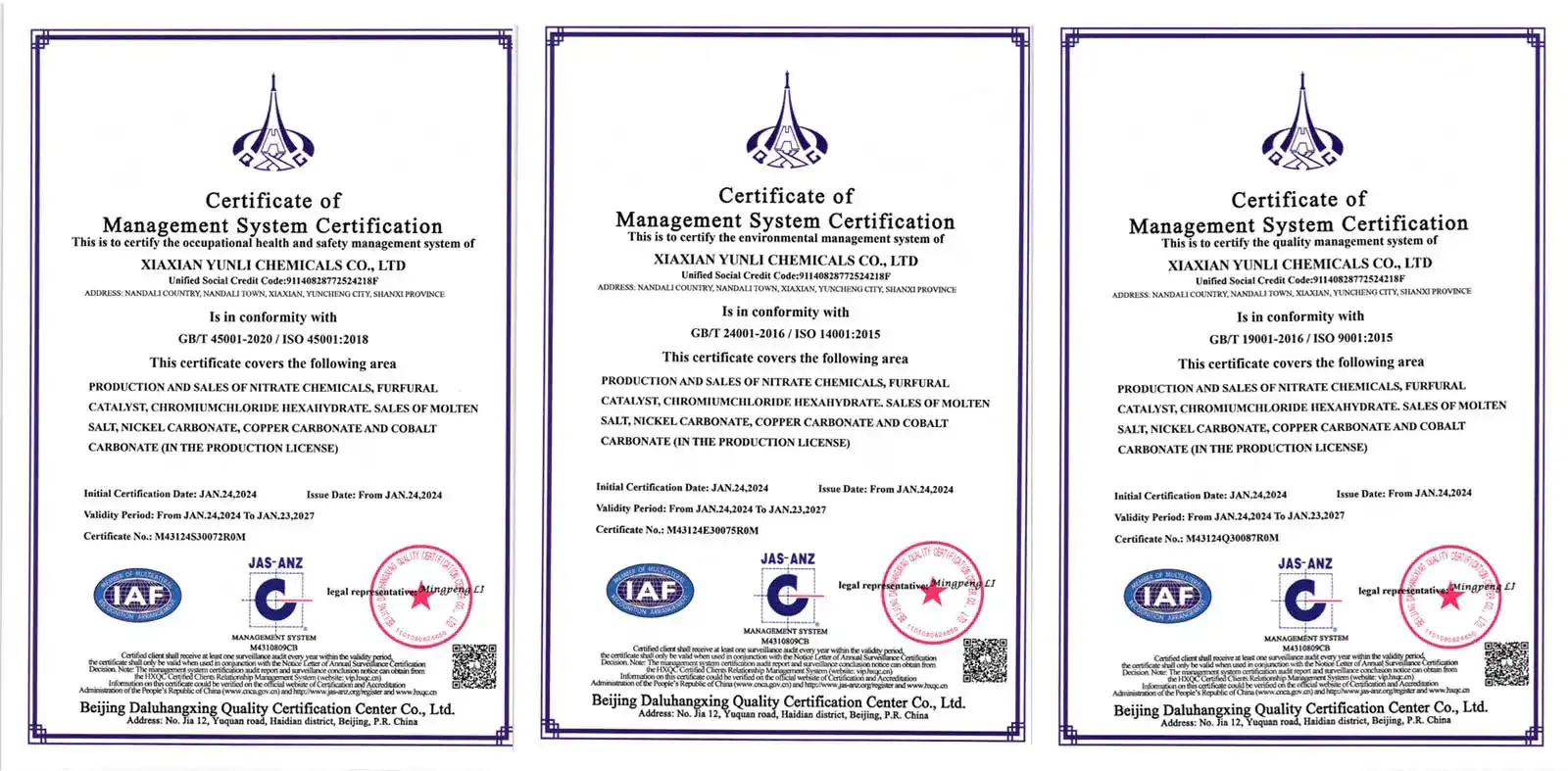
Long-term business risks can be cut down by choosing sources with proven technical skills. Established companies like XiaXian Yunli Chemical, which has been in business for over twenty years and has ISO 9001, ISO 14001, and OHSAS certifications, promise consistent quality management and environmental compliance.
When judging a supplier's ability, one must look at both the size of their production (annual sales of more than RMB 1 billion are a sign of stable operations) and their technical infrastructure, such as enterprise technology centers at the provincial level that have advanced analytical tools like ICP-MS and atomic absorption spectrometers. These features allow for both standard product delivery and custom formulations that can be changed to meet the needs of a specific application in terms of pH, concentration, and impurity levels.
Portfolios of certifications show how committed a company is to safety and quality. REACH registration makes sure that you can sell your products in Europe, and GHS-compliant labelling makes sure that they can be shipped anywhere in the world. Suppliers of 4N-grade (99.99% pure) materials have advanced purification skills that are needed for electronics and pharmaceuticals, where small impurities can cause critical failures.
Bulk Purchasing Strategy and Logistics Optimization
Cost savings and supply security must be balanced for buying to work well. By comparing minimum order amounts (MOQ) to storage space, you can avoid buying too much, which wastes money and raises the risk of items going bad too quickly. Progressive suppliers with flexible MOQ terms and free samples up to 500 grams let customers check the quality thoroughly before signing tonnage contracts. Catalyst-grade materials are more expensive than fertilizer-grade materials, and there are different ways to package them. For example, liquid formulations in IBC totes use 30% less energy than solid hexahydrate purchases because they don't need to be dissolved.
Getting oxidizing products from one place to another requires extra care. Carriers with DOT hazmat certifications make sure that regulations are followed while the goods are in transit. Talking about different ways to package things, like custom drum labels with the supplier's contact information and safety warnings, speeds up the receiving process in the warehouse. Setting delivery times that work with production cycles cuts down on storage time, which lowers the risk of crystallization and makes managing inventory easier.
Supplier Technical Support and Collaborative Risk Management
Long-term partnerships with suppliers go beyond one-time deals. Suppliers who give customers access to expert teams that can help with application problems are very helpful, especially when it comes to improving catalyst impregnation methods or phosphating bath chemistry.
Up-to-date MSDS documents can be found through supplier sites, which helps with employee training programs and makes sure that regulations are followed during checks. Some makers will come to your location and look at your storage facilities and make suggestions for improvements based on their years of experience handling Zinc Nitrate Solution in a wide range of businesses.
As part of collaborative risk management, suppliers can help create emergency response plans that are specific to the facility, and everyone can look at quality control data trends together to find ways to make the process better. When these services are combined with reliable delivery, the higher prices are worth it for important uses where supply problems cost a lot of money.
Case Studies and Best Practices in Zinc Nitrate Solution Storage
Pharmaceutical Intermediate Manufacturer: Mitigating Contamination Risks
A pharmaceutical company that made organic intermediates had to deal with batch rejects over and over again because iron got into their catalyst system. An investigation showed that their carbon steel holding tank slowly corroded in the acidic 45% Zinc Nitrate Solution, even though it had protection coatings on it. A three-part solution was put in place by the facility. They got rid of the steel tank and put in an approved HDPE tank that could handle oxidizer service.
They also put in an inline filter system to catch particles before the Zinc Nitrate Solution went into the process reactors and set up ICP-OES tests every week to check the Fe levels. Within three months, the amount of iron pollution dropped from 150 parts per million to less than 10 parts per million. This stopped batch failures and saved the company about $120,000 a year in lost product and repair costs. This case shows how material suitability has a direct effect on the quality of a product and its ability to make money.
Automotive Parts Manufacturer: Temperature Control Optimization
In the Midwest, an electroplating business had problems with crystallization every winter when the temperature in the warehouse dropped below 10℃. Their automated dosing pumps got clogged with crystalline material, which shut down the line for an average of 4 hours each time and made it hard to meet their just-in-time supply promises. The business bought sealed storage tanks with built-in heating coats that keep the temperature of the solution at 20℃ all year.
They also set up continuous monitoring of the density and set up automated alerts for when readings showed that crystallization thresholds were getting close. These changes got rid of all production problems in the winter, raised the percentage of on-time deliveries from 87% to 98%, and made relationships with customers stronger. The investment was paid for in 18 months because it cut down on downtime and kept shipping costs from going up.
Chemical Distributor: Compliance and Documentation Excellence
A regional chemical wholesaler that worked with many different businesses had a hard time following the rules. During regular inspections, they were given tickets for not having full danger communication paperwork. They changed how they kept track of paperwork by setting up a digital platform that connected each lot of products to full compliance packages that had COA, MSDS, and shipping paperwork.
They worked with a provider that offered full technical support and labelling that was already made and compliant with GHS standards. The labels were then customized with information about the distributors. Training programs made sure that warehouse workers knew what the rules were and how to handle emergencies. Within a year, the distributor had no more compliance issues, improved their image in the market, and gained 23% more customers as buyers came to value their careful attention to regulatory details.
Conclusion
Zinc Nitrate Solutions needs integrated approaches for effective storage risk management that take into account environmental controls, material compatibility, process monitoring, staff training, and regulatory compliance. The oxidizing and acidic qualities of Zn(NO₃)₂·6H₂O formulations make them difficult to work with and need special means to keep them contained, control the temperature, and stop contamination. Buying decisions have a big effect on the safety and success of storage operations.
Partnering with well-known companies that offer technical support, detailed documentation, and formulations that can be changed makes you less vulnerable to problems in the supply chain while keeping up the high standards of product quality that are needed for making catalysts, treating surfaces, and using them in pharmaceuticals. Industry case studies show that investing in structured risk management pays off in a big way by making products more consistent, cutting down on downtime, making sure that rules are followed better, and making a business stronger in the market.
FAQ
What temperature range is safe for storing zinc nitrate solution?
Between 15°C and 25°C is the best temperature range for storage. When the temperature drops below 15℃, strong liquids can crystallize and make precipitates that hurt pumps and pipes. When the temperature goes above 30℃, decomposition reactions speed up, releasing nitrogen oxides that damage buildings and are bad for your health. These problems can't happen with climate-controlled storage that has two sets of temperature sensors.
How does zinc nitrate solution differ from zinc sulfate in storage requirements?
Zinc sulfate is not an oxidizer and does not pose as much of a fire risk. Zinc Nitrate Solution, on the other hand, needs to be kept away from flammable materials and stored in special containers designed for oxidizing service. Zinc Nitrate Solutions are more acidic (pH 1.0–4.0) than zinc sulfate solutions (pH 4.0–6.0), so they need stronger protection against corrosion. Both need extra protection, but Zinc Nitrate Solution needs more air flow because it could release NOx.
Partner with Yunli Chemical for Reliable Zinc Nitrate Solution Supply
XiaXian Yunli Chemical offers high-purity Zinc Nitrate Solution and has been making it well for 20 years and offers full technical support. Our ISO-certified production guarantees consistent quality with ratios that can be changed (40–50% w/w) and strict impurity control (Fe ≤20 ppm), meeting strict requirements for catalyst, electroplating, and pharmaceutical uses. We are a verified manufacturer of Zinc Nitrate Solution that makes over RMB 1 billion a year in sales and has the credentials of a provincial technology center. We offer factory-direct pricing, a variety of packaging options, and all the necessary compliance paperwork, such as MSDS and COA certificates.
Our closed-loop environmental systems and expert team help you with your risk management efforts by giving you advice on how to use them and where to store them. You can visit yunlichemical.com or email us at wangjuan202301@outlook.com to get free samples of up to 500 grams, talk about special formulations, and make sure your supply chain is safe with a partner you can trust who is committed to your business success.

References
1. National Fire Protection Association. (2021). NFPA 400: Hazardous Materials Code. Standards for Oxidizer Storage and Handling.
2. American Chemical Society. (2020). Guidelines for Chemical Laboratory Safety in Academic Institutions. Chapter 7: Corrosive and Oxidizing Chemical Storage.
3. Occupational Safety and Health Administration. (2019). Hazard Communication Standard: Safety Data Sheets. OSHA Publication 3514.
4. Environmental Protection Agency. (2022). Resource Conservation and Recovery Act (RCRA) Regulations: Hazardous Waste Management for Metal Finishing Industries.
5. International Organization for Standardization. (2018). ISO 9001:2015 Quality Management Systems: Requirements for Chemical Manufacturing Facilities.
6. Chemical Safety Board. (2020). Investigation Report: Oxidizer Storage Incidents in Industrial Facilities. Case Study Analysis and Prevention Strategies.







